
China Arrests US Scholar: Spying Charges Analysis
China Arrests US Scholar on Suspicion of Spying — A Strategic Calculus The Circumstances of the Detention in Kunming China's foreign ministry has confirmed the arrest of U Min Zin, a US-based scholar, on charges of spying and endangering national security. The detention occurred in early June in the southwestern city of Kunming, a location that serves as a key gateway to Myanma
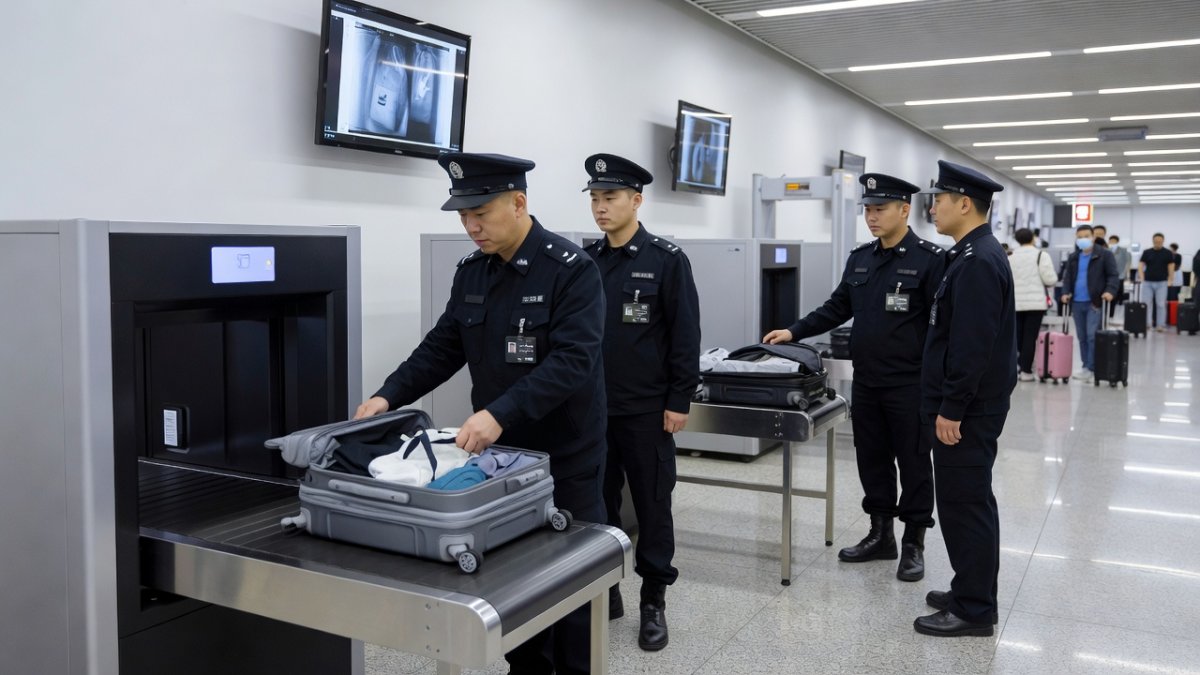
The Circumstances of the Detention in Kunming
China's foreign ministry has confirmed the arrest of U Min Zin, a US-based scholar, on charges of spying and endangering national security. The detention occurred in early June in the southwestern city of Kunming, a location that serves as a key gateway to Myanmar. Reports indicate that U Min Zin was taken into custody at the airport following a meeting, an action that underscores Beijing's heightened vigilance over cross-border movements and information flows in sensitive frontier regions.
This case stands out because China rarely applies national security charges against US citizens in such a direct manner. The limited public details available highlight the opaque nature of these proceedings, with further information remaining scarce. Family members have expressed concern and are coordinating with the US consulate in Guangzhou, reflecting the personal dimensions of what appears to be a calculated state response.
The arrest aligns with Beijing's broader pattern of monitoring activities that touch on its strategic periphery. Kunming's proximity to Myanmar makes it a focal point for oversight of regional networks, particularly those examining Chinese economic and political engagements in Southeast Asia.
Background and Professional Role of U Min Zin
U Min Zin serves as executive director of the Myanmar Institute for Strategic and Policy Studies, a Thailand-based think tank that analyzes China's involvement in Myanmar, including investment patterns and regional influence. His academic trajectory includes studies in the United States and a current PhD program at the University of California, Berkeley, positioning him as a bridge between Western scholarship and Myanmar affairs.
Having participated in Myanmar's 1988 pro-democracy movement as a student activist, U Min Zin later fled to Thailand and eventually pursued opportunities in the United States before returning to Myanmar in 2010. He maintains residence in Thailand while dividing time between the US and Myanmar, a profile that places him at the intersection of diaspora networks and policy research.
His scheduled appearance at a conference in Kathmandu later in the month was interrupted by the events in Kunming. This background illustrates how individuals with expertise on China's Myanmar footprint can become subjects of scrutiny when their work intersects with official sensitivities.
Diplomatic Timing Following the Trump-Xi Summit
The detention unfolded weeks after US President Donald Trump's visit to Beijing, during which he received an elaborate reception from Chinese President Xi Jinping. Such high-level engagements typically emphasize areas of potential cooperation, yet the arrest signals that security considerations can override immediate diplomatic optics.
Beijing's decision to proceed with the action despite the recent summit suggests a deliberate separation between ceremonial diplomacy and core national security enforcement. The foreign ministry's confirmation of the charges indicates that the case was deemed sufficiently important to publicize at the ministerial level.
Analysts note that this sequence reflects China's practice of managing multiple tracks in its relationship with Washington. While economic and strategic dialogues advance in one channel, enforcement actions in another domain serve to assert sovereignty over information and influence operations near its borders.
Myanmar's Military Leadership and Upcoming Beijing Visit
Myanmar's President Min Aung Hlaing is scheduled to visit Beijing shortly after the arrest, continuing a pattern of close engagement between the Chinese government and Myanmar's military authorities following the 2021 coup. Beijing maintains extensive economic and infrastructure ties with the junta, viewing stability in Myanmar as essential to protecting its investments and border security.
The timing of the detention, occurring just before this visit, may function as a signal regarding the parameters of acceptable research and commentary on bilateral relations. China's support for the Myanmar government includes diplomatic cover at international forums and substantial project financing under frameworks such as the Belt and Road Initiative.
U Min Zin's focus on documenting Chinese interests in Myanmar places his work directly within the scope of topics that Beijing seeks to shape. The arrest therefore carries implications for how external observers approach analysis of these entrenched connections.
Regional Influence and Constraints on Independent Analysis
China's approach to the case connects to its objective of expanding regional influence while limiting external narratives that could complicate relations with neighboring states. By targeting a scholar whose institute examines these dynamics, authorities demonstrate resolve in protecting what they regard as sensitive domains.
Think tanks operating across the Myanmar-Thailand-China triangle often navigate restricted information environments. The arrest serves as a reminder that activities perceived as intelligence-related can trigger enforcement even when conducted under academic auspices.
This development affects the broader ecosystem of policy research on ASEAN-China interactions. Organizations and individuals studying infrastructure projects, resource extraction, and political linkages must now account for elevated risks when conducting fieldwork near Chinese borders.
Strategic Calculus for Beijing, Washington, and Regional Actors
From Beijing's perspective, the arrest advances the goal of technological and informational self-reliance by discouraging scrutiny that might expose vulnerabilities in its Myanmar partnerships. The action also reinforces deterrence against perceived foreign interference in domestic security matters.
Washington faces the challenge of responding without derailing ongoing channels of communication established during the recent summit. Leverage remains asymmetrical, as China controls access to its territory and legal processes, while the United States possesses tools such as consular advocacy and public diplomacy.
Second-order effects extend to ASEAN members and the wider Global South, where similar cases could influence how governments and researchers weigh engagement with Chinese initiatives. The episode illustrates the tension between China's multilateral institution-building rhetoric and its unilateral enforcement of security red lines in frontier zones.
Overall, the detention underscores that Beijing prioritizes narrative control and border security even amid high-profile diplomatic overtures. Future interactions between US scholars and Chinese authorities will likely incorporate greater caution regarding topics linked to Myanmar's political and economic landscape.
By Prof. Marcus Chen, Staff WriterThis article was produced with AI-assisted research and editorial support. Reporting is based on sources cited in the article.
What's Your Reaction?
 Like
0
Like
0
 Dislike
0
Dislike
0
 Love
0
Love
0
 Funny
0
Funny
0
 Wow
0
Wow
0
 Sad
0
Sad
0
 Angry
0
Angry
0

World Politics Analyst at Global1.News. Based in Beijing, covering US-China relations, global trade, and geopolitical strategy. Brings deep analytical perspective to the power dynamics shaping international affairs.














Comments (0)