
Child Stunting in the Philippines Hits 25.3 Percent, First Rise in a Decade
The recent data from our national nutrition survey has stirred deep concern across Filipino households, reminding us how closely our children's futures are tied to the food on their tables. Stunting among children under five has risen to 25.3 percent in 2025, marking the first increase in a decade and placing the country once again in the World Health Organization's category of
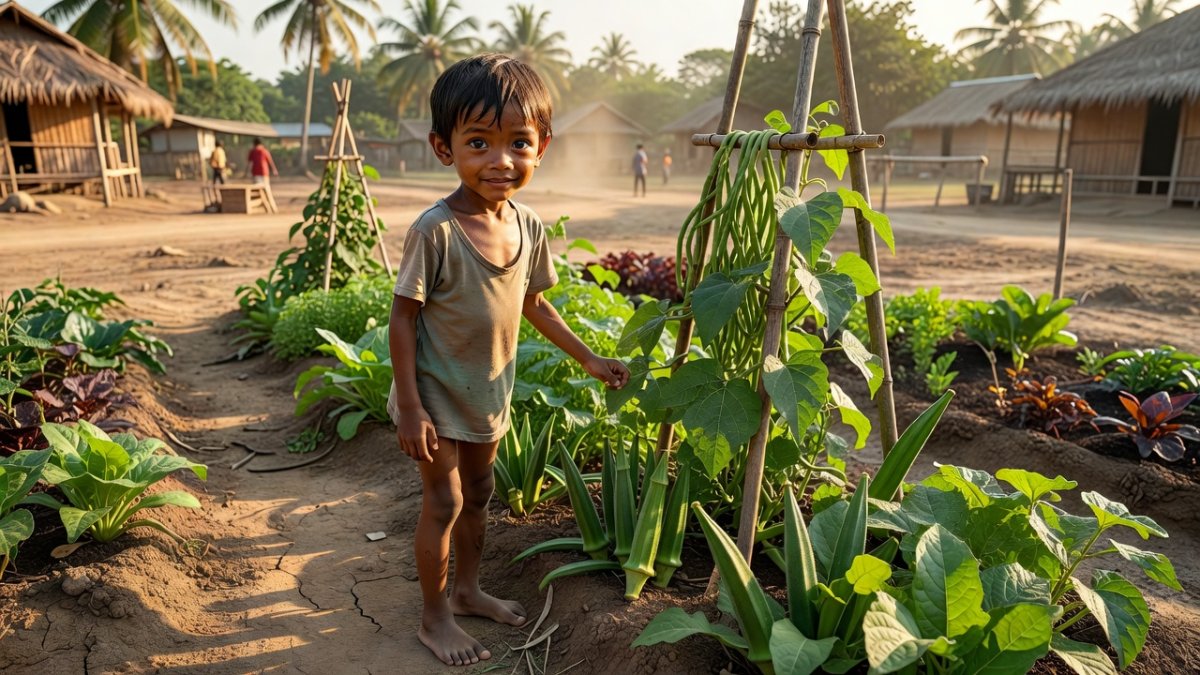
The recent data from our national nutrition survey has stirred deep concern across Filipino households, reminding us how closely our children's futures are tied to the food on their tables. Stunting among children under five has risen to 25.3 percent in 2025, marking the first increase in a decade and placing the country once again in the World Health Organization's category of high public health concern. This reversal comes after steady progress that began in 2015, and it touches every community from bustling city streets to quiet rural barangays.
A Wake-Up Call from the Numbers
Government nutrition data released this week shows that out of every 100 Filipino children under five, about 25 now experience stunting, meaning they are too short for their age due to chronic malnutrition. The figure sits 1.7 percentage points above the 2023 level, breaking a long downward trend that had brought rates down from 45 percent in 1989. The DOST-Food and Nutrition Research Institute conducted the nationwide survey between April 23, 2025, and March 31, 2026, continuing a series of studies it has run every two to three years since 1989. For families who have worked hard to improve their children's health over the past ten years, these numbers feel like a step backward that no one can ignore.
Regional Differences That Hit Close to Home
The burden does not fall evenly across the archipelago. Stunting reached 36 percent in the Bangsamoro Autonomous Region in Muslim Mindanao, 34 percent in the Zamboanga Peninsula, 31 percent in the Negros Island Region, and 30 percent in MIMAROPA. Rural areas recorded 28 percent compared with 23 percent in cities, highlighting how distance from markets and services still shapes daily life for many families. These patterns reflect the everyday realities of parents who travel far for work or rely on seasonal harvests, and they remind us that solutions must reach the most remote communities first.
Older Children Still Carry the Effects
Stunting does not stop at age five. The survey found rates of 19 percent among children aged five to ten and 21 percent among adolescents aged ten to nineteen. Nineteen percent of school-age children are also underweight, with prevalence above 24 percent in BARMM, Zamboanga Peninsula, MIMAROPA, and Bicol. These figures show how early nutritional shortfalls continue to affect growth and energy levels well into the school years, influencing how children participate in classes and play with friends.
Food Insecurity and the Daily Struggle
Behind the growth charts lies a broader picture of food insecurity. A third of Filipinos, or 33 percent, experience moderate to severe food insecurity. Of those households, 65 percent buy food on credit, mostly from sari-sari stores, while 69 percent borrow from relatives to put meals on the table. These coping strategies are familiar to many Filipino families who stretch every peso, yet they also signal ongoing pressure on household budgets that no amount of resourcefulness can fully ease.
Nutrition Risks for Mothers and the Next Generation
The survey also flagged that 17 percent of pregnant women are nutritionally at-risk, raising the chances of complications during pregnancy and newborns arriving with lower birth weights. This finding connects directly to the stunting rates we see today, because the health of mothers shapes the starting point for every child. In communities where support for prenatal care remains limited, these risks compound across generations and affect entire extended families who share the work of raising the young.
Linking Nutrition to the Learning Crisis
The Second Congressional Commission on Education, known as EDCOM 2, has pointed out that rising stunting threatens efforts to address the country's learning crisis. Children who arrive at school already behind in cognitive development, language skills, and the ability to learn face steeper challenges in the classroom. EDCOM 2 co-chair Rep. Roman Romulo, who also chairs the House basic education committee, stated that the increase after a decade of decline should serve as a wake-up call. He noted that remediation in Grade 3 cannot undo what was neglected in the first three years of life, and that solving the learning crisis requires first solving the nutrition crisis. This connection resonates with teachers and parents who see daily how hunger and poor growth affect attention and participation in lessons.
Human Stories Behind the Statistics
Each percentage point represents real children whose laughter and curiosity deserve every chance to flourish. In rural homes where gardens provide only part of the needed nutrition and in urban neighborhoods where prices rise faster than wages, families feel the weight of these trends. The data from DOST-FNRI gives us a clear picture, but it also calls on all of us to look at our own communities and ask how we can support better meals, stronger local markets, and more consistent care for mothers and young children. Progress once achieved can be protected when neighbors, local leaders, and national agencies work together with the same determination that brought rates down for so many years.
Moving Forward with Shared Responsibility
The reversal in stunting rates after years of improvement urges renewed focus on the first thousand days of life and on sustained support for food security. By centering the experiences of Filipino families who borrow from relatives or rely on sari-sari stores, we keep the conversation grounded in daily life rather than distant targets. The survey results from DOST-FNRI and the statement from EDCOM 2 together paint a path that begins with honest recognition of where we stand today. When communities come together around better nutrition, the benefits reach classrooms, workplaces, and future generations, strengthening the very fabric of our society.
By Bella Reyes, Staff WriterThis article was produced with AI-assisted research and editorial support. Reporting is based on sources cited in the article.
What's Your Reaction?
 Like
0
Like
0
 Dislike
0
Dislike
0
 Love
0
Love
0
 Funny
0
Funny
0
 Wow
0
Wow
0
 Sad
0
Sad
0
 Angry
0
Angry
0

Philippines/Southeast Asia Correspondent at Global1.News. Manila-based journalist covering Philippine politics, environment, maritime security, and social issues. Passionate about marine conservation and the communities protecting the Philippines' natural heritage.















Comments (0)