
The Historic Draw That Captured Hearts
The Historic Draw That Captured Hearts Cape Verde marked their first appearance at the World Cup with a determined 0-0 draw against Spain. The result came in Group H, where the island nation also faces Uruguay and Saudi Arabia. Thousands of Cape Verde supporters filled the stands and roared throughout the match as their team held firm against a relentless Spanish attack. At the
The Historic Draw That Captured Hearts
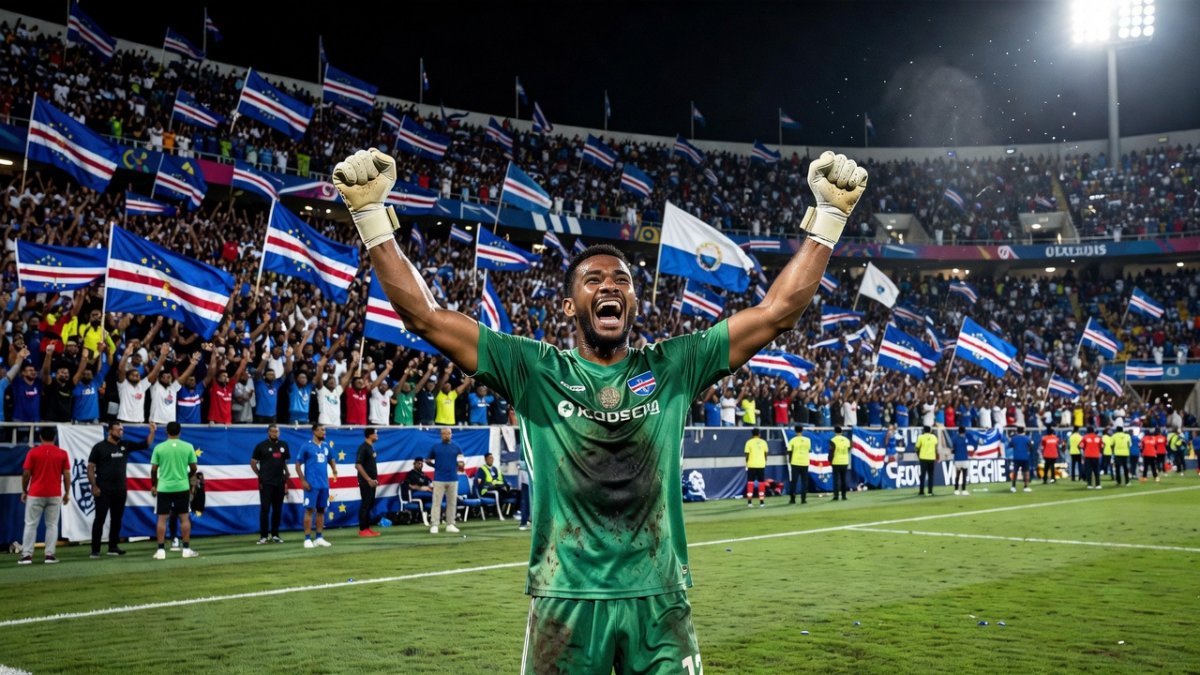
Cape Verde marked their first appearance at the World Cup with a determined 0-0 draw against Spain. The result came in Group H, where the island nation also faces Uruguay and Saudi Arabia. Thousands of Cape Verde supporters filled the stands and roared throughout the match as their team held firm against a relentless Spanish attack.
At the centre of the performance stood goalkeeper Vozinha, whose seven saves proved decisive. The 40-year-old, born Josimar Dias, became the oldest player to feature in a nation's debut World Cup match at 40 years and 12 days. He surpassed the previous mark set by Curacao's Eloy Room.
Former Scotland winger Pat Nevin noted that the goalkeeper lit up the game at an age when many have long retired. The achievement resonated far beyond the pitch, offering a moment of pride for a nation of roughly half a million people located nearly 600 kilometres off the west coast of Africa.
Vozinha's Journey from Doubt to Glory
Vozinha grew up in Mindelo on the island of São Vicente. Early in life he was told he was too small for professional football. He began his senior career only at the age of 25 in 2012 after moving to Portugal and later playing in Slovakia, Angola, Moldova and Cyprus. He now plays for Portuguese second-tier side Chaves.
His father had wanted to name him Valdano, but authorities refused. He received the name Josimar after the Brazilian defender who starred at the 1986 World Cup. Following the match against Spain, his Instagram following rose from 50,000 to more than five million after Brazilian channel CazeTV encouraged viewers to follow him.
Vozinha spoke openly about the personal emotions that surfaced during the game. He cried because his grandparents, who raised him, were no longer alive to witness the moment. His mother could not attend because of visa costs and timing. He described them as everything in his life.
Despite the obstacles, Vozinha emphasised the team's unity as their greatest weapon. He noted that every player, whether arriving today or still 10 or 15 years old, benefits from the way the group treats one another like family. The squad arrived to compete rather than simply participate.
Streets of Praia Erupt in Joy
In the capital Praia, the result triggered immediate celebrations across the city. Vuvuzelas, chants and car horns filled the air as men, women and children took to the streets. Supporters waved the national flag while dancing to the official World Cup song.
Fan Isa Conceicao described the feeling of a small country achieving such a result against a football powerhouse as the greatest ever. Another supporter, Pauline, who was visiting from France, said the team played with their hearts throughout the contest.
Cape Verde had already created history by qualifying through a playoff victory over continental giants Cameroon. The population of around half a million now watched their players compete at the highest level for the first time, turning ordinary streets into scenes of collective pride.
The celebrations continued late into the night, reflecting the deep connection between the national team and everyday life on the islands. The result against Spain gave residents a shared story that reached into homes, markets and family gatherings across Praia.
The Soul of Cape Verdean Culture in Football
Cape Verdean Creole music formed a constant backdrop to the celebrations. The official song "nos ora dja txiga," which translates as "our time has come," echoed through the streets as fans danced and sang. The lyrics captured a sense of long-awaited recognition for the island nation.
The diaspora played a visible role in the moment. Supporters from communities abroad joined those in Praia, reinforcing the ties that link Cape Verdeans across continents. The performance on the pitch gave these scattered communities a renewed point of connection.
Football in Cape Verde has always carried cultural weight beyond results. The team's unity, repeatedly highlighted by Vozinha, mirrors values of family and collective support that run through daily life on the islands. The draw against Spain brought those values onto a global stage.
Many observers noted how the players carried themselves with quiet determination rather than surprise. The approach reflected a broader Cape Verdean outlook that values preparation and respect for opponents while refusing to be limited by size or resources.
A Ripple Across African Football
The result carries meaning for other small island nations and for African football as a whole. Cape Verde's qualification by defeating Cameroon already signalled growing depth across the continent. Holding Spain showed that disciplined organisation can challenge established powers.
In Senegal, where the Teranga Lions have built a strong football culture rooted in community and resilience, the Cape Verde story found immediate echoes. Supporters across West Africa recognised the same emphasis on unity and heart that has defined Senegal's own campaigns.
The achievement also highlights the role of the roughly one million tourists who visit Cape Verde each year. Many now carry home stories of a team that refused to be underestimated, spreading awareness of the islands far beyond the usual tourism channels.
Pat Nevin's observation that Vozinha lit up the match at 40 underlined a wider point: experience and belief can outweigh conventional expectations. Across Africa, young players watching the game saw proof that late starts and long journeys can still lead to historic moments.
Unity as Cape Verde's Greatest Strength
Vozinha returned repeatedly to the idea that the team's best weapon remains its unity. He stressed that respect for every opponent coexists with a determination to fight for the country. The players arrived knowing this was their first World Cup but treated the occasion as an opportunity to compete fully.
This mindset connects directly to values familiar in Senegal and across West Africa. The Teranga Lions have long drawn strength from similar bonds of family and collective purpose. Cape Verde's performance offered another example of how these principles translate onto the biggest stages.
The draw against Spain will be remembered not only for the scoreline but for the visible joy it created in Praia and beyond. For a nation whose population is smaller than many cities, the result affirmed that football can still deliver moments of genuine national significance.
As the tournament continues, Cape Verde carries forward the same unity that defined their debut. The story of Vozinha and his teammates now sits alongside other African milestones, reminding supporters from Dakar to Praia that shared belief remains a powerful force in the game.
By Amara Diop, Staff WriterThis article was produced with AI-assisted research and editorial support. Reporting is based on sources cited in the article.
What's Your Reaction?
 Like
0
Like
0
 Dislike
0
Dislike
0
 Love
0
Love
0
 Funny
0
Funny
0
 Wow
0
Wow
0
 Sad
0
Sad
0
 Angry
0
Angry
0

West Africa/Sahel Correspondent at Global1.News. Dakar-based journalist covering politics, security, climate, and development across Francophone and Anglophone West Africa. Tells the stories of a region undergoing profound transformation.












Comments (0)