
Brazil Amazon Drought and Fires Threaten Hard-Won Gains
Recent Deforestation Trends and INPE Data INPE’s May 2026 DETER bulletin delivered encouraging news: 370 km² of deforestation alerts, a 61.4 percent decline from the 960 km² recorded in May 2025. The accumulated August-to-May period shows a 37.5 percent reduction overall. PRODES 2025 confirmed 5,796 km² lost for the year, the lowest figure in eleven years and well below the 202
Recent Deforestation Trends and INPE Data
INPE’s May 2026 DETER bulletin delivered encouraging news: 370 km² of deforestation alerts, a 61.4 percent decline from the 960 km² recorded in May 2025. The accumulated August-to-May period shows a 37.5 percent reduction overall. PRODES 2025 confirmed 5,796 km² lost for the year, the lowest figure in eleven years and well below the 2022 baseline of 11,594 km², equivalent to 1,159,400 hectares. These numbers reflect sustained pressure from Ibama and ICMBio enforcement teams operating across seven states. Yet the victories remain fragile. Every hectare spared still represents critical forest cover that sustains regional rainfall patterns. MMA officials note that continued vigilance is essential because even modest rebounds could compound under drier conditions. The data underscore how policy interventions have bent the curve downward, but external climate stressors now test whether those reductions can hold through the coming dry season.
The Looming Drought Crisis in the Amazon Basin
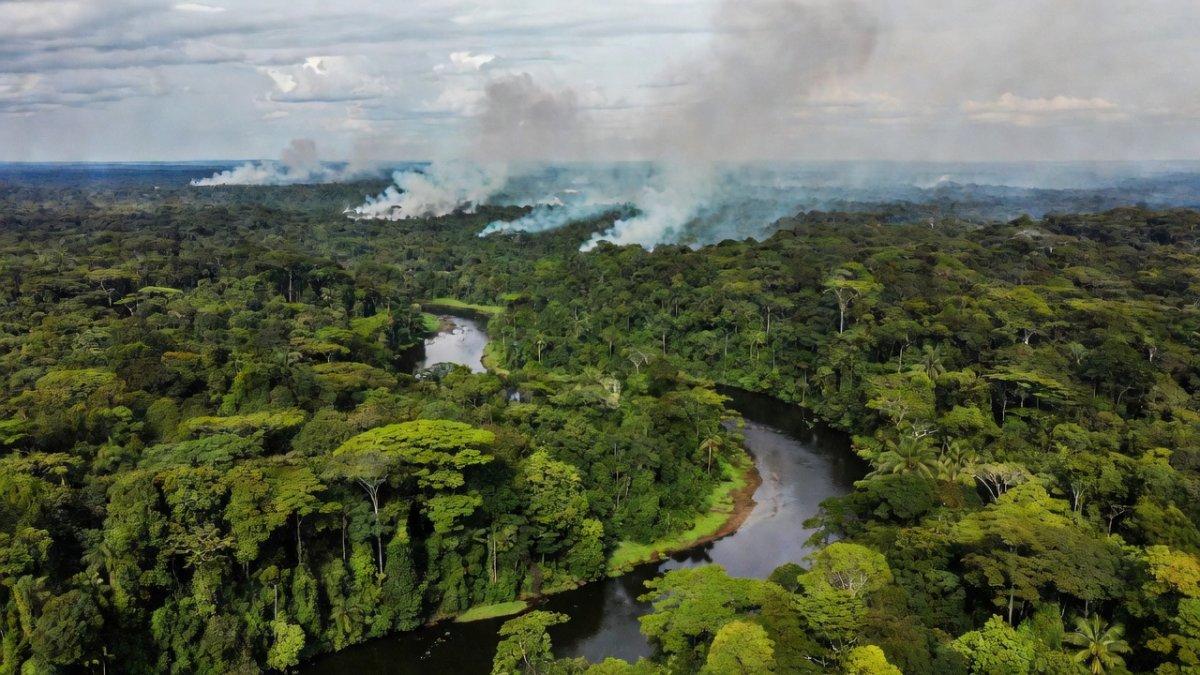
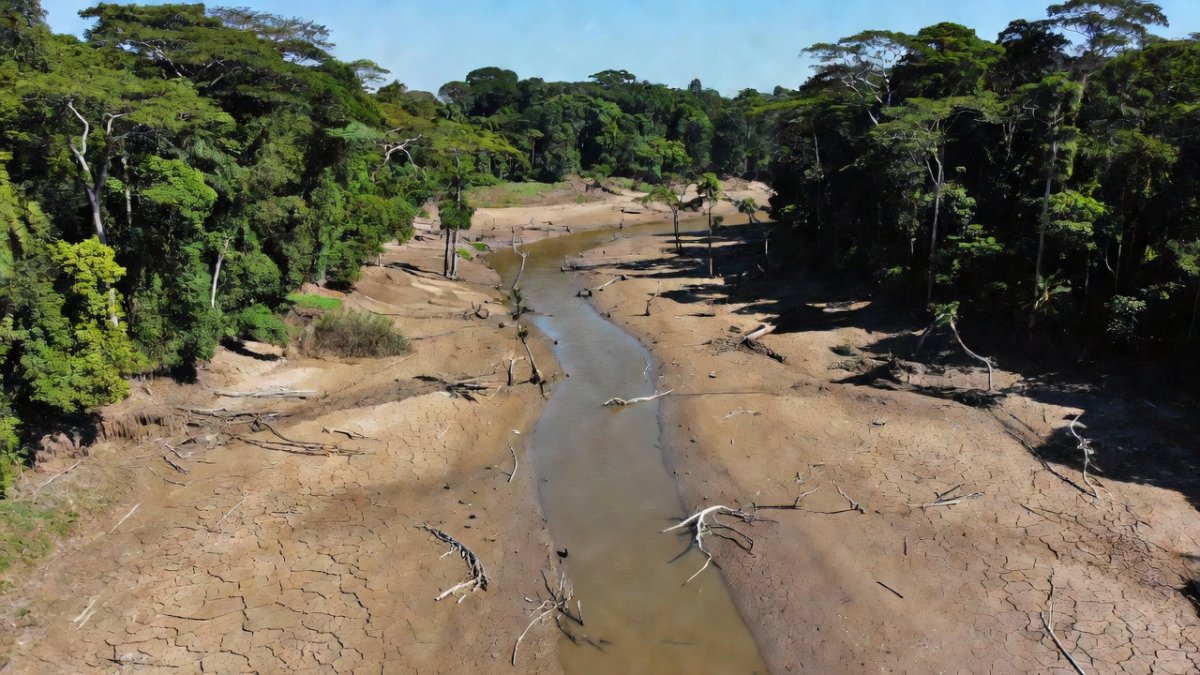
Rio Solimões at Tabatinga fell from 7.20 meters on July 1 to 7.04 meters just two days later, signaling an unusually rapid onset of the vazante low-water period. Transport operators already fear navigation disruptions worse than the record 2024 drought. Early smoke plumes visible from Manaus indicate fires have begun weeks ahead of historical norms. INMET forecasts confirm El Niño conditions persisting until early 2027, with this event ranked among the strongest in a century. Reduced river levels concentrate fish stocks and heighten human-wildlife conflict while simultaneously drying forest understories. The combination of lower humidity and higher temperatures accelerates leaf fall, creating abundant fine fuels. Communities along the Solimões and Negro rivers report wells running dry earlier than expected, forcing reliance on distant sources. These hydrological shifts directly undermine the forest’s capacity to maintain its own microclimate, setting the stage for more widespread burning.
Intensifying Fire Risks Amid El Niño Conditions
With El Niño projected to linger, fire risk maps produced by INPE show expanded high-danger zones across Pará, Mato Grosso, and Amazonas. The drought’s early arrival means leaf litter and grasses cure faster, extending the window when escaped agricultural burns can become uncontrolled wildfires. Historical comparisons reveal that strong El Niño years correlate with burned-area increases of 40 to 60 percent in the southern Amazon arc. Current atmospheric patterns also suppress convective rainfall that normally interrupts fire spread. Satellite detections already register hotspots in protected areas previously spared during wetter seasons. The synergy between drought stress and human ignition sources multiplies the probability of large-scale events capable of releasing decades of stored carbon in weeks. Regional meteorological services warn that without aggressive prevention, 2026 could rival or exceed the destructive fire seasons of 2010 and 2015.
Brazil’s Enhanced Fire Prevention and Enforcement Strategies
The federal government has deployed 4,385 brigadistas, a 26 percent increase over prior years, supported by seven additional helicopters representing a 133 percent boost in aerial response capacity. The Amazon Fund has expanded its geographic scope to include Cerrado and Pantanal transition zones where fire leakage is rising. Assessments now occur every 45 days, and the Sala de Situação has been reactivated for real-time coordination. Operation Apoena spans Pará, Mato Grosso, Amazonas, Rondônia, Acre, Maranhão, and Roraima, combining Ibama and ICMBio field teams with state police. Burned area in 2025 already sits 32 percent below the ten-year average. Nevertheless, rural producers criticize demolitions of illegal structures and heavy fines, while agents face ambushes and gunfire in remote enforcement zones. These tensions highlight the social friction inherent in protecting standing forest amid economic pressures.
The expanded Amazon Fund, replenished with pledges from Norway, Germany, and the United Kingdom, now exceeds R$4 billion and has been authorized for the first time to finance fire prevention in the Cerrado and Pantanal biomes, recognizing that fire does not respect administrative boundaries. Ibama's PrevFogo program has trained 12,000 local community members as auxiliary firefighters, creating a distributed response network that can reach remote areas before fires escalate. Satellite-based detection systems from INPE now deliver hotspot alerts within minutes, allowing rapid deployment. Yet the enforcement front remains dangerous: in the first six months of 2026, Ibama reported 14 attacks on field agents, including three ambushes in which agents' vehicles were set ablaze by suspected illegal loggers in southern Pará.
Indigenous Communities Leading Fire Management Efforts
Xerente women have revived controlled-burn practices that reduce fuel loads while preserving biodiversity, demonstrating culturally rooted solutions now supported by Amazon Fund grants. Indigenous territories receive targeted resources for fire brigades and early-warning systems, recognizing that these lands remain disproportionately vulnerable to external ignition. The national goal of protecting 80 percent of the Amazon alongside zero deforestation by 2030 explicitly incorporates Indigenous land management as a cornerstone. Yet many territories still lack adequate demarcation and surveillance, leaving them exposed when drought intensifies. Partnerships between FUNAI, ICMBio, and tribal authorities have produced joint protocols that respect traditional knowledge while integrating satellite monitoring. Scaling these models across the basin offers one of the most promising pathways to maintain forest resilience under drier future climates.
The Xerente model has drawn international attention: their women-led fire brigades combine traditional ecological knowledge with satellite mapping provided by Brazil's National Fire Prevention Program. Controlled burns conducted during the cooler, humid months reduce the fuel load that would otherwise feed catastrophic wildfires during the dry season. Similar programs are being adapted by the Kayapó in Pará and the Ashaninka in Acre, each tailoring the approach to their specific ecosystems. These community-led strategies are cost-effective — a fraction of the expense of aerial firefighting — and generate local employment while preserving biodiversity. Indigenous territories, which cover roughly 13 percent of Brazil's land area, now serve as critical firebreaks that slow the spread of blazes originating from adjacent agricultural and ranching areas.
The Dangerous Feedback Loop Threatening the Amazon’s Future
Deforestation severs the “flying rivers” that recycle moisture across South America, reducing regional rainfall and lengthening dry seasons. Drier forests become more flammable, releasing stored carbon that further warms the atmosphere and intensifies drought. This self-reinforcing cycle risks pushing large portions of the Amazon past a tipping point toward savanna-like vegetation. INPE models indicate that once cumulative deforestation exceeds roughly 20–25 percent of the original forest extent, the probability of irreversible transition rises sharply. Current PRODES figures show we remain below that threshold, but the margin narrows each year El Niño persists. Preserving the remaining forest is therefore not only a biodiversity imperative but a climate-stability necessity for the entire continent.
Human Impacts and the Path Toward 2030 Resilience
Local communities already experience respiratory illness from early smoke, disrupted school calendars due to river transport failures, and lost income from diminished fisheries. These human costs underscore why enforcement must pair with economic alternatives that reward standing forest. The combination of expanded brigades, Indigenous leadership, and sustained international financing through the Amazon Fund provides a viable framework, yet success hinges on maintaining political commitment through the prolonged El Niño. Brazil’s recent deforestation reductions prove that rapid progress is possible; the coming drought will test whether those gains can be defended against a hotter, drier Amazon.
 By Elena Vasquez, Staff Writer.
This article was produced with AI-assisted research and editorial support. Reporting is based on sources cited in the article.
What's Your Reaction?
 Like
0
Like
0
 Dislike
0
Dislike
0
 Love
0
Love
0
 Funny
0
Funny
0
 Wow
0
Wow
0
 Sad
0
Sad
0
 Angry
0
Angry
0

Latin America Correspondent at Global1.News. Based in Mexico City, covering politics, economics, energy, and culture across the region. Brings an on-the-ground perspective to stories spanning from the Rio Grande to Patagonia.














Comments (0)