
Bolivia Signs $20m Deal with US to Fight Drug Trafficking in the Andean-Amazon Corridor
The recent cooperation agreement between Bolivia and the United States marks a notable shift in regional security cooperation, with up to 20 million dollars allocated for training and equipment to combat drug trafficking. Signed in La Paz, the deal comes under President Rodrigo Paz and follows Bolivia's entry into the Shield of the Americas initiative. This development arrives

The recent cooperation agreement between Bolivia and the United States marks a notable shift in regional security cooperation, with up to 20 million dollars allocated for training and equipment to combat drug trafficking. Signed in La Paz, the deal comes under President Rodrigo Paz and follows Bolivia's entry into the Shield of the Americas initiative. This development arrives amid ongoing protests and road blockades that have drawn statements of support from alliance members concerned about threats to constitutional order.
Bolivia's Andean-Amazon transition zone, where coca cultivation intersects with forest conservation. (Global 1 News)
Thawing Ties After Two Decades of Strain
Bolivia's foreign ministry confirmed the pact less than two weeks after Ernesto Justiniano, previously the national drug czar, was appointed defense minister. The agreement revives direct collaboration 18 years after former President Evo Morales expelled the US Drug Enforcement Administration. Under the new framework, US support will target public security institutions, criminal investigations, and organized crime networks. The US embassy in La Paz stated that training, equipment, and additional assistance will be provided to strengthen these efforts.
Relations warmed further when Paz attended the inaugural Shield of the Americas summit in Florida alongside twelve other regional leaders. Hosted by US President Donald Trump, the gathering focused on narco-terrorism as a shared threat. The alliance has since issued joint declarations backing the Bolivian government during recent unrest, highlighting concerns over destabilization attempts.
Coca Expansion and Forest Loss in Bolivia's Heartland
Bolivia ranks as the world's third-largest coca producer, with cultivation concentrated in the Yungas and Chapare regions. These areas sit at the edge of the Andean-Amazon transition zone, where fields often replace native vegetation. Expansion of coca plots has been linked to soil degradation and reduced biodiversity in watersheds that feed into larger Amazonian river systems. Local communities in these zones rely on the forests for traditional livelihoods, yet pressure from cultivation continues to fragment habitats.
Anti-narcotics operations under the new deal could influence land-use patterns if they target production sites directly. Past eradication campaigns in the Chapare have sometimes displaced growers into more remote forest areas, accelerating clearance. Bolivian authorities have historically balanced such measures with development programs, though outcomes vary by municipality.
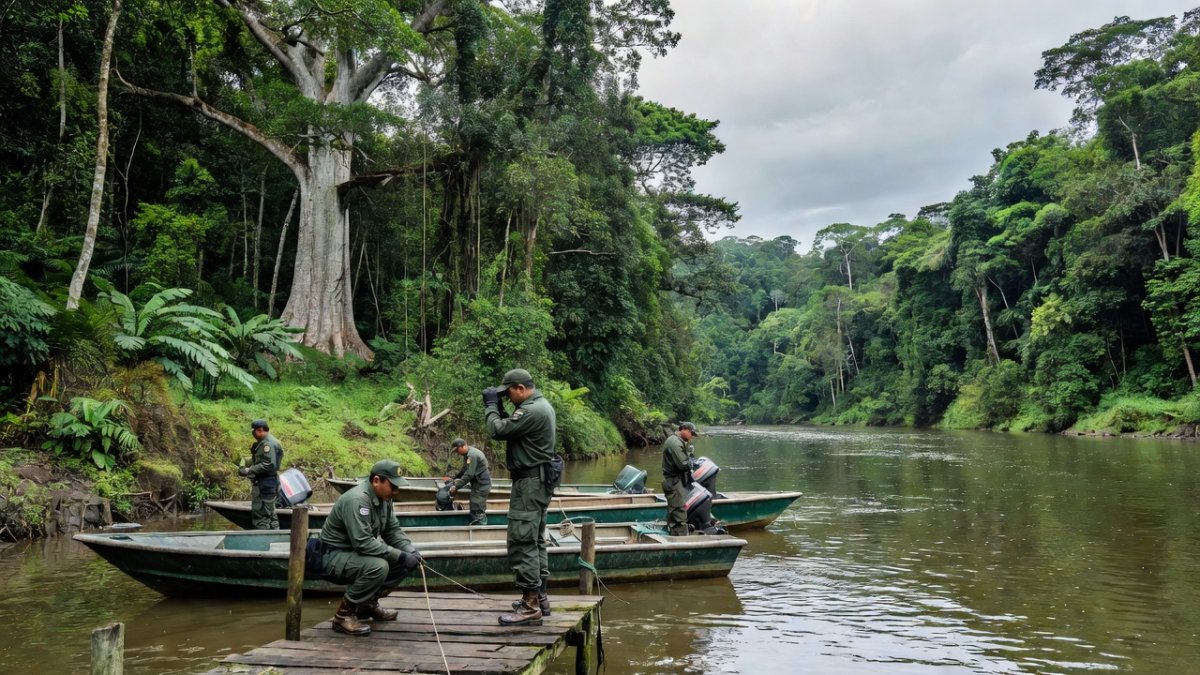
Anti-narcotics operations in Bolivia's coca-growing regions intersect with broader environmental and security challenges. (Global 1 News)
Regional Ripple Effects Across the Andean-Amazon Corridor
The drug trade's environmental footprint extends beyond Bolivia into neighboring countries. In Peru's Vraem region and Colombia's Putumayo department, similar cultivation patterns have driven deforestation rates tracked by national monitoring agencies. These activities contribute to carbon emissions and disrupt migration routes for species that range across borders into Brazil's Acre and Rondônia states.
Brazil's IBAMA has documented how trafficking routes overlap with protected areas in the western Amazon, complicating enforcement by the agency. The Shield of the Americas framework, now including Bolivia, may coordinate intelligence that indirectly affects forest governance if it addresses smuggling corridors. However, the primary mandate remains security rather than conservation, leaving questions about integrated environmental safeguards.
US-led maritime interdictions add another layer. Since early September, strikes on vessels in the Caribbean and Pacific have resulted in more than 200 deaths, according to Southcom reports. The most recent incident this week involved one fatality and two survivors on a boat confirmed by intelligence as engaged in trafficking, though public evidence remains limited. Such actions aim to disrupt flows toward US markets but raise concerns among legal experts about compliance with international maritime norms.
US Policy Influence and Local Realities in Latin America
US intervention in Latin American drug policy has long intersected with environmental management. Funding channeled through initiatives like the current agreement can shape enforcement priorities of agencies such as Bolivia's FELCN, yet it rarely includes dedicated resources for reforestation or sustainable agriculture alternatives. In contrast, Brazil's Ministry of Environment has pursued separate programs linking anti-deforestation targets with rural development, illustrating differing national approaches within the same biome.
President Paz's centrist government faces domestic protests partly fueled by economic pressures in coca-growing areas. The alliance's public backing emphasizes democratic stability while advancing narco-terrorism objectives. This dual focus may influence how Bolivian forces allocate the new resources between urban centers like La Paz and rural frontiers where forest conversion occurs.
Balancing Security Goals With Conservation Needs
Effective implementation of the 20-million-dollar package will depend on coordination between Bolivian defense structures and US Southern Command. Training components could incorporate land-use monitoring if expanded beyond core interdiction tactics. Without such integration, gains against trafficking risk coming at the expense of additional forest loss in sensitive Andean foothills.
Communities in the Chapare have voiced mixed views on past cooperation eras, citing both reduced violence in some periods and economic disruptions in others. Current protests underscore the social tensions that accompany policy shifts. Regional leaders within the Shield of the Americas have expressed solidarity with Paz, yet sustained progress will require addressing root drivers of cultivation alongside enforcement.
Broader climate implications arise as deforestation from any source undermines carbon sequestration in the Amazon basin. Bolivia's position as a coca producer places it at the center of debates over how anti-narcotics strategies align with forest protection commitments made by Andean nations. The new agreement offers an opportunity to test whether security assistance can support rather than sideline environmental objectives in the coming months.
By Elena Vasquez, Staff WriterThis article was produced with AI-assisted research and editorial support. Reporting is based on sources cited in the article.
What's Your Reaction?
 Like
0
Like
0
 Dislike
0
Dislike
0
 Love
0
Love
0
 Funny
0
Funny
0
 Wow
0
Wow
0
 Sad
0
Sad
0
 Angry
0
Angry
0

Latin America Correspondent at Global1.News. Based in Mexico City, covering politics, economics, energy, and culture across the region. Brings an on-the-ground perspective to stories spanning from the Rio Grande to Patagonia.














Comments (0)