
Canada Wildfires Crisis: 796 Active Fires, 670 Out of Control
Canada is experiencing a severe wildfire crisis with 796 active wildfires, 670 out of control, and 3,137 fires burning 1.4M hectares this season. Fatalities include a firefighter in Nova Scotia and four killed in a NWT plane crash. BC evacuations continue as cross-border smoke threatens US air quality from Minnesota to Washington. The crisis reveals strained firefighting resources and raises questions about preparedness for climate-driven fire seasons.
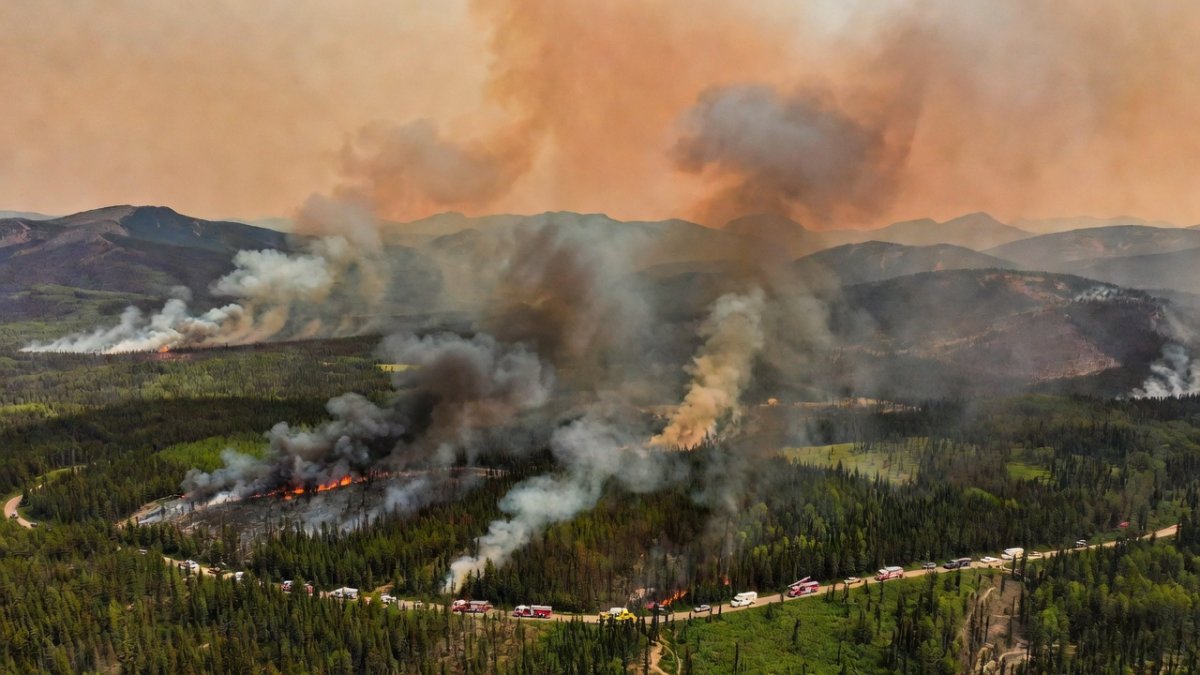
The Wildfire Inferno Gripping Canada
Canada is burning at an alarming rate, with 796 active wildfires ripping across the country as of the latest counts. Of those, 670 are listed as out of control according to Thompson Rivers University tracking. This is not a slow burn or a manageable season. It is a national emergency that has already claimed lives and forced repeated evacuations while sending smoke plumes visible from space.
The Numbers Tell a Brutal Story
Government of Canada data released by Minister of Emergency Management Eleanor Olszewski shows 3,137 fires so far this season, scorching 1.4 million hectares. That is more fires than last year at the same point, even if total area burned trails the previous season's 4.6 million hectares. CIFFC confirms the national picture remains volatile, with hourly updates showing no quick relief. Boston Bar, BC alone has an 1,800-hectare blaze under a fourth evacuation order after being discovered July 2 and staying out of control.
This pace reflects an earlier ignition window driven by record spring dryness, pushing provincial agencies to draw down mutual-aid inventories far sooner than the typical late-July surge. The disparity between this year and last underscores how climate-amplified fuel aridity is compressing what used to be a gradual ramp-up into an immediate national emergency. With 796 active fires — 670 classified as out of control — resource-sharing through the Canadian Interagency Forest Fire Centre is approaching saturation. Provinces have activated every pre-arranged crew and aircraft exchange, forcing some jurisdictions to retain assets for community protection rather than releasing them to neighboring hotspots.
When CIFFC's daily resource-allocation calls exceed available heavy tankers and Type-1 crews, the system shifts to ad-hoc international requests, revealing the fragility of a network designed for episodic rather than simultaneous multi-province events. Sustained high-velocity winds and single-digit relative humidity are likely to keep the out-of-control count elevated through July, further taxing both budgets and interagency goodwill.
Lives Lost in the Fight
The human cost is no longer abstract. A firefighter died battling a wildfire in Annapolis County, Nova Scotia. In the Northwest Territories, a plane crash during firefighting operations near Fort Simpson killed a pilot and three firefighters. These are not statistics. They are direct results of a season that began with 108-plus active fires in mid-May and has shown no sign of easing in Alberta, British Columbia, and Saskatchewan.
Why This Reaches American Soil
Smoke does not respect borders. GOES-West imagery tracked plumes from the Brunswick Creek Fire traveling directly toward Kamloops, BC, a pattern that routinely pushes haze into the northern United States. With temperatures forecast above normal across nearly every Canadian region except Saskatchewan and southern Alberta, and precipitation below normal in Manitoba and northwestern Ontario, the conditions driving these fires will continue to generate cross-border air quality problems. US communities downwind face the same respiratory risks and potential economic drag on tourism and outdoor industries.
Under the Northwest Wildland Fire Agreement, the United States routinely deploys firefighting crews, helicopters, and aerial tankers to assist Canadian provinces when the scale of the crisis exceeds domestic capacity. These cross-border mobilizations, coordinated through the Northwest Coordination Center in Portland, allow Canadian agencies to redirect domestic crews toward interface communities while American teams handle remote initial attack — a system that has existed since 1996 but is now being tested like never before.
Smoke plumes from these fires routinely trigger air-quality alerts across Minnesota, Washington, Oregon, Montana, and North Dakota. Major cities like Minneapolis and Seattle have recorded PM2.5 concentrations hazardous to sensitive groups on multiple occasions, driving increased hospital visits for asthma and respiratory complications. Schools cancel outdoor activities. Agricultural economists warn that persistent smoke reduces photosynthetically active radiation over the northern Plains, trimming projected corn and wheat yields. Airlines cancel and delay flights when visibility drops below safe thresholds. These cascading effects demonstrate how Canadian fire activity now functions as a continental economic and public-health variable.
Official Response Falls Short of the Scale
Minister Eleanor Olszewski delivered the Government of Canada update on July 9, highlighting partnerships with Metis Nation BC, Alberta, Saskatchewan, and Ontario for preparedness. Those efforts are real but reactive. The season's early high-risk start and sustained intensity in British Columbia, described as facing the "highest and most sustained" wildfire threat, expose gaps in prevention that leave both Canadian provinces and neighboring US states cleaning up the consequences.
Despite Environment and Climate Change Canada's seasonal outlook warning of above-normal fire potential across the Prairie provinces and British Columbia, federal prepositioning of additional airtankers and crew billets was reportedly not authorized at full scale until the threat became undeniable. Critics argue the lag between forecast issuance and resource surge left initial-attack capacity below what was needed during the first explosive growth period.
Indigenous communities remain disproportionately affected. The partnerships Minister Olszewski cited with Metis Nation BC, Alberta, Saskatchewan, and Ontario highlight efforts to integrate Indigenous knowledge into wildfire management — including risk mapping, emergency planning, and evacuation coordination. But remote communities lacking all-weather roads and dedicated fire crews face evacuation timelines measured in hours rather than days, amplifying long-standing inequities in emergency-service delivery. Climate scientists note that the current season aligns with projections of a lengthening fire-weather window driven by earlier snowmelt and higher vapor-pressure deficits, meaning the gap between seasonal forecasts and operational readiness is expected to widen each year without accelerated investment.
Evacuations and Ongoing Threats
British Columbia continues issuing evacuation orders, with the Boston Bar fire serving as the latest example of rapid growth under extreme conditions. The fire expanded to 18 square kilometers after being discovered July 2 and triggered a fourth evacuation order. Thompson Rivers University noted the national total near 800 active fires, underscoring that resources are stretched thin. Without decisive shifts in fuel management and early suppression, these orders will multiply and the threat to life and property will escalate.
What This Means
This is not merely a Canadian problem. The combination of 796 active fires, 670 out of control, and 1.4 million hectares already burned signals a climate-driven pattern that exports smoke, strains shared firefighting resources, and raises long-term economic and health costs for Americans. Last year's higher area burned at fewer fires shows the threat is evolving, not receding. Continued above-normal temperatures and patchy precipitation will keep pressure on both sides of the border. The deaths in Nova Scotia and the Northwest Territories prove the stakes are life-and-death, not abstract policy.
If current ignition rates and fuel-moisture trends persist, models suggest the fire season will continue to intensify through late summer, with peak activity potentially shifting northward into the Northwest Territories and Yukon. That trajectory would keep transboundary smoke corridors active into early fall, sustaining elevated air-pollution exposure for tens of millions of Americans from the Pacific Northwest across the northern Plains.
Timber and energy markets are already pricing in disruption. Pipeline curtailments linked to low visibility near active fire zones have the potential to nudge regional fuel prices higher. Insurance costs in fire-prone regions across both countries continue to climb. And the strain on mutual-aid agreements like the Northwest Wildland Fire Agreement could prompt both nations to revisit cost-sharing formulas and pre-positioning thresholds ahead of the next season.
For Americans living in smoke-affected states: monitor air quality through AirNow.gov, keep respirator masks handy, and prepare for potential air quality emergencies. For policymakers on both sides of the border: the window for proactive investment in firefighting capacity, Indigenous-led fuel management, and climate resiliency is closing. The 2026 wildfire season is a warning shot — and the next one will arrive sooner than anyone is ready for.
By Jessica Ali, Staff Writer
This article was produced with AI-assisted research and editorial support. Reporting is based on sources cited in the article.
What's Your Reaction?
 Like
0
Like
0
 Dislike
0
Dislike
0
 Love
0
Love
0
 Funny
0
Funny
0
 Wow
0
Wow
0
 Sad
0
Sad
0
 Angry
0
Angry
0

Editor-in-Chief at Global1.News. Atlanta-based journalist who cuts through the BS and tells it like it is. Lead anchor, host, and the voice you hear when the spin stops and the truth starts.















Comments (0)