
Despite Ottawa Deal, B.C. Still Against Pipeline, Eby Tells CBC News
In the July 2, 2026 episode of CBC News Power & Politics, analysts examined British Columbia Premier David Eby’s measured response to the West Coast Pipeline Project announcement made earlier that day by Prime Minister Mark Carney and Alberta Premier Danielle Smith. The segment highlighted how the federal-provincial dynamics affect everyday Canadians through energy pr
In the July 2, 2026 episode of CBC News Power & Politics, analysts examined British Columbia Premier David Eby’s measured response to the West Coast Pipeline Project announcement made earlier that day by Prime Minister Mark Carney and Alberta Premier Danielle Smith. The segment highlighted how the federal-provincial dynamics affect everyday Canadians through energy prices, environmental safeguards, and job creation across western provinces. Eby’s comments underscored ongoing tensions despite new funding agreements.
Despite Ottawa deal, B.C. still against pipeline, Eby tells CBC News
Vancouver, British Columbia — On July 2, 2026, Prime Minister Mark Carney and Alberta Premier Danielle Smith stood at the Trans Am Piping Products facility in Calgary to submit the West Coast Pipeline Project to the federal Major Projects Office. The proposed line would carry more than one million barrels per day from Bruderheim, Alberta, to Delta, British Columbia, largely following the existing Trans Mountain corridor. Construction is slated to begin in September 2027 with completion targeted for 2034 at an estimated cost between $35.2 billion and $43.7 billion.
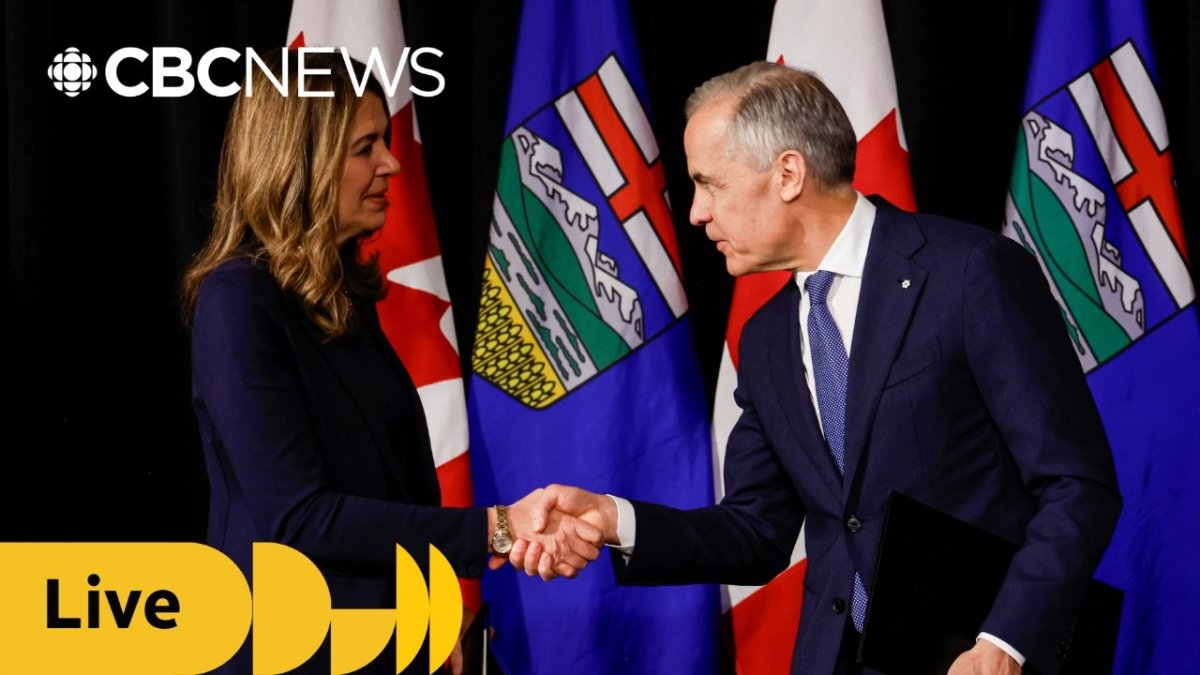
Pipeline Announcement Details
The West Coast Pipeline Project involves an equal partnership between the Government of Canada and the Government of Alberta, with an Indigenous equity stake included in the structure. Trans Mountain Corporation and Pembina Pipeline Corporation are named as the primary operators. Prime Minister Carney stated the project would support a national production target of eight million barrels per day while generating more than $200 billion in investment and creating 175,000 jobs. A separate Pathways carbon capture and storage agreement was also advanced during the Calgary event to address emissions concerns.
The southern route was selected after months of study, choosing the existing Trans Mountain corridor over a northern option that would have run to Prince Rupert or Kitimat. Premier Smith said the decision came down to “time to market” and the advantage of using established relationships with Indigenous partners along the existing pipeline corridor. The proposal includes equity ownership opportunities for Indigenous communities, with more details expected in the coming months.
Prosperity Agreement Terms
Later on July 2, 2026, Prime Minister Carney and Premier Eby announced the Canada-British Columbia Cooperative Prosperity Agreement in Vancouver. The deal includes nearly $20 billion in federal support, featuring a $3.9 billion allocation for the North Coast Transmission Line, $10 billion for Roberts Bank Terminal upgrades, and funding for four accelerated liquefied natural gas terminals. An additional $630 million was committed to child care expansion. The agreement explicitly upholds the northern tanker ban under Bill C-48 without any repeal provision.
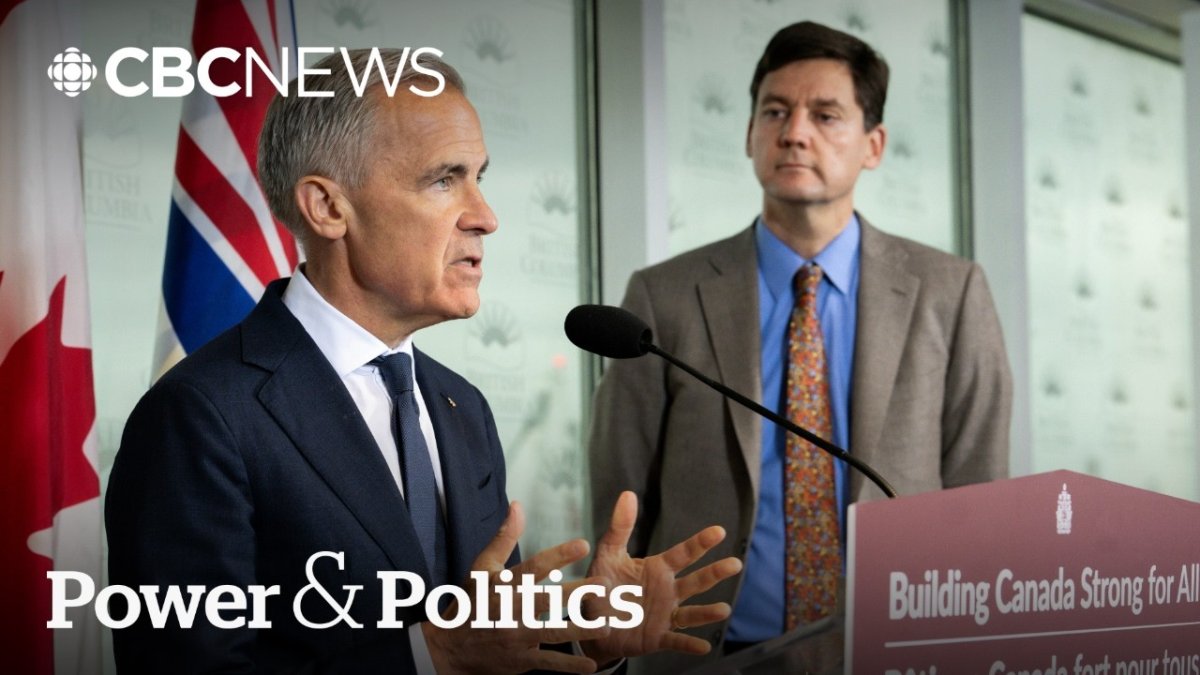
Premier Eby told CBC News that the agreement protects British Columbia’s interests. “That’s why this agreement matters. It ensures that the northern tanker ban stays in place, and it ensures that if the pipeline goes ahead, British Columbians are fairly compensated for the environmental risks we would take,” he said during the Vancouver announcement.
Eby’s Continued Opposition
Despite the funding commitments, Premier Eby made clear on July 2, 2026, that British Columbia remains opposed to the pipeline in principle. He ruled out launching a court challenge, noting the New Democratic Party’s previous unsuccessful legal efforts to halt the Trans Mountain expansion. Eby had earlier described a related memorandum of understanding as an “energy vampire” that could drain provincial resources without adequate safeguards.
The Power & Politics segment on July 2, 2026, focused on Eby’s political balancing act between accepting federal infrastructure dollars and maintaining the province’s environmental position. Analysts noted that British Columbia’s stance reflects long-standing concerns over spill risks along the southern route through sensitive coastal areas near Delta. The compromise position allows B.C. to benefit financially from the prosperity agreement while formally maintaining its environmental opposition.
Reactions from Opposition Leaders
Conservative Leader Pierre Poilievre criticised the southern route on July 2, 2026, arguing instead for a line running from Hardisty, Alberta, to Prince Rupert or Kitimat. He described the northern tanker ban as “ridiculous” and called for its removal to improve export access to Asian markets. Poilievre argued that American tankers carrying Alaskan oil already travel through the same Pacific waters, making the ban inconsistent.
Saskatchewan NDP Leader Carla Beck stated on the same day that her province felt placed “at the back of the line” regarding federal energy investments, calling on Premier Scott Moe to push harder for Saskatchewan-specific infrastructure projects. Coastal First Nations issued statements welcoming the continued tanker ban, while Stand.earth warned that the pipeline could threaten endangered orcas and salmon populations in the Salish Sea. Canadian Climate Institute President Rick Smith noted that grid investments in the prosperity agreement represent a positive step, though Pembina Institute analysts pointed out that nothing in the current framework compels private companies to proceed with construction.
Broader Canadian Implications
The July 2, 2026, developments illustrate ongoing tensions in Canadian federal-provincial relations between cooperative federalism and jurisdictional authority over energy projects. The pipeline proposal aims to diversify exports away from the United States market while advancing energy security for the country. Environmental trade-offs remain central, as the upheld tanker ban contrasts with expanded pipeline capacity along the southern corridor.
Indigenous reconciliation efforts feature through proposed equity ownership stakes, and carbon capture technology is positioned as a condition for any pipeline expansion. In western Canada, the combined projects could influence housing demand, labour markets, and regional economies in both Alberta and British Columbia over the coming decade. The nearly $20 billion in federal commitments to British Columbia also signals a shift toward large-scale federal-provincial partnership agreements as a model for infrastructure development.
Next Steps in the Process
The Major Projects Office must complete its review of the West Coast Pipeline Project proposal by October 1, 2026, to determine whether it qualifies for national interest listing under the Building Canada Act. Indigenous consultations are scheduled to begin immediately following the July 2 announcements. Full environmental assessments and regulatory approvals will follow, with the overall timeline dependent on permitting speed and stakeholder input.
Political implications for federal-provincial relations will continue to unfold as British Columbia weighs the benefits of the prosperity agreement against its pipeline opposition. Observers expect further statements from Premier Eby and other western premiers as consultations progress through the fall of 2026. The CBC News Power & Politics segment concluded that Eby’s position reflects the broader challenge of balancing economic development with environmental protection in Canadian energy policy.
By Alex Thompson, Staff Writer
This article was produced with AI-assisted research and editorial support. Reporting is based on sources cited in the article.
What's Your Reaction?
 Like
0
Like
0
 Dislike
0
Dislike
0
 Love
0
Love
0
 Funny
0
Funny
0
 Wow
0
Wow
0
 Sad
0
Sad
0
 Angry
0
Angry
0
Canada Correspondent at Global1.News. Based in Toronto, covering Canadian politics, energy, trade, and US-Canada relations. Provides the Canadian perspective on North American and global affairs.












Comments (0)