
Atong Ang’s lawyer sued over cash aid to 'missing sabungeros' families
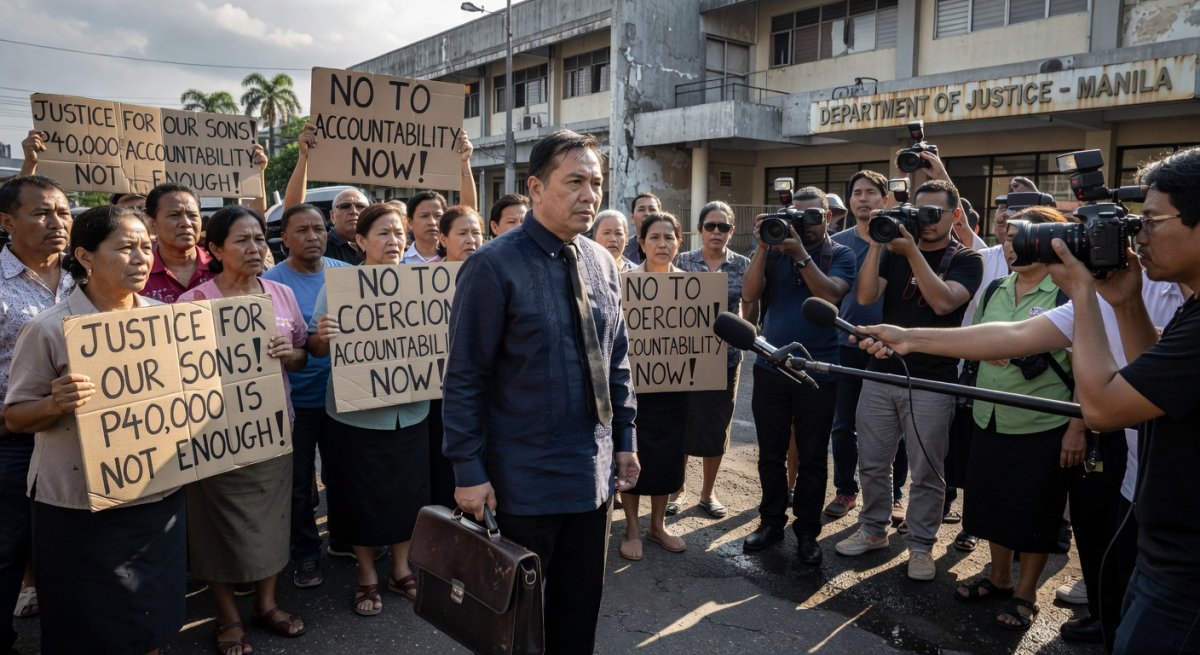
Atong Ang’s Lawyer Faces Lawsuit as Families of Missing Sabungeros Allege P40,000 Payments Were Coercive
Breaking: Kin Seek Accountability in Ongoing Disappearance Probe
MANILA — Relatives of several sabungeros who vanished in 2021 and 2022 have filed a civil lawsuit against the legal counsel of controversial cockfighting magnate Atong Ang, accusing the lawyer of distributing P40,000 cash payments that the families claim were intended to silence their demands for a full investigation. The complaint, lodged before the Quezon City Regional Trial Court on Monday, names Atty. Ramon “Mon” Velasco as respondent and seeks damages for alleged undue influence and possible obstruction of justice.
At least 34 sabungeros remain missing after they were reportedly recruited for high-stakes “tupada” matches in Batangas, Cavite, and Bulacan. Their families have long suspected foul play linked to unpaid gambling debts or retaliation by syndicates. The new lawsuit revives scrutiny on Ang, whose real name is Antonio “Tony” Ang Jr., a key figure in the Philippine Amusement and Gaming Corporation’s e-sabong licensing before its suspension in 2022.
Timeline of Disappearances and Initial Probes
Between May 2021 and March 2022, the Philippine National Police recorded 34 formal complaints involving sabungeros who left their homes for matches and never returned. Autopsy reports on three bodies recovered in Laguna in late 2022 showed signs of blunt-force trauma and strangulation. The Commission on Human Rights has documented patterns consistent with enforced disappearance, citing witness accounts of men being loaded into vans near cockpits.
Ang has consistently denied any involvement. In a 2023 Senate hearing, he testified that he had no knowledge of the missing men and offered to cooperate with authorities. Despite this, the families maintain that intermediaries connected to his circle approached them with cash offers shortly after the Senate inquiry concluded.
The P40,000 Payments and Alleged Coercion
According to the 18-page complaint, Velasco personally handed P40,000 in cash to six families between April and June 2023. The payments were framed as “humanitarian assistance” from an anonymous donor, yet recipients allege they were asked to sign documents stating they would “no longer pursue further claims” against Ang or his associates. One mother, Elena Santos of San Pablo City, claims the lawyer warned her that continued media interviews could jeopardize her children’s safety.
“We were desperate. My husband’s salary as a tricycle driver could not cover the daily search costs,” Santos told Global1 News. “When the money came with conditions, it felt like we were being bought off, not helped.” The complaint cites text messages and signed acknowledgment forms as evidence.
Velasco’s camp rejects the allegations. In a statement released Tuesday, he described the suit as “baseless harassment” and said the payments were voluntary donations from concerned citizens unaffiliated with Ang. He added that no confidentiality clauses were imposed.
Legal Context and Expert Analysis
Under Philippine law, offering money to witnesses in an active criminal investigation can constitute obstruction of justice if intent to suppress testimony is proven. Article 182 of the Revised Penal Code penalizes such acts with imprisonment. Human rights lawyer Erin Tanada, who is not involved in the case, noted that the suit tests the boundary between genuine aid and witness tampering.
“P40,000 is a significant sum for these families, many of whom live below the poverty line,” Tanada said. “The courts must determine whether the timing and conditions attached to the transfers crossed into coercion. This case could set precedent for how financial assistance is handled in high-profile disappearance cases.”
Data from the National Economic and Development Authority shows that the average monthly income for rural households in Laguna and Batangas hovers around P18,000. The P40,000 payment thus represented more than two months’ earnings, amplifying concerns about undue pressure.
Broader Implications for Justice and Democracy
The lawsuit arrives as the Department of Justice prepares to file formal charges against several suspects in the sabungero abductions. Senate Bill 2451, which seeks to criminalize enforced disappearance as a standalone offense, remains pending. Advocates argue that private settlements like the alleged P40,000 transactions undermine public trust in institutional probes.
Justice Secretary Jesus Crispin Remulla has ordered the National Bureau of Investigation to examine the payment records. Sources within the agency confirm that bank transactions linked to Velasco’s law firm are now under review. If irregularities surface, the DOJ could elevate the matter to a criminal complaint.
For democracy advocates, the case underscores the vulnerability of marginalized workers in the informal gambling economy. Sabong, once a cultural pastime, became a multibillion-peso industry under regulated e-sabong platforms until the 2022 ban. The missing men were mostly “kristo” or bet collectors earning daily commissions of P300–P500.
Family Perspectives and Ongoing Search Efforts
Other complainants include the wife of Rogelio “Boy” Mendoza, who disappeared after a match in Lipa City. She received the payment in May 2023 but now regrets signing the acknowledgment. “I want my husband’s case solved, not settled with money,” she said. The families have formed the “Sabungero Families United” group, which meets weekly in Quezon City to coordinate with volunteer search teams.
Psychosocial support remains limited. The Department of Social Welfare and Development has provided only P10,000 in initial burial or search assistance per family, far below the P40,000 figure now in dispute. Mental health experts from the University of the Philippines warn of rising trauma among children of the missing.
The lawsuit also requests the court to issue a temporary restraining order preventing further direct contact between Velasco’s office and the families without judicial oversight. Hearings are scheduled to begin next month.
As the case unfolds, it highlights systemic gaps in protecting witnesses and families entangled in organized crime probes. Public calls for transparent handling of the sabungero disappearances continue to grow, with rallies planned outside the DOJ headquarters this weekend.
This is Bella Reyes for Global1 News, reporting from Manila. 🇵🇭
This article was produced with AI-assisted research and editorial support. Reporting is based on sources cited in the article.
What's Your Reaction?
 Like
0
Like
0
 Dislike
0
Dislike
0
 Love
0
Love
0
 Funny
0
Funny
0
 Wow
0
Wow
0
 Sad
0
Sad
0
 Angry
0
Angry
0

Philippines/Southeast Asia Correspondent at Global1.News. Manila-based journalist covering Philippine politics, environment, maritime security, and social issues. Passionate about marine conservation and the communities protecting the Philippines' natural heritage.












Comments (0)