
Jinggoy Estrada posts bail in flood-control graft case, but still faces non-bailable plunder
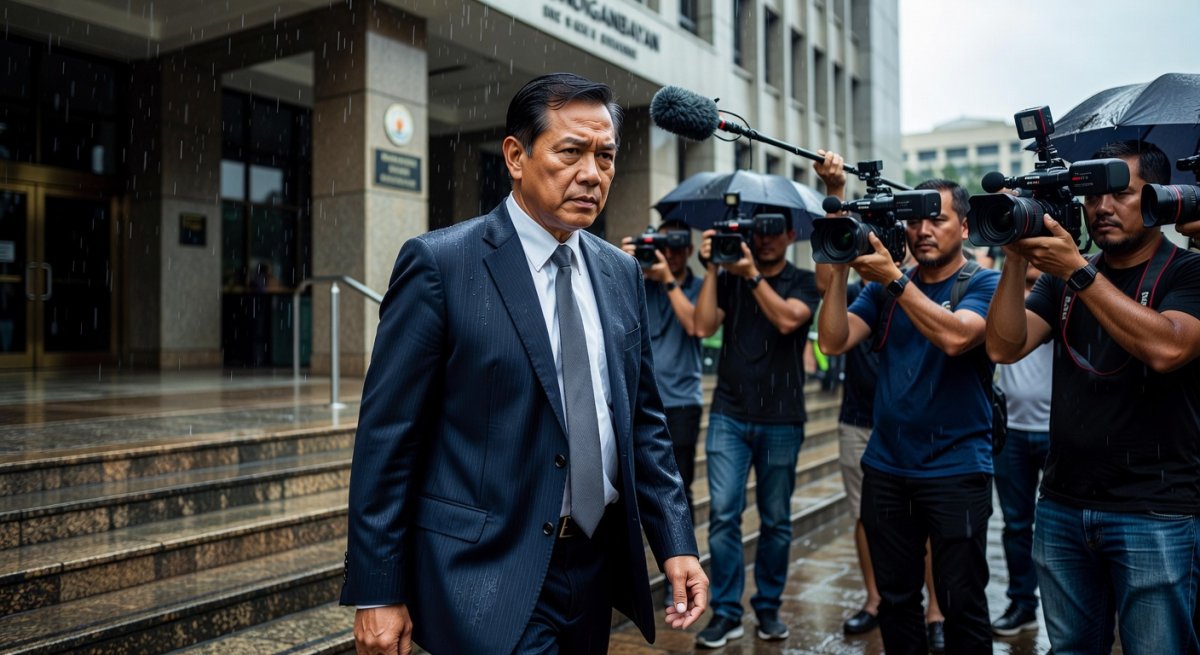
Senator Jinggoy Estrada Posts P90,000 Bail in Sandiganbayan Graft Case, Remains Detained on Non-Bailable Plunder Charges Tied to Flood-Control Scam
MANILA — Senator Jinggoy Ejercito Estrada surrendered to the Sandiganbayan on Friday, May 29, and posted P90,000 bail for multiple graft charges linked to the multibillion-peso flood-control projects scandal. The 57-year-old lawmaker walked out of the anti-graft court a free man on the lesser offenses but continues to face plunder charges that carry the penalty of life imprisonment without bail.
Details of the Bail Hearing
Presiding Justice Amparo Cabotaje-Tang approved the bail motion after the prosecution confirmed that the graft indictments under Republic Act 3019 do not involve amounts exceeding P50 million per count. Estrada’s counsel, lawyer Raymond Fortun, presented the surety bond issued by a court-accredited bonding company. “My client has always respected the processes of the court,” Fortun told reporters outside the Sandiganbayan building in Quezon City. “He is ready to prove his innocence at trial.”
Prosecutors from the Office of the Ombudsman did not object to the bail grant but reiterated that the plunder case, docketed separately, remains non-bailable. Estrada is accused of amassing at least P183 million in kickbacks from 13 flood-control contracts awarded between 2007 and 2009 through the Department of Public Works and Highways.
Background of the Flood-Control Scandal
The flood-control scandal emerged from the same investigation that unraveled the Priority Development Assistance Fund (PDAF) racket masterminded by Janet Lim Napoles. Commission on Audit records showed that 13 projects worth P1.2 billion in Metro Manila, Bulacan, and Rizal were either ghost projects or grossly overpriced. Substandard ripraps and drainage systems failed during Typhoon Ondoy in 2009, displacing thousands of families.
Estrada, then a senator, allegedly endorsed Napoles-linked NGOs to implement the projects. In exchange, prosecutors claim he received commissions funneled through dummy corporations. The Ombudsman filed the cases in 2014; the Sandiganbayan ordered his arrest in 2015. Estrada surrendered that year and posted bail on the graft counts but was detained for several months on the plunder charge before the court allowed temporary liberty under stringent conditions.
Legal Distinction Between Graft and Plunder
Under Philippine law, graft under RA 3019 is bailable because the penalty ranges from six to 15 years. Plunder, defined in RA 7080, carries reclusion perpetua and is non-bailable when the amount exceeds P50 million. The prosecution must prove that Estrada amassed ill-gotten wealth in a “combination or series of overt acts.” Defense lawyers argue the evidence is merely circumstantial and that Estrada merely performed legislative oversight functions.
Constitutional lawyer and former Sandiganbayan justice Romeo Callejo Sr. explained the threshold: “Once the amount crosses P50 million and the accused is shown to have acted with a public officer in accumulating that wealth through repeated acts, the court has no discretion to grant bail.” The Estrada plunder case remains at pre-trial stage, with the defense still presenting documentary evidence.
Political Ramifications for the Estrada Dynasty
The development comes weeks before the 2025 midterm elections, where Estrada’s half-brother, Manila Mayor Joseph “Jinggoy” Estrada Jr., is eyeing a Senate seat. Political analyst Professor Julio Teehankee of De La Salle University noted that the bail grant allows the senator to resume active campaigning. “However, the lingering plunder case remains a sword of Damocles,” Teehankee said. “Voters in 2022 already punished the family when Jinggoy lost his re-election bid; another conviction could permanently sideline the dynasty.”
Estrada’s camp insists the timing of the bail motion was purely procedural and not politically motivated. Senate President Francis Escudero issued a brief statement urging the public to respect the judicial process while emphasizing zero tolerance for corruption.
Expert Perspectives on Accountability
Transparency International Philippines executive director Vincent Lazatin stressed that bail posting does not equate to exoneration. “The Sandiganbayan’s decision merely affirms that the graft charges fall below the plunder threshold. The real test is whether the prosecution can marshal enough evidence to prove the P183 million accumulation,” Lazatin said. He added that the flood-control projects’ failure during successive typhoons demonstrates how corruption directly endangers public safety.
Former Budget Secretary Benjamin Diokno, now a private citizen, called for systemic reforms. “We must digitize public bidding and require real-time geo-tagging of infrastructure projects. The Napoles cases showed how paper trails can be fabricated; technology is the only way to close those loopholes,” Diokno told Global1 News.
Public Reaction and Civil Society Mobilization
Outside the Sandiganbayan, members of the anti-corruption group Tanggol Bayan held a small protest, displaying placards reading “Bail is not freedom from accountability.” Spokesperson Atty. Erin Tañada said the group will monitor trial dates and push for speedy resolution. “Filipinos who lost homes to floods caused by substandard projects deserve justice, not delays,” Tañada stated.
Social media sentiment was mixed. Hashtag #JinggoyBail trended briefly, with some users expressing frustration over perceived elite impunity. Others pointed out that Estrada has yet to be convicted and retains the presumption of innocence.
Broader Context of Philippine Anti-Corruption Efforts
The Estrada case forms part of a larger docket of high-profile corruption prosecutions. Since 2010, the Sandiganbayan has convicted 1,248 public officials in graft and plunder cases, according to its 2024 annual report. Yet conviction rates for senators remain low; only three have been found guilty since the court’s creation in 1979. Legal experts attribute this to lengthy trials and the resources available to well-funded defendants.
The Commission on Audit has flagged more than P2.3 trillion in questionable infrastructure spending from 2016 to 2023. Flood-control allocations alone ballooned from P12 billion in 2010 to P48 billion in 2024, yet the Metropolitan Manila Development Authority reports that 60 percent of drainage systems in Metro Manila remain substandard.
President Ferdinand Marcos Jr.’s administration has promised to fast-track pending cases through the creation of special anti-corruption courts. Whether the Estrada plunder trial will benefit from these reforms remains to be seen.
As Estrada left the courthouse, he waved to supporters but declined to answer questions about his political future. The next scheduled hearing on the plunder case is set for July 15, when the court will rule on several pending motions to suppress evidence.
This is Bella Reyes for Global1 News, reporting from Manila. 🇵🇭
This article was produced with AI-assisted research and editorial support. Reporting is based on sources cited in the article.
What's Your Reaction?
 Like
0
Like
0
 Dislike
0
Dislike
0
 Love
0
Love
0
 Funny
0
Funny
0
 Wow
0
Wow
0
 Sad
0
Sad
0
 Angry
0
Angry
0

Philippines/Southeast Asia Correspondent at Global1.News. Manila-based journalist covering Philippine politics, environment, maritime security, and social issues. Passionate about marine conservation and the communities protecting the Philippines' natural heritage.














Comments (0)