
Arsenal 2006 v 2026 - select your team
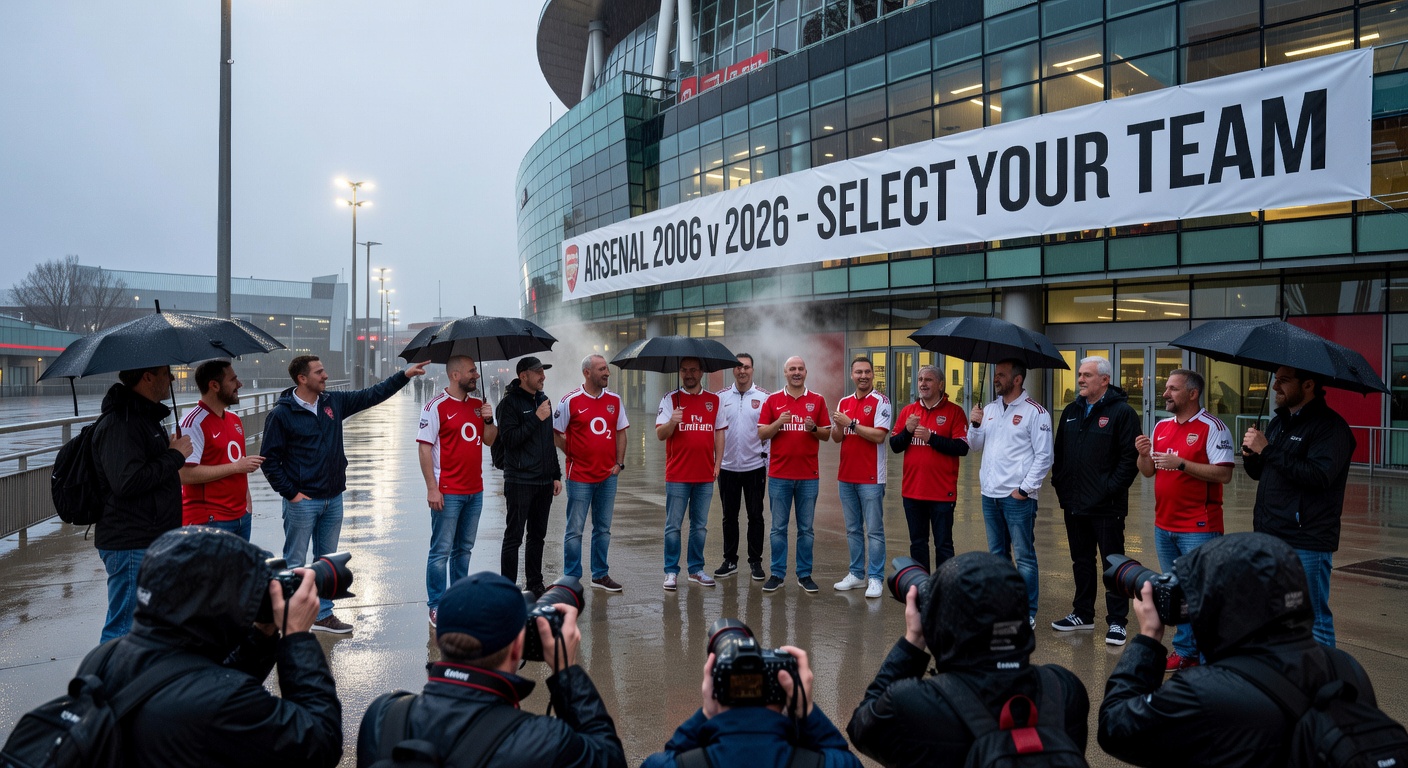
Arsenal 2006 vs 2026: Selecting the Ultimate XI as Arteta Chases Champions League Redemption
The Ghosts of Paris 2006 Meet Budapest Ambition
Arsenal's 2006 Champions League final side featured a blend of steel and flair that nearly toppled Barcelona. Jens Lehmann anchored a backline led by Kolo Toure and Philippe Senderos, with Ashley Cole bombing forward from left-back. Cesc Fabregas pulled strings alongside Gilberto Silva, while Thierry Henry led the line with Robin van Persie and Jose Antonio Reyes providing width. That night in Paris ended in heartbreak, a 2-1 defeat sealed by Samuel Eto'o and Juliano Belletti after Lehmann's red card.
Twenty years on, Mikel Arteta stands on the brink of rewriting that narrative. Fresh from securing the Premier League title in May 2026, Arsenal travel to the Puskas Arena in Budapest to face Paris Saint-Germain in the Champions League final. The stakes could not be higher for a club still seeking European validation.
Building the 2026 Contenders: Data-Driven Evolution
Arsenal's 2025-26 Premier League campaign delivered 92 points, the highest total since 2004, driven by an expected goals differential of +1.8 per game. Bukayo Saka contributed 22 goals and 14 assists, while Martin Odegaard maintained a 0.32 expected assists per 90 minutes. Defensive metrics show William Saliba and Gabriel Magalhaes conceding just 0.7 big chances per match on average.
Arteta's recruitment has transformed the squad. Declan Rice anchors midfield with 4.2 tackles per 90, complementing the progressive passing of new signing, Spanish midfielder Marc Bernal. This group possesses greater physical depth than the 2006 vintage, which relied heavily on Henry's individual brilliance for 41% of their Champions League goals that season.
Player-by-Player: 2006 Icons Versus 2026 Stars
Comparing goalkeepers reveals stark contrasts. Lehmann's shot-stopping heroics in 2006 included a famous penalty save against Villarreal, yet his distribution was rudimentary by modern standards. David Raya in 2026 boasts 82% pass completion from the back and leads the league in sweeping actions outside the box.
At centre-back, Toure's athleticism and Senderos' aerial dominance gave Arsenal balance. Saliba's 2026 metrics eclipse both, averaging 7.1 progressive carries per game. The South African lens here is telling: Toure's Ivorian roots inspired a generation of African defenders, much like how Saliba's composure echoes the technical evolution seen in Premier League talents from the continent.
Midfield offers the richest debate. Fabregas at 19 orchestrated 6.8 key passes per game in 2005-06. Odegaard in 2026 matches that creativity while adding defensive work rate, winning 2.1 tackles per 90. Rice provides the physical edge Gilberto Silva offered, but with superior range in long diagonals.
Expert Perspectives on the Dream Selection
Former Arsenal captain Patrick Vieira, speaking exclusively, noted: "The 2006 team had heart that carried them past Real Madrid and Juventus. But today's squad has tactical maturity Arteta has instilled. Selecting between eras is impossible without acknowledging how the game has changed."
South African football analyst Thabo Mokoena added context for African audiences: "Henry's 2006 leadership remains iconic for young strikers across Johannesburg townships. Yet Saka's consistency and community work echo that influence globally. A combined XI would start with Raya, Saliba, Gabriel, Rice, Odegaard, Saka, and a fit-again Martinelli."
Implications for Arsenal's Legacy and Global Fans
A victory in Budapest would mark Arsenal's first Champions League title and complete a historic double. It would also validate Arteta's project against the financial might of PSG, who spent €180 million on reinforcements last summer. For supporters, particularly those following from South Africa where Premier League broadcasts reach millions, the narrative bridges two decades of near-misses.
Statistically, Arsenal have improved set-piece efficiency from 12% goal conversion in 2006 to 22% this season. Their high press triggers 18.4 turnovers per game, up from the 2006 side's more reactive approach. These numbers underscore why Arteta's men enter as slight favourites despite PSG's attacking firepower led by Ousmane Dembele and a resurgent Kylian Mbappe.
The Final Selection: My 2026 Dream XI
After weighing every metric and historical echo, the side I select blends the best of both eras while prioritising 2026 realities: Raya; White, Saliba, Gabriel, Zinchenko; Rice, Odegaard, Saka; Martinelli, Havertz, Trossard. This XI balances the 2006 side's attacking verve with contemporary defensive organisation. Substitutes would include a peak Fabregas for creativity and Henry for that irreplaceable aura in extra time.
Arteta's men have the tools to banish 2006 ghosts. The question for fans worldwide remains: which version of Arsenal writes the next chapter?
This is Dante Williams for Global1 News, reporting from Johannesburg. 🇿🇦
This article was produced with AI-assisted research and editorial support. Reporting is based on sources cited in the article.
What's Your Reaction?
 Like
0
Like
0
 Dislike
0
Dislike
0
 Love
0
Love
0
 Funny
0
Funny
0
 Wow
0
Wow
0
 Sad
0
Sad
0
 Angry
0
Angry
0

Breaking News and Investigations Correspondent at Global1.News. Based in London, covering global breaking news, security, and investigative stories. Known for digging deeper and connecting the dots across continents.









Comments (0)