
Power Grabs and Engine Supermajorities: Inside F1’s Latest Political Earthquakes
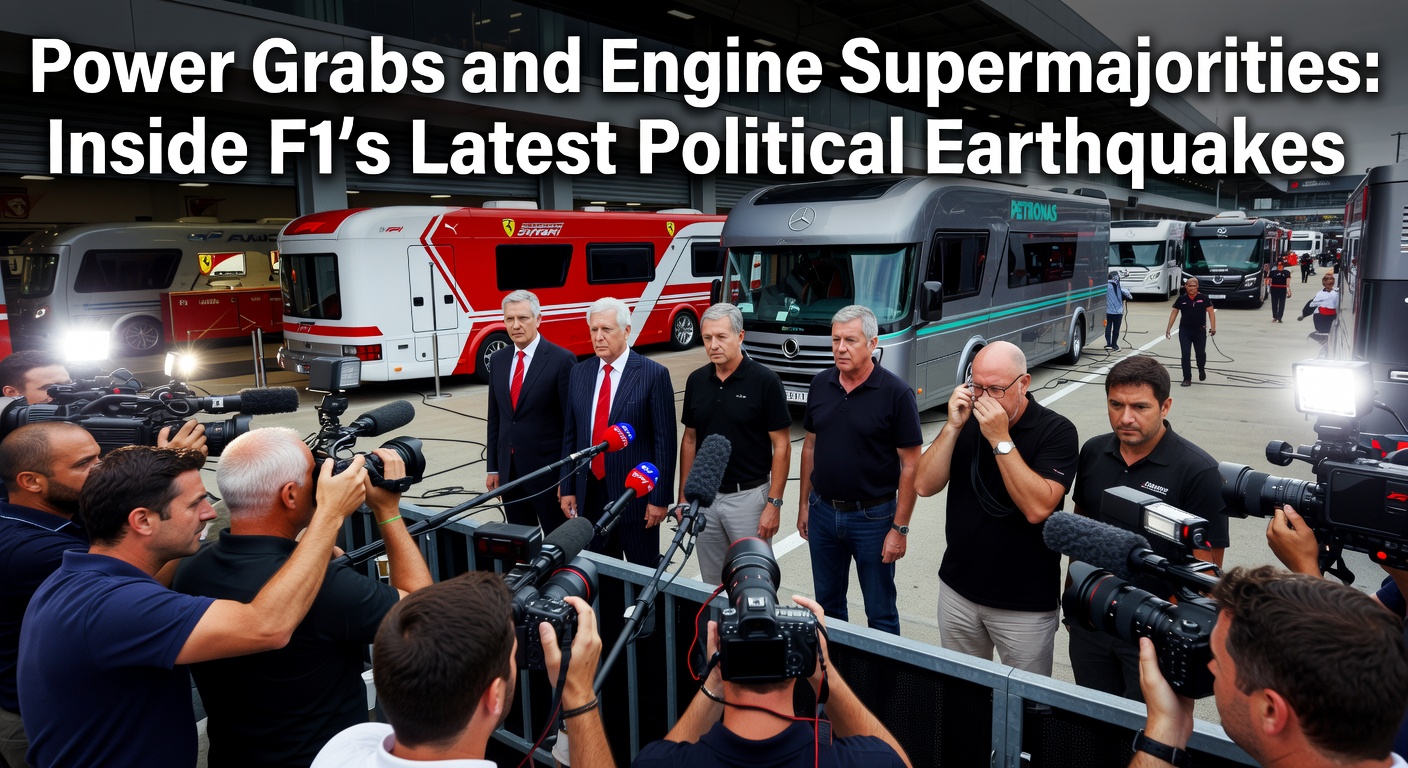
Power Grabs and Engine Supermajorities: Inside F1’s Latest Political Earthquakes
The Formula 1 paddock has rarely seen two simultaneous power struggles of this magnitude. After months of stalled negotiations, the grid finally secured the supermajority needed to lock in the 2027 engine regulations last week in Geneva. At the same time, FIA president Mohammed Ben Sulayem has begun an unprecedented internal restructuring that insiders describe as a deliberate consolidation of authority over technical, sporting, and commercial decisions. These twin developments are reshaping the sport’s governance at a moment when costs, sustainability targets, and manufacturer commitments hang in the balance.
Breaking the Deadlock: How the 2027 Regulations Cleared the Vote
Reaching a supermajority in F1 requires the support of at least eight of the ten teams plus the commercial rights holder. The 2027 package, which mandates a further increase in electrical power to 50 percent of total output alongside a shift to fully sustainable drop-in fuels, had been blocked by two power-unit manufacturers wary of development costs exceeding €300 million per team. Sources close to the negotiations confirm that a last-minute compromise on shared intellectual property for battery systems and MGU-K units swayed the final holdouts. Mercedes and Ferrari, who had initially voiced reservations, joined the majority after guarantees that smaller teams would receive capped access to simulation data.
The approved regulations also introduce a strict 1,000 bhp total power ceiling and ban the use of exhaust-blown diffusers in any form. These changes aim to keep lap times competitive while aligning with the FIA’s net-zero roadmap by 2030. Data from the 2026 prototype testing at Paul Ricard showed a 15 percent reduction in CO2 emissions per lap compared with current units, providing the environmental justification that ultimately tipped the political scales.
Background: Why Engine Rules Keep Causing Gridlock
Engine regulations have been the most contentious battleground in modern F1. The 2014 hybrid era required a similar supermajority and ultimately produced the turbo-hybrid V6s that dominate today. That transition cost independent teams such as Sauber and Williams dearly, with some spending over €150 million in catch-up development. Learning from that experience, the 2027 working group introduced cost-control mechanisms earlier, including a power-unit budget cap of €95 million per season starting in 2026. Yet the political friction remained intense because manufacturers viewed these rules as existential for their road-car electrification strategies.
South African fans following the series from Johannesburg have watched these technical shifts with growing interest. The country’s own motorsport heritage, from the 1992 Kyalami Grand Prix to the current generation of emerging talent in regional Formula 4, makes the sustainability angle particularly resonant. Local engineers at the University of the Witwatersrand have already begun modelling the new fuel specifications for possible use in domestic touring-car series.
The Quiet Power Consolidation at the FIA
While the engine vote dominated headlines, a parallel move inside the FIA has raised alarms among team principals. Ben Sulayem has proposed amendments to the FIA statutes that would transfer several technical working-group chair positions from elected representatives to presidential appointees. The changes, scheduled for ratification at the December World Motor Sport Council meeting, would give the FIA president direct oversight of the Formula 1 Technical Working Group and the Advisory Committee on Sustainability. Critics argue this centralises power in a way unseen since the Jean-Marie Balestre era of the late 1980s.
One senior team executive, speaking on condition of anonymity, described the proposals as “a structural power grab that could undermine the collaborative governance model that has kept F1 stable since the Concorde Agreement renewal in 2021.” The FIA counters that the reforms will streamline decision-making and reduce the veto power of any single manufacturer, pointing to past delays on safety-related changes as justification.
Expert Perspectives and Team Reactions
Toto Wolff of Mercedes called the engine agreement “a pragmatic compromise that protects the DNA of Formula 1 while pushing technology forward.” He emphasised that the new battery regulations would accelerate road-relevant developments in energy density. Red Bull team principal Christian Horner struck a more cautious tone, noting that the cost cap must be policed rigorously or risk repeating the 2014 cost explosion. Ferrari’s John Elkann welcomed the sustainability mandate but warned that any further political interference from the FIA could deter new manufacturers from entering in 2028.
Independent analysis from motorsport economist Dr. Priya Sharma estimates that the 2027 rules could add between €40 million and €70 million in annual costs for customer teams unless the shared IP provisions are implemented transparently. Her models suggest that Audi and Honda, both committed to 2026 power units, stand to gain the most from the regulatory stability, while smaller squads may still struggle with the transition.
Implications for the 2026–2030 Cycle
With the engine regulations now settled, attention shifts to the commercial landscape. Liberty Media’s 2026–2030 Concorde Agreement negotiations are expected to incorporate clauses that limit future regulatory changes without broader consensus. This could blunt the impact of Ben Sulayem’s proposed power consolidation. Meanwhile, the introduction of sustainable fuels opens new commercial opportunities for African biofuel producers, with pilot projects already under discussion in Kenya and South Africa.
The political earthquakes also carry sporting consequences. Teams that invested early in 2026 power-unit architecture may enjoy a temporary advantage, but the 2027 reset levels the playing field in key areas such as energy recovery. Drivers will notice subtler differences in throttle response and braking, areas where the increased electrical component will reward precise energy management. For spectators, the promise of closer racing and louder engines remains the headline attraction.
These developments underscore a broader truth about Formula 1: the sport’s future is decided as much in boardrooms as on the track. The successful passage of the 2027 regulations demonstrates that compromise remains possible when commercial and environmental imperatives align. Yet the simultaneous move to centralise authority at the FIA introduces new uncertainties that could resurface during the next regulatory cycle. The grid has cleared one major hurdle, but the race for control of the sport’s governance is far from over.
This is Dante Williams for Global1 News, reporting from Johannesburg. 🇿🇦
This article was produced with AI-assisted research and editorial support. Reporting is based on sources cited in the article.
What's Your Reaction?
 Like
0
Like
0
 Dislike
0
Dislike
0
 Love
0
Love
0
 Funny
0
Funny
0
 Wow
0
Wow
0
 Sad
0
Sad
0
 Angry
0
Angry
0

Breaking News and Investigations Correspondent at Global1.News. Based in London, covering global breaking news, security, and investigative stories. Known for digging deeper and connecting the dots across continents.














Comments (0)