
Displaced Yemeni Women Face Harassment and Blame in Rural Camps
Displacement from Taiz Amid Houthi Advances Afnan al-Soroori, 22, once enjoyed a stable middle-class life in Taiz, Yemen's third-largest city, where she assisted her family as the eldest of five siblings. Electric ovens, washing machines, and other appliances eased household tasks, allowing her to contribute without exhaustion. That security shattered when Houthi rebels advance
Displacement from Taiz Amid Houthi Advances
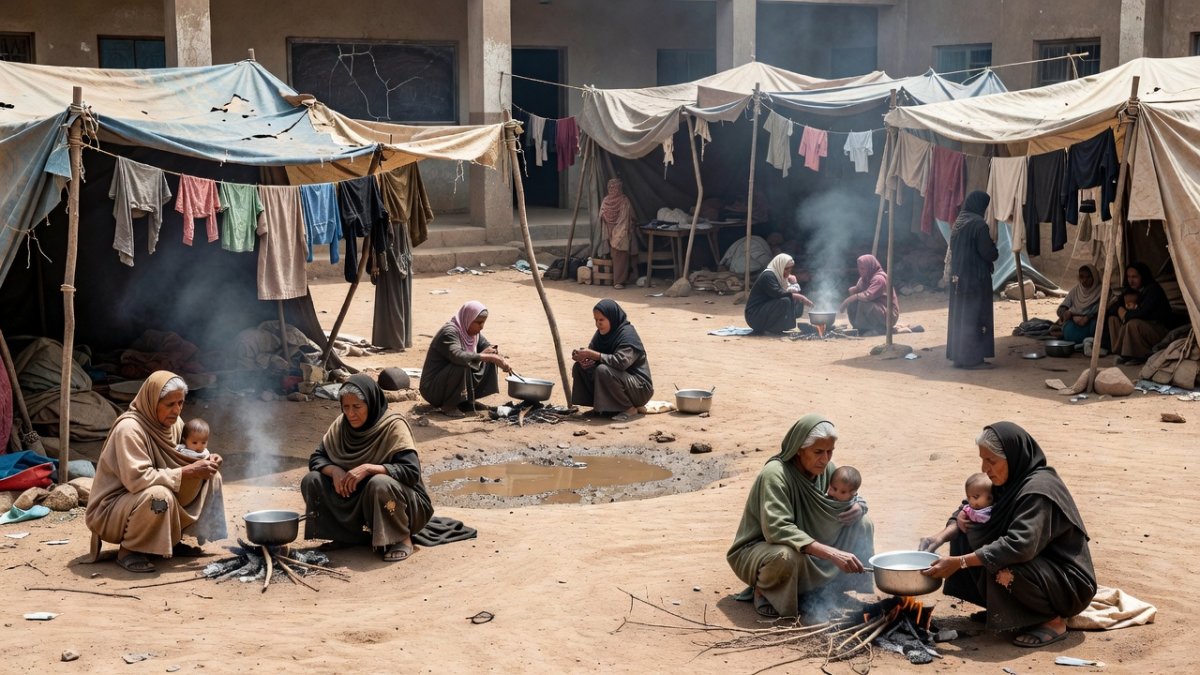
Afnan al-Soroori, 22, once enjoyed a stable middle-class life in Taiz, Yemen's third-largest city, where she assisted her family as the eldest of five siblings. Electric ovens, washing machines, and other appliances eased household tasks, allowing her to contribute without exhaustion. That security shattered when Houthi rebels advanced toward her neighborhood, forcing the family to abandon their home and all possessions for a makeshift camp inside a school in the al-Safia area, 65 kilometres away.
The sudden flight left Soroori's father without employment, plunging the household into uncertainty. Families like hers arrived with nothing, their urban routines replaced by survival in an unfamiliar rural setting. The move was not a choice but a direct response to the encroaching conflict that threatened their safety in Taiz.
Many displaced residents from Taiz share similar stories of abrupt uprooting. The 65-kilometre journey marked more than physical distance; it represented the loss of community networks and economic stability built over years. Without immediate aid or return options, these families remain trapped in temporary shelters that offer little protection from ongoing instability.
Such displacements echo patterns seen across conflict zones in the Middle East, where civilians bear the heaviest costs. For women like Soroori, the transition from city comforts to camp restrictions compounds emotional strain, limiting mobility and exposing them to new vulnerabilities in unfamiliar surroundings.
The Harsh Realities of Camp Life and Endless Labor
Inside the al-Safia school camp, daily chores stretch from dawn until after dusk without modern conveniences. Soroori fashioned a makeshift oven from two stones beside firewood to prepare meals, a far cry from her electric stove at home. Washing clothes by hand in a large courtyard bowl has hardened her hands, turning simple tasks into prolonged physical ordeals.
Adaptation proves difficult for those accustomed to appliances that once lightened burdens. The absence of reliable infrastructure forces women to expend extra energy on basic survival, leaving little room for rest or personal pursuits. Soroori has openly described the challenge of managing domestic work without electric support, highlighting how conflict strips away layers of ease.
These routines affect entire families, with men unable to find work and children witnessing the strain. The camp environment amplifies isolation, as resources remain scarce and external support inconsistent. Women shoulder much of the visible labor, their days defined by repetitive, manual efforts that test endurance.
The grinding nature of camp life reveals deeper human costs of displacement. What was once manageable household help now demands full physical commitment, reshaping identities and limiting opportunities for education or recovery. Families continue to navigate these conditions with resilience, though the toll accumulates steadily.
Cultural Clashes Fueling Harassment of Displaced Women
Soroori cannot leave the camp without encountering groups of young men who shout abuse or make inappropriate sexual advances. Attempts to step outside the gates, especially in the afternoon, result in bad words and obscene gestures that reinforce her confinement. This harassment stems partly from visible differences between city women and rural villagers.
Mariam Abdul-Qader, 23, tried wearing the same dress as local women in the al-Safia area to blend in, yet youths still recognized her by her sandals and walking style. They shouted abuse regardless of her efforts to adapt. Such recognition underscores how cultural markers become targets in tense environments where displaced urban residents stand out.
The conflict arises from differing norms around dress, behavior, and public presence. City women accustomed to relative freedoms face scrutiny in conservative rural settings, where their appearance draws unwanted attention. This dynamic traps women indoors, curtailing access to markets, services, or social connections essential for recovery.
Harassment extends beyond individuals to affect family structures, as fathers worry about daughters' safety. The resulting isolation deepens psychological pressures, turning displacement into a layered experience of loss and restriction. Women bear these burdens while attempting to maintain dignity amid constant vigilance.
Unheeded Appeals to Tribal and Religious Authorities
Soroori's father, along with other men in the camp, appealed to local tribal elders to urge respect toward women from the city. Their requests went unheeded, with many villagers instead criticizing the women's fashionable clothes and loud voices. Appeals to mosques in the village yielded similar results, as religious figures sided against the displaced women.
Sheikh Mohammed Gobah acknowledged that sexual harassment had become a major problem in the area. Yet he attributed it to the immodesty of city women, claiming he had never heard of such issues before their arrival. This response shifted blame rather than addressing the actions of local youths.
The lack of intervention from community leaders leaves families without recourse. Elders and religious figures, positioned to mediate, instead reinforced existing prejudices, deepening divisions between newcomers and hosts. Women like Soroori and Abdul-Qader find their attempts at integration met with further hostility.
These failed appeals highlight gaps in protection for displaced populations. Without accountability from influential figures, harassment persists unchecked, forcing women to limit their movements and accept restricted lives. The situation calls attention to how local power structures can either ease or exacerbate conflict-related tensions.
Gender-Based Violence as a Shadow of Conflict
Incidents in the al-Safia camp reflect wider patterns where displacement heightens risks of gender-based violence. Women separated from familiar support networks encounter new threats in host communities, where cultural misunderstandings fuel aggression. The experiences of Soroori and Abdul-Qader illustrate how conflict amplifies existing vulnerabilities.
Such violence disrupts daily functioning and long-term prospects. Restricted movement prevents access to education, healthcare, or employment, trapping women in cycles of dependence. Families watch as daughters internalize fear, altering their sense of safety and agency in public spaces.
Broader regional conflicts demonstrate similar dynamics, where women and girls face compounded hardships during upheaval. The Yemeni case adds to documented accounts of harassment in camps, underscoring the need for targeted responses that address both immediate safety and cultural frictions.
Human rights perspectives emphasize that these abuses violate fundamental dignities. Displaced women deserve environments free from intimidation, yet current conditions deny them that basic security. The personal testimonies from Taiz families reveal the intimate ways conflict reshapes lives through fear and isolation.
The Enduring Yemen War: Roots Since 2014
Yemen's conflict, ongoing since 2014, has driven waves of internal displacement, with Taiz among the hardest-hit areas. Houthi advances prompted families like Soroori's to flee, leaving behind established lives for uncertain camp existence. The war's persistence continues to generate such movements without clear resolution.
Economic fallout compounds the crisis, as fathers lose work opportunities and households deplete resources. The shift from urban appliances to manual labor symbolizes wider societal breakdowns caused by prolonged fighting. Communities in al-Safia now host displaced groups amid strained local capacities.
Historical layers of the conflict involve multiple actors and shifting frontlines, affecting civilian mobility across regions. Taiz residents, once part of a vibrant city, now navigate rural interfaces where tensions arise from sudden demographic changes. The war's duration has normalized hardship for many families.
Understanding this background provides context for the harassment reported in camps. Displacement does not occur in isolation but emerges from sustained instability that erodes social fabrics. Women and families carry forward the consequences, seeking stability in environments that often withhold it.
Paths Forward: Demanding Accountability and Protection
Addressing harassment requires accountability from local leaders who have so far dismissed concerns. Tribal elders and religious figures must prioritize safety over blame, creating spaces where displaced women can move freely without fear. Mechanisms for reporting incidents and mediating disputes could reduce tensions between city arrivals and rural hosts.
Protection measures might include designated safe zones within camps, community education on cultural differences, and involvement of neutral organizations to monitor conditions. Families in al-Safia have already shown initiative by raising issues through mosques and elders; sustained follow-through could yield better outcomes.
Broader support systems, such as economic aid for fathers and skill programs for women, would ease daily pressures that heighten vulnerabilities. Ensuring access to resources reduces reliance on restricted camp boundaries and empowers individuals to rebuild.
Ultimately, lasting change depends on recognizing the human dignity of all affected by Yemen's displacements. Women like Afnan al-Soroori and Mariam Abdul-Qader deserve environments where their voices prompt action rather than criticism. International and local efforts focused on protection can help transform camps from sites of fear into places of recovery and respect.
By Fatima Al-Rashid, Staff WriterThis article was produced with AI-assisted research and editorial support. Reporting is based on sources cited in the article.
What's Your Reaction?
 Like
0
Like
0
 Dislike
0
Dislike
0
 Love
0
Love
0
 Funny
0
Funny
0
 Wow
0
Wow
0
 Sad
0
Sad
0
 Angry
0
Angry
0

Middle East Correspondent at Global1.News. Based in Beirut, covering politics, conflict, energy, and society across the Middle East. Brings context and depth to a region often reduced to headlines.












Comments (0)