
Gulf States Step In After US-Iran War: Regional Fallout
In a recent Middle East Eye report titled "How the Gulf stepped in to clean up America's mess" featuring analyst Andreas Krieg, the discussion centers on how Gulf monarchies navigated the dangerous fallout from the US-Iran war initiated under President Donald Trump. The analysis highlights a fundamental shift where states long reliant on American security guarantees found thems
In a recent Middle East Eye report titled "How the Gulf stepped in to clean up America's mess" featuring analyst Andreas Krieg, the discussion centers on how Gulf monarchies navigated the dangerous fallout from the US-Iran war initiated under President Donald Trump. The analysis highlights a fundamental shift where states long reliant on American security guarantees found themselves exposed, absorbing strikes while Washington proved unable to contain the escalation it helped ignite. This development carries direct consequences for communities across the region, including Palestinians enduring prolonged occupation and displacement in the West Bank and Gaza Strip, where any surge in regional tensions amplifies restrictions on movement and humanitarian access.
The Erosion of Long-Standing Security Assumptions
For decades, Gulf states structured their defense strategies around the expectation that American military presence would deter major threats. The recent conflict dismantled this framework, as bases intended for protection instead drew Iranian responses that the Gulf could not fully deflect. Palestinian observers have noted parallels in how external powers shape local realities without regard for civilian costs, a pattern visible in both the Gulf and the occupied territories where policies often prioritize strategic interests over human security.
Trump's approach combined rapid military action with inconsistent diplomacy, leaving partners to manage consequences they did not initiate. The result exposed vulnerabilities that extended beyond immediate battlefields, affecting trade routes and energy supplies that indirectly influence aid flows to Palestinian areas. Regional analysts emphasize that such instability reinforces cycles of economic pressure felt most acutely by families already navigating checkpoints and limited resources.
Gulf States Confront Direct Exposure to Conflict
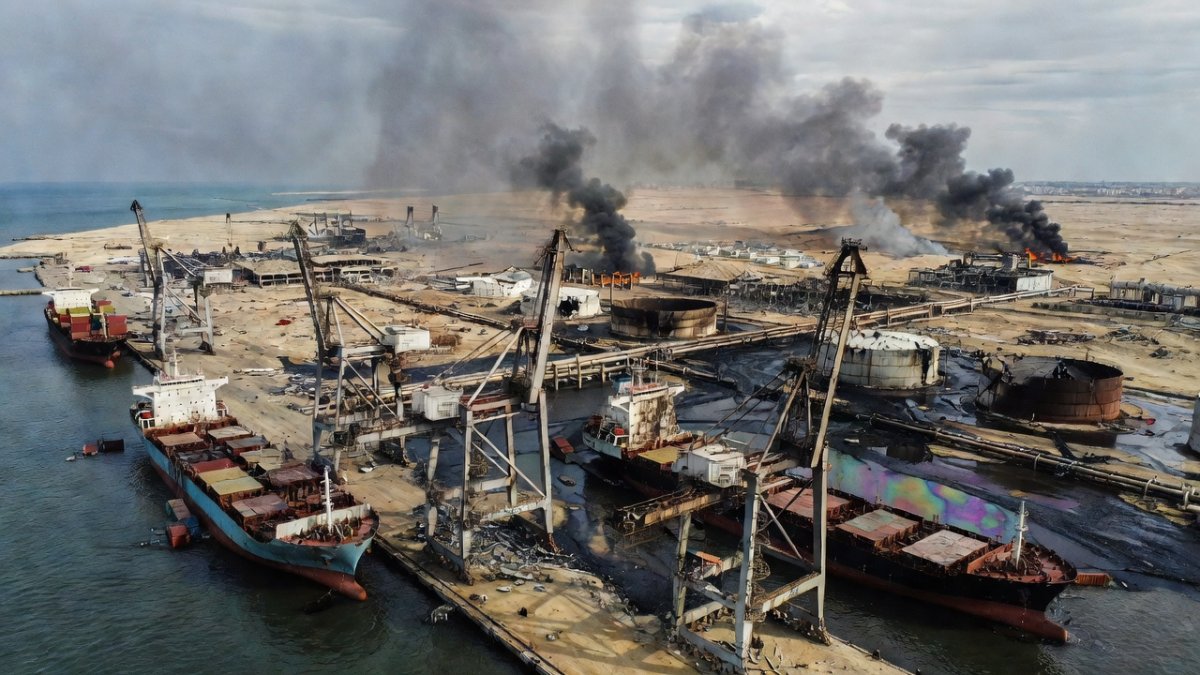
Iran targeted accessible sites within range when direct strikes on distant capitals proved difficult, placing Gulf infrastructure and populations in the line of fire. This outcome contradicted the protective narrative long promoted by American officials and their local partners. Communities in the Gulf experienced disruptions to daily life that echoed the hardships faced by Palestinians under blockade, where external decisions dictate access to essentials like medicine and fuel.
The financial burden of repair and stabilization fell heavily on Riyadh, Doha, and Abu Dhabi, diverting resources that might otherwise support broader regional development. Human rights monitors have documented how such diversions compound existing strains on vulnerable populations, including refugees and those displaced by earlier rounds of violence. The episode underscored that reliance on a single external actor carries inherent risks when that actor's priorities shift unpredictably.
Qatar's Central Role in Sustaining Dialogue
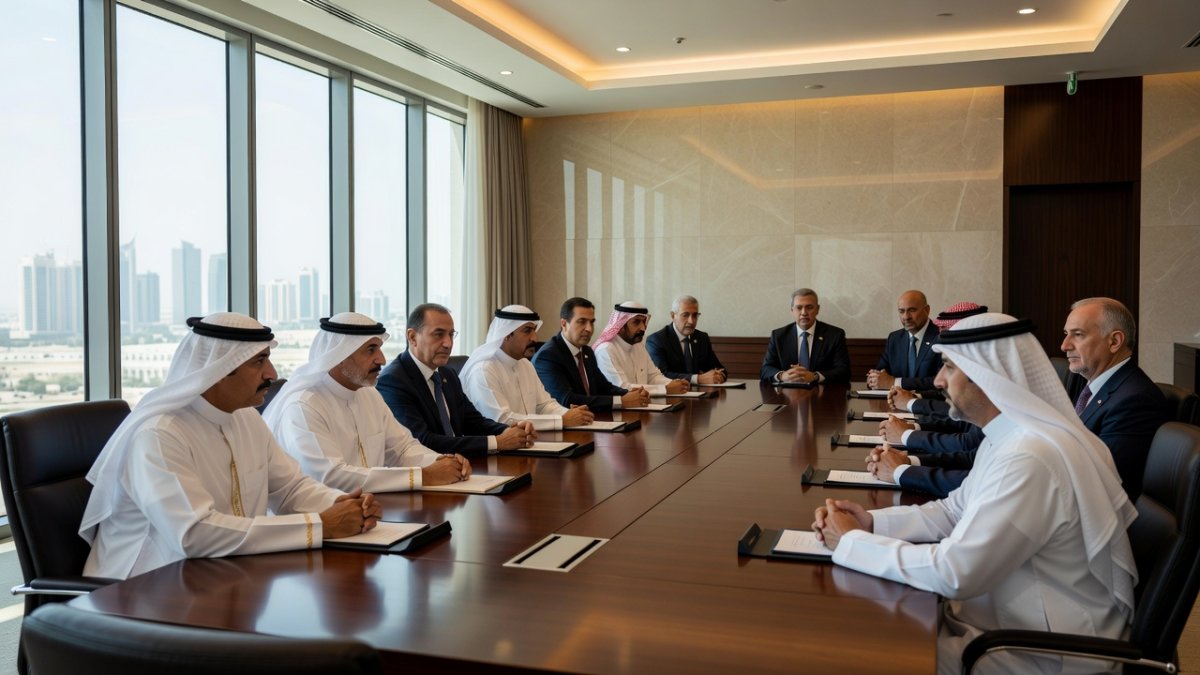
Qatar positioned itself as a critical intermediary, maintaining channels with both Washington and Tehran during fragile negotiations. Prime Minister Sheikh Mohammed bin Abdulrahman Al Thani coordinated efforts that prevented complete collapse after initial setbacks in Islamabad talks. This quiet diplomacy of incremental steps helped ease pressures on shipping lanes, an outcome with ripple effects for Palestinian importers struggling with supply chain interruptions tied to regional volatility.
Unlike more confrontational postures advocated elsewhere, Doha's approach prioritized engagement that acknowledged Iran's capacity to absorb pressure. Palestinian civil society groups have long advocated similar persistence in talks that address root causes rather than symptoms, viewing sustained contact as essential to preventing wider humanitarian fallout. The memorandum under discussion remains modest yet provides the momentum absent in prior frozen disputes.
Unity Among Major Gulf Players Reshapes Regional Leverage
Saudi Arabia, Qatar, and the United Arab Emirates eventually aligned on pragmatic engagement after earlier divergences, denying external actors opportunities to exploit divisions. This coordination blunted attempts to derail talks through escalation in neighboring arenas such as Lebanon. For Palestinians, such unity offers a potential model for collective advocacy that resists divide-and-rule tactics long employed in negotiations over occupation and settlements.
The shift from deterrence rhetoric to interdependence reflects recognition that military solutions alone cannot address an adversary structured for endurance. Economic linkages proposed as part of future arrangements could open reconstruction pathways, though their realization depends on consistent follow-through. Observers stress that any resulting stability must account for the human dimension, ensuring that Palestinian communities are not sidelined in arrangements focused solely on state-level interests.
Economic Interdependence as a Stabilizing Mechanism
Proposals for commercial ties with Iran aim to create mutual stakes that raise the cost of renewed confrontation. A united Gulf front dense with such connections could serve as a more durable signal to Iranian decision-makers than isolated military posturing. This framework also positions American commercial interests in potential reconstruction markets, offering incentives that might sustain engagement beyond short-term political cycles.
Palestinian economists have pointed out that similar interdependence across the wider Middle East could alleviate chronic aid dependency in Gaza and the West Bank. When regional economies integrate more deeply, the leverage for addressing occupation-related restrictions grows. The current moment tests whether Gulf states will extend this logic to include Palestinian economic recovery as part of broader stabilization efforts.
Lessons for Collective Responsibility in a Volatile Region
The experience demonstrated that Gulf states possess the networks and resources to influence outcomes when they coordinate rather than compete. This capacity emerged most clearly once the "big three" presented a unified position, limiting the effectiveness of outside interference. Palestinian advocates see in this development a reminder that regional actors can assert agency even when major powers pursue conflicting agendas.
Geography binds these states together through shared waterways and economies, making isolated security impossible. The same interconnectedness applies to the Palestinian question, where developments in one arena affect stability across borders. Sustained Gulf involvement in diplomacy could help prevent the marginalization of Palestinian rights in any emerging settlements.
Prospects for Palestinian-Centered Regional Stability
Ultimately, the Gulf's turn toward self-directed management raises questions about whether this approach will incorporate the longstanding Palestinian demand for justice and self-determination. A framework that pairs deterrence with economic ties offers one route, yet its success hinges on inclusive processes that do not repeat past exclusions. Families in Gaza and the West Bank continue to bear the daily weight of decisions made far from their realities, underscoring the need for diplomacy that centers human rights alongside state interests.
The war's aftermath leaves the region with both cautionary lessons and openings for more autonomous policy. Whether Gulf capitals build on their recent coordination to address occupation-related grievances remains an open question, one that will shape the lived conditions of millions for years ahead.
By Fatima Al-Rashid, Staff WriterThis article was produced with AI-assisted research and editorial support. Reporting is based on sources cited in the article.
What's Your Reaction?
 Like
0
Like
0
 Dislike
0
Dislike
0
 Love
0
Love
0
 Funny
0
Funny
0
 Wow
0
Wow
0
 Sad
0
Sad
0
 Angry
0
Angry
0
Gulf/MENA Correspondent at Global1.News. Based in Doha, covering Gulf politics, energy markets, diplomacy, and development across the Middle East and North Africa. Tracks the economic transformation of the Gulf states.









Comments (0)