
The Doctor Giving Life Back to Yazidi Survivors of Islamic State
The Harrowing Ordeal of Captivity in Sinjar and Mosul Shireen was preparing for a high school examination in her family home in Sinjar on 3 August 2014 when Islamic State militants entered and took her away. At nineteen she was sold into sexual slavery in Tal Afar and later became the third wife of an Islamic State fighter named Abu Omar in Mosul. She recounts how declarations
The Harrowing Ordeal of Captivity in Sinjar and Mosul
Shireen was preparing for a high school examination in her family home in Sinjar on 3 August 2014 when Islamic State militants entered and took her away. At nineteen she was sold into sexual slavery in Tal Afar and later became the third wife of an Islamic State fighter named Abu Omar in Mosul. She recounts how declarations of affection were followed by repeated rape, while the other wives in the household subjected her to beatings during their gatherings.
Shireen describes being confined indoors for more than two years, forbidden even to step into the garden for fresh air. Two guards stood at the entrance at all times. Abu Omar later brought two additional Yazidi girls to the house, one aged six who was forced to clean and another aged ten who was also raped. These details illustrate the systematic nature of the violence inflicted on Yazidi women and girls during the 2014 offensive.
Destruction of Family and Community Ties
Shireen’s uncle and many friends were killed. Her father and one sister remain missing since 2014. Upon release during the 2016 campaign to retake Mosul, she returned carrying severe depression and recurring nightmares. Such losses extend beyond individual suffering to the fragmentation of entire Yazidi families and social structures that once sustained daily life in Sinjar.
The United Nations has characterised the killings and abductions of at least 12,000 Yazidis as an ongoing genocide. This framing underscores the deliberate targeting of a religious minority whose beliefs centre on Yasdan and the revered Peacock Angel, Melek Tawwus, which Islamic State fighters denounced as devil worship while compelling conversion to their interpretation of Islam.
Dr Nagham Nawzat’s Path to Gynaecological Care
Born in Mosul in 1976 to a Yazidi family, Nagham Nawzat pursued medicine from an early age. She completed her gynaecology degree at Mosul Medical College in 2002. When Islamic State seized nearly a third of Iraq in 2014, she responded by volunteering at the Duhok Survivors’ Centre the following year, offering both medical examinations and psychological support to women who had endured captivity.
By July 2018 the Kurdistan Regional Government’s Kidnapped Affairs department in Duhok, under director Hussein al-Qaidi, recorded 2,023 liberated Yazidi women. Nawzat has provided care to more than half of them, an estimated 1,200 survivors. Her approach begins with a post-traumatic medical protocol, followed by attentive listening that builds trust so patients can speak of their deepest fears.
Healing Work at the Duhok Survivors’ Centre
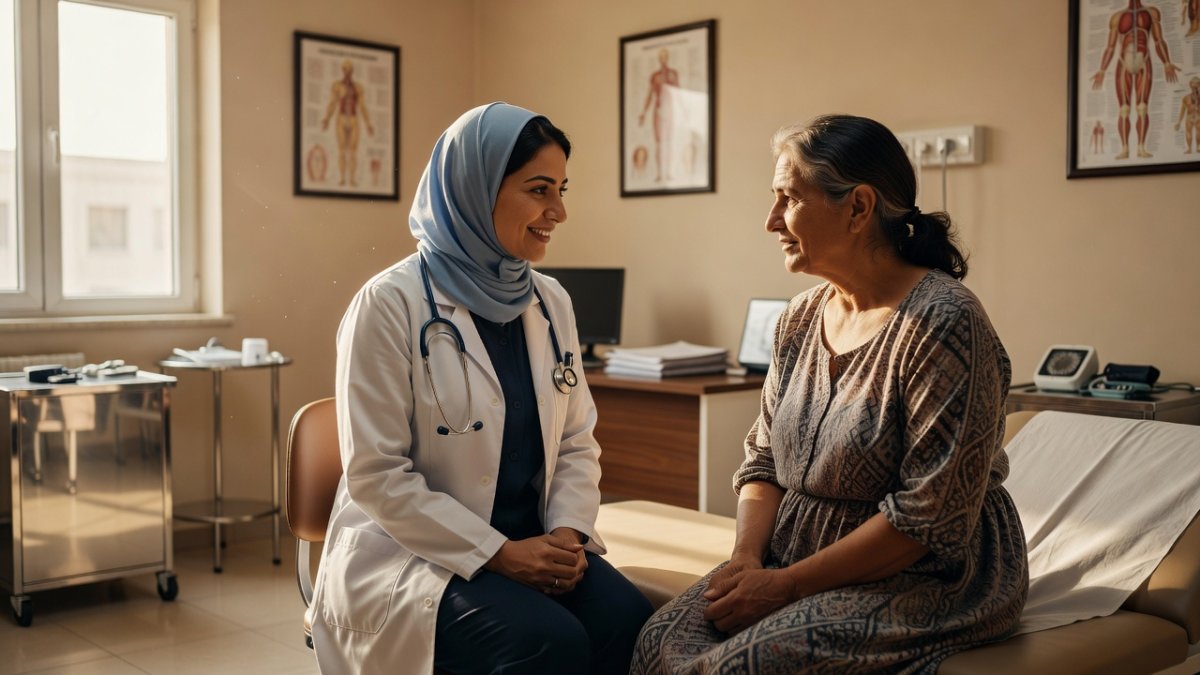
The Duhok Survivors’ Centre, supported by the United Nations Population Fund, remains the only facility in Iraq dedicated exclusively to gender-based violence. Nawzat conducts thorough physical check-ups and then sits with each woman, offering encouragement in the manner of an older sister. This combination of clinical attention and emotional presence has enabled survivors such as Shireen to begin reconstructing their sense of safety.
Shireen states plainly that without Nawzat’s help she would not be alive today. The centre’s model recognises that recovery requires addressing both bodily harm and the psychological isolation imposed by prolonged captivity, forced labour, and sexual violence. Women arrive having been denied basic freedoms for years; the centre restores dignity through consistent, culturally attuned care.
International Recognition and Persistent Challenges
In March 2016 then-US Secretary of State John Kerry presented Nawzat with the International Women of Courage Award for her psychological support to traumatised Yazidi survivors and her efforts against gender-based violence. The recognition highlights the global stakes of local medical work conducted amid ongoing displacement in Iraq’s Kurdish region.
Even after liberation, survivors navigate missing relatives, destroyed homes, and the long process of reclaiming education and livelihoods. Nawzat’s continued presence in Duhok demonstrates how sustained, community-rooted health services can mitigate some of the lasting consequences of systematic sexual violence in conflict.
Human Rights Dimensions of Yazidi Survival
The experiences documented at the Duhok Survivors’ Centre reveal patterns of targeted violence against religious minorities that resonate with broader struggles against occupation, forced displacement, and conflict across the Middle East. Each woman’s account of restricted movement, forced domestic labour, and sexual exploitation points to violations that demand accountability alongside medical and psychological redress.
By listening to survivors and providing specialised gynaecological care, Nawzat contributes to preserving the collective memory of Yazidi women while supporting their individual recovery. Her work underscores the necessity of placing survivor voices at the centre of any response to genocide and sexual violence in wartime.
By Fatima Al-Rashid, Staff WriterThis article was produced with AI-assisted research and editorial support. Reporting is based on sources cited in the article.
What's Your Reaction?
 Like
0
Like
0
 Dislike
0
Dislike
0
 Love
0
Love
0
 Funny
0
Funny
0
 Wow
0
Wow
0
 Sad
0
Sad
0
 Angry
0
Angry
0
Middle East Correspondent at Global1.News. Based in Beirut, covering politics, conflict, energy, and society across the Middle East. Brings context and depth to a region often reduced to headlines.










Comments (0)