
Xi Jinping to meet Kim Jong Un in rare visit to North Korea
Xi Jinping to meet Kim Jong Un in rare visit to North Korea The Diplomatic Weight of Xi Jinping's Pyongyang Visit President Xi Jinping's scheduled arrival in Pyongyang from 8 to 9 June marks his first trip to North Korea in nearly seven years, following his previous visit in 2019. Both Chinese and North Korean state media have confirmed the dates at the invitation of Kim Jong U
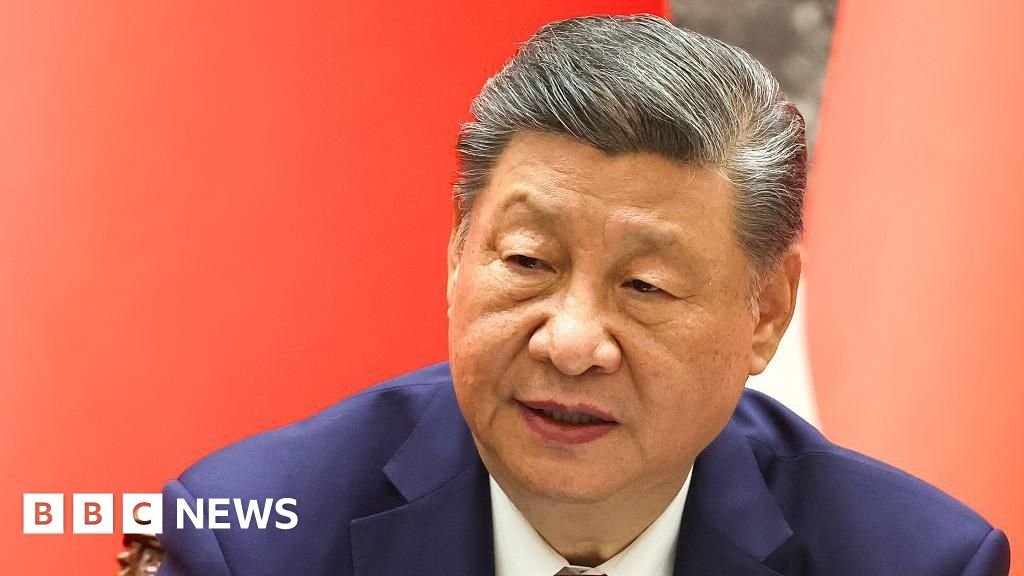
The Diplomatic Weight of Xi Jinping's Pyongyang Visit
President Xi Jinping's scheduled arrival in Pyongyang from 8 to 9 June marks his first trip to North Korea in nearly seven years, following his previous visit in 2019. Both Chinese and North Korean state media have confirmed the dates at the invitation of Kim Jong Un. This engagement occurs shortly after Xi hosted United States President Donald Trump and Russian President Vladimir Putin in Beijing, underscoring the intersecting pressures on Pyongyang's foreign policy calculus.
The timing reflects Beijing's calculated approach to managing relations on the Korean Peninsula without rushing into commitments that could constrain its flexibility. China remains North Korea's primary economic and political partner, a position reinforced by the 1,400-kilometre shared border and the mutual defence pact that marks the only such formal commitment in China's current diplomatic portfolio.
Historical Foundations of the China-North Korea Defence Treaty
This year commemorates the 65th anniversary of the 1961 Sino-North Korean Treaty of Friendship, Cooperation and Mutual Assistance. The agreement obligates each party to provide military support if the other faces armed attack, a framework that continues to shape Beijing's strategic calculations even as regional dynamics evolve.
Successive Chinese leaders have invoked this pact to signal continuity in border security priorities. The treaty's endurance highlights how Beijing views stability along its northeastern frontier as a core interest, distinct from broader multilateral sanctions regimes targeting Pyongyang's nuclear programme and reported human rights issues.
Economic Lifelines and Trade Expectations
China serves as North Korea's largest trading partner, supplying essential goods across the land border despite international sanctions linked to nuclear weapons development. Reports indicate Kim Jong Un may seek expanded cross-border commerce and increased Chinese tourist flows to support new beach and ski resort facilities.
Beijing's leverage stems from this economic centrality rather than formal enforcement mechanisms. Any incremental trade facilitation would align with China's Dual Circulation strategy, which emphasises secure regional supply chains while advancing technological self-sufficiency goals outlined in the 14th Five-Year Plan.
Navigating the Russia-North Korea Alignment
Kim's recent military cooperation with Moscow, including reported support for Russia's operations in Ukraine, has introduced new variables into Beijing's regional posture. Although China maintains close ties with both Pyongyang and Moscow, Xi has demonstrated caution toward an accelerated bilateral axis that could limit Chinese influence over Korean Peninsula developments.
North Korea's improved international visibility after enduring pandemic isolation and aligning with Russia provides Kim with additional propaganda leverage at home. Yet Beijing retains the dominant economic position, positioning it to moderate the pace and scope of any deepening Moscow-Pyongyang coordination.
North Korea's Nuclear Posture and Communication Freeze
Kim has publicly highlighted expansions in weapons-grade nuclear materials production capacity, stating that output more than doubled over the past five years during a tour of a new facility. This stance coincides with the December 2024 declaration ending reunification efforts with South Korea and the subsequent severance of official communication channels.
Seoul's unification minister Chung Dong-young has expressed hope that Xi's meetings will encourage Pyongyang to resume dialogue with both Seoul and Washington. South Korean officials anticipate Beijing may raise the nuclear issue, consistent with long-standing Chinese advocacy for peninsula denuclearisation, though recent Chinese statements have emphasised policy continuity rather than new commitments.
Strategic Calculus for Beijing and Regional Ripple Effects
Beijing's approach balances support for a stable neighbour against the risks of unchecked nuclear advancement that could trigger further sanctions or military responses. The mutual defence treaty provides a baseline for engagement, yet practical implementation remains subject to China's broader foreign policy doctrine of multilateral institution-building and regional influence expansion.
For ASEAN states and the Global South, the visit illustrates how major powers calibrate pressure and incentives on the Korean Peninsula. Second-order effects may include shifts in South Korea's security partnerships and renewed European Union attention to non-proliferation coordination, though outcomes will depend on follow-through rather than the summit itself.
Pyongyang's display of its nuclear and missile capabilities to visiting dignitaries, alongside the capital's infrastructure projects, signals an intent to project self-reliance. Whether Xi's presence translates into concrete steps toward dialogue or merely reinforces existing alignments remains to be observed after the June meetings.
By Prof. Marcus Chen, Staff WriterThis article was produced with AI-assisted research and editorial support. Reporting is based on sources cited in the article.
What's Your Reaction?
 Like
0
Like
0
 Dislike
0
Dislike
0
 Love
0
Love
0
 Funny
0
Funny
0
 Wow
0
Wow
0
 Sad
0
Sad
0
 Angry
0
Angry
0

World Politics Analyst at Global1.News. Based in Beijing, covering US-China relations, global trade, and geopolitical strategy. Brings deep analytical perspective to the power dynamics shaping international affairs.














Comments (0)