
Venezuela Government and Opposition Launch Historic Democracy Talks
Venezuela's interim government and opposition will begin formal talks August 1 aimed at strengthening democratic institutions, triggered by the devastating June 24 twin earthquakes that killed over 4,700 people. Nobel laureate María Corina Machado is notably absent from negotiations.
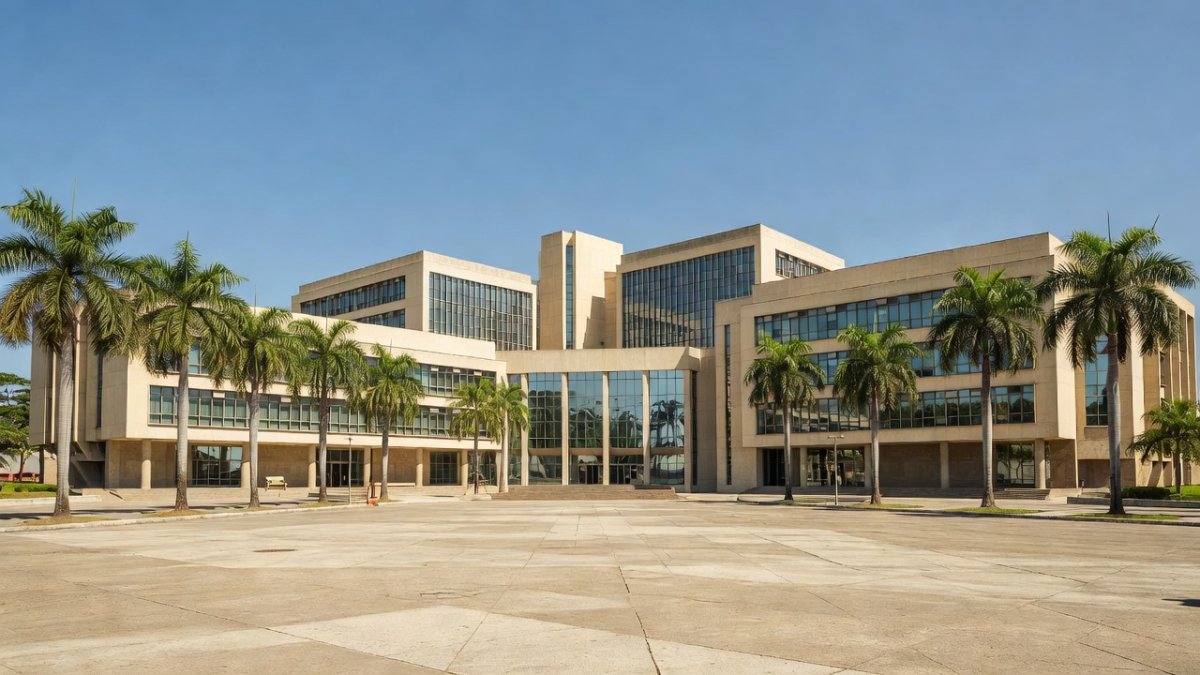
Venezuela Government and Opposition Launch Historic Democracy Talks
In a development that could reshape Venezuela's political future, the interim government of Acting President Delcy Rodríguez has announced it will begin formal talks with opposition members starting August 1 — a move aimed at "strengthening democracy" in a nation still reeling from catastrophic twin earthquakes that killed thousands. The announcement, made simultaneously by government officials and a bloc of opposition politicians on Wednesday, represents the most significant political dialogue since the dramatic capture of former president Nicolás Maduro by US forces in January.
Tags: Venezuela, Delcy Rodríguez, María Corina Machado, Dinorah Figuera, Jorge Rodríguez, opposition talks, democracy, Venezuela earthquake, CNE, political prisoners, Nicolás Maduro
The Path to the Negotiating Table
The talks were announced almost simultaneously by two unlikely partners: Jorge Rodríguez, the brother of Acting President Delcy Rodríguez and head of the government-controlled National Assembly, and a group of opposition politicians led by Dinorah Figuera, who returned to Venezuela in June after nearly eight years in exile in Spain. The joint working group will be composed of former lawmakers elected to the National Assembly in 2015 — the last time opposition parties won a majority in Venezuela's legislative body before the institutions were progressively captured by Maduro's United Socialist Party of Venezuela (PSUV).
Jorge Rodríguez cited the devastation wrought by the twin earthquakes of June 24 as the primary catalyst for the dialogue. "Only through unity can we move forward with reconstruction and maintain peace," his brief statement read. The quakes — registering magnitudes 7.2 and 7.5 — struck Venezuela's central-northern coast, destroying entire neighborhoods in La Guaira, Caraballeda, and Catia La Mar. At least 4,734 people have been confirmed dead, though officials acknowledge the toll continues to rise as rescue crews recover more bodies from beneath the rubble.
The opposition's statement was more detailed, referencing the international support Venezuela has received since the disaster — particularly from the United States — as evidence that "Venezuela is not alone." The group described the talks as laying down "a roadmap towards democracy."
Six Months After Maduro's Fall
The announcement comes barely six months after US special forces seized Nicolás Maduro in a stunning dawn raid on Caracas and transported him to New York to face federal drug-trafficking charges. The operation, which the Trump administration celebrated as a decisive blow against narco-authoritarianism, left Venezuela in a precarious political limbo. Former vice-president Delcy Rodríguez, a longtime Maduro loyalist, assumed power with Washington's backing — a decision that frustrated many in the opposition who had hoped Maduro's ouster would lead to a full democratic transition rather than a continuation of the same political structure under new management.
The United States has been calling the shots in Caracas ever since. According to the New York Times, US Secretary of State Marco Rubio has in effect been running Venezuela as a "de facto viceroy" from Washington, closely coordinating with Delcy Rodríguez's administration on economic and political matters. The US has restored diplomatic ties and lifted sanctions on Rodríguez, signaling a pragmatic approach that prioritizes stability over a clean break with the Maduro-era power structure.
The Absence of María Corina Machado
Perhaps the most striking aspect of the announced talks is who will not be at the table. María Corina Machado — the fiery opposition leader who won the Nobel Peace Prize in November 2025 for her relentless work promoting democracy in Venezuela — has been sidelined from the negotiations, despite being the country's most popular opposition figure by a wide margin.
Machado slipped out of Venezuela secretly in late November to receive the Nobel Prize in Oslo, and has been unable to return since. She dedicated her Nobel Prize to US President Donald Trump, but the Trump administration has reportedly discouraged her from returning to Venezuela out of concern that her presence could trigger civil unrest. Machado tried to re-enter the country in the chaotic aftermath of the June earthquakes but was blocked from doing so.
Instead, the White House has thrown its weight behind Dinorah Figuera, a former opposition lawmaker who has been living in exile in Spain since 2018. Figuera told reporters upon landing in Caracas in June that she returned "on invitation from the [US] State Department" with the express aim of pushing for the renewal of the National Electoral Council (CNE) — the institution that for years has been packed with Maduro loyalists and has certified fraudulent election results.
Machado's coalition of opposition parties announced Wednesday that they would meet to "define a public position" on the talks between the 2015 National Assembly members and the government, signaling internal divisions about the legitimacy of the process without her involvement.
The Earthquake That Shook Venezuelan Politics
The June 24 twin earthquakes did more than level buildings — they fundamentally altered Venezuela's political calculus. The disaster struck with devastating force across Venezuela's most densely populated region, collapsing thousands of structures including apartment blocks, hospitals, schools, and highways. The humanitarian catastrophe overwhelmed the country's already crippled infrastructure, with the health system — decimated by years of economic crisis and underinvestment — incapable of handling the mass casualties.
International aid has poured in from the United States, China, Russia, Cuba, and numerous humanitarian organizations. The UN Population Fund (UNFPA) has described the situation as "a major humanitarian emergency," with more than 1,200 aftershocks recorded since the initial quakes. An estimated 200,000 people have been displaced, and makeshift shelters have been set up in baseball stadiums and country clubs in Caraballeda and other affected areas.
For many Venezuelans, the government's response to the earthquake has been a test of its legitimacy. Rescue crews — including international teams from Mexico, Chile, and Turkey — have been working around the clock, pulling survivors from collapsed structures days after the initial disaster. One 12-year-old girl, Fabiana, survived 32 hours trapped in the rubble of a 10-story residential building by surviving on "ketchup and cheese" she found in the debris. A two-year-old boy, Kleiber Moran, was rescued six days after the quakes.
The tragedy has created a rare window for political cooperation. As Jorge Rodríguez framed it, the scale of destruction demands national unity rather than partisan conflict — a message that resonates deeply with a population exhausted by decades of political crisis.
What the Talks Aim to Achieve
The opposition group, composed of former lawmakers from the 2015 National Assembly, has laid out clear priorities for the working group that begins August 1. The top of the agenda: strengthening democratic institutions and the electoral system, and providing guarantees for political participation. At the heart of these demands lies the National Electoral Council (CNE), the body that declared Nicolás Maduro the winner of the 2024 presidential election despite independently verified voting tallies showing an overwhelming victory for opposition candidate Edmundo González.
The CNE has been dominated by Maduro loyalists for years, and its renewal is seen as a prerequisite for any credible future election. The opposition statement expressly called for the CNE's restructuring as a nonpartisan institution capable of conducting free and fair elections — a demand that has been at the center of Venezuela's democratic crisis since the fraudulent 2018 presidential election.
Beyond the CNE, the talks are expected to address the status of Venezuela's remaining political prisoners. Foro Penal, the country's leading prisoners' rights organization, reports that 372 individuals remain behind bars despite the release of scores of political prisoners following Maduro's capture. Many opposition figures and critics of the former government have spent years in jail or have been forced into exile, creating a diaspora of Venezuelan political talent spread across the Americas and Europe.
However, one critical question remains unanswered: there is still no timetable for new elections. The opposition has not secured a commitment from Delcy Rodríguez's government to hold presidential or legislative votes, and the joint working group's mandate appears focused on institutional reform rather than immediate electoral transition.
What This Means
This is not the clean break the opposition had hoped for when US troops handcuffed Nicolás Maduro on a Caracas tarmac in January. Instead, Venezuela appears to be navigating a messy, incremental transition — one where the old guard retains significant power through Delcy Rodríguez, where the US calls the shots from Washington, and where Venezuela's most popular democratic leader remains exiled and sidelined.
The earthquake has fundamentally changed the dynamics. A government that might otherwise have faced sustained opposition pressure now has a humanitarian imperative to present a unified front. And the opposition, weakened by years of persecution and exile, must decide whether to accept a seat at a table it doesn't fully control or risk being left out of the process entirely.
The involvement of the United States — through Secretary Rubio's hands-on management and the State Department's careful choreography of the opposition delegation — ensures that the talks have international backing. But it also raises uncomfortable questions about Venezuelan sovereignty and whether the Venezuelan people will ultimately have the final say in their own democratic future.
Challenges Ahead
The road from announced talks to genuine democratic reform is long and uncertain. The PSUV still controls most branches of government. The military, while weakened by Maduro's capture, remains a powerful institution with opaque loyalties. The economy, while showing signs of stabilization after the US lifted sanctions, is still recovering from years of hyperinflation, corruption, and mismanagement. And the humanitarian crisis triggered by the June earthquakes has added an urgent, unpredictable variable to an already volatile political equation.
Furthermore, the exclusion of María Corina Machado from the negotiating table threatens to undermine the legitimacy of any agreement reached. Many Venezuelans see Machado as the authentic voice of the democratic opposition, and a deal negotiated without her participation may struggle to gain popular support. The opposition coalition's internal meetings Wednesday to "define a public position" suggest that the path to unity will not be smooth.
For the millions of Venezuelans who have endured years of political repression, economic collapse, and now natural disaster, the August 1 talks represent a fragile hope — a chance, however imperfect, to begin rebuilding not just the buildings that crumbled in June, but the democratic institutions that have been falling apart for much longer. Whether that hope leads to real change will depend on the willingness of all parties to put country above power.
What to Watch For
The August 1 start date for the joint working group will be the first test of whether both sides are serious about dialogue. Key milestones to watch include: the composition of the opposition delegation and whether Machado's coalition endorses the process; the government's willingness to begin releasing additional political prisoners as a goodwill gesture; and the first public statements from the working group on the timeline for CNE reform.
The US role will remain decisive. Secretary Rubio's direct involvement signals Washington's commitment to managing the transition, but the Trump administration's preference for stability over rapid change may clash with opposition demands for immediate elections. Meanwhile, the broader Latin American response — from Mexico, Colombia, Brazil, and regional bodies like the OAS and Celac — will shape the international environment in which these talks take place.
For Venezuelan families in Caracas, La Guaira, Maracaibo, and the earthquake-ravaged coastal towns, the most urgent question is not about elections or institutional reform — it is about shelter, food, medical care, and the long, slow work of rebuilding their homes and their lives. If the August 1 talks can deliver progress on both fronts, they may yet chart a path toward a Venezuela that is not only democratic but whole again.
By Rosa Martinez, Staff Writer
This article was produced with AI-assisted research and editorial support. Reporting is based on sources cited in the article.
What's Your Reaction?
 Like
0
Like
0
 Dislike
0
Dislike
0
 Love
0
Love
0
 Funny
0
Funny
0
 Wow
0
Wow
0
 Sad
0
Sad
0
 Angry
0
Angry
0
Latin America/Andes Correspondent at Global1.News. Based in Bogota, covering politics, environment, energy, and social movements across the Andean region. Passionate about environmental journalism and communities protecting their land.








Comments (0)