
Senate Debates Subpoena for Duterte Bank Records
Senate impeachment court weighs subpoena for VP Sara Duterte's bank records, tax returns, and AMLC reports in historic trial. Atty. Cayosa discusses privacy vs accountability on ANC 24/7 Headstart. Vote set for July 20, 2026.
In the July 17, 2026 episode of ANC 24/7 Headstart, host Katrina Domingo interviewed former IBP President Atty. Domingo Cayosa on the legal questions surrounding the Senate impeachment court's subpoena bid for Vice President Sara Duterte's financial records. The discussion highlighted the tension between public accountability and privacy rights as the trial enters its second week. This historic proceeding, the first impeachment trial of a sitting vice president in Philippine history, centers on allegations of unexplained wealth under Article II of the articles of impeachment.
Senate Debates Subpoena for Duterte Bank Records
Manila, Philippines – July 17, 2026 — The Senate impeachment court, presided over by Senator Francis "Chiz" Escudero, spent Day 6 of the trial on July 15, 2026 entirely on oral arguments over whether to issue subpoenas for Vice President Sara Duterte's bank records from nine branches, tax returns, and Anti-Money Laundering Council reports covering nearly two decades. House prosecutors seek these documents to support claims of unexplained wealth tied to 22 businesses linked to the Dutertes and the Carpio family. The court deferred its ruling, with a vote now scheduled for July 20, 2026.
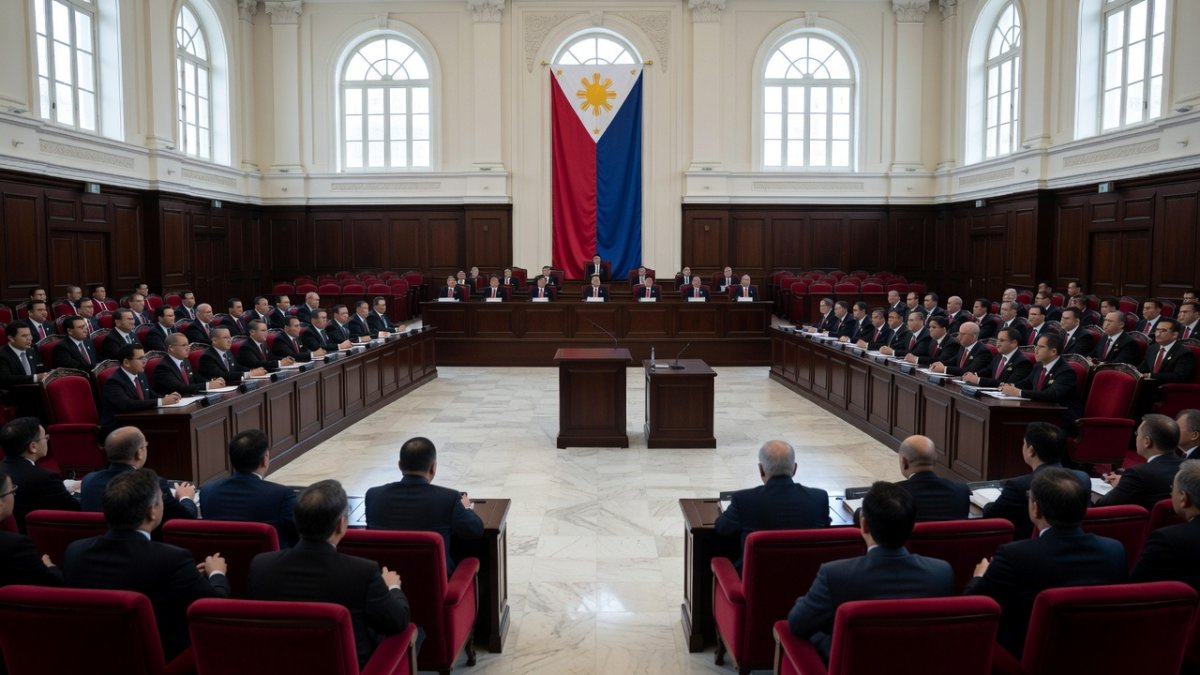
The Core of the Controversy — Bank Records and Unexplained Wealth
The House prosecution panel, led by Representative Chel Diokno, argues that the financial documents are essential to prove betrayal of public trust. They point to records spanning from 2007 to the present that could reveal patterns of wealth accumulation inconsistent with the vice president's declared income. This request directly targets the 22 businesses connected to the Duterte and Carpio families.
Filipino families watching the proceedings see this as a test of whether public officials can shield their finances from scrutiny. Many in Mindanao and the Visayas, where the Duterte name carries deep roots, feel the outcome will shape how future leaders handle transparency. The subpoena covers tax returns that former Senate President Franklin Drilon has urged President Ferdinand Marcos Jr. to release.
Privacy vs Accountability — Cayosa's Legal Analysis
Atty. Domingo Cayosa told ANC 24/7 Headstart that impeachment proceedings carry exceptions to ordinary privacy protections because they address betrayal of public trust rather than criminal guilt. He stressed that senators must balance the need for accountability against individual privacy rights when deciding on the subpoena. Cayosa noted that the trial is not a criminal case but a constitutional process meant to protect the public from abuse of office.
This distinction matters to ordinary Filipinos who pay taxes and expect leaders to do the same. Communities in Davao City and Manila alike have voiced concern that unchecked privacy claims could weaken mechanisms for holding officials responsible. Cayosa's view aligns with precedents where public office requires greater disclosure than private citizens face.
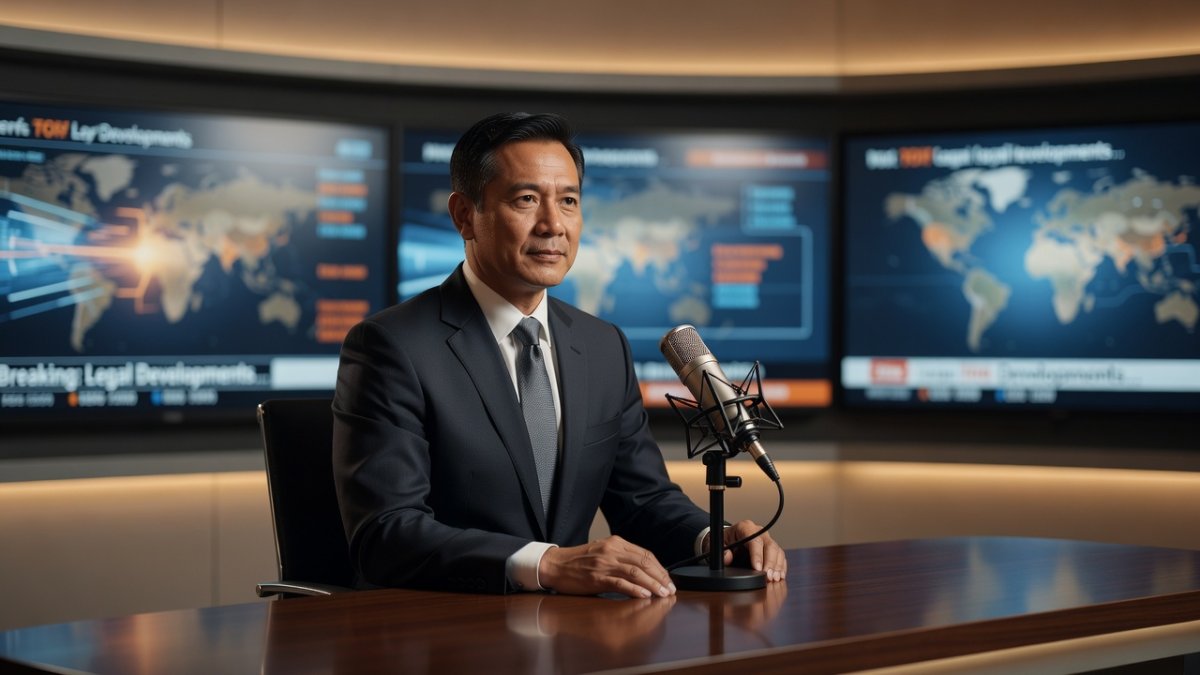
In Philippine jurisprudence, the tension between privacy rights and public accountability has long been shaped by constitutional mandates under Article XI, which holds public officials to the highest standards of transparency. Landmark cases such as Sabio v. Gordon (2006) affirmed that legislative inquiries into official conduct override individual privacy claims when matters of grave public concern are at stake, establishing that no public servant can shield financial records behind personal privacy when impeachment proceedings are underway. Similarly, the 1987 Constitution's Bill of Rights provisions on due process have been interpreted to yield to the people's right to information under Article III, Section 7, particularly in cases involving alleged misuse of public funds.
The Data Privacy Act of 2012 (RA 10173) further complicates this landscape by protecting personal information yet explicitly carving out exceptions for legal proceedings and national interest. Section 4 of the Act permits disclosure when required by law or court order, allowing impeachment subpoenas to access BIR and AMLC records without violating privacy statutes. This framework ensures that accountability mechanisms in Senate trials supersede routine data protections, preventing officials from invoking the Act to obstruct investigations into unexplained wealth.
Prosecution's Case — 'Truth Is Not Confidential'
Representative Chel Diokno framed the request plainly during oral arguments: truth is not confidential. The prosecution maintains that the documents will show whether the vice president's assets match her salary and other lawful sources of income. They also called on President Marcos Jr. to authorize the Bureau of Internal Revenue to release the tax records without further delay.
House prosecutors believe these records will clarify the financial trail behind the 22 businesses under scrutiny. For taxpayers across the country, the case underscores how unexplained wealth allegations affect public trust in government institutions. The prosecution insists the subpoena serves the constitutional duty of the Senate to examine fitness for office.
The prosecution's push for specific documents centers on Bureau of Internal Revenue tax returns, Anti-Money Laundering Council reports, and bank records exempted under the Bank Secrecy Law (RA 1405). These exceptions allow disclosure in cases involving public officials suspected of graft, enabling the Senate to trace potential unexplained wealth without the usual consent requirements that protect private citizens.
Impeachment subpoenas derive their legal force from Article XI of the Constitution and Senate impeachment rules, which grant broad investigative powers to compel evidence relevant to removal proceedings. Courts have upheld that such subpoenas supersede standard confidentiality barriers when the integrity of high office is questioned, ensuring that claims of privacy cannot obstruct the pursuit of truth in accountability trials.
Defense Pushback — 'Weapon of Fishing Expedition'
The defense team countered that the subpoena amounts to a fishing expedition designed to harass rather than uncover evidence. They argued that the broad scope, covering nearly 20 years and multiple institutions, violates the vice president's right to privacy without sufficient justification. Defense lawyers warned that granting the request could set a dangerous precedent for future impeachment cases.
Supporters of Vice President Duterte in southern Philippines view the move as politically motivated ahead of the 2028 elections. They worry that selective scrutiny could discourage capable leaders from running for higher office. The defense maintains that existing laws already provide safeguards against unexplained wealth without needing such expansive document production.
Political Implications — Marcos Role and 2028 Elections
President Marcos Jr. now faces direct calls from both former Senate President Drilon and House prosecutors to authorize release of the tax records. His decision could influence the Senate vote on July 20 and shape perceptions of executive involvement in the trial. The outcome may also affect Vice President Duterte's current standing as a frontrunner for the 2028 presidential race.
Filipino voters are already weighing how this legal battle will play out in the next national elections. Political analysts note that any ruling on the subpoena could either strengthen or weaken public confidence in the impeachment process itself. The timing overlaps with preparations for the president's State of the Nation Address on July 27, 2026.
The impeachment trial has intensified the fragile alliance between the Marcos and Duterte political dynasties, with President Marcos navigating a delicate balance to avoid alienating Duterte loyalists ahead of the 2028 presidential race. Sara Duterte, once seen as a strong 2028 frontrunner, now faces diminished prospects as the proceedings expose rifts that could fracture the UniTeam coalition. Political analysts note that Marcos's measured support for the trial reflects a strategy to consolidate power while distancing himself from corruption allegations tied to his former running mate.
Senator Imee Marcos has publicly expressed reservations about the timing of the proceedings, warning that they risk deepening divisions within the administration's base and could benefit opposition candidates in 2028. Other figures, including Vice President-aligned senators, have echoed concerns that prolonged scrutiny might shift voter sentiment toward alternative alliances, potentially elevating candidates who promise stability over dynastic infighting. The trial thus serves as a critical test for Marcos's ability to manage internal party dynamics without derailing his broader electoral roadmap.
What This Means for Filipinos
Every Filipino household that struggles with rising fuel prices and relies on government programs feels the weight of this trial. When public officials face questions about unexplained wealth, it directly touches the integrity of services funded by taxpayer money. The subpoena battle tests whether the system can deliver accountability without descending into partisan spectacle.
Communities in provinces far from Manila watch closely because the result will influence how future leaders handle public resources. The case reminds citizens that impeachment exists to protect the Constitution, not to settle political scores. Clear rules on financial disclosure protect both officials and the public they serve.
Corruption and unexplained wealth among top officials directly exacerbate the daily struggles of ordinary Filipinos, diverting billions from essential services like healthcare and education. When public funds are allegedly siphoned into private accounts, infrastructure projects stall, leaving communities without adequate roads or flood control, which in turn drives up transportation costs and isolates rural populations from economic opportunities.
The ongoing cost-of-living crisis, marked by volatile fuel prices hovering above P70 per liter, compounds these issues as higher transport and commodity expenses erode household budgets. The government's P2,000 cash aid program, intended to cushion inflation's blow, reaches only a fraction of affected families due to mismanagement and leakages often linked to weak oversight. Strong governance that enforces accountability can reverse these trends by ensuring resources fuel sustainable growth, lower living costs, and restore public trust in institutions that directly impact economic well-being.
What to Watch For — July 20 Vote and Beyond
The Senate's July 20, 2026 vote will determine whether the nine bank branches, tax returns, and AMLC reports must be produced. Atty. Cayosa emphasized that the decision rests on weighing constitutional accountability against privacy claims in a non-criminal proceeding. Whatever the outcome, the ruling will guide how similar requests are handled in future impeachment trials.
Filipinos deserve a process that is both thorough and fair. The coming days will show whether the Senate can strike that balance while the nation prepares for the president's July 27 address and the long road to 2028. The eyes of the country remain fixed on the impeachment court.
By Bella Reyes, Staff WriterThis article was produced with AI-assisted research and editorial support. Reporting is based on sources cited in the article.
What's Your Reaction?
 Like
0
Like
0
 Dislike
0
Dislike
0
 Love
0
Love
0
 Funny
0
Funny
0
 Wow
0
Wow
0
 Sad
0
Sad
0
 Angry
0
Angry
0

Philippines/Southeast Asia Correspondent at Global1.News. Manila-based journalist covering Philippine politics, environment, maritime security, and social issues. Passionate about marine conservation and the communities protecting the Philippines' natural heritage.













Comments (0)