
US and Iran Exchange Fifth Day of Strikes as War Escalates
In a recent BBC News report, the United States launched a fifth consecutive day of strikes against Iran, as President Donald Trump warned Tehran it "better behave" and threatened to hit bridges and power plants next week if Iran does not return to negotiations.
In a recent BBC News report, the United States launched a fifth consecutive day of strikes against Iran, as President Donald Trump warned Tehran it "better behave" and threatened to hit bridges and power plants next week if Iran does not return to negotiations.
\n
US and Iran Exchange Fifth Day of Strikes as War Escalates Beyond the Strait of Hormuz
\nMoscow, Russia — 15 July 2026 — The United States and Iran have entered a fifth consecutive day of renewed hostilities, trading strikes across the Persian Gulf and the broader Middle East as the Islamabad Memorandum of Understanding — the ceasefire framework signed barely a month ago — collapses under the weight of competing claims over control of the Strait of Hormuz. President Donald Trump has reimposed a full naval blockade of Iranian ports and warned that Tehran faces strikes on its power plants and bridges next week if it does not return to the negotiating table.
\n\n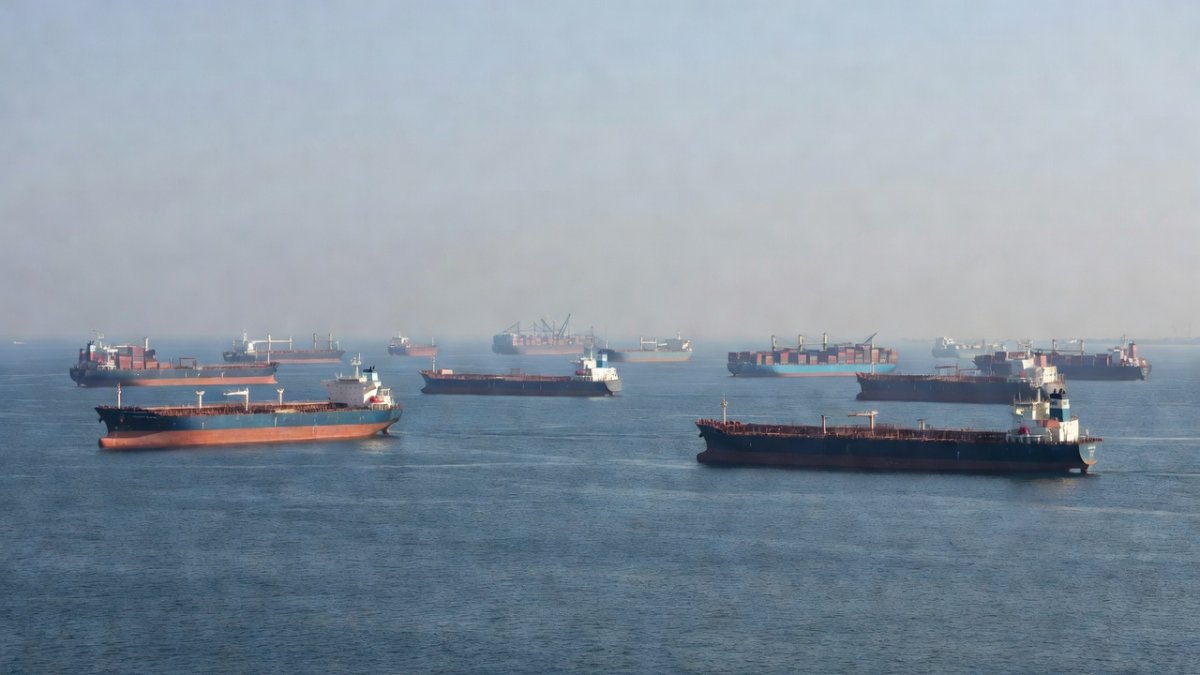 \n\n
\n\nFifth Day of Strikes: A Deeper Level of Escalation
\nThe renewed US military campaign against Iran entered its fifth consecutive day on Wednesday, with the United States launching two waves of precision strikes within hours of each other. US Central Command confirmed that a 90-minute operation targeted Iran's coastal defence systems and cruise missile storage and launch sites on Greater Tunb Island, a strategically located island in the eastern Persian Gulf. Later that evening, a second wave struck Iranian command centres, air defence installations, missile and drone capabilities, and coastal surveillance facilities in and around Bandar Abbas, a major Iranian port city on the Strait of Hormuz. A senior US official told Reuters that American forces had struck more than 80 Iranian military sites across multiple provinces, hitting air defence systems, anti-ship cruise missile batteries, surface-to-air missile launchers, drone launch pads, and coastal radar installations. The scope and intensity of the campaign mark a significant escalation from the limited, targeted exchanges that characterised the early stages of renewed hostilities earlier this month. The strikes follow President Donald Trump's decision on Tuesday evening to reimpose a full naval blockade of Iranian ports and coastal waters — a blockade that had been lifted barely a month ago as part of the Islamabad Memorandum of Understanding that was supposed to end the conflict.
\nThe blockade restoration effectively strangles Iran's remaining commercial maritime access, preventing all vessels from transiting to or from Iranian ports. Centcom reported it had already redirected two commercial vessels since the blockade was reinstated. The move is widely seen as a deliberate provocation designed to force Iran back to the negotiating table — or to cripple its economy if it refuses. Tehran, however, shows no signs of capitulation. From the US perspective, the operation targets Iranian military capabilities used to threaten vessels in the Strait of Hormuz, including a direct response to a ship that attempted to violate the renewed naval blockade. President Trump told reporters that Iran "better behave" and that "they know the story," framing the strikes as necessary enforcement rather than unprovoked aggression.
Tehran's Response: Retaliation and Diplomatic Rupture
\nIran responded swiftly to the latest American bombardment. The Islamic Revolutionary Guard Corps announced it had launched retaliatory strikes against US military assets in Bahrain and Kuwait, claiming to have hit dozens of facilities. Sirens sounded repeatedly in Bahrain, home to the US Navy's Fifth Fleet headquarters, and air defence systems were activated across Kuwait and Qatar. Iran's top negotiator, Mohammad Bagher Ghalibaf, told state media that Tehran saw "no reason" to continue abiding by the Islamabad Memorandum of Understanding if it derived no benefit from the arrangement. "Negotiation — along with war — is part of Iran's strategy of resistance as it engages an existential conflict with the United States," Ghalibaf stated, framing the escalating confrontation as a struggle for national survival rather than a diplomatic dispute over shipping lanes. The political rupture in Tehran runs deeper than the IRGC's military posturing. Nearly 180 Iranian lawmakers have signed a statement declaring the Islamabad MoU effectively terminated, arguing that the United States violated its terms by reimposing the naval blockade. Hardliners in the Iranian parliament have called for revenge for the killing of the late Supreme Leader Ayatollah Ali Khamenei, whose funeral in early July drew millions of mourners and symbolised the deep emotional — and ideological — investment Iranians have in confronting the United States and its allies.
\nThe IRGC's warning carried an explicit threat beyond the Persian Gulf. In a statement issued shortly after Wednesday's strikes, the Guard Corps told Washington to "expect the closure of other oil and gas export routes that serve the interests of the United States and its allies." While it did not specify which routes could be targeted, the implicit warning pointed toward the Bab el-Mandeb strait at the mouth of the Red Sea — a chokepoint through which a significant share of global container traffic and energy shipments passes — and potentially toward pipelines across Saudi Arabia and Iraq. Such a move would expand a conflict that has already disrupted global energy markets into a broader regional crisis. Iranian officials maintain that the US actions represent a clear breach of the ceasefire terms established in the Islamabad agreement.
\nThe Strait of Hormuz: The Strategic Faultline
\nThe Strait of Hormuz remains the central point of contention in the US-Iran conflict. The waterway carries approximately 20 percent of the world's oil and gas supplies, making any disruption a matter of immediate global economic consequence. Tanker traffic through the strait has virtually stalled following the reimposition of the US naval blockade, driving sharp surges in oil prices worldwide. The Islamabad Memorandum of Understanding contained vague language regarding "Iranian arrangements" in the strait, which created fundamental disagreement over governance and enforcement authority. According to analysis from the New York Times, the original deal effectively granted Iran official influence over transit rules in the strait, a concession that Washington later sought to reverse through the blockade. This dispute over control of the strait became the decisive factor that collapsed the ceasefire reached in early July. US Central Command has framed its operations as protecting international shipping lanes, while Iranian authorities insist the blockade violates their sovereign rights and the spirit of the Islamabad accord. The resulting standoff has left both sides locked in a cycle of escalation with no immediate off-ramp visible.
\nInternational Reactions and the Question of War Crimes
\nInternational reactions have been muted despite the rapid escalation. UN human rights chief Volker Turk had previously condemned President Trump's April threat to bomb Iran's civilian infrastructure, describing it as a potential war crime under international law. That earlier warning now carries renewed relevance as Trump has repeated threats to target bridges and power plants should Iran fail to return to talks next week. European capitals have issued only general calls for restraint, while Russia and China have avoided direct criticism of either side, reflecting their own strategic calculations in the region. The absence of stronger diplomatic intervention leaves the conflict largely unchecked by traditional mechanisms of international accountability. Analysts note that the lack of coordinated response from major powers may embolden further military actions by both Washington and Tehran in the coming days.
\nA Fragile Olive Branch: The Detainee Release
\nIn a separate development, Iran freed American detainee Dena Karari, who had been held since December 2024 on charges of espionage. Iranian authorities described the release as a goodwill gesture amid the fighting. President Trump welcomed the move on Truth Social, calling it a positive signal. Attorney Jared Genser confirmed that Karari was en route back to the United States. While the release could indicate an open diplomatic backchannel, it may equally represent a tactical Iranian effort to influence US public opinion without altering the broader military trajectory. The timing suggests Tehran seeks to demonstrate flexibility even as it rejects the Islamabad framework.
\n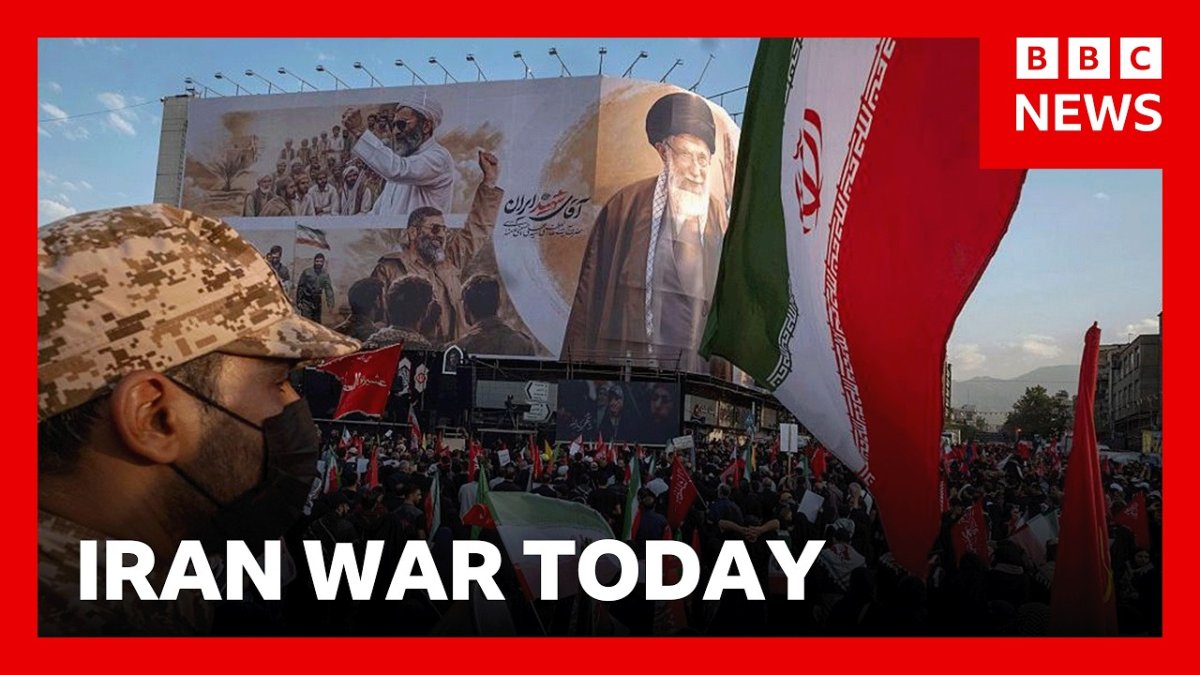 \n
\nAnalysis — What Comes Next
\nThe Council on Foreign Relations has assessed that the Islamabad Memorandum of Understanding has collapsed, leaving the United States with few good options. President Trump now faces a narrowing set of choices: a full ground invasion, continuation of the air and naval campaign, or a pressured return to negotiations before his self-imposed deadline next week. Iran, for its part, retains capacity for asymmetrical retaliation through proxy networks and threats to additional maritime chokepoints. The economic toll of prolonged conflict continues to mount, with global energy markets already showing significant strain. Geopolitically, Russia and China stand to gain influence if the United States becomes further entangled, yet both powers also risk secondary sanctions and supply disruptions. When Trump's deadline for potential strikes on power plants and bridges arrives, the trajectory of the 2026 Iran war will depend on whether either side calculates that further escalation serves its core interests or whether a new diplomatic formula can be found. The coming days will test whether military pressure can compel concessions or whether the conflict will expand beyond the Persian Gulf.
\nBy Irina Volkov, Staff Writer
This article was produced with AI-assisted research and editorial support. Reporting is based on sources cited in the article.
What's Your Reaction?
 Like
0
Like
0
 Dislike
0
Dislike
0
 Love
0
Love
0
 Funny
0
Funny
0
 Wow
0
Wow
0
 Sad
0
Sad
0
 Angry
0
Angry
0
Russia/Eastern Europe Correspondent at Global1.News. Covering Russian politics, energy, security, and the shifting dynamics of the post-Soviet space. Provides clear-eyed analysis on one of the world's most opaque regions.










Comments (0)