
Russia Urges Citizens in Gulf to Take Precautions as U.S.-Iran Strikes Resume
Russia warns Gulf-residing citizens as U.S.-Iran strikes resume after interim deal collapse. Kremlin regrets escalation, warns Ukraine peace talks sidelined. Strait of Hormuz blockade threatens global energy markets with Iran signaling Bab el-Mandeb closure next.
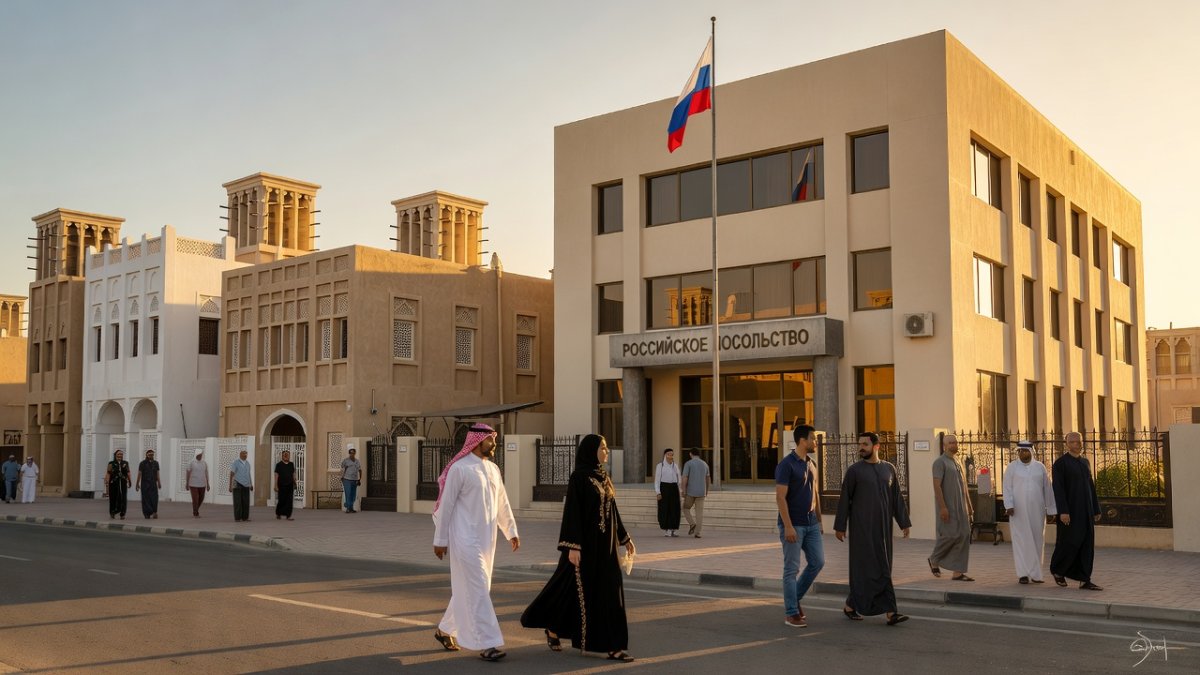
Russia's Foreign Ministry has issued an urgent warning to its citizens across Gulf countries, urging them to take "additional personal safety precautions" after a fragile interim deal to contain the Middle East war collapsed and Iran and the United States resumed back-and-forth strikes. The advisory comes as Washington reimposed its naval blockade on Iranian ports and intensified airstrikes in retaliation for Tehran's attacks on commercial shipping attempting to transit the Strait of Hormuz.
Russia Urges Citizens in Gulf to Take Precautions as U.S.-Iran Strikes Resume
Moscow — July 15, 2026 — Russia's Foreign Ministry on Wednesday "strongly recommended" that Russian citizens in Gulf countries avoid areas near military installations and critical infrastructure, while instructing them to remain in close contact with tour operators and airlines. The ministry also warned against filming or posting footage of air defense operations and the aftermath of attacks on social media, citing potential legal consequences under local laws.
The Collapse of the Interim Deal
The latest escalation marks the end of a brief ceasefire arrangement that had temporarily de-escalated one of the most volatile confrontations in the Middle East in decades. According to Kremlin spokesperson Dmitry Peskov, the breakdown of the interim agreement was triggered by renewed Iranian strikes on vessels attempting to navigate the Strait of Hormuz — a narrow waterway through which approximately one-fifth of the world's petroleum passes daily. The United States retaliated by reimposing its naval blockade on Iranian ports and launching new airstrikes on Iranian coastal defense positions and missile sites, according to U.S. Central Command statements. Reports indicate that the U.S. fired at least two waves of attacks on Wednesday alone, targeting Iranian missile batteries and naval assets along the Persian Gulf coastline.
Kremlin's Position: Regret and Frustration
Speaking at his daily briefing in Moscow, Peskov told reporters that the Kremlin "regrets" the renewed escalation. His remarks carried a subtext of frustration that extends beyond the immediate crisis. "Right now, the Americans can't deal with the Ukraine settlement," Peskov said, explicitly linking the Middle East conflagration to the stalled peace negotiations between Russia and Ukraine. The statement reflects a persistent Kremlin narrative that Washington's military entanglement in the Middle East is coming at the expense of its self-proclaimed role as a mediator in the Ukraine conflict. Russia has consistently sought to position itself as open to peace talks while blaming Western weapons deliveries to Kyiv for prolonging the war. The renewed U.S.-Iran confrontation, from Moscow's perspective, creates both a diplomatic distraction and an opportunity — it pulls American military and political resources toward the Persian Gulf while potentially weakening Washington's leverage in European security negotiations.
Russia's Tightening Embrace of Iran
Russia, one of Iran's closest strategic partners, has repeatedly condemned the U.S.-Israeli campaign against the Islamic Republic. Moscow's Foreign Ministry has described the military operations as an "unprovoked act of armed aggression" and has consistently called for restraint from all parties. The relationship between Moscow and Tehran has deepened considerably since the onset of the war in Ukraine. Iran has supplied Russia with Shahed drones and other military equipment, while Russia has provided Iran with diplomatic cover at the United Nations Security Council and technical cooperation on nuclear and space programs. In early July, former Russian president and current Security Council Deputy Chairman Dmitry Medvedev led the official Russian delegation to the state funeral of Iran's late Supreme Leader Ayatollah Ali Khamenei in Tehran. Upon his return, Medvedev posted a video statement declaring that Iran would "prevail" over the United States — language that signaled Moscow's unwavering political support for the Islamic Republic even as the conflict escalates.
Gulf Citizens Trapped Between Two Fires
The Foreign Ministry advisory affects Russian nationals living in or traveling to the United Arab Emirates, Saudi Arabia, Qatar, Bahrain, Kuwait, and Oman — all countries that host significant Russian expatriate communities. According to Russian diplomatic estimates, tens of thousands of Russian citizens reside across the Gulf Cooperation Council states, many working in the energy, construction, and service sectors. The ministry's warning comes with practical implications. Russian civil aviation authorities have already indefinitely suspended all commercial flights to and from Iran, leaving travelers with no direct air route between Russia and the Islamic Republic. Russians in Gulf countries may face similar disruptions if the conflict widens and airspace restrictions expand. The recommendation to avoid posting footage of air defense activity carries particular weight in the Gulf, where several countries have strict cybercrime and national security laws that criminalize the dissemination of military-related information.
The Strait of Hormuz and Global Energy Risk
The Strait of Hormuz has once again become the epicenter of a confrontation with global implications. Iran has effectively closed the strait — the world's most important oil transit chokepoint — to commercial shipping, striking vessels it claims are violating its territorial waters. The U.S. reimposed its naval blockade of Iranian ports this week, a move that President Donald Trump accompanied with an announcement that the United States would charge a 20% fee on all cargo shipped through the strait — a policy that has drawn sharp criticism from global shipping companies and energy markets. The standoff has already driven oil prices sharply upward. Analysts warn that the disruption could trigger a global energy supply crisis if the blockage persists, particularly as European nations head into winter and Asian economies continue their post-pandemic industrial recovery. For Russia, the situation presents a complex calculus. Higher oil prices benefit Moscow's budget as it funds its war in Ukraine. However, the Kremlin has also signaled concern that a prolonged energy crisis could destabilize its own economy, which remains heavily reliant on energy exports.
Iran's Next Move: The Bab el-Mandeb Threat
Iran has signaled that it may expand the confrontation beyond the Strait of Hormuz. On Wednesday, Tehran threatened to shut additional energy export routes, including the Bab el-Mandeb strait — the narrow gateway linking the Red Sea to the Gulf of Aden. Such a move would almost certainly be executed through Iran's Houthi allies in Yemen, who have already demonstrated their capacity to strike commercial vessels in the Red Sea with missiles and drones. The Bab el-Mandeb is a critical artery for global trade, carrying roughly 10% of all seaborne trade, including oil and liquefied natural gas shipments from the Persian Gulf to European and North American markets. A simultaneous closure of both Hormuz and Bab el-Mandeb would represent an unprecedented disruption to global maritime commerce — a scenario that defense analysts have described as a "worst-case" outcome for the global economy.
What This Means: A Regional War With Global Consequences
The collapse of the interim deal and the resumption of direct U.S.-Iran hostilities mark a dangerous new phase in a conflict that has been building for months. The conflict is no longer a contained military campaign — it has evolved into a full-spectrum confrontation involving naval blockades, missile strikes on commercial shipping, and the active threat of strategic chokepoint closures that could reshape global energy markets. For Russia, the timing is both a strategic gift and a diplomatic headache. The Iran conflict diverts American attention and military resources away from Ukraine at a critical moment, potentially easing pressure on Russian forces. Yet Moscow must also manage the risk of being drawn deeper into a regional war it cannot fully control, while maintaining its balancing act between supporting Iran and preserving its own channels of communication with Gulf states that host Russian citizens. For ordinary Russians abroad in the Gulf, the immediate concern is more tangible: how to navigate a region that is rapidly becoming a theater of war, with limited options for evacuation and an uncertain timeline for resolution.
By Irina Volkov, Staff Writer
This article was produced with AI-assisted research and editorial support. Reporting is based on sources cited in the article.
What's Your Reaction?
 Like
0
Like
0
 Dislike
0
Dislike
0
 Love
0
Love
0
 Funny
0
Funny
0
 Wow
0
Wow
0
 Sad
0
Sad
0
 Angry
0
Angry
0
Russia/Eastern Europe Correspondent at Global1.News. Covering Russian politics, energy, security, and the shifting dynamics of the post-Soviet space. Provides clear-eyed analysis on one of the world's most opaque regions.











Comments (0)