
Xi Jinping's Return to Pyongyang Signals Beijing's Bid to Counterbalance Moscow's Growing Sway
The Timing and Diplomatic Context of the June 2026 Visit Xi Jinping's two-day state visit to Pyongyang in June 2026 marks his first official trip to North Korea since 2019, arriving at a moment when Beijing seeks to recalibrate its influence over a neighbour that has tilted toward Moscow. The Chinese president met Kim Jong Un amid a sequence of high-level engagements that inclu
The Timing and Diplomatic Context of the June 2026 Visit
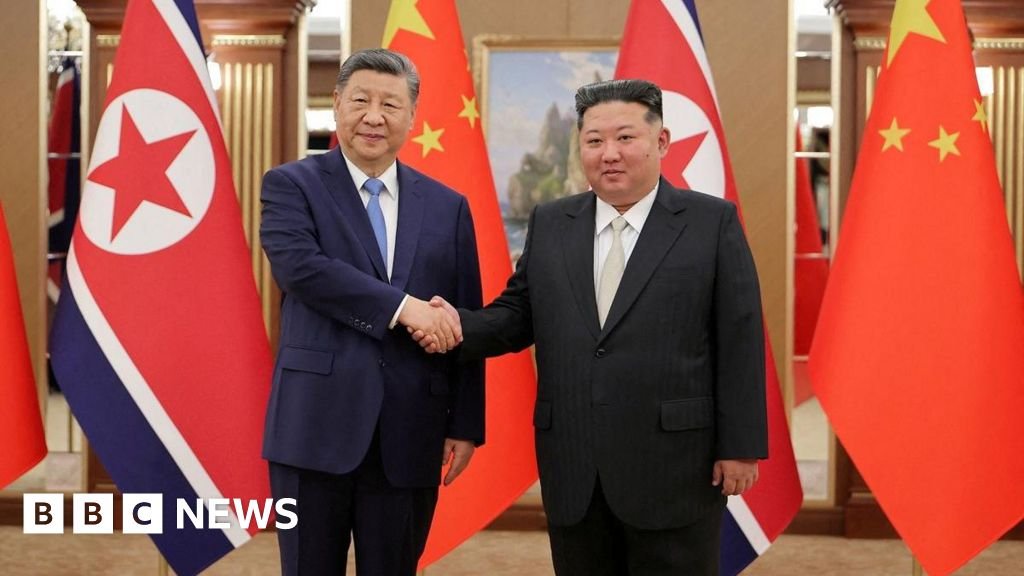
Xi Jinping's two-day state visit to Pyongyang in June 2026 marks his first official trip to North Korea since 2019, arriving at a moment when Beijing seeks to recalibrate its influence over a neighbour that has tilted toward Moscow. The Chinese president met Kim Jong Un amid a sequence of high-level engagements that included recent talks with US President Donald Trump and Russian President Vladimir Putin. This sequencing underscores Beijing's determination to prevent any erosion of its position on the Korean Peninsula while managing relations with both Washington and Moscow.
North Korean state media and Chinese outlets such as Xinhua highlighted elaborate welcoming ceremonies, including red-carpet arrivals and acrobatic performances. At the evening banquet, Xi described the two countries as "linked by mountains and rivers and share a common destiny," language that deliberately evokes historical bonds. Kim Jong Un reciprocated by reaffirming support for Beijing's "One China" principle. These public affirmations set the tone for substantive discussions that deliberately omitted any reference to denuclearisation.
Why Beijing Chose This Moment for Re-engagement
China's decision to dispatch Xi now reflects concern over North Korea's accelerating military cooperation with Russia. Since the 2022 invasion of Ukraine, Pyongyang has supplied troops and munitions to Moscow, culminating in a mutual defence pact signed during Vladimir Putin's 2024 visit to the North Korean capital. Western diplomatic sources cited by the BBC estimate that approximately 2,300 North Korean soldiers have died fighting alongside Russian forces. Beijing views this partnership as a potential vector for reduced Chinese leverage, particularly if a more confident Kim Jong Un feels less dependent on Chinese economic support.
The 65th anniversary of the 1961 Sino-North Korean defence treaty, the only formal defence pact China maintains with any country, provided a convenient diplomatic hook. Xi was accompanied by a high-level delegation that included de facto chief of staff Cai Qi, Defence Minister Dong Jun, Foreign Minister Wang Yi, and Commerce Minister Wang Wentao. Their presence signalled that the visit addressed security, economic, and party-to-party coordination simultaneously.
What Each Leader Seeks from the Relationship
Xi Jinping's primary objective remains strategic stability on China's northeastern border combined with continued influence over Pyongyang's external alignments. Beijing wants to ensure that North Korea does not become a platform for Russian power projection in Northeast Asia. At the same time, Chinese commerce data show exports to North Korea reached approximately US$2.3 billion last year, the highest level in six years, illustrating the economic dimension of leverage that Xi can deploy.
Kim Jong Un, for his part, seeks continued access to Chinese markets, technology, and diplomatic cover at the United Nations. The restart of passenger train services between Beijing and Pyongyang earlier in 2026 after a six-year suspension demonstrates practical economic reconnection that benefits both sides. Kim also gains domestic legitimacy from hosting the Chinese leader, reinforcing his image as an international statesman capable of balancing great-power relationships.
The Russia Factor and Its Implications for Chinese Influence
North Korea's mutual defence pact with Russia introduces a new variable into the triangular relationship. While Beijing and Moscow maintain close coordination on many global issues, their interests diverge on the Korean Peninsula. Analysts note that a Pyongyang less reliant on Chinese aid could pursue more autonomous policies, including further nuclear and missile development that complicates China's regional diplomacy. The presence of Defence Minister Dong Jun in Xi's delegation suggests Beijing is monitoring military-to-military ties between Pyongyang and Moscow with particular attention.
China's strategic calculus therefore prioritises preventing Russia from becoming the dominant external patron. By invoking the 65th anniversary of the defence treaty and dispatching senior officials such as Wang Yi and Cai Qi, Beijing reminds Pyongyang of the long-standing institutional framework that still binds the two capitals more tightly than any new arrangement with Moscow.
China's Leverage Mechanisms: Trade, Aid, and Treaty Obligations
Beijing's most immediate instruments remain economic. The surge in Chinese exports to US$2.3 billion last year demonstrates North Korea's continued dependence on Chinese goods and energy supplies. The resumption of direct passenger rail links further deepens this integration. Should tensions rise, China retains the ability to modulate these flows without triggering the kind of humanitarian crisis that would destabilise its own border regions.
The 1961 defence treaty, now marking its 65th year, provides a legal and symbolic foundation that Russia cannot easily replicate. Although the treaty's operational details remain opaque, its existence allows Beijing to frame any future security guarantees as consistent with long-standing obligations rather than new concessions. Commerce Minister Wang Wentao's inclusion in the delegation indicates that economic coordination will remain a central channel for managing the relationship in the months ahead.
Regional Stability and the Absence of Denuclearisation Talks
The omission of denuclearisation from official readouts carries significant implications for Northeast Asian security. Neighbouring states, particularly South Korea and Japan, will interpret the visit as evidence that Beijing is prioritising influence management over non-proliferation objectives. This approach may reduce immediate incentives for Pyongyang to engage in talks, while simultaneously heightening vigilance in Seoul and Tokyo regarding missile and nuclear developments.
For ASEAN and the broader Global South, the visit illustrates China's preference for bilateral management of sensitive security issues rather than multilateral frameworks that might constrain its freedom of action. The strategic competition between Chinese and Russian influence in Pyongyang could produce second-order effects, including greater North Korean assertiveness that tests US extended deterrence commitments in the region.
Strategic Outlook for Beijing's Northeast Asia Policy
Xi Jinping's June 2026 visit represents a calculated effort to reassert China's position as North Korea's indispensable partner at a time when alternative alignments are emerging. By combining high-level personal diplomacy with concrete economic reconnection and invocation of the 1961 treaty, Beijing seeks to limit the strategic space available to both Pyongyang and Moscow. The coming months will reveal whether these measures succeed in restoring the traditional asymmetry of dependence or whether North Korea's growing ties with Russia produce a more multipolar dynamic on the peninsula. For China, the stakes involve not only border security but also its broader claim to regional leadership in an era of intensifying great-power competition.
By Prof. Marcus Chen, Staff WriterThis article was produced with AI-assisted research and editorial support. Reporting is based on sources cited in the article.
What's Your Reaction?
 Like
0
Like
0
 Dislike
0
Dislike
0
 Love
0
Love
0
 Funny
0
Funny
0
 Wow
0
Wow
0
 Sad
0
Sad
0
 Angry
0
Angry
0

World Politics Analyst at Global1.News. Based in Beijing, covering US-China relations, global trade, and geopolitical strategy. Brings deep analytical perspective to the power dynamics shaping international affairs.















Comments (0)