
International Community Rallies Behind Philippines After Magnitude 7.8 Earthquake Devastates Mindanao
International Community Rallies Behind Philippines After Magnitude 7.8 Earthquake Devastates Mindanao The Devastating Impact on Mindanao Communities The magnitude 7.8 earthquake that struck Massim, Sarangani and nearby provinces has left deep scars across Mindanao communities. With 37 people confirmed dead, families are grappling with loss while many others have been displaced
International Community Rallies Behind Philippines After Magnitude 7.8 Earthquake Devastates Mindanao
The Devastating Impact on Mindanao Communities
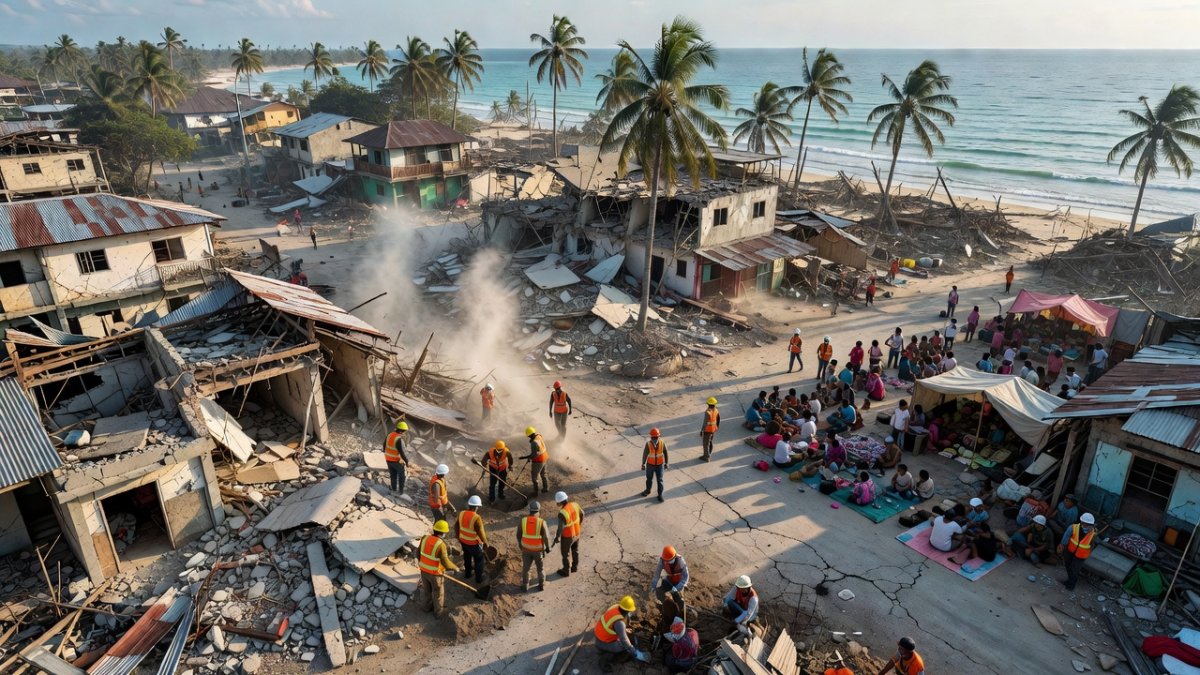
The magnitude 7.8 earthquake that struck Massim, Sarangani and nearby provinces has left deep scars across Mindanao communities. With 37 people confirmed dead, families are grappling with loss while many others have been displaced from their homes. The focus now rests on the safety and welfare of evacuees and patients in hospitals, as ordinary households in the region face the immediate challenge of rebuilding daily routines amid uncertainty.
In the aftermath, the human stories emerge from barangays where residents once gathered for fiestas and relied on the spirit of bayanihan. Displaced families now depend on coordinated relief, while patients in affected hospitals require uninterrupted care. This disaster touches farmers, workers, and students alike, reminding everyone how quickly life in these tight-knit communities can change.
Local government units are working closely with national agencies to address these needs. The emphasis remains on protecting the most vulnerable, from children worried about their safety to elders who have lost their sense of stability. Such events highlight the resilience required in provinces like Sarangani, where communities have long supported one another through trials.
International Sympathy and Solidarity Flows In
Following the earthquake, the international community has expressed sympathy and solidarity with the Philippines. Japanese Prime Minister Sanae Takaichi conveyed her condolences, while the United Nations extended its sympathies to those affected. The Canadian embassy also conveyed condolences and pledged support, and the US embassy extended its deepest sympathies.
Additional messages of solidarity arrived from the Czech Republic, France, and Germany. These expressions underscore the global recognition of the challenges facing Mindanao families. The UN World Food Program announced the deployment of staff and emergency equipment to assist in the response.
The Philippine Red Cross and other partners have begun mobilizing response teams on the ground. UNICEF has voiced particular concern about the impact on children, while the WHO expressed sympathy and condolences. This outpouring connects distant nations to the daily realities of Filipino households recovering from the quake.
Government Mobilizes Multi-Agency Response
President Marcos ordered government agencies to prioritize the safety and welfare of displaced families and patients in hospitals. He presided over a situation briefing at Malacañang and is scheduled to visit Mindanao to assess conditions firsthand. Energy Secretary Sharon Garin was instructed to speed up restoration of electricity to hospitals, ensuring critical services remain available.
DSWD Secretary Rex Gatchalian reported working with the Philippine Air Force and Coast Guard to airlift relief supplies to affected areas. The Department of Health deployed medical assistance, while the Department of Education coordinated with local government units for student safety. The Department of Information and Communications Technology reported stable connectivity in many locations.
Power has been restored in many parts of Mindanao. The DSWD provided P4.23 million in humanitarian assistance so far. Public Works Secretary Vince Dizon inspected damage across the region. A price freeze on basic goods is in effect in General Santos City for 60 days, offering some relief to households managing tight budgets.
Ensuring Learning Continuity for Students in Quake-Hit Areas
Education Secretary Sonny Angara ordered a P235.1 million allocation to ensure learning continuity in quake-hit schools. The budget will fund 130 Learning Continuity Spaces equipped with emergency power and Starlink WiFi. This step aims to keep students engaged despite disruptions to regular classrooms.
DepEd also secured P258.98 million for the printing and delivery of learning packets. A P3-billion Quick Response Fund has been set aside for structural reconstruction of damaged facilities. Guidance counselors have been deployed to provide psychological first aid to students and staff coping with the trauma.
These measures connect directly to families in Mindanao, where education remains a pathway to better opportunities. Students affected by the earthquake can continue their studies through these temporary setups, supported by coordination between DepEd and local government units. The approach reflects a commitment to protecting the next generation amid recovery efforts.
Bayanihan Spirit Shines Amidst the Crisis
The spirit of bayanihan is evident as various groups step forward to support quake-affected communities. The Senate New Majority donated one month's salary to aid relief operations. House members Lazatin and Leviste pledged donations, adding to the collective effort from national leaders.
The Bureau of Customs plans to donate confiscated goods to those in need. PhilHealth reminded affected individuals of the outpatient emergency care benefit available during this period. Such contributions echo the traditional Filipino practice of neighbors helping neighbors, extending from barangay level to national institutions.
Communities in Sarangani and surrounding provinces draw strength from this shared response. Families receiving assistance from the DSWD and partners see the practical side of solidarity, whether through airlifted supplies or restored power. This cultural value helps ordinary people navigate the path toward normalcy.
What This Means for Affected Families and Future Recovery
For families in Mindanao, the earthquake response means access to immediate humanitarian aid alongside longer-term support for housing and health. Displaced households benefit from prioritized welfare measures, while the price freeze in General Santos City helps stabilize costs for basic goods over the next 60 days.
Students stand to gain from the DepEd allocations that keep learning spaces functional. The involvement of multiple agencies, from the Department of Health to the Department of Social Welfare and Development, shows how government resources target both urgent needs and sustained recovery. International support complements these efforts by bringing additional equipment and expertise.
Ultimately, the focus on evacuees, patients, and children points to a recovery centered on people rather than infrastructure alone. As power returns and relief supplies reach communities, the combined actions of local leaders, national agencies, and global partners offer a foundation for Mindanao residents to rebuild with dignity and hope.
By Bella Reyes, Staff WriterThis article was produced with AI-assisted research and editorial support. Reporting is based on sources cited in the article.
What's Your Reaction?
 Like
0
Like
0
 Dislike
0
Dislike
0
 Love
0
Love
0
 Funny
0
Funny
0
 Wow
0
Wow
0
 Sad
0
Sad
0
 Angry
0
Angry
0

Philippines/Southeast Asia Correspondent at Global1.News. Manila-based journalist covering Philippine politics, environment, maritime security, and social issues. Passionate about marine conservation and the communities protecting the Philippines' natural heritage.











Comments (0)