
What's in the US-Iran Peace Deal?
In a recent Middle East Eye report titled "What's in the US-Iran peace deal?", analysts outline the core elements of an agreement reached after months of indirect negotiations. The coverage highlights how the deal, announced in mid-June 2026, seeks to halt active hostilities that began on February 28, 2026, and have since affected energy routes, civilian populations, and diplom
In a recent Middle East Eye report titled "What's in the US-Iran peace deal?", analysts outline the core elements of an agreement reached after months of indirect negotiations. The coverage highlights how the deal, announced in mid-June 2026, seeks to halt active hostilities that began on February 28, 2026, and have since affected energy routes, civilian populations, and diplomatic alignments across the Middle East. The conflict erupted when US and Israeli forces launched coordinated strikes on Iranian military and nuclear-related sites, prompting Tehran to close the Strait of Hormuz in retaliation and triggering more than 100 days of fighting that sent global energy prices soaring.
The roots of this latest confrontation stretch back decades, beginning with the 1979 Iranian Revolution that overthrew the US-backed Shah and established the Islamic Republic. Relations deteriorated further after the 1980-1988 Iran-Iraq War, during which Washington provided indirect support to Baghdad. The 2015 Joint Comprehensive Plan of Action offered a brief thaw by limiting Iran's nuclear activities in exchange for sanctions relief, yet the 2018 US withdrawal under the first Trump administration reimposed crippling economic measures. Subsequent years saw escalating shadow wars through proxies in Syria, Iraq, and Yemen, culminating in the February 2026 strikes that marked the first direct US-Israeli assault on Iranian soil.
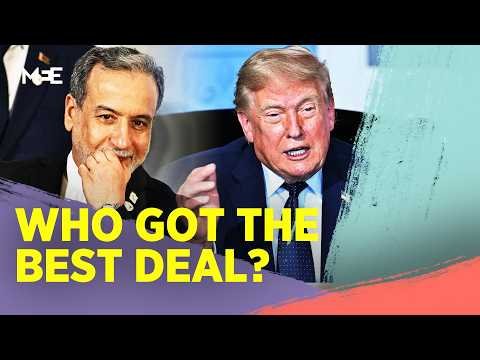
The Announcement and Mediation Process
US President Donald Trump stated on June 14, 2026, via Truth Social that the agreement with Iran was complete, using the phrase "Ships of the World, start your engines. Let the oil flow!" He further declared, "I fully authorize the toll free opening of Strait of Hormuz" and ordered the "immediate removal of US Naval blockade." Pakistani Prime Minister Shehbaz Sharif played a central role in the talks as lead mediator, which also involved officials from Qatar, Saudi Arabia, and Turkey. Iranian Deputy Foreign Minister Kazem Gharibabadi indicated the formal signing would occur on June 19, 2026, in Switzerland under the name Islamabad Memorandum, named after the Pakistani capital where key breakthroughs occurred. Vice President JD Vance confirmed the deal was "already signed digitally" on Sunday ahead of the ceremony.
The timeline places the announcement after a fragile April 2026 ceasefire that failed to hold and broke down repeatedly amid renewed exchanges. If implemented as described, the memorandum would mark the first comprehensive pause in operations since the conflict opened with US and Israeli strikes on Iranian targets. Iran's Supreme Leader Mojtaba Khamenei, who succeeded his father Ali Khamenei, endorsed the framework as a pragmatic step to protect national sovereignty while addressing immediate economic pressures.
Core Provisions Outlined So Far
Known terms include an immediate and permanent end to military operations on all fronts, explicitly covering Lebanon. The US naval blockade would lift beginning the night of the announcement, and the Strait of Hormuz would reopen for commercial traffic. Iran had restricted passage through the strait since late February 2026, affecting roughly 20 percent of global oil transit at the time. Iran's Mehr news agency reported the strait would reopen within 30 days under "Iranian arrangements" to ensure security. A 60-day window for technical talks on Iran's nuclear program would begin after the signing, with specific attention to the country's enriched uranium stockpile. Figures on exact stockpile levels were not immediately available from Iranian or US sources. The E4 group of the United Kingdom, France, Germany, and Italy issued a joint statement welcoming the framework and emphasizing energy stability.
The 60-day technical phase is expected to address International Atomic Energy Agency access to Iranian nuclear sites, enrichment levels, and stockpile monitoring. Verification challenges include real-time monitoring of centrifuge operations and satellite surveillance of known facilities, with negotiators likely addressing snap inspections and data-sharing protocols to prevent covert weaponization pathways.
Trump told The New York Times he would restart attacks if no nuclear deal emerged within 60 days, underscoring the conditional nature of the pause. Iran maintains its nuclear program is peaceful and has not agreed to dispose of enriched material, leaving verification as a central challenge for the upcoming technical phase.
Iran's Perspective and Stated Gains
Tehran has framed the agreement as recognition of its regional position after withstanding sustained pressure. Iranian officials have pointed to the termination of the naval blockade and the reopening of the Strait of Hormuz as measures that could ease economic strain on ordinary citizens. The 60-day technical period is presented as an opportunity to address nuclear concerns without immediate further escalation. Local analysts in Iran note that any sustained reduction in hostilities could allow attention to shift toward domestic recovery, though they caution that full compliance by all parties remains to be tested. The deal does not yet address longer-term sanctions relief or reconstruction funding.
Under Mojtaba Khamenei's leadership, Iranian state media highlighted how the Islamabad Memorandum preserves the country's right to peaceful nuclear activities while restoring maritime access critical for oil exports. Residents across major cities expressed cautious optimism that reduced tensions might alleviate shortages and inflation triggered by the prolonged closure of the strait.
Israeli Opposition and Security Concerns
Israeli officials responded critically. Defense Minister Israel Katz stated that Israel would not withdraw from Lebanese territory and warned that Israel would strike Iran with "great force" if attacked. Finance Minister Bezalel Smotrich described the agreement as detrimental to Israel and the broader international community, calling the deal "bad for Israel." These statements reflect ongoing Israeli operations in Lebanon that Lebanese authorities say have killed more than 3,700 people since March 2, 2026. Israeli concerns center on verification mechanisms for the nuclear provisions and the absence of explicit guarantees regarding Iranian support for allied groups in the region. The government's position suggests that implementation could face domestic political resistance inside Israel.
Israeli leaders have emphasized that any perceived weakening of deterrence could embolden adversaries, with Katz reiterating that operations in Lebanon would continue regardless of the US-Iran framework. This stance has raised questions about whether the ceasefire can extend fully to all fronts as envisioned in the memorandum.
Global Reactions and Next Steps
UK Prime Minister Keir Starmer called for prompt reopening of the Strait of Hormuz to stabilize energy markets. The United Arab Emirates urged full compliance with all terms. World leaders from multiple regions issued statements of cautious support, emphasizing the need for verifiable steps in the coming weeks. The E4 nations stressed that energy stability remains a priority for European economies still recovering from earlier price shocks.
Global oil markets have experienced sustained volatility throughout the conflict, with prices fluctuating sharply based on developments in the Strait of Hormuz. Analysts project that sustained Hormuz access could ease prices toward pre-conflict levels within months, yet volatility remains tied to compliance signals from Tehran and Washington.
The next immediate milestone is the June 19 signing in Switzerland. Technical negotiations on the nuclear file are scheduled to begin shortly afterward. Observers note that previous pauses in fighting proved short-lived, making sustained monitoring essential. Pakistan's role as lead mediator has drawn international praise for facilitating dialogue among diverse regional actors including Qatar, Saudi Arabia, and Turkey.
Humanitarian Stakes Across the Region
The conflict has already driven global energy prices higher and interrupted shipping lanes, effects felt most acutely by households in Lebanon, Iran, and neighboring states. In Lebanon, continued Israeli strikes have compounded existing economic pressures on families already managing displacement and infrastructure damage. More than 3,700 deaths since early March underscore the human cost, with many civilians lacking access to basic services amid the fighting. Inside Iran, residents have faced shortages and rising costs tied to the blockade and restricted maritime access, exacerbating vulnerabilities for low-income communities.
Displacement figures across the region remain difficult to verify independently, though humanitarian organizations have reported significant population movements since the conflict intensified in March. Economic data on the full cost of the war has been slow to emerge, with comprehensive assessments still underway by international financial institutions.
Palestinian communities in the broader region watch developments closely, given historical linkages between Iranian policy and the wider Palestinian question. Any durable reduction in hostilities could ease some cross-border tensions, yet the human recovery from thousands of deaths and widespread disruption will require sustained attention beyond the initial signing. Civilian priorities remain centered on safe return for the displaced, access to medical care, and predictable economic conditions. The Islamabad Memorandum addresses military operations but leaves detailed humanitarian coordination for later phases, raising concerns among aid organizations about gaps in protection for affected populations.
For Palestinian communities, the deal carries mixed implications. Reduced Iranian-Hezbollah coordination might lessen pressure on northern Israeli borders, potentially freeing resources for Gaza reconstruction talks, yet weakened regional deterrence could embolden further settlement expansion in the West Bank. Broader Middle East stability hinges on whether the pause translates into renewed diplomatic momentum for a two-state framework amid ongoing economic fallout affecting refugee populations in Jordan and Syria.
Regional analysts stress that long-term stability hinges on addressing root causes such as sanctions, reconstruction needs, and verification of nuclear commitments. Without parallel progress on these fronts, the risk of renewed escalation remains high, particularly given the fragile nature of prior ceasefires. The involvement of multiple mediators offers hope for broader buy-in, yet implementation will test the commitment of all parties over the coming months.
By Fatima Al-Rashid, Staff WriterThis article was produced with AI-assisted research and editorial support. Reporting is based on sources cited in the article.
What's Your Reaction?
 Like
0
Like
0
 Dislike
0
Dislike
0
 Love
0
Love
0
 Funny
0
Funny
0
 Wow
0
Wow
0
 Sad
0
Sad
0
 Angry
0
Angry
0
Gulf/MENA Correspondent at Global1.News. Based in Doha, covering Gulf politics, energy markets, diplomacy, and development across the Middle East and North Africa. Tracks the economic transformation of the Gulf states.










Comments (0)