
Wars may end, but displacement persists: Where is humanitarianism in the US-Iran war?
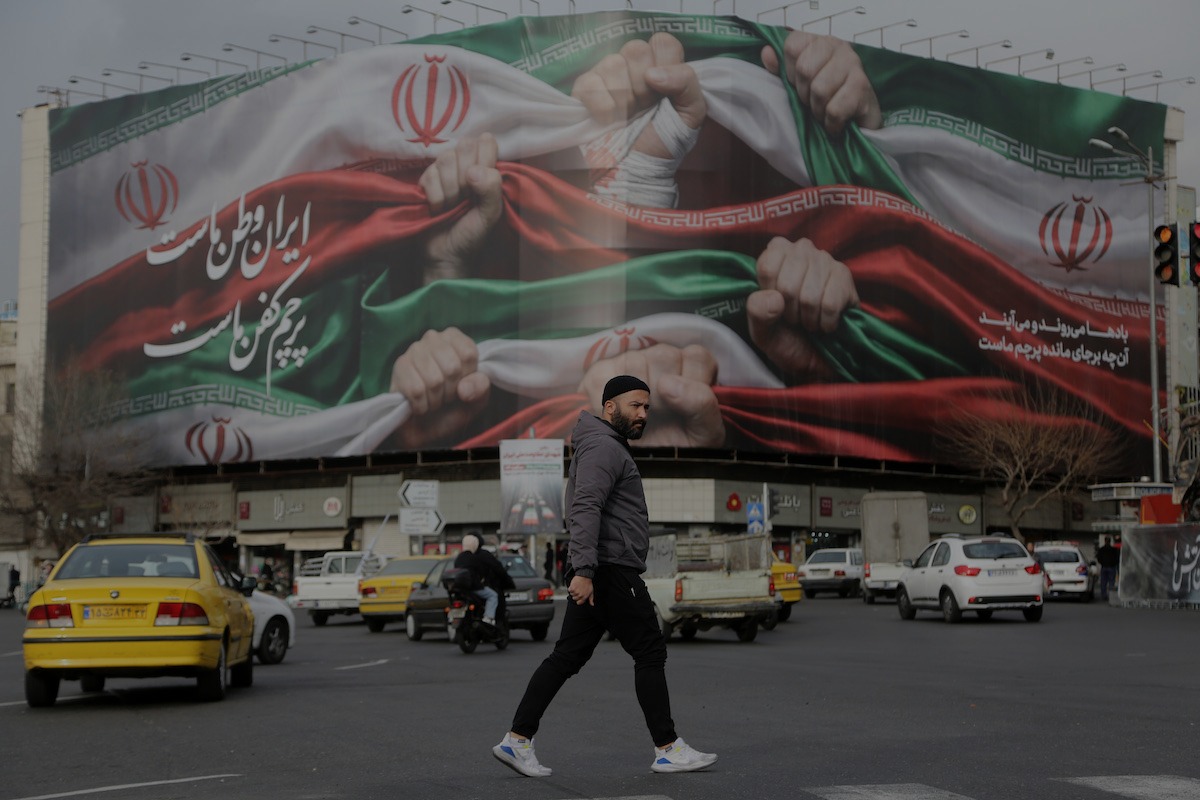
Wars may end, but displacement persists: Where is humanitarianism in the US-Iran war?
The 2026 Middle East war, ignited by U.S. and Israeli strikes under Operation Epic Fury on January 12, has shattered any illusion that military campaigns conclude with ceasefires. While initial bombardment targeted Iranian nuclear facilities and command centers, the operation’s most enduring legacy is a humanitarian catastrophe: over 4.2 million people displaced across Iran, Iraq, and neighboring states. The targeted killing of Supreme Leader Ayatollah Ali Khamenei and at least seven senior Revolutionary Guard commanders has left a power vacuum that fuels both internal fragmentation and cross-border flight.
Operation Epic Fury: From Strikes to Systemic Collapse
U.S. Central Command confirmed 187 precision strikes in the first 72 hours, hitting Natanz, Fordow, and military installations near Tehran. Israeli F-35 sorties supplemented the campaign, destroying air-defense radars and ballistic-missile silos. Within ten days, Iranian state media reported Khamenei’s assassination in a bunker strike outside Qom. The resulting leadership contest between hard-line clerics and pragmatic military factions has paralyzed aid coordination inside Iran.
Independent satellite analysis by the International Crisis Group shows 31 percent of Iran’s urban housing stock damaged or destroyed in Tehran, Isfahan, and Shiraz provinces. Electricity grids in western Iran remain at 38 percent capacity, forcing hospitals to ration oxygen and dialysis. These conditions, rather than battlefield victories, drive the displacement surge.
Displacement by the Numbers
UNHCR’s March 2026 flash appeal documents 2.8 million internally displaced persons inside Iran and 1.4 million who have crossed borders. Iraq hosts 680,000 new arrivals, overwhelming camps already sheltering Syrian and Yemeni refugees. Turkey reports 310,000 Iranian nationals entering through the Van corridor since February, many traveling with only identity documents and cash reserves depleted by hyperinflation. Afghanistan’s Herat province has absorbed 240,000, while smaller flows reach Armenia and Pakistan.
Women and children comprise 64 percent of the displaced population, according to UNICEF field assessments. Female-headed households face acute protection risks in makeshift camps lacking segregated sanitation. Elderly civilians with chronic illnesses have been left behind in bombed urban neighborhoods; Doctors Without Borders recorded a 47 percent rise in untreated diabetes and hypertension cases in western Iran last month.
Humanitarian Access Denied
Despite repeated appeals from the UN Office for the Coordination of Humanitarian Affairs, U.S. Treasury licenses for emergency medical shipments remain stalled. Existing sanctions on Iranian banks block even neutral Swiss intermediaries from transferring funds. A senior OCHA official, speaking on condition of anonymity, stated: “We have 42,000 metric tons of ready-to-use therapeutic food in Dubai warehouses, yet zero legal pathway to deliver it.”
Regional states cite security concerns. Iraq’s parliament passed legislation in late February restricting Iranian refugee inflows to 50,000 per month, citing fears of infiltration by remaining Revolutionary Guard elements. Turkey has closed three border crossings since March 3, redirecting arrivals to remote tent cities with limited water trucking.
Expert Perspectives on Prolonged Displacement
Dr. Leila Haddad, a migration scholar at Birzeit University, notes parallels with Palestinian displacement since 1948: “Once populations are uprooted by great-power conflict, return rarely occurs on terms set by the displaced themselves.” Her research team projects that without immediate reconstruction guarantees, 60 percent of current Iranian refugees will remain in host countries beyond 2030.
Former UN Special Rapporteur on the Right to Food, Hilal Elver, emphasizes the compounding effect of climate stress: “Iran’s central plateau already faces severe drought. War damage to irrigation canals accelerates desertification, making agricultural livelihoods impossible for at least two planting seasons.”
Regional Stability at Risk
The power vacuum inside Iran has revived proxy skirmishes along the Iraq-Syria border. Kurdish groups report increased Iranian militia movements near Sulaymaniyah, while Shia militias in southern Iraq have mobilized to prevent Sunni refugee flows. Oil markets have priced in a sustained 18 percent premium, raising global food and transport costs that hit import-dependent Palestinian territories especially hard.
Meanwhile, reconstruction financing remains frozen. The World Bank estimates $187 billion needed for basic infrastructure repair, yet no donor conference has been scheduled. European governments, wary of secondary sanctions, have limited contributions to small-scale NGO projects that cannot scale.
The Human Cost Behind Statistics
In a makeshift camp near Erbil, 34-year-old teacher Zahra Moradi described fleeing Isfahan after her apartment block was hit: “My students ask when they can go home. I have no answer. The world speaks of ‘de-escalation,’ but our children sleep on plastic sheets.” Similar testimonies echo across camps, underscoring that displacement outlasts any single military operation.
Palestinian civil-society organizations have drawn explicit connections. The Palestinian Human Rights Council issued a statement last week condemning the selective application of international humanitarian law, noting that sanctions regimes routinely obstruct aid to populations labeled adversaries.
History demonstrates that displacement becomes permanent when political will for return and reparations is absent. The 2026 war’s true measure will not be battlefield tallies but the generations denied the right to rebuild.
This is Fatima Al-Rashid for Global1 News, reporting from Ramallah. 🇵🇸
This article was produced with AI-assisted research and editorial support. Reporting is based on sources cited in the article.
What's Your Reaction?
 Like
0
Like
0
 Dislike
0
Dislike
0
 Love
0
Love
0
 Funny
0
Funny
0
 Wow
0
Wow
0
 Sad
0
Sad
0
 Angry
0
Angry
0
Gulf/MENA Correspondent at Global1.News. Based in Doha, covering Gulf politics, energy markets, diplomacy, and development across the Middle East and North Africa. Tracks the economic transformation of the Gulf states.










Comments (0)