
Villas, cars and cash: Italy seizes dead Mafia mobster's millions
Villas, cars and cash: Italy seizes dead Mafia mobster's millions The Operation That Hit the Heart of Cosa Nostra's Fortune Italian authorities have just dropped the hammer on the financial empire of the late Matteo Messina Denaro, seizing villas, luxury vehicles, cash stockpiles and business fronts worth tens of millions of euros. The raids, executed across Sicily and mainland
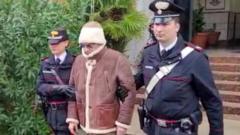
Villas, cars and cash: Italy seizes dead Mafia mobster's millions
The Operation That Hit the Heart of Cosa Nostra's Fortune
Italian authorities have just dropped the hammer on the financial empire of the late Matteo Messina Denaro, seizing villas, luxury vehicles, cash stockpiles and business fronts worth tens of millions of euros. The raids, executed across Sicily and mainland Italy this week by the Direzione Investigativa Antimafia, targeted the inner circle that kept the "Diabolik" boss's money flowing even while he hid for three decades. Police say the action wasn't symbolic—it was a deliberate strike at the network that turned drug trafficking, extortion and public contracts into generational wealth.
Officials confirmed the seizure includes multiple properties in Castelvetrano and Trapani, a fleet of high-end cars including Ferraris and Range Rovers registered through shell companies, and bank accounts holding over €20 million in liquid assets. The move comes months after Messina Denaro's death in a maximum-security prison hospital from colon cancer. Prosecutors aren't waiting for heirs to redistribute the loot. They're ripping it out now.
Who Was Matteo Messina Denaro and Why His Money Still Matters
Messina Denaro rose through the Corleonesi faction after the 1992 bombings that killed judges Giovanni Falcone and Paolo Borsellino. He became the last of the old-school bosses who dictated terms from the shadows, ordering hits while living openly in his hometown under fake identities. His capture in January 2023 ended a 30-year manhunt that cost Italian taxpayers millions. Yet the real power never sat with the man—it sat with the money.
Unlike flashy narco-lords in Mexico, Messina Denaro's operation stayed low-profile. Front companies won EU-funded infrastructure bids. Relatives bought real estate in Palermo and abroad. The cash bought silence from local politicians and police. When he died behind bars, investigators feared the assets would simply transfer to cousins and lieutenants. Instead, the DIA moved fast with wiretaps, financial tracking and cooperation from two turncoats who named every account.
International Reach and Money Trails Across Borders
This isn't just a Sicilian story. Messina Denaro's network moved cocaine through Venezuelan and Colombian contacts, then laundered proceeds through Swiss banks and Spanish real-estate firms. Italian prosecutors have already flagged properties in Barcelona and bank records in Lugano. The U.S. Treasury's sanctions list still carries several Messina Denaro associates, a reminder that American law enforcement watched the same pipelines feeding heroin into East Coast cities decades ago.
European police agencies are now comparing notes. German authorities flagged similar laundering patterns tied to Italian clans in Berlin construction projects. French investigators noted parallel tactics in Marseille port rackets. The Messina Denaro seizures prove that killing or jailing the boss means nothing if the accountants stay free. Cut the cash flow and the organization starves.
Analysis: Dismantling an Empire That Outlives Its Leader
Italy has tried this before. After Bernardo Provenzano's arrest, assets were clawed back but the structure adapted. Messina Denaro's case is different because prosecutors now have digital trails from encrypted phones and cryptocurrency wallets used by younger operators. The seized villas weren't vacation homes—they doubled as meeting points for bid-rigging on wind-farm contracts in western Sicily. Those contracts represent real economic damage: overpriced public works that shortchanged hospitals and roads.
The opinionated truth is this: romantic portrayals of the Mafia as family defenders ignore the body count and the stolen future. Every euro taken from a rigged tender is a euro not spent on schools in Palermo's poorest neighborhoods. Local business owners who refused to pay pizzo watched their shops burned. Messina Denaro's death changes none of that unless the financial skeleton is crushed. So far, the numbers look promising—€45 million in confirmed assets and counting.
Reactions From Rome to Washington
Italian Interior Minister Matteo Piantedosi called the operation "a message that no one is untouchable, even in death." Anti-Mafia prosecutor Maurizio de Lucia emphasized that the seizures target not just relatives but complicit professionals—accountants, notaries and construction bosses—who kept the machine running. In Washington, the FBI's organized-crime section issued a quiet statement of support, noting ongoing joint task force work on transatlantic laundering.
Back in Trapani, residents are watching bulldozers and police tape with mixed feelings. Some see long-overdue justice. Others fear retaliation from remaining foot soldiers who still collect protection money in the markets. The DIA has increased patrols, but history shows that vacuum left by one boss gets filled quickly unless the money stays frozen.
The broader lesson for global law enforcement is clear: focus on the balance sheets. Messina Denaro lived modestly on the run for years, but his network's wealth bought influence that outlasted him. Italy's latest move proves that aggressive asset forfeiture, paired with financial intelligence, can deliver blows that prison sentences alone cannot. Whether this breaks the back of the remaining clans or merely slows them down remains the open question. For now, the villas sit empty, the cars sit impounded, and the cash sits in government accounts where it belongs.
This is Jessica Ali for Global1 News. 🔥
This article was produced with AI-assisted research and editorial support. Reporting is based on sources cited in the article.
What's Your Reaction?
 Like
0
Like
0
 Dislike
0
Dislike
0
 Love
0
Love
0
 Funny
0
Funny
0
 Wow
0
Wow
0
 Sad
0
Sad
0
 Angry
0
Angry
0

Editor-in-Chief at Global1.News. Atlanta-based journalist who cuts through the BS and tells it like it is. Lead anchor, host, and the voice you hear when the spin stops and the truth starts.












Comments (0)