
Venezuela Twin Earthquakes: 1,700 Dead as Communities Forced to Self-Rescue
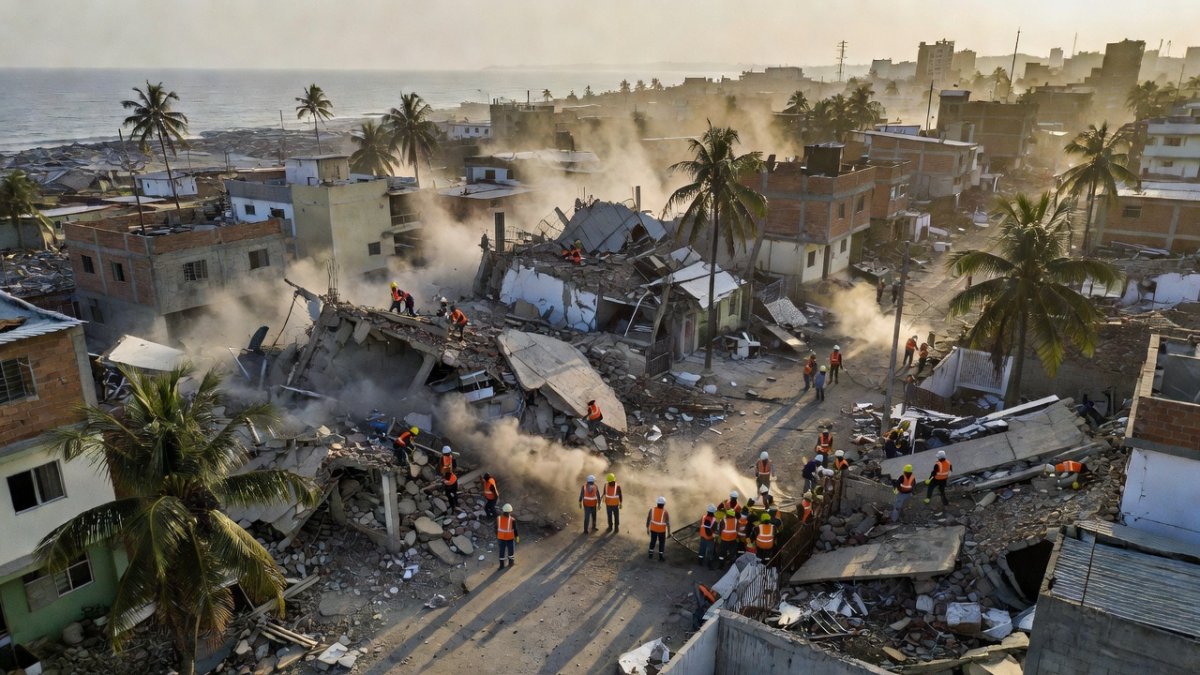
The Twin Earthquakes That Shook Venezuela's Coast The twin earthquakes struck Venezuela's northern coast on Wednesday last week, registering magnitudes of 7.2 and 7.5 within a span of just 39 seconds. The epicenter was located in the northern state of La Guaira, a port area close to the capital Caracas, where the ground shook violently enough to bring down entire neighborhoods
The Twin Earthquakes That Shook Venezuela's Coast
The twin earthquakes struck Venezuela's northern coast on Wednesday last week, registering magnitudes of 7.2 and 7.5 within a span of just 39 seconds. The epicenter was located in the northern state of La Guaira, a port area close to the capital Caracas, where the ground shook violently enough to bring down entire neighborhoods in moments. Residents described the event as an unrelenting force that left little time for reaction before the second, stronger tremor followed.
(Global 1 News)
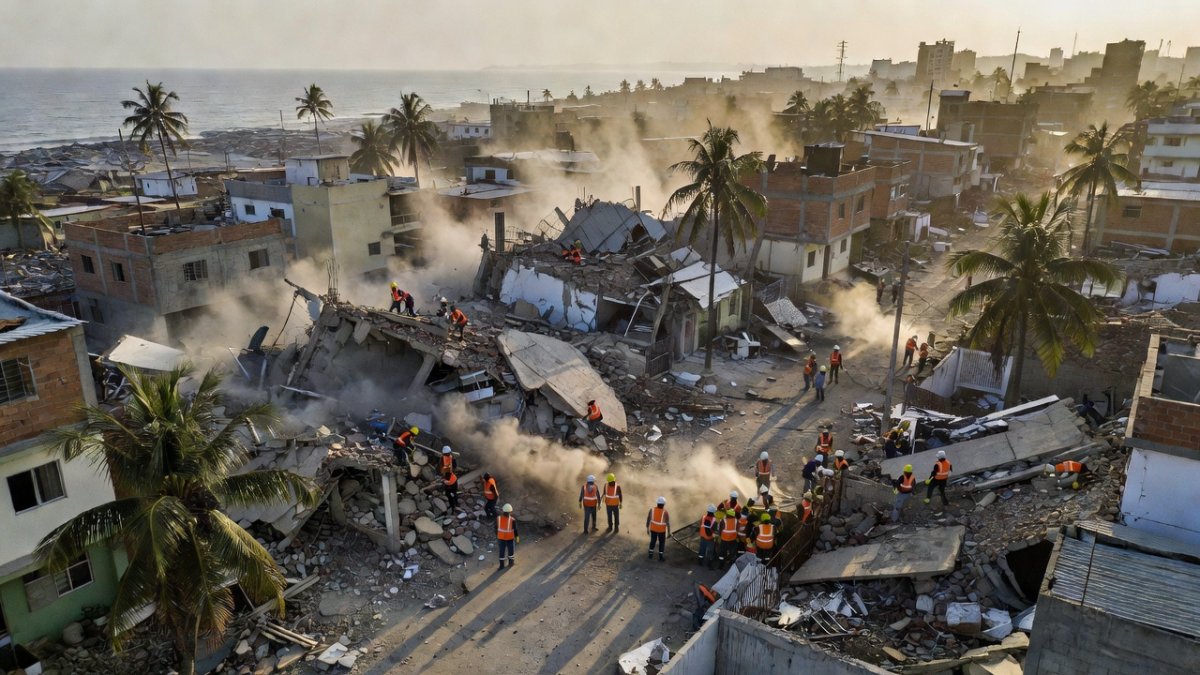
Approximately 800 buildings collapsed completely while another 2,500 structures suffered serious damage across the affected zone. The destruction concentrated in densely populated coastal communities where older construction proved especially vulnerable. Streets filled with rubble as power lines snapped and water supplies were cut off almost immediately after the shaking stopped.
At least 1,700 people lost their lives in the disaster, with tens of thousands more reported missing in the initial days. Rescue operations faced enormous challenges because of the scale of collapsed concrete and twisted metal that buried neighborhoods. More than 500 aftershocks continued to rattle the region, keeping survivors on edge and complicating efforts to search unstable ruins.
Interim President Delcy Rodríguez described the events as the most brutal natural catastrophe in Venezuela's history. The government quickly mobilized over 25,000 emergency workers to the hardest-hit areas, though the sheer number of affected sites stretched resources thin from the outset. The combination of high death toll, widespread structural failure, and ongoing seismic activity created a scene of devastation rarely seen in the country's recent past.
Communities Forced to Dig With Their Bare Hands
Local volunteers stepped forward immediately when official equipment proved insufficient for the task of reaching those trapped beneath rubble. Ruben Rojas, a 32-year-old electrician, worked through the debris wearing only gloves and a hard hat because civil protection teams lacked proper tools for the collapsed buildings. He joined neighbors who used whatever was at hand to clear paths into pancaked structures.
Carolyn Zerpa, 39, spent hours searching by hand for her father and brother among the remains of their home. As days passed without signs of life, the effort gradually shifted from rescue to recovery, yet she continued alongside others who refused to abandon the sites. The physical toll of moving heavy concrete fragments without machinery became evident in the exhausted faces of these community members.
Juan Avendo, 60, responded to screams he heard coming from beneath a pile of debris and managed to pull one woman free using only his bare hands. His actions reflected the determination of many residents who organized themselves into informal teams to cover areas that larger operations had not yet reached. These efforts often took place under the threat of further aftershocks that could destabilize already precarious ruins.
William Rodrigues joined the search for his uncle, describing the overpowering stench that grew stronger with each passing hour as a grim reminder of the urgency. Together with other volunteers, he worked in shifts to clear pathways, motivated by the knowledge that time was running out for anyone still alive beneath the surface. The collective action of these individuals highlighted how local initiative filled critical gaps in the early response.
Stories of Survival Against the Odds
Dayana Patino was rescued from her eighth-floor apartment along with her 18-day-old baby Juan David after her leg became trapped under fallen debris. She clung to a bible for hope during the long wait, drawing strength from the belief that survival remained possible. Her brother eventually located her and helped coordinate the careful removal of rubble that allowed both mother and child to be freed.
Her husband Gerson had been outside in their car when the earthquakes hit and survived the initial shaking. Upon learning that his family was trapped, he refused to leave the area, later stating that as long as he remained alive he would ensure they stayed alive too. When he finally saw his son after the rescue, Gerson said he felt born again, overwhelmed by the relief of reunion.
The experience left the young family with profound gratitude for the narrow margin by which they escaped greater harm. Dayana later recounted how the sound of her baby's cries had kept her focused during the darkest moments of entrapment. Their story quickly spread among survivors as an example of resilience amid overwhelming destruction.
Aaron Levi Cantillo Vargas, 21, was pulled from the ruins in Caraballeda after remaining trapped for more than 100 hours. Rescue teams worked methodically to reach him, navigating unstable sections of the building that had partially collapsed. His survival after such an extended period offered a rare moment of hope in an otherwise grim sequence of recoveries.
Government Response Under Fire
Kevin Montilla, 34, voiced sharp criticism of the official effort, noting that rescue operations began very late and that only community members provided meaningful help in the first critical hours. He described the government response as frustrating and impotent, leaving residents to manage with limited resources while waiting for organized assistance. Many shared his view that delays worsened the outcome for those still reachable in the rubble.
Deilisbeth Herreira, a single parent, waited in vain for help to reach her daughters Greydelys, 12, and Graybelys, 13, who had been at home when the buildings fell. The absence of timely support forced families like hers to confront the disaster largely on their own. Her account underscored the uneven reach of emergency services across affected neighborhoods.
Zuly Marín pointed out that the slow pace of the response was further hampered by the country's ongoing economic crisis, which limited access to heavy machinery and trained personnel. The combination of these factors created bottlenecks that volunteers could only partially overcome. Observers noted that pre-existing conditions made rapid mobilization more difficult than it might otherwise have been.
Interim President Delcy Rodríguez later addressed some of these concerns while announcing that a commission chaired by National Assembly President Jorge Rodríguez would oversee coordination of recovery activities. The body was tasked with streamlining efforts among the various groups already on the ground. Officials emphasized that lessons from the initial phase would guide improvements in the days ahead.
(Global 1 News)
International Aid and the Long Road Ahead
The United States provided 300 million dollars in assistance to support immediate relief and longer-term rebuilding. This funding arrived alongside 10,000 body bags from a United Nations agency, reflecting the grim recognition of the scale of loss. International contributions helped supplement local supplies that had been stretched thin by the volume of casualties.
Rescue teams from Colombia, Mexico, and El Salvador joined Venezuelan workers in targeted operations, bringing specialized equipment and additional manpower to sites where progress had slowed. Their combined presence allowed for more systematic searches in multi-story buildings that had proven especially challenging. Coordination among these groups focused on maximizing coverage of the hardest-hit zones.
Miguel Oscar Nunez, whose 34-year-old son Angel remained trapped inside a 12-storey building, followed the progress of these international teams closely. He expressed cautious optimism that the added resources might improve chances for those still unaccounted for. Families in similar situations watched each new arrival of foreign personnel with renewed hope.
Despite the influx of outside support, the path to recovery appeared lengthy given the extent of destruction across La Guaira. Officials stressed that restoring basic services and clearing debris would require sustained effort well beyond the initial rescue phase. The arrival of international aid marked an important step, yet the underlying challenges of reconstruction remained substantial.
What the Disaster Means for Latin America
The earthquakes prompted renewed discussion about regional cooperation in disaster response across Latin America. Neighboring countries demonstrated solidarity by sending trained teams and supplies, illustrating how shared resources can strengthen collective capacity when individual nations face overwhelming events. Such collaboration may serve as a model for future incidents that cross borders in impact.
Lessons for other earthquake-prone nations emerged from the Venezuelan experience, particularly regarding the importance of rapid community-level action when official systems are delayed. The effectiveness of volunteers who worked with minimal equipment highlighted both the value of local knowledge and the need for better prepositioned tools. Countries with similar seismic risks began reviewing their own preparedness plans in light of these observations.
Venezuela's economic context added another layer of complexity, as limited financial reserves constrained the speed at which heavy equipment could be deployed. Zuly Marín noted that these pre-existing pressures amplified the difficulties of mounting an effective response. Observers suggested that addressing economic vulnerabilities could improve resilience ahead of future natural events.
Overall, the disaster underscored the interconnected nature of disaster management in the region, where timely information sharing and joint training exercises might reduce casualties in subsequent crises. Nations throughout Latin America watched the unfolding situation closely, recognizing parallels with their own geographic and economic circumstances. The emphasis shifted toward building more robust frameworks that integrate both governmental and community capabilities.
By Elena Vasquez, Staff WriterThis article was produced with AI-assisted research and editorial support. Reporting is based on sources cited in the article.
What's Your Reaction?
 Like
0
Like
0
 Dislike
0
Dislike
0
 Love
0
Love
0
 Funny
0
Funny
0
 Wow
0
Wow
0
 Sad
0
Sad
0
 Angry
0
Angry
0

Latin America Correspondent at Global1.News. Based in Mexico City, covering politics, economics, energy, and culture across the region. Brings an on-the-ground perspective to stories spanning from the Rio Grande to Patagonia.









Comments (0)