
US and Iran Trade Devastating Strikes as Tehran Announces Strait of Hormuz Closure
THE APACHE DOWN On June 8, a United States Army AH-64 Apache helicopter crashed near the Strait of Hormuz in what quickly escalated into a major flashpoint between Washington and Tehran. The two American crew members were successfully rescued by nearby naval forces, according to statements from the Pentagon. President Trump immediately took to Truth Social to accuse Iran of sho
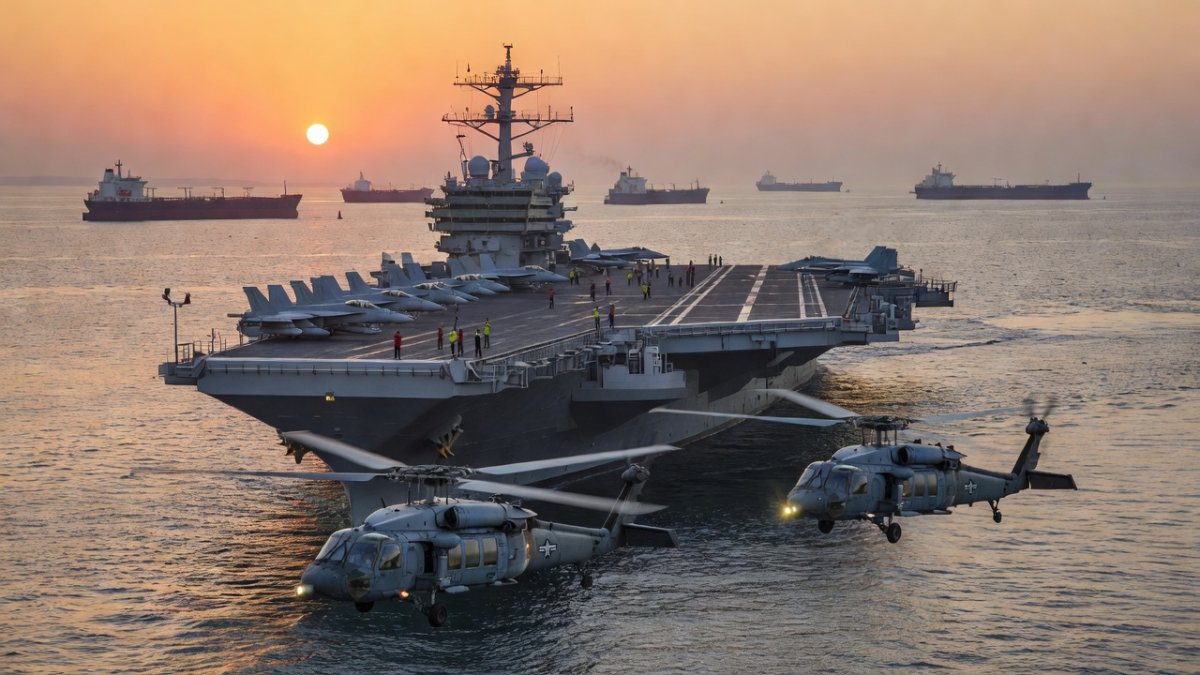
THE APACHE DOWN
On June 8, a United States Army AH-64 Apache helicopter crashed near the Strait of Hormuz in what quickly escalated into a major flashpoint between Washington and Tehran. The two American crew members were successfully rescued by nearby naval forces, according to statements from the Pentagon. President Trump immediately took to Truth Social to accuse Iran of shooting down the aircraft, declaring that such aggression would not go unanswered. This incident marked a sharp deterioration in an already tense standoff that had simmered for months.
NBC News reported that preliminary assessments pointed to a possible collision with an Iranian drone operating in the same airspace, though no official confirmation has been released. The United States Central Command, known as CENTCOM, immediately launched a full investigation into the crash site and surrounding circumstances. Military analysts noted that the Apache was conducting routine patrol operations when contact was lost, raising questions about Iranian air defense activity in the region. Reuters cited unnamed defense officials who described the event as the trigger for subsequent American military action.
The crash occurred amid heightened patrols following repeated violations of a fragile ceasefire that had been in place since April. AP sources embedded with rescue teams confirmed that both crew members sustained only minor injuries and were transported to a nearby aircraft carrier for medical evaluation. Trump’s public statements framed the incident as deliberate Iranian hostility, while Tehran denied any involvement and accused the United States of fabricating evidence to justify further strikes. BBC correspondents in the region reported increased naval movements on both sides in the hours following the downing.
Al Jazeera’s coverage emphasized the strategic location of the crash, just outside Iranian territorial waters but within the heavily trafficked Strait of Hormuz corridor. The incident immediately drew international attention because of its potential to disrupt global energy routes. CENTCOM’s investigation continues with forensic teams examining wreckage recovered from the sea, and officials have promised a transparent report once all facts are verified. This single event set in motion a chain of retaliatory measures that have now placed the region on the brink of wider conflict.
AMERICA STRIKES BACK
On June 10 at precisely 5:15 PM Eastern Time, CENTCOM executed coordinated strikes against multiple targets inside Iran. The operation focused on facilities near Bandar Abbas, Iran’s primary naval base, as well as sites in Sirik and on Qeshm Island. Pentagon briefings confirmed that precision munitions were used to neutralize what officials described as command-and-control nodes and ammunition storage areas supporting Iranian Revolutionary Guard naval units.
Water storage tanks in Hormozgan province were also struck, leaving approximately 20,000 civilians without access to clean water according to local Iranian reports relayed by Reuters. This marked the second consecutive day of American military action following the Apache helicopter incident. AP journalists on the ground in the region documented secondary explosions at several of the targeted locations, indicating the presence of stored ordnance. The strikes were carried out by a combination of carrier-based aircraft and long-range missiles launched from naval vessels in the Arabian Sea.
Trump administration officials told BBC that the targets were selected to degrade Iran’s ability to threaten shipping lanes and American forces in the Persian Gulf. Iranian state media condemned the attacks as acts of war and vowed a proportionate response. Al Jazeera reported that hospitals in Bandar Abbas received dozens of casualties, though exact figures remain unconfirmed due to restricted access for international observers. The operation represented a significant escalation from previous limited exchanges and signaled Washington’s willingness to conduct deeper strikes inside Iranian territory.
Military analysts cited by Reuters noted that the choice of targets near Bandar Abbas directly challenged Iran’s naval projection capabilities in the Strait of Hormuz. CENTCOM released video footage showing successful hits on several structures, though independent verification remains limited. The strikes have drawn mixed reactions from allies, with some European nations calling for immediate de-escalation talks while others expressed support for protecting freedom of navigation. This second day of operations has now established a pattern of tit-for-tat military exchanges with no immediate off-ramp in sight.
IRAN'S RETALIATION - 18 TARGETS AND A BLOCKADE
Following the American strikes, Iran’s Islamic Revolutionary Guard Corps launched retaliatory attacks against 18 United States military positions across Jordan, Kuwait, and Bahrain. Iranian state television broadcast footage of missile launches and claimed direct hits on several American forward operating bases. AP sources confirmed explosions at facilities in Kuwait and Jordan, though casualty figures have not been officially released by the Pentagon.
Iran’s joint military command then declared the Strait of Hormuz closed to all vessels, including oil tankers and commercial shipping. The IRGC warned that any ship attempting passage would be fired upon without further notice. This blockade announcement immediately raised alarms across global energy markets because the strait handles roughly one-fifth of the world’s oil supply. Reuters reported that several tankers already in transit reversed course upon receiving the Iranian warning.
The United States military quickly countered that the Strait of Hormuz is not closed and that commercial shipping continues under naval escort. Trump publicly disputed Iran’s claim on social media, stating that American forces would ensure safe passage for all legitimate traffic. BBC correspondents monitoring maritime traffic noted that some vessels were still moving through the strait but at greatly reduced speeds and with heightened security measures. Al Jazeera’s regional correspondents described Iranian patrol boats actively shadowing commercial ships near the entrance to the waterway.
Defense officials in Washington told Reuters that additional naval assets have been redirected to the area to deter any attempts to enforce the blockade. Iran’s actions have drawn sharp condemnation from multiple governments, yet Tehran maintains that the closure is a defensive measure against further American aggression. The situation remains fluid, with both sides issuing conflicting statements about actual control of the critical chokepoint. This development has transformed a bilateral military dispute into a potential global energy crisis.
THE BROADER WAR - DAY 104
The current conflict between the United States and Iran entered its 104th day on June 10, having begun on February 28 when President Trump announced the start of major combat operations. A fragile ceasefire was declared on April 7 and later extended on April 21, yet both sides have repeatedly violated its terms through proxy actions and limited strikes. The Pentagon has already expended more than 29 billion dollars on operations, according to budget documents obtained by AP.
On June 3, the House of Representatives passed a War Powers Resolution by a narrow 215-208 vote, attempting to reassert congressional oversight over the expanding military campaign. Twenty-two countries issued a joint statement urging Iran to cease attacks on American positions and regional allies. Reuters reported that the resolution’s passage reflected growing domestic divisions over the scope and duration of the conflict.
Yemen’s Houthi forces have also intensified restrictions on Israeli-linked vessels transiting the Red Sea, adding another layer of complexity to the regional picture. BBC analysts described the overall situation as a multi-front confrontation involving direct state actors and non-state proxies. Al Jazeera noted that diplomatic efforts to revive the April ceasefire have stalled amid mutual accusations of bad faith.
The cumulative effect of four months of fighting has strained military resources on both sides and displaced thousands of civilians near border areas. Pentagon officials cited by Reuters warned that continued operations could require additional supplemental funding from Congress. The narrow passage of the War Powers Resolution signals that lawmakers remain deeply split on how to proceed, leaving the executive branch with significant latitude in the immediate term. This prolonged conflict shows no signs of abating despite earlier hopes for a negotiated pause.
OIL AND GLOBAL IMPACT
Brent crude prices have climbed to approximately 95 dollars per barrel while West Texas Intermediate crude reached 91 dollars amid fears of prolonged disruption in the Strait of Hormuz. Global equity markets have turned sharply volatile, with the S&P 500 hovering near the 7,200 level according to trading data reported by Reuters. The strait’s role in transporting nearly 20 percent of global oil supply makes any closure a direct threat to energy security worldwide.
Iran’s main export terminal on Kharg Island now faces potential American military action, with Trump reportedly considering options to seize or neutralize the facility. AP sources indicated that such a move would represent a dramatic expansion of the conflict beyond previous targeting of naval and military sites. Analysts interviewed by BBC warned that sustained closure of the strait could trigger a global recession by driving energy costs higher and disrupting supply chains across Asia and Europe.
Al Jazeera’s economic correspondents reported that several Asian nations have begun drawing down strategic petroleum reserves in anticipation of further price spikes. Shipping insurance rates for vessels transiting the Persian Gulf have increased tenfold in the past week alone. The combination of military strikes and the Iranian blockade has created unprecedented uncertainty for energy traders and governments dependent on Gulf oil.
Market analysts cited by Reuters emphasized that even a partial reopening under military escort would not immediately calm prices because the risk of renewed attacks remains elevated. The threat to Kharg Island has particularly alarmed importers in China and India, who rely heavily on Iranian crude. Global recession risks are now being openly discussed in financial circles as the standoff shows no signs of quick resolution. The economic fallout from this crisis is already being felt far beyond the Middle East.
WHAT COMES NEXT
President Trump has warned that Iran is “taking too long” to respond to American demands and will “pay the price” for continued defiance. Al Jazeera’s Rami Khouri observed that Iran has never before faced an adversary with the combined military reach and political resolve currently arrayed against it. Iranian state media described the current moment as the most dangerous since major combat operations began on February 28.
The Iran SITREP compiled by regional intelligence analysts concluded that diplomatic channels have completely collapsed, leaving military posturing as the dominant form of communication. No clear pathway back to negotiations has emerged despite quiet efforts by several European governments. Reuters reported that backchannel contacts through Oman and Qatar have yielded no tangible progress in recent days.
Congress remains deeply divided on the scope of the War Powers Resolution, with some lawmakers pushing for stricter limits on executive authority while others support broader operational freedom. BBC sources indicated that additional American naval deployments are already underway, suggesting further escalation may be imminent. Iran’s leadership has signaled it will not back down from its blockade declaration regardless of international pressure.
Al Jazeera correspondents in Tehran noted growing public anxiety over the prospect of wider war and its impact on daily life. With both sides entrenched in their positions and no credible mediator able to bridge the gap, the immediate future appears dominated by continued military exchanges. The risk of miscalculation remains extremely high as forces operate in close proximity within the confined waters of the Strait of Hormuz.
By Jessica Ali, Global 1 News
This article was produced with AI-assisted research and editorial support. Reporting is based on sources cited in the article.
What's Your Reaction?
 Like
0
Like
0
 Dislike
0
Dislike
0
 Love
0
Love
0
 Funny
0
Funny
0
 Wow
0
Wow
0
 Sad
0
Sad
0
 Angry
0
Angry
0

Editor-in-Chief at Global1.News. Atlanta-based journalist who cuts through the BS and tells it like it is. Lead anchor, host, and the voice you hear when the spin stops and the truth starts.














Comments (0)