
US-Iran Peace Deal Leaves Southern Lebanon Under Israeli Occupation as Gaps in Framework Enable Continued Military Control
In a recent Middle East Eye report, the camera captures the stark contradiction at the heart of the US-Iran peace deal signed on June 15, 2026: families crossing back into villages along the Lebanese border only to encounter Israeli military checkpoints still firmly in place. The footage documents how a page-and-a-half memorandum of understanding, signed electronically by Presi
In a recent Middle East Eye report, the camera captures the stark contradiction at the heart of the US-Iran peace deal signed on June 15, 2026: families crossing back into villages along the Lebanese border only to encounter Israeli military checkpoints still firmly in place. The footage documents how a page-and-a-half memorandum of understanding, signed electronically by President Trump, Vice President Vance, and Iranian parliamentary speaker Mohammad Bagher Ghalibaf, was announced by Pakistan's Prime Minister Shehbaz Sharif as covering "all fronts, including Lebanon" — yet contains no explicit provision requiring Israeli withdrawal from the 570 square kilometers of southern Lebanon still under occupation.
US-Iran Peace Deal Leaves Southern Lebanon Under Israeli Occupation as Gaps in Framework Enable Continued Military Control
Beirut, Lebanon – June 17, 2026 — The discrepancy between diplomatic language and battlefield reality is not semantic. It determines whether displaced residents can rebuild homes or must again navigate minefields and checkpoints. The memorandum's brevity leaves critical questions of enforcement unaddressed, allowing interpretations that preserve Israeli positions while claiming regional de-escalation. Lebanese families watching the Middle East Eye footage see their own futures held in that ambiguity.
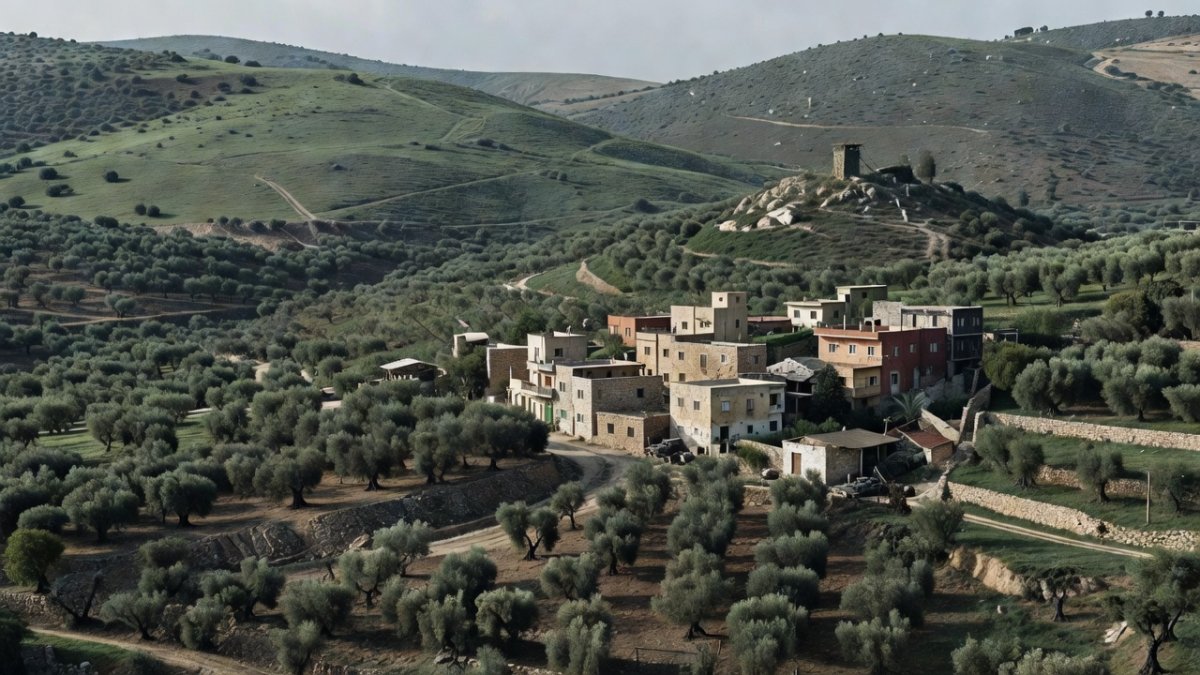
Southern Lebanon, where the US-Iran peace deal leaves 570 square kilometers under continued Israeli occupation (Global 1 News)
The Gap in the Deal
The memorandum signed on June 15 functions more as a statement of principles than a binding protocol. Its limited length omits operational details on verification mechanisms or timelines for any Lebanese front. Pakistan's prime minister framed the document as encompassing every theater, yet American officials immediately clarified that withdrawal from southern Lebanon was never established as a strict condition. Instead, the text permits Israel to retain what it terms self-defense prerogatives within the occupied zone. This formulation echoes earlier diplomatic language that proved elastic under pressure.
Iranian Foreign Minister Araghchi stated publicly that the entire arrangement hinges on Israel ending its war in Lebanon, yet no enforcement clause translates that condition into action. The absence of such language means the deal can be presented as comprehensive while leaving the 570 square kilometers under continued Israeli control. Observers note that previous agreements collapsed precisely because similar gaps allowed one party to redefine obligations after signatures were exchanged. The current text offers no new safeguards against that pattern repeating.
Israel's Defiance
Within hours of the memorandum's announcement, Israeli Defense Minister Israel Katz declared that forces would remain in the southern Lebanon security zones, describing them as among the IDF's greatest achievements. Prime Minister Netanyahu reinforced the position at a June 15 press conference, stating that Israel would stay in the Lebanon security buffer zone for as long as necessary. Both statements directly contradict the public framing offered by Pakistan's prime minister and leave no room for phased withdrawal.
This stance builds on the unfulfilled November 2024 ceasefire, which had required full Israeli withdrawal by January 2026. That deadline passed without implementation, and the new memorandum does not revive or strengthen the earlier obligation. Katz further indicated that similar logic applies to positions in Syria and Gaza, suggesting a broader policy of retaining strategic depth regardless of diplomatic agreements. The explicit rejection from senior Israeli leadership underscores how little leverage the US-Iran text exerts over decisions made in Jerusalem.
Southern Lebanon Under Occupation
More than 3,000 people have been killed in the Israel-Lebanon conflict that preceded the June 15 memorandum. Many of those deaths occurred in villages now partially reoccupied by Israeli forces. Returning residents describe arriving to find homes reduced to rubble, fields marked by military tracks, and access roads blocked by checkpoints. The 570 square kilometers under control function as a buffer that severs normal movement between communities and agricultural land.
Local accounts collected by humanitarian organizations detail repeated incidents of farmers denied entry to their orchards and families separated from relatives on the other side of patrol routes. The November 2024 ceasefire had promised restoration of full sovereignty, yet the continued presence prevents any meaningful return to pre-conflict routines. Schools operating near the zone report irregular attendance as parents weigh the risks of daily crossings. Economic activity remains suppressed, with traders unable to transport goods across the controlled area without coordination that is rarely granted. These conditions persist even as diplomats describe the memorandum as closing active hostilities.
Regional Fallout
Iranian Foreign Minister Araghchi's insistence that the deal depends on an end to the Lebanon war places Tehran in direct tension with Israeli policy statements. Hezbollah has not issued a formal response to the memorandum, yet its political wing has signaled that any permanent arrangement must address the occupied zone. Lebanese state institutions, already strained by economic crisis, face additional pressure to manage displaced populations without the resources or authority to challenge the buffer area.
The memorandum's silence on Syria and Gaza compounds the uncertainty. Katz's remarks linking all three fronts suggest that Israeli positions elsewhere could similarly remain untouched. This interconnectedness risks turning a narrow US-Iran understanding into a wider stalemate. Arab states monitoring the process have expressed private concern that the lack of withdrawal provisions weakens incentives for non-state actors to accept de-escalation. The result is a regional environment where the memorandum's limited scope may prolong rather than resolve underlying conflicts.
International Diplomacy in Limbo
US officials have emphasized that the memorandum preserves Israel's right to self-defense, effectively deferring any withdrawal question to future bilateral discussions. European governments have issued measured statements calling for clarification on Lebanese sovereignty but have not conditioned their support for the broader framework on such guarantees. The Arab League has yet to adopt a unified position, with member states divided between those prioritizing economic normalization and those insisting on territorial restoration.
Because the text is preliminary and only a page and a half long, negotiators retain flexibility to add protocols later. However, the public positions taken by Katz and Netanyahu reduce the likelihood that additional language will emerge without sustained external pressure. Observers note that previous rounds of diplomacy stalled when enforcement mechanisms were left for subsequent talks that never materialized. The current limbo leaves Lebanese authorities and displaced communities without a clear path forward while the occupation continues.
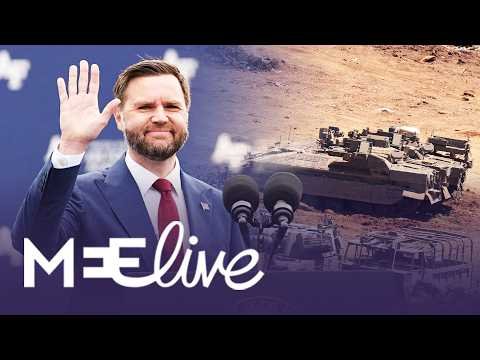
Middle East Eye report examined the gap between the US-Iran deal's public framing and its actual provisions on Lebanon (Middle East Eye)
Human Costs of Ambiguity
Ordinary Lebanese families now navigate a landscape where diplomatic announcements coexist with unchanged military realities on the ground. Children attend schools within sight of positions that the memorandum does not address, their daily commute passing through checkpoints that were supposed to have been dismantled months ago. Farmers weigh the cost of planting crops that may again be inaccessible when patrol routes shift without warning. The 3,000 lives already lost underscore the stakes of leaving territorial questions unresolved, each fatality representing not only a personal tragedy but a collective wound that deepens community distrust of diplomatic processes.
For the estimated 100,000 displaced residents of southern Lebanon, the question is not whether the US-Iran memorandum represents progress — it is whether it represents anything that changes the conditions of their displacement. Humanitarian organizations report that families who attempted to return to villages like Kfar Kila and Meiss el-Jabal in recent weeks found their homes either destroyed or situated within areas now designated as security zones. The Israeli military has not published official maps of the occupied zone, leaving residents to determine boundaries through trial and error, sometimes with fatal consequences.
Palestinian observers, familiar with prolonged occupations justified through security language, recognize the pattern and its human toll. Across the border in Gaza, a similar dynamic has played out since October 2023: ceasefire agreements that promise civilian protection give way to continued military operations justified through exceptions and self-defense clauses. The Lebanese experience mirrors this trajectory, raising questions about whether any diplomatic framework can compel withdrawal when the occupying power retains veto power over implementation.
Without explicit withdrawal provisions and enforcement mechanisms, the June 15 memorandum risks becoming another document that promises comprehensive peace while preserving the very conditions that fuel future confrontation. The families featured in the Middle East Eye footage embody this uncertainty — returning to villages that remain divided by checkpoints rather than restored to civilian life, carrying belongings through terrain that diplomacy has not yet secured. Regional stability will ultimately depend on whether subsequent negotiations close the gaps the current text leaves open, or whether those gaps become permanent features of the landscape that generations of Lebanese will inherit.
By Fatima Al-Rashid, Staff WriterThis article was produced with AI-assisted research and editorial support. Reporting is based on sources cited in the article.
What's Your Reaction?
 Like
0
Like
0
 Dislike
0
Dislike
0
 Love
0
Love
0
 Funny
0
Funny
0
 Wow
0
Wow
0
 Sad
0
Sad
0
 Angry
0
Angry
0
Gulf/MENA Correspondent at Global1.News. Based in Doha, covering Gulf politics, energy markets, diplomacy, and development across the Middle East and North Africa. Tracks the economic transformation of the Gulf states.













Comments (0)