
US House Votes 215-208 to Halt Military Action Against Iran
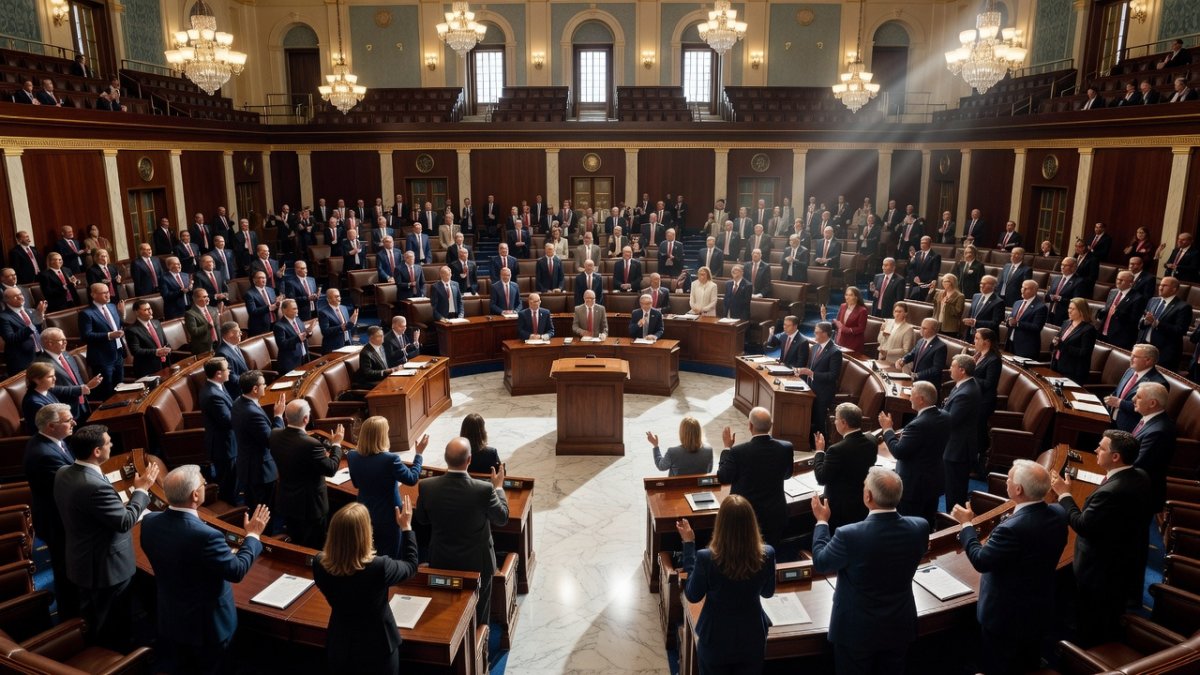
US House Narrowly Approves Resolution to End Strikes on Iran, Exposing Fractures in Washington and Across the Gulf Beirut, Lebanon – June 9, 2026 — In a razor-thin 215-208 vote on June 3, the US House of Representatives passed a War Powers Resolution aimed at halting American military operations against Iran, marking the fourth attempt by lawmakers to rein in an engagement that
US House Narrowly Approves Resolution to End Strikes on Iran, Exposing Fractures in Washington and Across the Gulf
Beirut, Lebanon – June 9, 2026 — In a razor-thin 215-208 vote on June 3, the US House of Representatives passed a War Powers Resolution aimed at halting American military operations against Iran, marking the fourth attempt by lawmakers to rein in an engagement that began on February 28, 2026. The measure, supported by four Republican defectors including Thomas Massie of Kentucky, Brian Fitzpatrick of Pennsylvania, Warren Davidson of Ohio, and Tom Barrett of Michigan, now heads to the Republican-controlled Senate where its prospects remain uncertain. House Democratic Leader Hakeem Jeffries framed the decision as essential to stopping what he called a reckless and costly war of choice, while the Pentagon has tallied at least $29 billion in direct costs with totals approaching $100 billion when indirect expenses are included.
The Historic House Vote and Its Procedural Context
The June 3 tally reflected months of mounting frustration on Capitol Hill over an operation that Defense Secretary Pete Hegseth claimed had been reset by the fragile April 8 ceasefire. Four Republicans broke with party leadership, a move that immediately drew retaliation as Thomas Massie subsequently lost his primary contest after defying former President Trump. Speaker Mike Johnson had blocked an earlier version just two weeks prior, underscoring how internal GOP divisions over executive war powers continue to shape legislative outcomes. Democrats accused Secretary of State Marco Rubio of evasion when he told lawmakers the war was over, prompting Senator Jeanne Shaheen to note that the administration had sent Congress a war powers notification asserting the United States was not engaged in active hostilities.
Analysts in Beirut and Riyadh view the vote as a signal that congressional oversight mechanisms, long dormant, are reasserting themselves amid public fatigue with prolonged Middle East engagements. The resolution’s passage does not automatically end operations, however, because President Trump retains veto authority and any override would require a two-thirds majority in both chambers.
Origins of the US-Iran Conflict and the 90-Day Mark
US and Israeli strikes on Iranian targets commenced February 28, 2026, quickly evolving into the longest unauthorized military engagement in recent American history. The initial justification centered on preventing Iran from advancing its nuclear program and disrupting proxy networks, yet the campaign soon expanded to include a naval blockade of Iranian vessels transiting the Strait of Hormuz. At the 90-day threshold, lawmakers argued that the executive branch had exceeded constitutional bounds by failing to secure explicit congressional authorization.
Regional observers note that Israeli participation in the opening salvos complicated diplomatic off-ramps from the outset, as Gulf capitals weighed their security ties to Washington against the risk of direct Iranian retaliation on their soil. The conflict’s duration has already surpassed previous limited operations, forcing a reassessment of how long any administration can sustain kinetic action without legislative buy-in.
Economic Fallout and the Strait of Hormuz Disruption
The closure or partial disruption of the Strait of Hormuz, through which roughly 20 percent of global oil trade passes, has driven crude prices above $100-120 per barrel and triggered extreme volatility in futures markets. Iran possesses 170 billion barrels of proven reserves, representing nine percent of worldwide crude, making any sustained cutoff a direct threat to energy security in Asia and Europe alike. Gulf sovereign wealth funds valued at nearly $3 trillion have absorbed significant paper losses, prompting sovereign investors in Abu Dhabi and Riyadh to accelerate diversification under Saudi Vision 2030 even as regional instability delays major projects.
Oil traders in Dubai report that the combination of the US naval blockade and sporadic Iranian mine-laying threats has forced rerouting of tankers around the Cape of Good Hope, adding weeks to delivery schedules and inflating shipping costs. These pressures have rippled into petrochemical industries across the Gulf Cooperation Council states, where feedstock prices have risen sharply.

Positions of Key Regional Players and Proxy Dynamics
Saudi Arabia and the United Arab Emirates have maintained a delicate balancing act, publicly supporting US security guarantees while privately urging de-escalation to protect Vision 2030 infrastructure and tourism ambitions. Oman and Qatar, which mediated the April 8 ceasefire, continue to host back-channel talks, whereas Turkey has offered Ankara as a venue for broader negotiations involving all parties. The E3 group of France, Germany, and the United Kingdom has pushed for a return to the negotiating table, emphasizing that renewed diplomacy offers the only sustainable path to containing Iran’s nuclear ambitions.
Iranian-backed proxies including Hezbollah in Lebanon, Iraqi militias, and Yemen’s Houthis remain active, conducting periodic strikes that test the durability of the fragile truce. These groups view the House vote as evidence that American domestic politics may eventually constrain further escalation, potentially granting Tehran greater leverage in any future talks.
Congressional Battles Over War Powers and Executive Authority
The current resolution represents the culmination of repeated legislative efforts to enforce the 1973 War Powers Resolution, which requires the president to notify Congress within 48 hours of committing forces and limits engagements to 60 days without authorization. Defense Secretary Hegseth’s assertion that the April ceasefire reset the clock has been rejected by many Democrats and some Republicans as an overly expansive interpretation of executive discretion. Previous attempts to force a vote were stymied by procedural maneuvers, highlighting how control of the legislative calendar can determine whether Congress exercises meaningful oversight.
Legal scholars in Washington and London argue that the narrow margin of victory illustrates the difficulty of assembling bipartisan majorities on national security questions when partisan incentives remain strong. The Senate’s Republican majority is expected to subject the measure to intense scrutiny, with several members already signaling reluctance to constrain military options against Iran.
Diplomatic Efforts, Ceasefire Violations, and Mediation Tracks
The April 8 ceasefire brokered by Oman and Qatar has been violated multiple times by US, Israeli, and Iranian forces, underscoring the absence of robust monitoring mechanisms. Chinese and Russian diplomatic activity has increased markedly, with Beijing positioning itself as a potential guarantor of any energy transit agreement and Moscow offering arms and political cover to Tehran. These parallel tracks risk fragmenting the diplomatic landscape and reducing Western influence over outcomes.
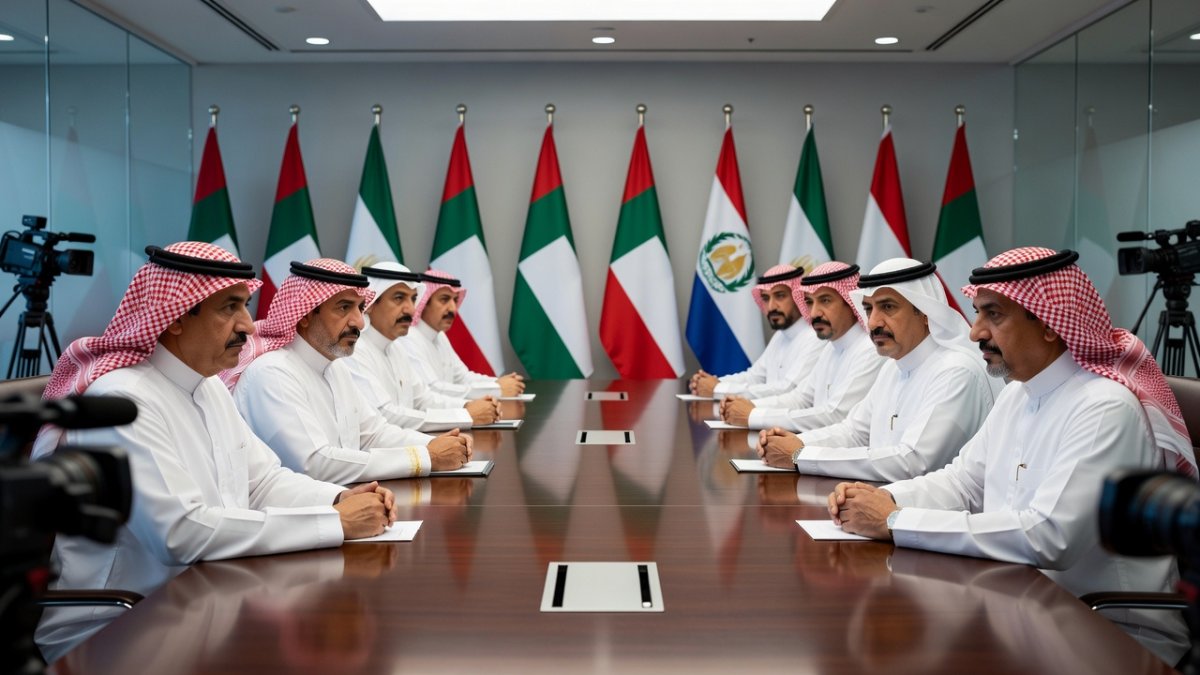
Abraham Accords signatories now confront renewed Sunni-Shia tensions that threaten to unravel normalization gains achieved in prior years. Gulf leaders meeting in Riyadh have privately expressed concern that prolonged US-Iran confrontation could reignite proxy conflicts across Yemen, Iraq, and Lebanon, further destabilizing already fragile economies.
Global Implications and Questions of US Security Guarantees
The vote arrives as US midterm elections approach and public support for additional Middle East commitments remains low. Markets have reacted sharply to every rumor of renewed hostilities, demonstrating how intertwined energy security and financial stability have become. Questions about the durability of American security guarantees now dominate conversations in Gulf capitals, where planners must weigh the benefits of close alignment with Washington against the geographic reality of proximity to Iran.
European diplomats worry that any perception of US retrenchment could embolden revisionist actors, while Asian importers of Gulf crude seek alternative supply arrangements to mitigate future shocks. The interplay between domestic American politics and regional power balances has rarely been more visible.
Outlook for the Resolution, Senate Action, and Potential Veto
With the measure now before the Senate, attention turns to whether Republican leadership will allow a floor vote or attempt further procedural delays. Even if the resolution clears both chambers, a presidential veto remains likely, requiring a two-thirds override that currently appears out of reach. Nevertheless, the House action has already altered the political terrain, forcing the administration to justify continued operations in public forums and potentially constraining options for deeper escalation.
Regional capitals are watching closely, recognizing that sustained congressional pressure could eventually shift US policy toward negotiated containment rather than open-ended confrontation. For now, the Strait of Hormuz remains a flashpoint, oil prices continue their whipsaw pattern, and the broader Middle East braces for whatever comes next.
By Malik Hassan, Staff Writer
This article was produced with AI-assisted research and editorial support. Reporting is based on sources cited in the article.
What's Your Reaction?
 Like
0
Like
0
 Dislike
0
Dislike
0
 Love
0
Love
0
 Funny
0
Funny
0
 Wow
0
Wow
0
 Sad
0
Sad
0
 Angry
0
Angry
0

Middle East Correspondent at Global1.News. Based in Beirut, covering politics, conflict, energy, and society across the Middle East. Brings context and depth to a region often reduced to headlines.















Comments (0)