
US and Iran 'very close' to deal but 'not there yet', Vance says
US and Iran 'Very Close' to Ceasefire Deal, But Vance Warns: 'Not There Yet' Framework Locked In, Sign-Offs Still Pending US officials briefed the BBC late yesterday that a detailed framework for extending the fragile US-Iran ceasefire has been hammered out in back-channel talks. The deal would freeze current force postures, ease certain sanctions on Iranian oil exports, and es
US and Iran 'Very Close' to Ceasefire Deal, But Vance Warns: 'Not There Yet'
Framework Locked In, Sign-Offs Still Pending
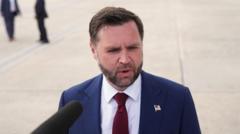
US officials briefed the BBC late yesterday that a detailed framework for extending the fragile US-Iran ceasefire has been hammered out in back-channel talks. The deal would freeze current force postures, ease certain sanctions on Iranian oil exports, and establish verification steps for nuclear sites. Yet the package still requires final approval from President Trump and Iran’s Supreme Leader Ayatollah Khamenei. JD Vance, speaking from the White House briefing room, cut straight to the point: “We are very close, but we are not there yet.”
The language is deliberate. Vance’s phrasing signals that the technical work is largely complete while the political risks remain high on both sides. Sources close to the talks describe a 12-page annex covering maritime security in the Strait of Hormuz, limits on Iranian proxy activity in Iraq and Syria, and a six-month renewable timeline. Nothing is signed until the two leaders green-light the text.
Why This Moment Matters
The current ceasefire, reached after months of tit-for-tat strikes on shipping and energy infrastructure, expires in nine days. Renewing it would mark the first sustained de-escalation between Washington and Tehran since the 2018 US withdrawal from the JCPOA. Oil markets have already priced in a modest risk premium; Brent crude slipped $1.80 on the reported progress. Regional actors are watching closely. Israel has quietly signaled it will not object provided Iranian ballistic-missile transfers to Hezbollah remain capped. Saudi Arabia, eager for stable energy prices ahead of its Vision 2030 bond issuance, has urged both capitals to close the deal.
Trump’s domestic calculus is equally sharp. A visible win on Iran could blunt criticism that his second-term foreign policy is all tariffs and no diplomacy. Yet he faces pressure from hardline senators who want deeper Iranian concessions on uranium enrichment before any sanctions relief. Tehran, meanwhile, must convince its own Revolutionary Guard that the economic breathing room is worth the security trade-offs.
The Sticking Points That Still Matter
Three core issues remain unresolved. First, the duration and scope of sanctions relief: Iran wants multi-year waivers on oil sales; the US side is offering only quarterly renewals tied to compliance reports. Second, verification access at the Fordow enrichment site, where Iran has resisted 24/7 IAEA cameras. Third, the status of Iranian weapons shipments through Iraqi airspace—an issue that directly affects Israeli threat assessments.
Vance acknowledged these gaps without sugarcoating them. “The framework is solid, but the details on verification and duration are still being stress-tested,” he said. Iranian Foreign Minister Abbas Araghchi echoed the caution in a statement from Tehran, noting that “final decisions rest with the leadership.”
Broader Geopolitical Ripple Effects
A successful extension would reshape the Middle East power map. China, which imports nearly 15 percent of its crude from Iran, has already offered to mediate implementation logistics. Russia, distracted by Ukraine, has little leverage left to spoil the talks but could still supply diplomatic cover inside the UN Security Council. European powers, sidelined during the original JCPOA collapse, are positioning themselves as guarantors of any new monitoring regime.
Most critically, the deal would test whether Trump’s transactional style can deliver durable results where Obama-era multilateralism fell short. Supporters argue that direct US-Iran engagement, free of European intermediaries, removes plausible deniability for Tehran. Critics counter that any agreement without binding congressional approval risks becoming another campaign prop rather than lasting policy.
Ground-Level Realities
Inside Iran, public sentiment is split. Younger urban populations desperate for economic relief favor the framework; hardline clerical factions view any concession as weakness. In Washington, defense contractors are already lobbying against provisions that could slow arms sales to Gulf allies. The human cost of continued tension remains stark: shipping insurance rates in the Gulf have tripled since last year’s attacks, driving up food prices from Pakistan to East Africa.
Intelligence assessments shared with Global1 News suggest both capitals are calculating the same risk-reward equation. A collapsed deal would likely trigger immediate Iranian enrichment spikes and US secondary sanctions that hit Chinese and Indian buyers. An approved extension, even a limited one, buys time for wider regional diplomacy.
Vance’s “not there yet” line is therefore not hedging—it is a precise status update. The technical scaffolding exists. The political will on both ends is the final variable still in motion.
This is Jessica Ali for Global1 News. 🔥
This article was produced with AI-assisted research and editorial support. Reporting is based on sources cited in the article.
What's Your Reaction?
 Like
0
Like
0
 Dislike
0
Dislike
0
 Love
0
Love
0
 Funny
0
Funny
0
 Wow
0
Wow
0
 Sad
0
Sad
0
 Angry
0
Angry
0

Editor-in-Chief at Global1.News. Atlanta-based journalist who cuts through the BS and tells it like it is. Lead anchor, host, and the voice you hear when the spin stops and the truth starts.













Comments (0)