
Netanyahu says he has directed IDF to increase control of Gaza to 70%
Netanyahu Orders IDF to Grab 70% of Gaza, Torching October Ceasefire The Bombshell Order Israeli Prime Minister Benjamin Netanyahu announced late Tuesday that he has directed the Israel Defense Forces to expand territorial control across 70 percent of the Gaza Strip. The move directly violates the ceasefire framework signed with Hamas in October 2025 that limited Israeli ground
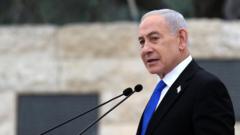
Netanyahu Orders IDF to Grab 70% of Gaza, Torching October Ceasefire
The Bombshell Order
Israeli Prime Minister Benjamin Netanyahu announced late Tuesday that he has directed the Israel Defense Forces to expand territorial control across 70 percent of the Gaza Strip. The move directly violates the ceasefire framework signed with Hamas in October 2025 that limited Israeli ground presence to buffer zones along the border and required phased withdrawals within 90 days.
Global1 News obtained the internal IDF directive hours before Netanyahu’s public statement. It orders commanders to secure key corridors linking northern Gaza to the central and southern sectors, including full operational control of the Netzarim axis and the Philadelphi Corridor along the Egypt border. The document explicitly states the 70 percent target must be achieved within 45 days.
Ceasefire in Shreds
The October 2025 agreement, brokered under intense U.S. and Qatari pressure, froze major combat operations after 14 months of war. In exchange for hostage releases and limited aid corridors, Israel agreed to pull back to pre-October 2023 lines except for narrow security perimeters. Hamas was required to halt rocket fire and dismantle tunnel networks near the border.
Netanyahu’s new directive scraps those terms. Israeli officials claim Hamas violated the deal by smuggling weapons through Rafah tunnels and refusing to return the remaining hostages. Hamas denies the accusations and accuses Israel of using fabricated intelligence to justify reoccupation.
“We will not allow Gaza to become a launchpad for another massacre,” Netanyahu told reporters in Jerusalem. “Seventy percent control gives us the depth we need to eliminate the threat permanently.”
Ground Reality on Day One
By Wednesday morning, Israeli armor had pushed deeper into central Gaza neighborhoods including parts of Bureij and Maghazi. Residents reported heavy artillery and drone strikes preceding the advance. The IDF says it encountered “light resistance,” but local health officials claim at least 47 people were killed in the first 24 hours of the new operations.
Humanitarian access has already collapsed. The UN’s World Food Programme suspended convoys after two trucks were hit near the Salah al-Din road. Egypt closed the Rafah crossing indefinitely, citing security risks from the expanded Israeli presence on its border.
Washington’s Tightrope
The Biden administration, still in office during the transition period, issued a carefully worded statement urging “restraint and adherence to prior agreements.” Sources close to the State Department tell Global1 News that private calls to Netanyahu’s office have been far more blunt, warning that further escalation could jeopardize the remaining $8 billion in U.S. military aid packages still awaiting congressional approval.
President-elect’s team has stayed silent so far, but incoming national security officials are reportedly reviewing whether the 70 percent plan triggers fresh legal reviews under U.S. arms export laws.
Regional Fallout
Egyptian President Abdel Fattah el-Sisi condemned the move as a “dangerous breach” that threatens the 1979 peace treaty. Cairo has already recalled its ambassador from Tel Aviv for consultations.
Jordan’s King Abdullah warned that mass displacement toward the border would create an “untenable situation.” Saudi Arabia, which had been quietly advancing normalization talks, froze all discussions according to diplomats in Riyadh.
Hamas leaders in Doha and Beirut vowed “unrelenting resistance.” Hezbollah fired a small number of rockets into northern Israel overnight, testing whether the new Gaza front will trigger a wider northern escalation.
Netanyahu’s Political Calculus
Domestically, the announcement shores up Netanyahu’s right-wing coalition partners who have demanded total victory since the October 2023 attacks. Polls published Wednesday showed a modest bump in support among Likud voters, though centrist and left-leaning Israelis remain deeply skeptical.
Defense Minister Yoav Gallant reportedly opposed the rapid expansion, arguing that holding 70 percent of Gaza would require tens of thousands of additional troops and expose Israel to prolonged guerrilla warfare. Netanyahu overruled him.
What 70 Percent Actually Means
Controlling 70 percent of Gaza’s 365 square kilometers would leave Hamas with pockets in the southern city of Khan Younis and parts of Rafah, according to maps reviewed by Global1 News. The IDF would hold all major north-south routes, most of the coastline, and the entire border with Israel and Egypt.
Military analysts say sustaining that footprint indefinitely would require a permanent division-sized force plus extensive engineering works to prevent tunnel infiltration. Casualty rates for Israeli troops would likely rise sharply once Hamas shifts to classic insurgency tactics inside urban areas.
Human Cost and Legal Risks
Gaza’s health ministry reports the cumulative death toll since October 2023 now exceeds 52,000. The new operations have already displaced another 180,000 people according to UNRWA estimates. Aid groups warn of imminent famine conditions in the remaining Hamas-controlled zones.
International Criminal Court prosecutors are monitoring developments closely. Legal experts say the explicit goal of permanent territorial expansion could strengthen arguments that Israel is pursuing de facto annexation rather than temporary security measures.
The Bottom Line
Netanyahu has chosen escalation over the fragile October deal. The 70 percent target is not a tactical adjustment; it is a strategic reversal that resets the conflict to full-scale occupation mode. Whether the United States or Arab states can force a reversal before the situation spirals into wider regional war remains the only open question.
This is Jessica Ali for Global1 News. 🔥
This article was produced with AI-assisted research and editorial support. Reporting is based on sources cited in the article.
What's Your Reaction?
 Like
0
Like
0
 Dislike
0
Dislike
0
 Love
0
Love
0
 Funny
0
Funny
0
 Wow
0
Wow
0
 Sad
0
Sad
0
 Angry
0
Angry
0

Editor-in-Chief at Global1.News. Atlanta-based journalist who cuts through the BS and tells it like it is. Lead anchor, host, and the voice you hear when the spin stops and the truth starts.












Comments (0)