
UK Inflation Holds at 2.8% in May 2026 Despite Forecasts
Inflation in the United Kingdom remained unchanged at 2.8% in the year to May 2026, confounding City forecasts that had predicted a rise to 3% and offering the Treasury and the Bank of England a moment of respite amid global economic turbulence driven by the Middle East conflict. The Office for National Statistics confirmed that the Consumer Prices Index held steady, driven by
Inflation in the United Kingdom remained unchanged at 2.8% in the year to May 2026, confounding City forecasts that had predicted a rise to 3% and offering the Treasury and the Bank of England a moment of respite amid global economic turbulence driven by the Middle East conflict. The Office for National Statistics confirmed that the Consumer Prices Index held steady, driven by opposing forces — easing food costs on one hand and sharply rising transport prices on the other.
UK Inflation Holds at 2.8% in May 2026 Despite Forecasts — What It Means for Households and the Economy
London, UK – 17 June 2026 — The Office for National Statistics reported that the Consumer Prices Index held steady at 2.8% in the year to May 2026, matching the April figure and confounding City forecasts of a rise to 3%. This outcome surprised financial markets, which had priced in an uptick driven by recent fuel and geopolitical pressures from the Iran conflict and the closure of the Strait of Hormuz.
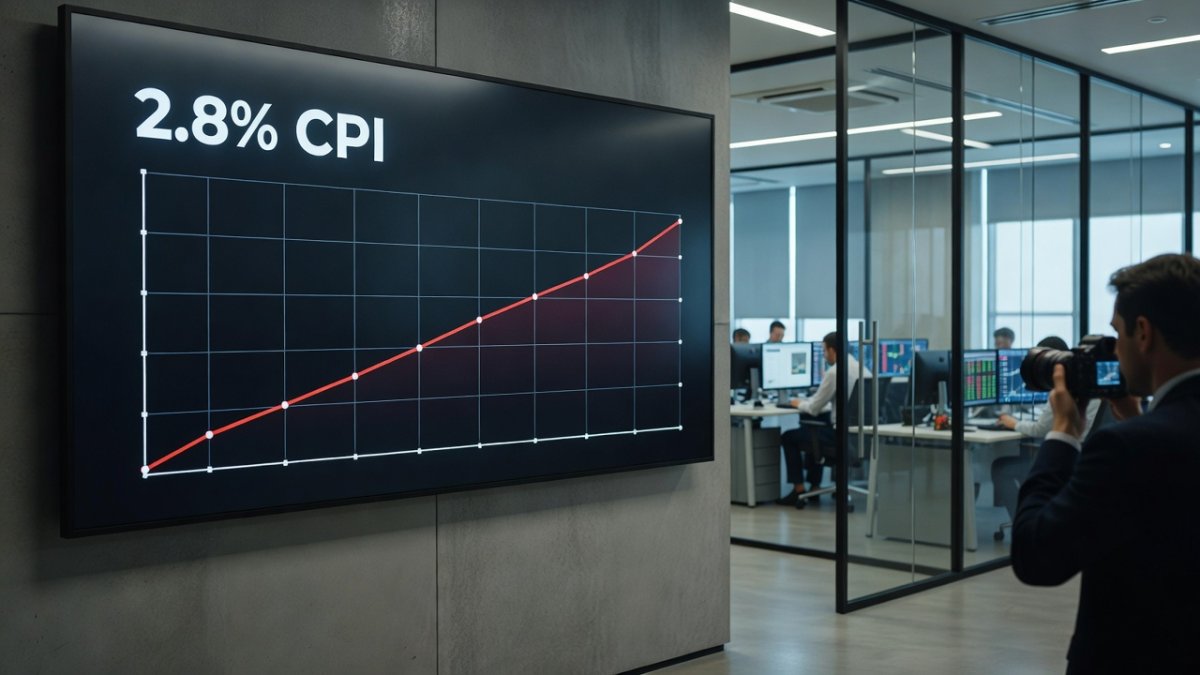
Food Costs Ease While Transport Prices Accelerate
Food price inflation fell to 2.2% in the year to May, the lowest rate in 17 months and down from 3% in April. The British Retail Consortium highlighted that competitive pressures among British supermarkets — including Tesco, Sainsbury's, Asda and Morrisons — helped contain grocery costs for households across England, Scotland and Wales. Meat and dairy prices continued to rise, but at a significantly slower pace: beef and veal prices rose 9.4% in the year to May, compared with 13.2% in April and 18.8% in March.
In contrast, transport inflation reached 6.8%, the highest level since December 2022. Motor fuel prices stood 24.6% higher than a year earlier, while air fares jumped 10.3% between April and May alone. These sharp rises were felt acutely by commuters in Greater Manchester, those navigating the M25 corridor and holidaymakers departing from Heathrow, Gatwick and Manchester airports.
Core Inflation Edges Higher Amid Mixed Signals
Core inflation, which strips out volatile energy and food components, rose to 2.6% from 2.5% in April. This measure remains a critical focus for the Bank of England's Monetary Policy Committee as it assesses underlying price pressures before Thursday's rate decision.
Economists at the National Institute of Economic and Social Research warned that the Ofgem energy price cap adjustment due in July will exert a "sizeable" upward impact on household bills later in the summer. Charlotte O'Leary, associate economist at NIESR, said the lagged effects of higher oil prices are still feeding through and that "should the [US-Iran] deal collapse, oil may rebound and reinstate upward pressure on inflation."
Market and Political Reactions in Westminster
Chancellor Rachel Reeves welcomed the figures, stating that the government was "protecting families and businesses from rising costs, with cuts in energy bills and freezes in fuel duty and rail fares." Treasury borrowing costs fell following the release, with the 10-year government bond yield dropping to 4.74%, its lowest level in a month.
Shadow Chancellor Mel Stride countered that "prices are still rising too fast" and criticised the government for the UK having the highest inflation rate among G7 nations. The figures are expected to feature prominently in upcoming Treasury Select Committee sessions at Portcullis House, where MPs will press ministers on the outlook for household finances through the second half of 2026.
Interest Rate Outlook and Geopolitical Influences
The Bank of England is now widely expected to hold interest rates at 3.75% when the Monetary Policy Committee meets on Thursday. Yael Selfin, chief economist at KPMG UK, said the data "strengthen the case" for a hold, while Suren Thiru of the Institute of Chartered Accountants in England and Wales suggested the recent US-Iran peace deal could keep future inflation peaks "well below 4%."
However, Karen Betts of the Food and Drink Federation cautioned that current readings do not yet reflect the full impact of earlier disruptions in the Strait of Hormuz. She noted that it generally takes several months for the increased costs paid by farmers, processors and manufacturers to filter into raised prices at the till, partly because of "the widespread use of long-term contracts for energy and ingredients."
Impact on Households Across the UK
For families in Birmingham, Leeds and Glasgow, the steady headline rate offers limited immediate relief as transport and energy costs continue to outpace wage growth in many sectors. The easing in food inflation provides modest support for pensioners reliant on fixed incomes, yet core inflation creeping higher signals persistent pressures on everyday essentials.
Domestic heating oil — which does not have a price cap like energy bills — has fallen after rising sharply due to the war, providing some respite for rural households in Cornwall and Cumbria that rely on oil heating rather than gas. However, these same rural families face steeper combined fuel and grocery bills, widening the gap between urban and rural cost-of-living pressures.
The Bottom Line — What Comes Next
The steady inflation reading provides a welcome — if temporary — calming influence on UK financial markets and consumer confidence. But with Ofgem's July price cap adjustment looming, the full effects of the Hormuz Strait disruption yet to feed through supply chains, and core inflation still creeping upward, the path back to the Bank of England's 2% target remains uncertain. For British households, the message from this data is cautiously optimistic but far from comfortable: prices are no longer accelerating, but neither are they meaningfully coming down.
By Erica Thornton, Staff Writer
This article was produced with AI-assisted research and editorial support. Reporting is based on sources cited in the article.
What's Your Reaction?
 Like
0
Like
0
 Dislike
0
Dislike
0
 Love
0
Love
0
 Funny
0
Funny
0
 Wow
0
Wow
0
 Sad
0
Sad
0
 Angry
0
Angry
0

US Politics and Policy Correspondent at Global1.News. Based in Washington DC, covering American politics, policy, elections, and the courts. Knows how the system works and tells you what it actually means.















Comments (0)