
Trump Calls Putin 'Absolutely Crazy' as Moscow-Kyiv Aerial Escalation Reaches New Heights
In a recent BBC News report, US President Donald Trump called Vladimir Putin "absolutely crazy" as Moscow and Kyiv traded the largest aerial attacks of the war, raising fears that the conflict is entering a dangerous new phase of escalation. Trump Calls Putin 'Absolutely Crazy' as Moscow-Kyiv Aerial Escalation Reaches New Heights Moscow, Russia – 21 June 2026 — Ukraine and Russ
In a recent BBC News report, US President Donald Trump called Vladimir Putin "absolutely crazy" as Moscow and Kyiv traded the largest aerial attacks of the war, raising fears that the conflict is entering a dangerous new phase of escalation.
Trump Calls Putin 'Absolutely Crazy' as Moscow-Kyiv Aerial Escalation Reaches New Heights
Moscow, Russia – 21 June 2026 — Ukraine and Russia exchanged unprecedented drone and missile barrages this week, with Kyiv striking deep into the Russian capital and Moscow responding with one of its heaviest assaults on Ukrainian cities. The dual escalation has drawn sharp international attention, including from Washington, where President Trump publicly condemned the Russian leader.
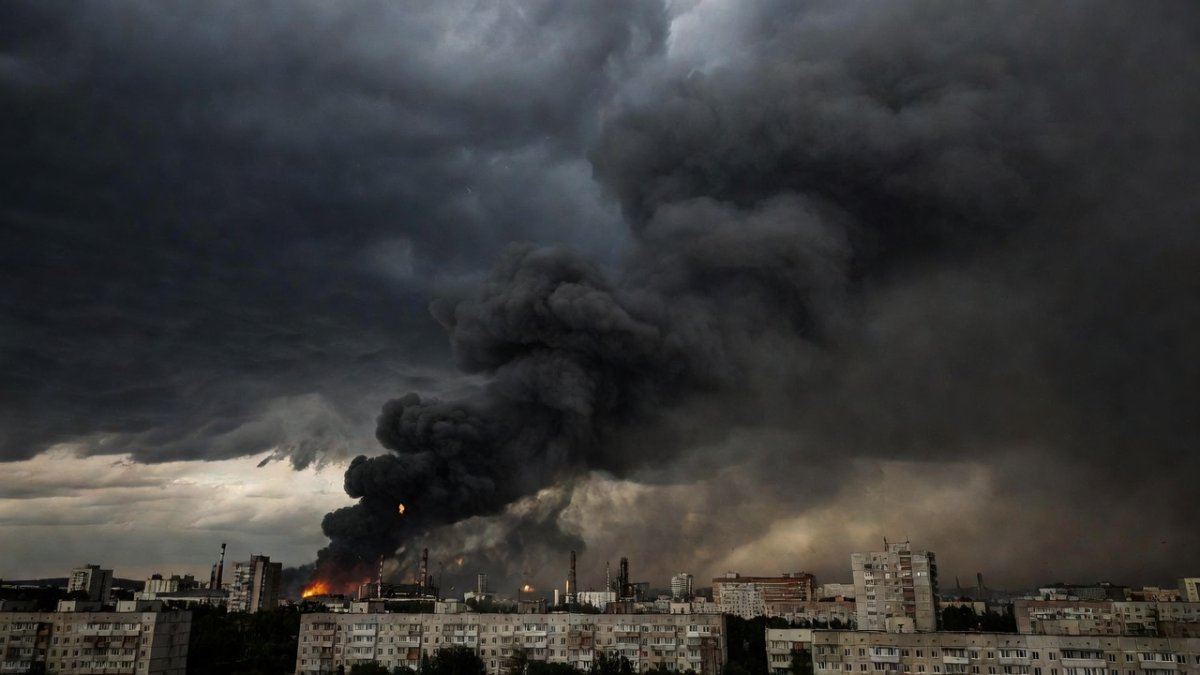
Ukraine's Record Strike on Moscow
On Wednesday, Ukrainian forces launched close to 200 drones toward Moscow in the largest such attack since the full-scale war began. The Kapotnya oil refinery in southeast Moscow was struck, sending thick black smoke billowing across the skyline and disrupting operations at a key energy facility. Local governor Andrei Vorobyov reported that 17 people were wounded in the Moscow region. Moscow's four airports were temporarily shut down, resulting in more than 500 flights being cancelled or delayed as air defenses engaged the incoming drones. Russia's defense ministry stated that almost 1,000 drones and four Ukrainian cruise missiles were intercepted across the country in a 24-hour period, underscoring the scale of the defensive effort mounted by Russian forces.
Moscow residents described unsettling scenes, including reports of "black rain" that left unpleasant black spots on clothing and surfaces. One woman recounted finding dark residue on her garments after stepping outside, while a local man said his building shook from nearby explosions and he smelled burning fuel in the air. Moscow authorities denied that "oil rain" had fallen but issued contradictory guidance, warning residents in affected districts to keep windows closed and advising families with children and asthmatics to evacuate temporarily. These measures highlighted the immediate public health concerns raised by the refinery fire and the visible fallout across the capital.
The strikes on energy infrastructure carry significant ramifications for Russia's domestic fuel supply and export capabilities. With the Kapotnya facility playing a pivotal role in processing crude oil for both internal consumption and international markets, sustained disruptions could exacerbate existing pressures on the national economy. This situation may compel Russian planners to reroute resources or seek alternative supply routes, further straining logistical networks already burdened by the demands of prolonged military operations. In turn, global observers note that such developments contribute to ongoing uncertainty in energy pricing, affecting not only European consumers but also broader efforts to stabilize post-pandemic recovery trajectories.
Confirmed damage included a silo explosion at the Kapotnya refinery captured on video, a fire at a nearby shopping center, and at least one drone verified crashing into a high-rise building. The Russian Defense Ministry's interception claims reflect the extensive air defense network protecting the capital, yet the successful hits on energy infrastructure reveal vulnerabilities in protecting critical sites. Such strikes carry broader implications for Russia's energy sector, which remains central to Kremlin economic strategy amid ongoing sanctions pressure from Western governments. Disruptions at Kapotnya, a facility processing significant volumes of crude for domestic and export markets, threaten to tighten already strained supply chains and amplify price volatility in European energy markets that continue to adjust to reduced Russian flows.
The Kremlin's Response and Retaliation
Russian Foreign Minister Sergei Lavrov responded by stating that Russian strikes on Ukraine would be delivered "on a mass scale." In the immediate aftermath, Russia launched 440 drones and 32 missiles at Ukraine in one of its largest attacks of the conflict, striking a Kyiv apartment block and causing significant civilian casualties. At least 28 people were killed in Kyiv and more than 100 injured, according to Ukrainian officials. The scale of the Russian retaliation demonstrated the Kremlin's capacity to sustain high-intensity aerial operations despite Ukrainian advances in drone technology.
The attack also targeted the Pechersk Lavra monastery in Kyiv, which Ukrainian President Volodymyr Zelensky described as an act of "pure terrorism." Zelensky framed the Ukrainian strike on Moscow as retaliation for the Russian assault that set the monastery ablaze, declaring: "We don't want this war and have never wanted it. But if Ukraine burns, your Moscow will burn too." This exchange illustrates the dangerous tit-for-tat dynamic now driving operations between the two capitals, with each side targeting energy and symbolic sites to impose costs on the other. Kremlin decision-making appears calibrated to signal resolve without triggering direct NATO intervention, balancing domestic expectations of strength against the risk of further economic isolation.
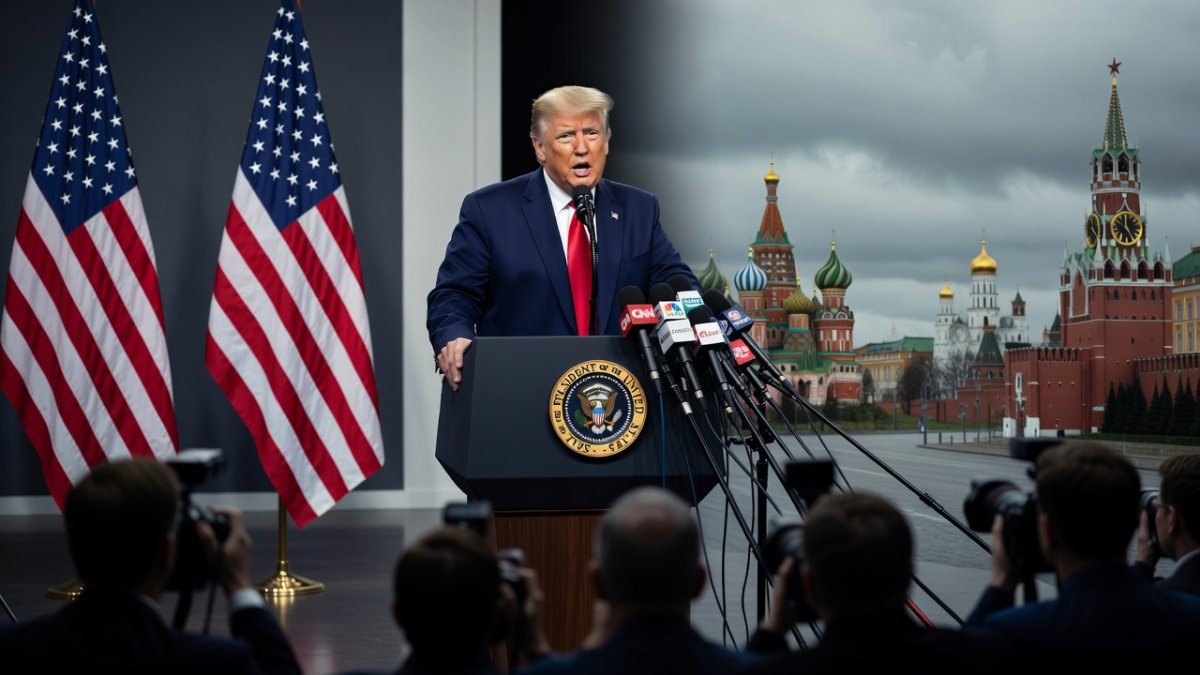
Trump's Reversal on Putin
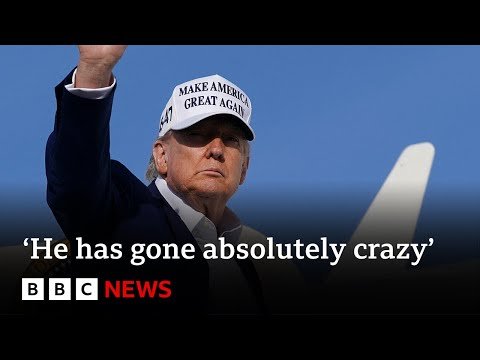
US President Donald Trump posted on Truth Social that he had always maintained a good relationship with Vladimir Putin but that something had changed, calling the Russian leader "absolutely crazy" for needlessly killing large numbers of people. Trump indicated he was considering increasing US sanctions on Russia, marking a notable shift from his earlier emphasis on personal diplomacy with the Kremlin. This statement came after months during which Trump had praised Putin and urged Ukraine to pursue negotiations, reflecting growing frustration in Washington with the battlefield stalemate.
Trump also criticized Zelensky, stating that the Ukrainian leader was "doing his country no favours by talking the way he does." The mixed signals from Washington reveal internal tensions in US policy, where officials continue to insist they want peace talks yet warn they may "walk away" if progress stalls. Such comments underscore the challenges facing any renewed American mediation effort amid intensifying combat. The potential for escalated sanctions could further constrain Russian access to global finance and technology, complicating Moscow's ability to sustain prolonged high-tempo operations while pressuring European allies to accelerate diversification away from Russian energy supplies.
Kremlin's Measured Response to Trump
Kremlin spokesman Dmitry Peskov described Trump's remarks as showing "emotional overload," while the Kremlin expressed thanks for the US president's work on negotiations with Ukraine. Analysts suggest this deliberately polite response indicates Moscow's determination not to antagonize the American leader at a moment when diplomatic channels remain valuable. The careful phrasing avoids direct confrontation and preserves space for future engagement.
Furthermore, the Kremlin's approach highlights a nuanced understanding of Trump's foreign policy style, which often emphasizes personal relationships over institutional frameworks. By expressing appreciation for negotiation efforts while downplaying critical comments, Moscow seeks to maintain leverage in bilateral discussions that could influence the pace of Western military aid to Ukraine. This strategy also accounts for potential changes in US congressional support, where bipartisan consensus on Russia sanctions remains fragile and subject to evolving geopolitical priorities.
Russia continues to need US diplomatic involvement on Ukraine even as fighting intensifies, and the Kremlin's strategy appears focused on separating Trump's personal relationship with Putin from the realities on the battlefield. This approach reflects longstanding Russian efforts to manage great-power relations through targeted messaging rather than outright rupture. By maintaining a measured tone, Moscow seeks to keep open avenues for potential sanctions relief or negotiated pauses that could stabilize energy revenues critical to funding the war effort.
War Comes Home to Moscow
The psychological impact on ordinary Muscovites has grown as drones reach the capital with increasing frequency. For more than four years, many Russians viewed the conflict as distant, but repeated strikes on energy facilities have changed that perception. The Kapotnya refinery has now been hit three times in a single month, bringing visible evidence of the war into daily life through smoke plumes and flight disruptions. Social media images of the black smoke have circulated widely despite official efforts to limit coverage.
Ukraine's strategy of bringing the war home to Russian civilians aims to alter Kremlin calculations by demonstrating that Moscow is no longer immune. Russian state media continues to downplay the attacks, yet the visible damage and evacuation warnings contradict official narratives. This gap between censorship and observable reality is widening as the conflict enters its fifth year. Residents now weigh routine decisions—whether to travel, keep children indoors, or stock emergency supplies—against the backdrop of recurring alerts, eroding the sense of normalcy that state propaganda once cultivated.
Analysis — The Escalation Spiral
The mutual strikes on each other's capitals mark a dangerous new phase in which neither side appears willing to de-escalate. Trump's tough talk may not immediately translate into changed US policy, given the administration's competing priorities and the entrenched positions of both Moscow and Kyiv. The war of attrition continues without a clear off-ramp, as each capital calculates that sustained pressure will eventually force concessions from the other.
Scenarios for the coming months include the possibility of intensified Ukrainian deep strikes coinciding with Russian winter campaigns, potentially overwhelming Ukrainian air defenses and civilian infrastructure. Conversely, a period of mutual exhaustion might open windows for backchannel communications facilitated by third parties. The involvement of international organizations in monitoring energy facility protections could emerge as a confidence-building measure, though skepticism from both belligerents may hinder such initiatives. Ultimately, the escalation spiral risks normalizing attacks on strategic assets, reshaping the conflict's character toward greater economic warfare.
Implications for ceasefire talks remain limited in the short term, while energy markets face renewed volatility from attacks on oil infrastructure. The widening geography of strikes deep into Russian and Ukrainian territory raises questions about European security and the potential for further spillover. What comes next depends on whether either leadership perceives an advantage in pausing the aerial campaign or whether the current spiral continues unchecked. For ordinary Russians, the convergence of economic strain from sanctions and direct exposure to strikes may gradually shift domestic tolerance for the conflict, even as the Kremlin prioritizes battlefield momentum over immediate diplomatic concessions.
By Irina Volkov, Staff Writer
This article was produced with AI-assisted research and editorial support. Reporting is based on sources cited in the article.
What's Your Reaction?
 Like
0
Like
0
 Dislike
0
Dislike
0
 Love
0
Love
0
 Funny
0
Funny
0
 Wow
0
Wow
0
 Sad
0
Sad
0
 Angry
0
Angry
0
Russia/Eastern Europe Correspondent at Global1.News. Covering Russian politics, energy, security, and the shifting dynamics of the post-Soviet space. Provides clear-eyed analysis on one of the world's most opaque regions.












Comments (0)