
Turkish FM Warns Israel May Sabotage US-Iran Nuclear Talks
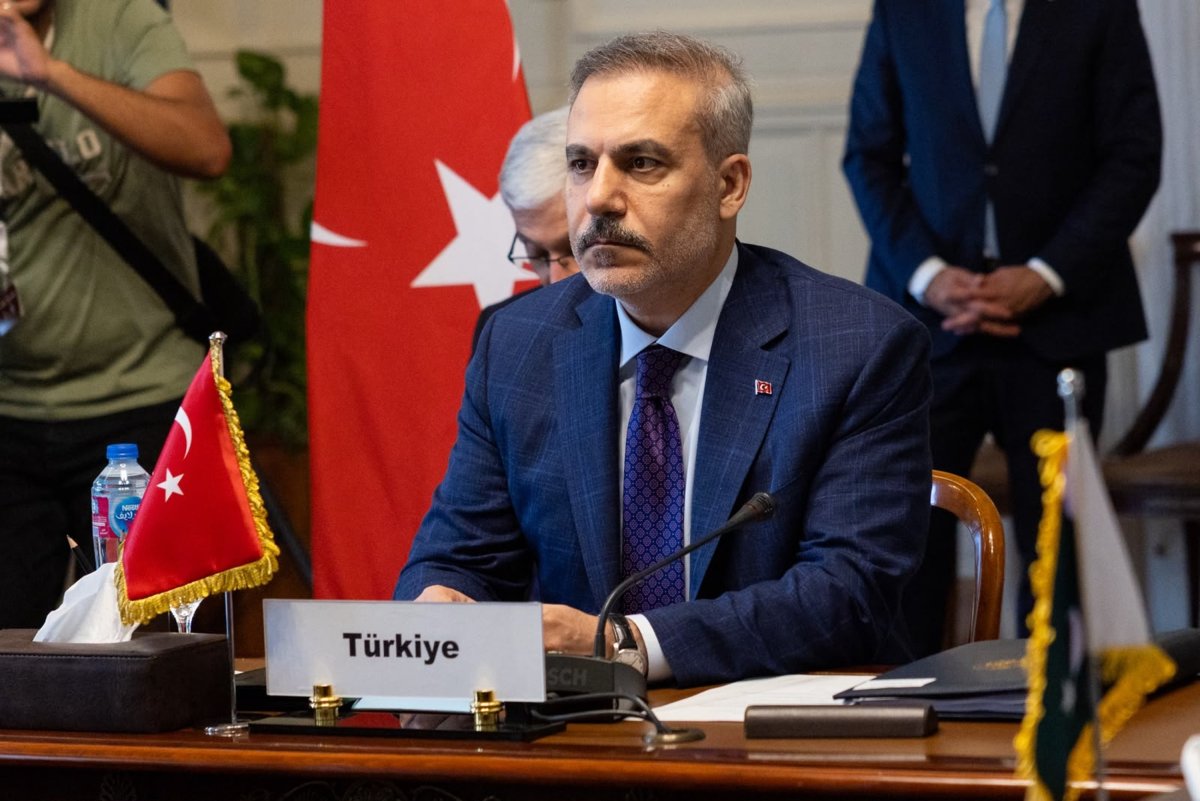
Turkish Foreign Minister Hakan Fidan has welcomed the opening of direct talks between the United States and Iran in Switzerland while cautioning that technical details could create bottlenecks and that Israel stands ready to undermine any emerging agreement. Speaking to Anadolu Agency after intensive meetings in Cairo, Fidan stressed that the two sides have allocated sixty days
Context of the Switzerland Talks
The Swiss venue provided a neutral setting for initial exchanges on Iran’s nuclear program and related sanctions. Fidan indicated that both capitals recognize the need for structured follow-up work rather than rapid declarations. This measured approach reflects the complexity of verifying compliance and sequencing sanctions relief, issues that have historically required extended technical negotiations.
Turkey’s Diplomatic Engagements in Cairo
Over the weekend Fidan participated in a quadrilateral gathering that brought together the foreign ministers of Turkey, Saudi Arabia, Egypt and Pakistan. The format allowed discussion of US-Iran developments alongside parallel regional files. Immediately upon arrival the four ministers joined a separate session with the United States focused on Libya, the eastern Mediterranean and African security questions. Fidan described the exchanges as productive, yielding preliminary understandings on several dossiers.
The following morning the group was received by Egyptian President Abdel Fattah el-Sisi, who expressed support for the new coordination mechanism. Fidan conveyed greetings from Turkish President Recep Tayyip Erdoğan and underscored the shared interest in shaping outcomes through regional rather than external initiative.
Strategic Calculus Behind the Quadrilateral Format
Turkey, Saudi Arabia, Egypt and Pakistan collectively represent significant demographic weight, geographic reach and institutional capacity. Their decision to convene regularly signals an effort to coordinate positions on security and economic challenges before external actors impose templates. By addressing Libya and Mediterranean issues in tandem with the US-Iran channel, the four capitals aim to prevent spillover effects that could destabilize North Africa or the Levant.
Each participant brings distinct leverage. Turkey maintains influence through its NATO membership and Mediterranean presence. Saudi Arabia offers financial resources tied to Vision 2030 diversification goals. Egypt provides geographic centrality and military weight along the Suez corridor. Pakistan contributes diplomatic reach within the broader Islamic world. Together they seek to channel international support toward solutions they themselves help design.
Israel’s Potential Role as Spoiler
Fidan explicitly flagged Israel as a second risk factor alongside technical bottlenecks. He stated that Israel is “waiting in the corner, ready to try to sabotage the issues whenever it finds an opportunity.” This warning aligns with longstanding Israeli concerns over Iran’s nuclear threshold and regional proxy networks. Any agreement that eases sanctions without ironclad restrictions on enrichment or missile development could prompt Israeli countermeasures, including covert operations or diplomatic pressure on Washington.
Such interference would carry second-order consequences for Sunni-Shia geopolitical competition. A collapsed or diluted deal might accelerate Iran’s nuclear timeline, prompting Gulf states to deepen security cooperation with the United States or explore independent deterrence options. Conversely, a successful accord could open space for limited economic engagement between Iran and Arab Gulf economies, though deep mistrust would persist.
Implications for Broader Regional Dynamics
The Cairo discussions also touched on the future architecture of a post-conflict Middle East. Fidan emphasized that regional countries must articulate their own vision rather than accept externally imposed frameworks. This stance resonates with ongoing debates over reconstruction priorities in Syria, Yemen and potentially Gaza, where Arab-Israeli normalization under the Abraham Accords continues to evolve alongside Turkish and Iranian influence operations.
Energy markets add another layer. OPEC+ diplomacy remains sensitive to any shift in Iranian export volumes that could follow sanctions relief. Turkey’s role as a transit hub and its interest in stable Mediterranean energy routes intersect with Saudi and Egyptian calculations about long-term revenue and investment flows.
Outlook and Remaining Uncertainties
Fidan expressed cautious optimism that intensive technical work over the coming weeks could resolve outstanding issues. Yet he urged all parties to prepare for periodic impasses. The sixty-day window is not a deadline but a planning horizon within which working groups must deliver concrete mechanisms on verification, sanctions snap-back and deconfliction protocols.
Great-power competition further complicates the picture. While the United States leads the current channel, Russia and China maintain separate equities with Tehran. Any perception that Washington is conceding ground could invite parallel initiatives from Moscow or Beijing, diluting the coherence of a single agreement.
Regional actors therefore view sustained coordination among Turkey, Saudi Arabia, Egypt and Pakistan as essential insurance. By maintaining open lines with Washington and Tehran alike, they hope to steer developments toward outcomes that preserve stability and economic opportunity without ceding agenda-setting authority to outside powers.
By Malik Hassan, Staff WriterThis article was produced with AI-assisted research and editorial support. Reporting is based on sources cited in the article.
What's Your Reaction?
 Like
0
Like
0
 Dislike
0
Dislike
0
 Love
0
Love
0
 Funny
0
Funny
0
 Wow
0
Wow
0
 Sad
0
Sad
0
 Angry
0
Angry
0

Middle East Correspondent at Global1.News. Based in Beirut, covering politics, conflict, energy, and society across the Middle East. Brings context and depth to a region often reduced to headlines.









Comments (0)