
Trump's Historic Arrival Sets the Stage for NATO's Ankara Summit
Trump's Historic Arrival Sets the Stage for NATO's Ankara Summit The 2026 NATO Summit in Ankara, Turkey, on July 7-8 marks a pivotal moment in alliance history, drawing all 32 member states together amid escalating global tensions. AP confirmed this as the first US presidential visit to Turkey since President Obama in 2015, underscoring the weight of the occasion. President Tru
Trump's Historic Arrival Sets the Stage for NATO's Ankara Summit
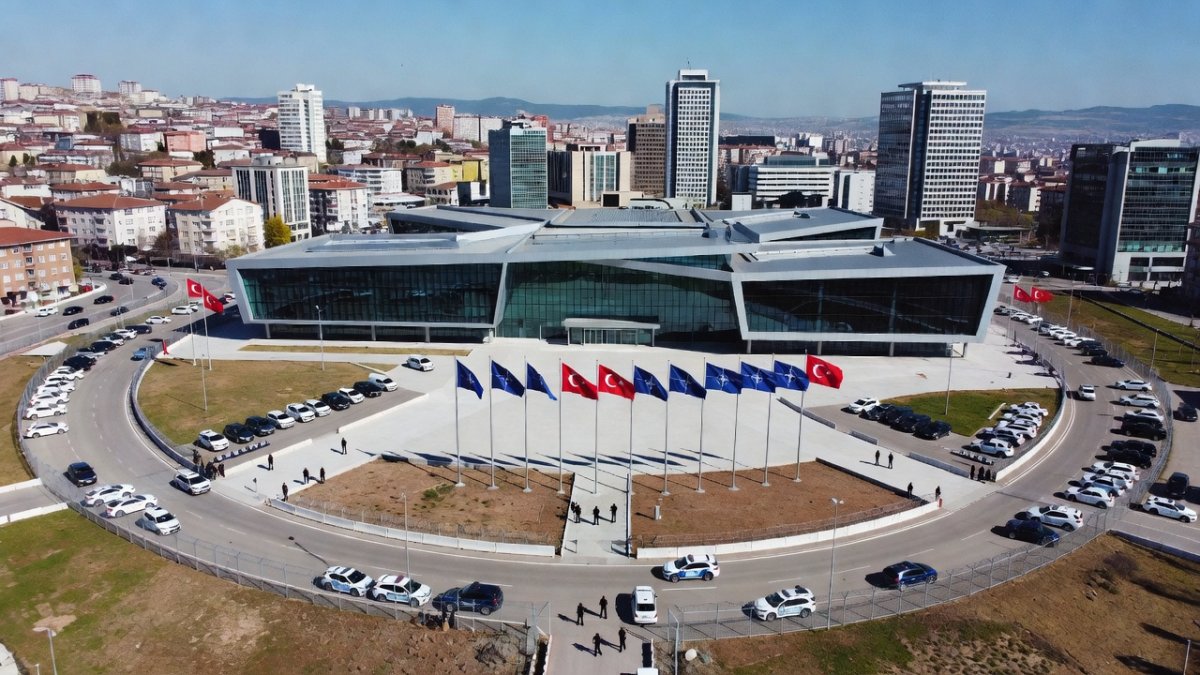
The 2026 NATO Summit in Ankara, Turkey, on July 7-8 marks a pivotal moment in alliance history, drawing all 32 member states together amid escalating global tensions. AP confirmed this as the first US presidential visit to Turkey since President Obama in 2015, underscoring the weight of the occasion. President Trump touched down on July 7, where AP photographs by Alex Brandon captured him being greeted directly on the tarmac by Turkish President Erdogan in a display of personal diplomacy. This arrival wasn't just ceremonial; it signaled a potential reset in US-Turkey relations strained by years of sanctions and defense disputes. According to CBS News, Trump lauded Erdogan as the summit began, praising his leadership in ways that hinted at warmer bilateral ties ahead. The event has been dubbed "NATO 3.0" by CNBC and European Interest outlets, reflecting a new Cold War era where old alliances must adapt to fresh threats from Russia, China, and regional instability. Let me break this down: with Ukraine support and long-term military aid as core agenda items per Al Jazeera, the summit isn't about photo ops but about forging commitments that could reshape European security for decades. Folks, the optics of that tarmac greeting alone spoke volumes about shifting power dynamics within the alliance.
High-Stakes Bilateral Talks at Erdogan's Presidential Compound
Following the arrival, Trump and Erdogan convened for a bilateral meeting at Erdogan's presidential compound, as detailed in NYT Live Updates. This closed-door session focused on defense cooperation, trade, and regional influence, setting the tone for the full summit. The discussions came against a backdrop of Turkey's strategic importance as a NATO member bridging Europe and the Middle East. Bloomberg reported that the F-35 fighter jet sale to Turkey emerged as a central topic, with Trump hinting at a breakthrough and Erdogan expressing optimism afterward. These talks built on years of friction, including Turkey's S-400 purchase from Russia that previously triggered US sanctions. The Guardian noted Trump's broader criticism of NATO allies, calling some "very disappointed" for falling short on commitments, which likely colored the Erdogan dialogue. Here's the thing: such one-on-one engagements allow leaders to bypass the larger multilateral noise and hammer out deals that benefit both nations directly. With 32 NATO members represented, this bilateral stood out as a potential catalyst for wider agreements on defense spending and technology transfers. The compound setting itself amplified the gravity, providing a secure environment for candid exchanges on everything from counterterrorism to energy security.
Trump's Bold Move Lifting Sanctions Over the S-400 Purchase
In a surprise announcement during the summit, Trump declared he would lift sanctions on Turkey related to its S-400 purchase, a move CBS News reported on July 7, 2026. This decision reverses years of punitive measures imposed after Ankara acquired the Russian system, which NATO viewed as incompatible with alliance standards. The move signals Trump's willingness to prioritize personal rapport with Erdogan over strict alliance protocols. Background context reveals the S-400 issue had frozen Turkey out of the F-35 program, creating a rift that weakened NATO's southern flank. By lifting these sanctions, Trump aims to reintegrate Turkey more fully into Western defense structures while addressing Erdogan's grievances. Analysis shows this could stabilize supply chains for critical components and reduce Turkey's reliance on Russian hardware. However, it risks alienating other allies concerned about technology leaks to Moscow. The announcement injected immediate momentum into the summit, shifting conversations from confrontation to collaboration. According to multiple reports, this policy pivot reflects Trump's transactional approach to foreign policy, where economic and strategic gains outweigh ideological purity tests. The implications extend beyond Turkey, potentially encouraging other members to negotiate similar carve-outs in future disputes.
Breakthrough on F-35 Sales and KAAN Fighter Engine Deals
The F-35 fighter jet sale to Turkey took center stage, with Bloomberg highlighting Trump's hints at a breakthrough that left Erdogan optimistic post-meeting. Complementing this, the State Department is moving to bypass congressional opposition on F-110 engine sales worth $700 million for Turkey's KAAN fighter program, according to Kurdistan24. These engines represent a critical upgrade path for Turkey's indigenous defense industry, allowing it to modernize its air force independently. The KAAN project aims to produce a fifth-generation fighter, positioning Turkey as a regional aerospace power. Trump's involvement suggests he sees these sales as leverage to secure Turkish cooperation on NATO initiatives, including Ukraine aid. Yet this push faces domestic hurdles in Washington, where lawmakers worry about proliferation risks. The $700 million figure underscores the scale of the transaction and its potential economic boost for US manufacturers. Expanding on the background, Turkey's exclusion from the F-35 consortium since 2019 had forced Ankara to explore alternatives like the Russian Su-57, a development that alarmed NATO planners. Reopening these channels could restore interoperability among alliance air forces. Analysis indicates that successful engine deliveries might accelerate KAAN timelines by two to three years, enhancing Turkey's deterrence capabilities against threats in the Black Sea and Aegean regions.
Netanyahu's Warning and Regional Power Dynamics
Israeli Prime Minister Netanyahu specifically asked Trump to refrain from selling weapons systems that would modernize Turkey's air force, Axios reported on July 6, 2026. This intervention highlights deep regional rivalries, with Israel viewing a strengthened Turkish military as a potential threat to its qualitative edge. The request came just before the summit, adding diplomatic pressure on the US president. Background on these tensions traces back to longstanding disputes over Cyprus, Syria, and energy resources in the Eastern Mediterranean. Netanyahu's stance reflects Israel's strategic calculus that advanced Turkish fighters could shift balances in proxy conflicts. Trump's response remains unclear, but his pro-Israel record suggests he may seek compromises that satisfy both Ankara and Jerusalem. Analysis of the broader picture shows how NATO decisions ripple into Middle East security, where Turkey's NATO membership clashes with its independent foreign policy. The summit thus serves as a flashpoint for reconciling alliance unity with bilateral frictions involving non-NATO actors like Israel. Such dynamics complicate Ukraine support discussions, as resources allocated to one theater affect readiness elsewhere. Netanyahu's outreach demonstrates how summit outcomes influence global arms flows and deterrence postures far beyond European borders.
NATO 3.0 Emerges with 5% GDP Defense Spending Push
The summit has been branded "NATO 3.0" by CNBC and European Interest, capturing the alliance's evolution into a new Cold War posture against revanchist powers. NATO Secretary General Mark Rutte is aggressively pushing allies to meet a 5% GDP defense spending target, a significant jump from the previous 2% benchmark, CNBC detailed. This ambitious goal aims to fund advanced capabilities like hypersonic defenses and cyber infrastructure amid Russia's ongoing aggression. Trump amplified the pressure by criticizing several NATO allies as "very disappointed" for lagging contributions, The Guardian reported. With all 32 members present, the discussions emphasized burden-sharing to sustain long-term operations. Background reveals that only a handful of nations currently meet even the 2% threshold, making the 5% target a stretch that could strain budgets across Europe. Analysis suggests this push could lead to increased US arms exports while forcing European members to accelerate domestic production. The new Cold War framing underscores how NATO must deter simultaneous challenges from Moscow and Beijing, requiring integrated strategies beyond traditional Article 5 commitments. Rutte's advocacy positions him as a key architect of this upgraded alliance framework.
Ukraine Support Anchors the Summit Agenda Amid Global Shifts
Ukraine support and long-term military aid formed key agenda items, Al Jazeera confirmed, with discussions centering on sustained weapons flows and reconstruction financing. The 32 NATO members weighed commitments that could lock in multi-year packages to bolster Kyiv against Russian advances. Trump's presence added unpredictability, given his past skepticism toward endless aid. Yet the Ankara venue allowed Turkey to highlight its role as a mediator and Black Sea power. Background on Ukraine's plight shows NATO's credibility hinges on preventing further territorial losses, which could embolden adversaries elsewhere. Analysis indicates that tying Ukraine aid to Turkish defense deals might create a quid pro quo benefiting all parties. The summit's outcomes could set precedents for how the alliance handles frozen conflicts and hybrid threats in the years ahead. Expanding further, long-term aid packages might include training programs and intelligence sharing that integrate Ukrainian forces more closely with NATO standards. This focus ensures the alliance remains relevant in an era of great-power competition.
Folks, the decisions forged here will echo for years. Stay informed by following reliable updates, contact your representatives to voice support for balanced NATO policies, and share this story with your networks to keep the conversation alive. By Jessica Ali, Lead Anchor — Global 1 News
This article was produced with AI-assisted research and editorial support. Reporting is based on sources cited in the article.
What's Your Reaction?
 Like
0
Like
0
 Dislike
0
Dislike
0
 Love
0
Love
0
 Funny
0
Funny
0
 Wow
0
Wow
0
 Sad
0
Sad
0
 Angry
0
Angry
0

Editor-in-Chief at Global1.News. Atlanta-based journalist who cuts through the BS and tells it like it is. Lead anchor, host, and the voice you hear when the spin stops and the truth starts.











Comments (0)