
Tango as Medicine: How Buenos Aires Patients Dance Through Parkinson's
In a sunlit hall of Buenos Aires' Ramos Mejía Hospital, the mournful cry of a bandoneón signals the start of class — and for the Parkinson's patients gathering in a loose circle, the weekly tango session has become as vital as any prescription. What began 15 years ago with a single patient's hunch that the dance of her childhood could steady her shaking hands has grown into a pioneering rehabilitation program that has served roughly 100 people, and it is now drawing renewed.
In a sunlit hall of Buenos Aires' Ramos Mejía Hospital, the mournful cry of a bandoneón signals the start of class — and for the Parkinson's patients gathering in a loose circle, the weekly tango session has become as vital as any prescription. What began 15 years ago with a single patient's hunch that the dance of her childhood could steady her shaking hands has grown into a pioneering rehabilitation program that has served roughly 100 people, and it is now drawing renewed attention across Latin America as the region confronts a sharply rising burden of Parkinson's disease.
Tango as Medicine: How Buenos Aires Patients Dance Through Parkinson's
Buenos Aires, Argentina – September 5, 2026 — Every week, about a dozen patients with Parkinson's disease arrive at Ramos Mejía Hospital to dance Argentine tango as therapy for the balance, stiffness and coordination that the disease steals from them. Guided by professional dancer Manuel Firmani and the neurologists who helped create the program, patients — each paired with a partner without Parkinson's — retrain bodies that have lost their automatic grace, one deliberate step at a time.
Dancing Through Parkinson's: A Buenos Aires Hospital's Tango Revolution
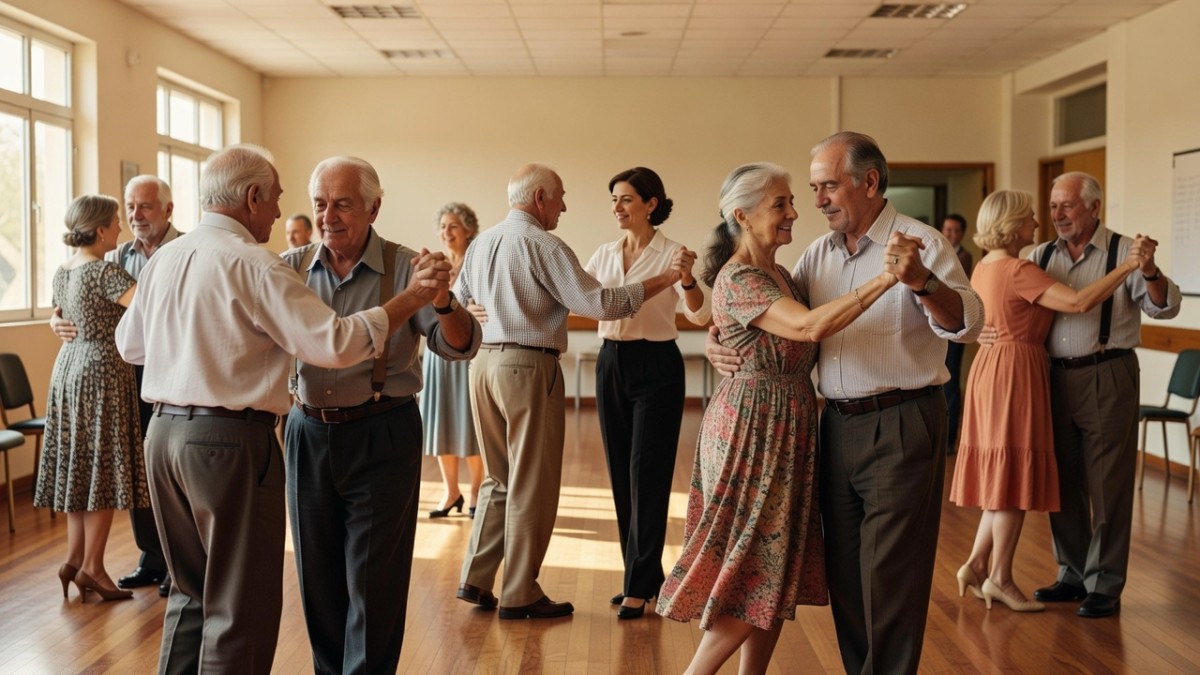
In a bright, high-ceilinged room at Ramos Mejía Hospital in Buenos Aires, the air fills not with the sterile hum of medical equipment, but with the soulful strains of a bandoneón. It is a weekly ritual that has transformed the lives of roughly one hundred Parkinson's disease patients over the past fifteen years. About a dozen patients, some standing with the help of canes, others seated in chairs, form a loose circle. They are guided by Manuel Firmani, a professional tango dancer whose movements are as precise as they are gentle. The session begins with warm-ups—a series of deliberate stretches and weight shifts designed to awaken stiff limbs and recalibrate a faltering sense of balance.
The program, which began around 2009, was born from an unlikely muse: a patient who had danced tango since childhood and noticed that her symptoms—the tremor, the rigidity, the shuffling gait—seemed to recede when she moved to the music. Dr. Nélida Garretto, a neurologist at the hospital, took note and helped spearhead the initiative alongside her colleague, Dr. Tomoko Arakaki. Today, each patient is paired with a partner who does not have Parkinson's—friends, relatives, and volunteers who dance alongside them, offering physical support and a human connection that is as therapeutic as any medication. The scene is one of profound dignity: people who often struggle to take a single step without freezing are gliding across the floor, their faces etched with concentration and, increasingly, joy.
What makes this program so remarkable is its simplicity. It requires no expensive equipment, no cutting-edge technology—just a room, a musician, a dancer, and the willingness of a community to show up. As the music swells, the patients are not patients anymore; they are dancers. The hospital walls seem to melt away, replaced by the intimate embrace of the milonga. For an hour each week, Parkinson's disease takes a back seat to the rhythm of the tango, and the patients, many of whom arrive using canes, often leave without them, their steps steadier, their spirits lifted.
The Science of the Dance: Why Tango Beats Traditional Exercise
The benefits witnessed in that Buenos Aires hospital room are not merely anecdotal; they are backed by a growing body of rigorous scientific evidence. The core of the problem in Parkinson's disease lies in the basal ganglia, the brain region responsible for initiating and regulating movement. This dysfunction leads to the hallmark symptoms of bradykinesia (slowness), rigidity, and postural instability. Crucially, it impairs automatic movements, forcing patients to consciously think about every step. Tango, with its complex, multi-directional steps and constant weight shifting, forces the brain to engage in motor planning in a way that simple walking or traditional gym exercises do not.
A landmark randomized controlled trial at Washington University, led by researchers Duncan and Earhart in 2012, provides compelling data. The study followed 62 participants over 12 months, with one group engaging in twice-weekly community Argentine tango and a control group receiving no intervention. The results were striking: the tango group improved by 28.7%—a gain of 12.8 points—on the MDS-UPDRS-3 motor scale at the 12-month mark, while the control group showed little change. The researchers found significant group-by-time interactions favoring dance on the MiniBESTest balance test, the Freezing of Gait Questionnaire, the 6-Minute Walk Test, and even forward and dual-task walking velocities.
Earlier research by Hackney and Earhart had already demonstrated that tango improves balance and functional mobility better than traditional exercise routines. In head-to-head comparisons, tango outperformed waltz and foxtrot on several Parkinson's-specific measures. This is critical because the consequences of impaired balance are severe: approximately 70% of people with Parkinson's fall within a year of diagnosis, and they face a 3.2-fold greater risk of hip fracture. By training the body to shift weight, pivot, and step backward—movements that are often lost—tango directly addresses the mechanisms that lead to these debilitating falls.
How Tango Moves Map to Daily Life
The genius of using tango as therapy lies in its direct translation to the mundane, yet challenging, tasks of daily living. Débora Rabinovich, a psychologist and researcher who helped create the program at Ramos Mejía, explains that "tango uses the same kind of movements that people with Parkinson's disease tend to lose." Many tango steps involve walking backward, a motion that is notoriously difficult for patients who often fall backward when they lose their center of gravity. By practicing this in a safe, supported environment, patients retrain their brains and bodies to handle this precarious movement without fear.
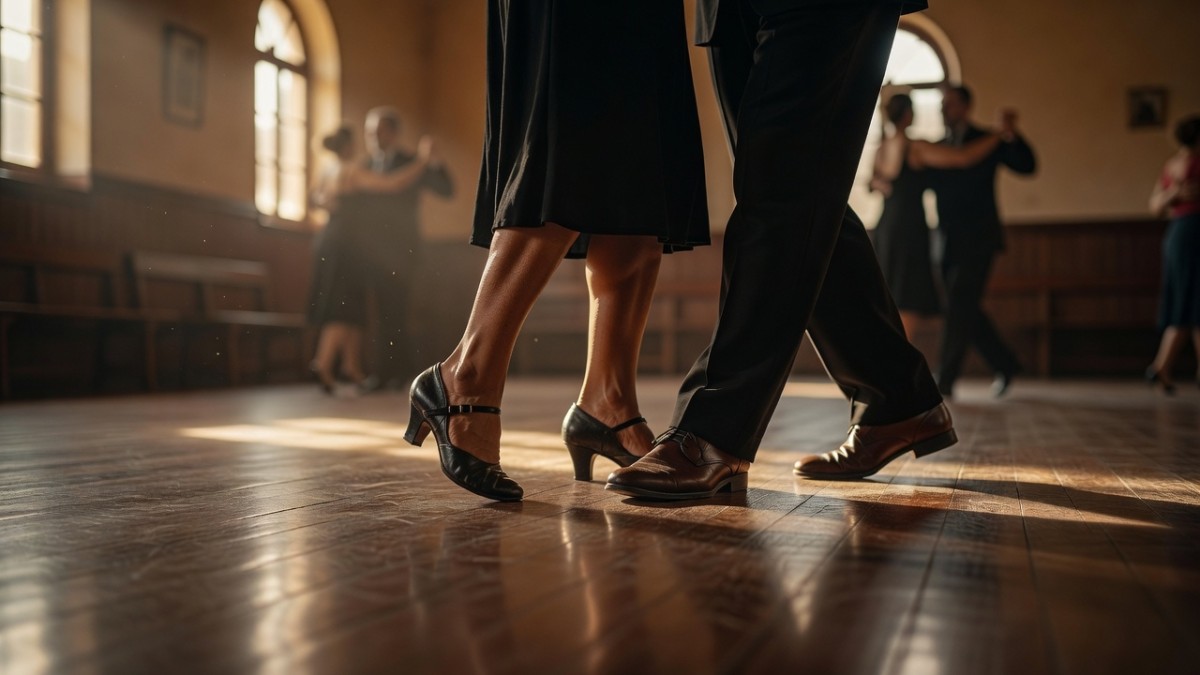
The specific steps are a masterclass in functional rehabilitation. Consider the sanguchito, or "sandwich," where one dancer's foot slides between the partner's feet and pauses. This move teaches precise foot placement and the ability to halt a movement deliberately—a skill needed when stepping up onto a curb or entering a doorway. The constant weight shifting from foot to foot, fundamental to the tango walk, is the exact motion required to navigate uneven sidewalks or transition from standing to walking. The sidestep, another tango staple, is the same movement used to open a refrigerator while holding groceries. Even the elegant torso rotation, so characteristic of the dance, is a rehearsal for pivoting while washing dishes at a sink.
Rabinovich argues that tango "places the body in a certain position and moves it in specific directions," effectively restoring a sense of order to a motor system that has lost its automaticity. It is not just about strengthening muscles; it is about re-establishing the neural pathways that connect intention to action. When a patient freezes—a sudden, involuntary halt in movement—they are taught to use the rhythmic cues of the music to restart. The tango provides a structured, predictable framework that the brain can latch onto, bypassing the faulty internal cues and using external ones instead. This is why the program has seen patients arrive using canes and leave without them, their gait having become more fluid and confident.
A Lifeline in the Milonga: Patients Find Community and Dignity
For Liliana Garay, 59, the tango program has been nothing short of a lifeline. Diagnosed with Parkinson's two decades ago, she joined the Ramos Mejía program in 2011 with no prior tango experience. Today, she is a testament to the therapy's power. When symptoms arise at home, she does not panic. Instead, she practices an eight-step tango movement that traces "the number eight on the floor, like the infinity symbol." When she feels a freeze coming on, she breathes deeply and moves her leg backward, sideways, and forward, just as she does in class. "That helps the stiffness pass, and I can walk again," she says, her voice filled with quiet triumph.
Garay's commitment extends far beyond the hospital walls. She travels long distances by public transport to attend the sessions, a feat that requires immense planning and energy for someone with a movement disorder. Her passion has even led her to organize tango parties, known as milongas, in her hometown of Ciudadela. She has become an ambassador for the dance, proving that a diagnosis of Parkinson's does not mean the end of a vibrant social life. Her favorite music is Osvaldo Pugliese, "because his music has very strong rhythms for dancing," providing the clear, steady beat that her brain craves to initiate and sustain movement.
But perhaps the most profound aspect of the program is the sense of community and dignity it restores. In a typical medical setting, patients are often defined by their deficits. Here, they are defined by their ability to move, to connect, and to express themselves. "People come in wheelchairs, with crutches, and we all dance," Garay says. The partners—the volunteers and relatives—do not treat the patients as fragile or different. They dance with them as equals, offering support without condescension. This social integration is a powerful antidote to the isolation and depression that often accompany Parkinson's. For Garay, the conclusion is simple and absolute: "Tango, for me, is health."
Latin America's Parkinson's Burden: A Region in Motion
The scene at Ramos Mejía Hospital is not just a local success story; it is a beacon of hope for a region grappling with a significant and growing health challenge. Parkinson's disease affects about 8.5 million people worldwide, making it the fastest-growing neurological condition after dementia. The global prevalence has doubled from 2.5 million in 1990 to 6.1 million in 2016, a trajectory driven largely by aging populations. Latin America is on the front lines of this trend. A 2023 meta-analysis published in the journal Movement Disorders, which reviewed 18 studies across 13 Latin American countries involving nearly 4 million participants, found a startling reality: the prevalence of Parkinson's disease in the region is 472 per 100,000 people—significantly higher than the global estimate of 315 per 100,000.
The data becomes even more stark when broken down by age. The same meta-analysis found that the prevalence of parkinsonism, a broader category of movement disorders, is 4,300 per 100,000 in the region. Among people aged 60 and older, the prevalence of Parkinson's disease jumps to 1,229 per 100,000 in cohort studies. The 10/66 Dementia Research Group, a major population-based study across six Latin American countries—Cuba, the Dominican Republic, Peru, Venezuela, Mexico, and Puerto Rico—found parkinsonism in 7.9% and Parkinson's disease in 2.6% of people aged 65 and older. These are not abstract numbers; they represent millions of individuals and their families facing a debilitating condition.
The implications are profound. The 10/66 study found that Parkinson's disease carries a 2.10-fold higher risk of developing dependency and a 1.38-fold higher mortality risk in this population. This means that beyond the motor symptoms, the disease robs people of their independence and shortens their lives. Interestingly, countries with universal health coverage—such as Argentina, Brazil, Colombia, and Mexico—may show higher diagnosed prevalence simply because their citizens have greater access to neurologists. This suggests that the true burden in other parts of the region, where access is limited, may be even higher than reported. The combination of aging populations and environmental risk factors, such as pesticide exposure common in agricultural regions, points to a rising burden that health systems are ill-prepared to handle.
From Buenos Aires to the World: A Low-Cost Therapy With Global Reach
The tango program at Ramos Mejía Hospital is not an isolated phenomenon. Its success has inspired similar initiatives across the globe, from community centers in the United States to rehabilitation clinics in Europe. The model is inherently replicable because it is low-cost and relies on community participation rather than expensive medical infrastructure. In the U.S., programs like "Dance for PD" have brought the benefits of dance to thousands of patients, and the Washington University trials have provided the scientific validation needed to convince healthcare providers of its efficacy. The therapeutic use of dance is also being explored for other neurological conditions, including multiple sclerosis and Alzheimer's disease, where rhythm and social engagement have shown promising results in improving quality of life and cognitive function.
What makes the Buenos Aires program particularly significant is its location within a public hospital in a middle-income country. It demonstrates that sophisticated neurological rehabilitation does not require the resources of a wealthy nation. It requires creativity, dedication, and the mobilization of a community's cultural assets. In Argentina, tango is not just a dance; it is a core part of the national identity. By harnessing this cultural treasure, the hospital has created a therapy that is both deeply effective and deeply meaningful to its patients. The program's longevity—over 15 years—is a testament to its sustainability and its acceptance by the medical establishment.
For Latin American countries facing a surge in Parkinson's cases, this model offers a practical, scalable solution. While access to levodopa and other medications remains a critical challenge, non-pharmacological therapies like tango can be implemented immediately at a fraction of the cost. The program requires a professional dancer, a room, and a sound system—resources that are available in most communities. As the region's population ages, the demand for such therapies will only grow. The challenge for public health systems is to recognize dance therapy not as a luxury, but as a standard component of Parkinson's care, and to integrate it into the treatment plans offered at hospitals and community health centers across the region.
The Bottom Line — Dance as Medicine for a Region Growing Older
Latin America is undergoing a profound demographic transition. Its population is aging at an unprecedented rate, and with that aging comes a surge in age-related neurological diseases like Parkinson's. The region's health systems, many of which are already stretched thin, face a daunting challenge. The data from the Movement Disorders meta-analysis and the 10/66 study paint a clear picture: Parkinson's is more common in Latin America than in many other parts of the world, and it carries a heavy toll of dependency and mortality. Experts are calling for a multi-pronged response: training more neurologists, ensuring affordable access to levodopa and other essential medications, and expanding access to rehabilitation services.
In this context, the tango program at Ramos Mejía Hospital is more than a feel-good story; it is a public health intervention with measurable outcomes. It is an adjunct to medication, not a replacement. Patients still need their dopaminergic drugs to manage the underlying chemical imbalance. But the dance provides something that pills cannot: a way to retrain the brain, rebuild confidence, and reconnect with a community. It addresses the "hidden" symptoms of Parkinson's—the depression, the social withdrawal, the loss of identity—that often cause as much suffering as the tremor and stiffness. The program's success, measured in the improved gait of its patients and the joy on their faces, is a powerful argument for integrating dance therapy into standard care protocols.
As the sun sets over Buenos Aires and the patients of Ramos Mejía Hospital make their way home, they carry with them more than just the memory of a pleasant afternoon. They carry a renewed sense of agency over their own bodies. Liliana Garay's words echo in the halls of the hospital and in the growing global movement for dance therapy: "Tango, for me, is health." For a region growing older, this simple equation—dance equals health—may be one of the most powerful and cost-effective tools available. It is a prescription that costs little, harms none, and offers a profound improvement in the quality of life for millions facing the challenges of Parkinson's disease.
By Elena Vasquez, Staff Writer
This article was produced with AI-assisted research and editorial support. Reporting is based on sources cited in the article.
What's Your Reaction?
 Like
0
Like
0
 Dislike
0
Dislike
0
 Love
0
Love
0
 Funny
0
Funny
0
 Wow
0
Wow
0
 Sad
0
Sad
0
 Angry
0
Angry
0

Latin America Correspondent at Global1.News. Based in Mexico City, covering politics, economics, energy, and culture across the region. Brings an on-the-ground perspective to stories spanning from the Rio Grande to Patagonia.












Comments (0)