
When will Africa get its next Ballon d'Or winner?
As the 2026 Ballon d’Or nominations were unveiled, the continent’s hopes rested on two familiar names: Senegal’s veteran forward Sadio Mané and Morocco’s dynamic right‑back Achraf Hakimi.
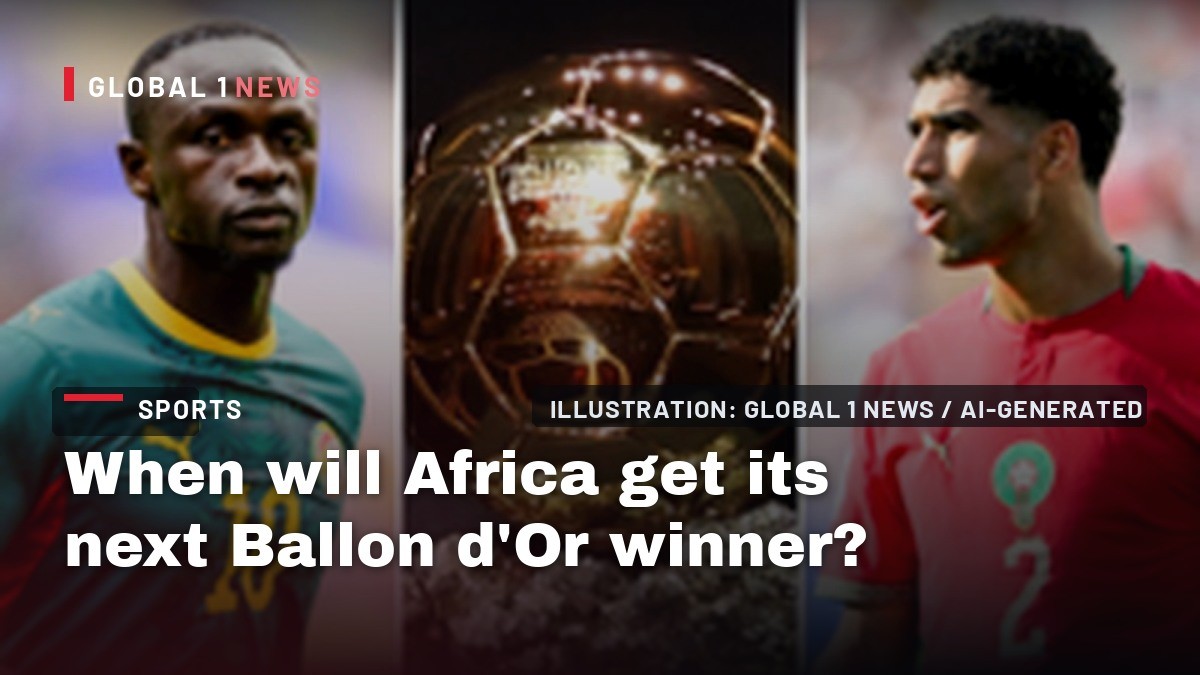
As the 2026 Ballon d’Or nominations were unveiled, the continent’s hopes rested on two familiar names: Senegal’s veteran forward Sadio Mané and Morocco’s dynamic right‑back Achraf Hakimi. Both have previously broken into the top six of the prestigious award, yet the odds appear steep after a year dominated by Europe’s giants – Spain’s World Cup triumph and Kylian Mbappé’s record‑breaking goal tally. Their presence on the 30‑strong shortlist revives a long‑standing question: when will Africa celebrate its next individual football champion?
From George Weah to the present: a brief history
The Ballon d’Or, launched by France Football in 1956, did not open its doors to non‑European players until 1995. That very year Liberian striker George Weah seized the prize, becoming the continent’s sole winner to date. His triumph marked a high point, with the award’s eligibility shift allowing African talent to compete on an equal footing.
Since Weah’s breakthrough, African representation has waxed and waned. The most concentrated African presence occurred in 2007, when six nominees were listed and Ivorian Didier Drogba finished fourth, the highest placement since Weah’s victory. Yet the pool has generally narrowed, stabilising at around thirty candidates each year after 2008.
Overall, Africa has amassed 76 nominations since becoming eligible. While the continent’s stars have often shone, the ultimate prize has remained elusive, underscoring both the competitive nature of the award and the historic barriers that African football continues to confront.
Key African performers and their landmark years
Beyond Weah’s singular win, a handful of African players have reached the upper echelons of the Ballon d’Or rankings. In 2019, three Africans broke into the top ten: Mané secured fourth place, Egypt’s Mohamed Salah was fifth, and Algeria’s Riyad Mahrez rounded out the list at ten. This trio highlighted a resurgence of African impact on the global stage.
The most recent top‑three finish came in 2022, when Mané claimed second spot behind France’s Karim Benzema. That performance reaffirmed his status as the continent’s most consistent contender, a claim supported by his ten‑year span of nominations – the longest of any African player.
Other notable high‑finishers include Samuel Eto’o, who placed fifth in 2009 after nine consecutive nominations, and Didier Drogba, whose 2007 fourth‑place finish remains the best result since Weah’s 1995 victory.
Geographic spread and nomination patterns
Nigeria leads the continent in the sheer number of individual nominees, with eight different players having appeared on the shortlist. Victor Osimhen’s eighth‑place finish in 2023 stands as the best result for a Super Eagles representative. Cameroon follows with a strong showing from Samuel Eto’o, who earned nine straight nominations, while Ivory Coast contributed eight nominees, highlighted by Drogba’s eight‑year presence.
Despite this diversity, 39 African nations have yet to see a single nominee. Even among those awaiting their first nod, the Democratic Republic of Congo and South Africa – ranked 43rd and 54th globally – remain the highest‑ranked countries still without representation.
Notably, no player from a club based on the African continent has ever been nominated, reflecting the migration of top talent to European leagues where visibility and competition are higher. This diaspora dynamic continues to shape the continent’s Ballon d’Or narrative.
The gender gap in Ballon d’Or recognition
Since the women’s Ballon d’Or was introduced in 2018, African representation has been modest. Only four African women have earned nominations: Nigeria’s Asisat Oshoala appeared on the shortlist in 2022 and 2023, while Zambian captain Barbra Banda has been a constant presence each year since the award’s inception. Malawi’s Tabitha Chawinga joined the list in 2024, followed by her sister Temwa Chawinga in 2025 and 2026.
This limited participation underscores a broader challenge: African women’s football still battles for equal exposure and investment compared with their male counterparts. Nevertheless, the recurring nominations of Oshoala, Banda and the Chawinga sisters signal a growing pool of talent that could eventually break through to the highest echelons.
Overall, the continent has contributed ten nominations out of the 195 total across both men’s and women’s awards, illustrating both the progress made and the distance yet to travel in achieving parity.
Voting mechanics and the 2026 ceremony
The Ballon d’Or’s outcome is decided by journalists from the top 100 FIFA‑ranked nations, alongside national team coaches and captains. The 2026 ceremony, scheduled for 26 October in London, marks the award’s 70th anniversary and pays homage to inaugural winner Sir Stanley Matthews.
Given the voting body’s European concentration, African nominees often face an uphill battle for points. Historical data shows that African players have gone without a single vote on four occasions – 1998, 2000, 2001 and 2003 – highlighting the difficulty of converting nominations into tangible support.
Nevertheless, the presence of Mané and Hakimi this year keeps the conversation alive. Their performances for Al‑Nassr and Paris Saint‑Germain respectively will be scrutinised by the global press, whose assessments will ultimately shape the final tally.
Looking ahead: what it would take for the next African champion
For an African player to clinch the Ballon d’Or, a combination of individual brilliance and team success on the world stage appears essential. The recent dominance of Lionel Messi and Cristiano Ronaldo – who together claimed 13 of the 15 awards between 2008 and 2023 – demonstrates how sustained excellence at the highest levels can tip the scales.
Mané’s 2022 runner‑up finish suggests that a deep run in major tournaments, such as the World Cup or continental championships, can elevate an African candidate. Similarly, Hakimi’s defensive prowess and contributions to PSG’s European campaigns could position him as a dark horse if his club secures continental glory.
Beyond individual feats, broader recognition of African leagues and increased media coverage of African‑based talent could reshape voting patterns. As the continent continues to produce world‑class players, the hope remains that the next Ballon d’Or will finally echo the triumph of George Weah, celebrating African football at its zenith.
Conclusion: the enduring quest for African glory
The 2026 Ballon d’Or shortlist reaffirms Africa’s steady, if uneven, presence on football’s most prestigious individual stage. While the continent’s tally of nominations and occasional top‑ten finishes attest to a rich reservoir of talent, the ultimate prize remains just out of reach.
Mané and Hakimi carry the weight of a continent that has produced legends yet still yearns for a second winner. Their performances in the coming months, coupled with the evolving dynamics of global football voting, will determine whether Africa can add another name to the Ballon d’Or roll of honour.
Until then, fans across the continent will watch, hopeful and proud, knowing that each nomination brings African football a step closer to the pinnacle of recognition.
This article was produced with AI-assisted research and editorial support. Reporting is based on the source material cited below. Sources: BBC News Africa; bbc.co.uk; Global1.News (10 September 2026).
By Amara Diop, Staff Writer
What's Your Reaction?
 Like
0
Like
0
 Dislike
0
Dislike
0
 Love
0
Love
0
 Funny
0
Funny
0
 Wow
0
Wow
0
 Sad
0
Sad
0
 Angry
0
Angry
0

West Africa/Sahel Correspondent at Global1.News. Dakar-based journalist covering politics, security, climate, and development across Francophone and Anglophone West Africa. Tells the stories of a region undergoing profound transformation.










Comments (0)