
Pakistan Warns Houthis as Makkah Pact Faces First Test After Saudi Strikes
Pakistan condemned Houthi missile and drone attacks on southern Saudi Arabia and said the Makkah Joint Defense Agreement would go operational if aggression continues. The strikes injured at least 73 civilians and hit energy infrastructure, testing a new Saudi-Pakistani-Turkish security architecture.
When Houthi ballistic missiles and suicide drones struck southern Saudi Arabia on September 8 and 9, the loudest reaction did not come from Washington or Brussels. It came from Islamabad. Pakistan's threat to activate the Makkah Joint Defense Agreement has turned a Yemeni escalation into a test of a new Sunni security architecture stretching from the Gulf to South Asia.
Pakistan Warns Houthis as Makkah Pact Faces First Test After Saudi Strikes
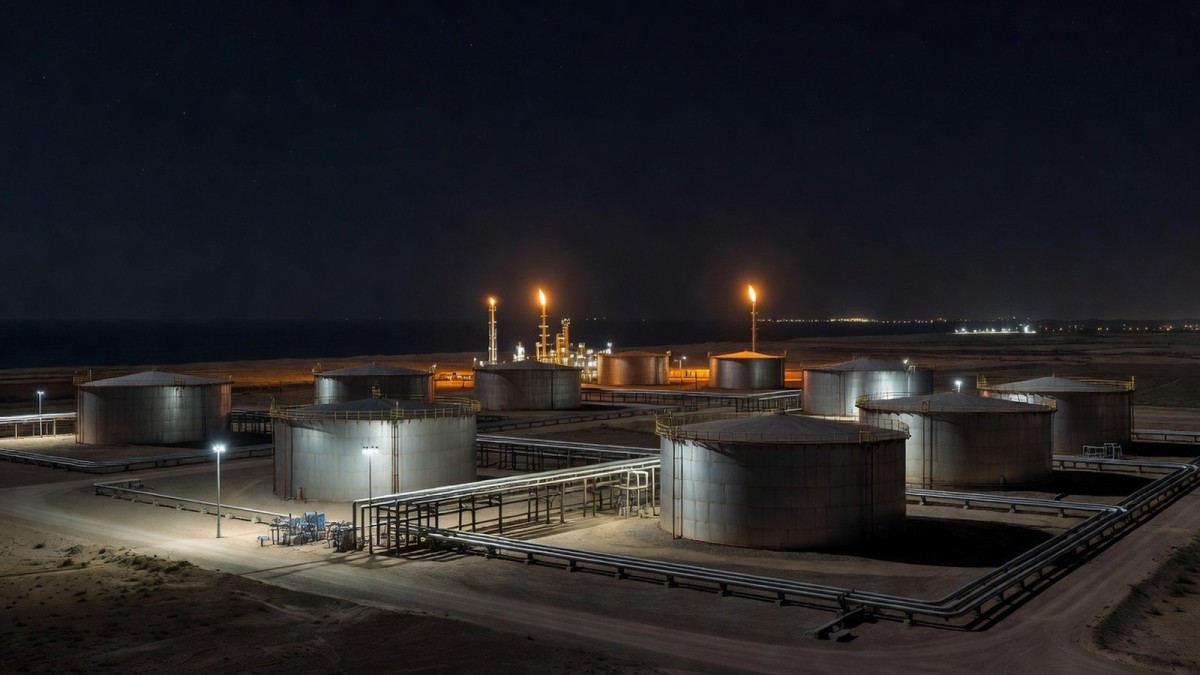
Riyadh, Saudi Arabia — Yemen's Houthis launched ballistic missiles and suicide drones at Abha, Khamis Mushait, Jazan and Najran in southern Saudi Arabia on September 8, 2026, injuring at least 73 civilians, including women and children, and setting energy infrastructure and oil installations ablaze. The Saudi-led coalition described it as one of the biggest attacks on the Kingdom since the U.S.-Israeli war on Iran began in February 2026. No fatalities were initially reported, but temporary shutdowns were imposed at oil sites.
Fresh Houthi ballistic missile and drone attacks followed on September 9 toward Khamis Mushait, Abha and Jazan, with an airbase in Khamis Mushait among the targets. Saudi Civil Defense lifted an alert in Khamis Mushait the same day; Saudi authorities gave no reason. Saudi-led coalition spokesman Maj. Gen. Turki al-Maliki accused the Houthis of "extremist ideology" and a continued escalatory approach against civilians and civilian infrastructure, saying the Joint Forces Command would respond "responsibly" under the right to self-defense in Article 51 of the UN Charter.
Houthi military spokesman Yahya Saree said Saudi air forces conducted 54 airstrikes in 12 hours across Al-Jawf, Marib, Taiz, Hodeida and Saada. The Houthis reported more than 50 attacks targeting areas including Taiz and Hodeida. Houthi-run Al-Masirah TV said the toll from a Saudi strike on a prison days earlier had risen to 32 dead and 7 injured.
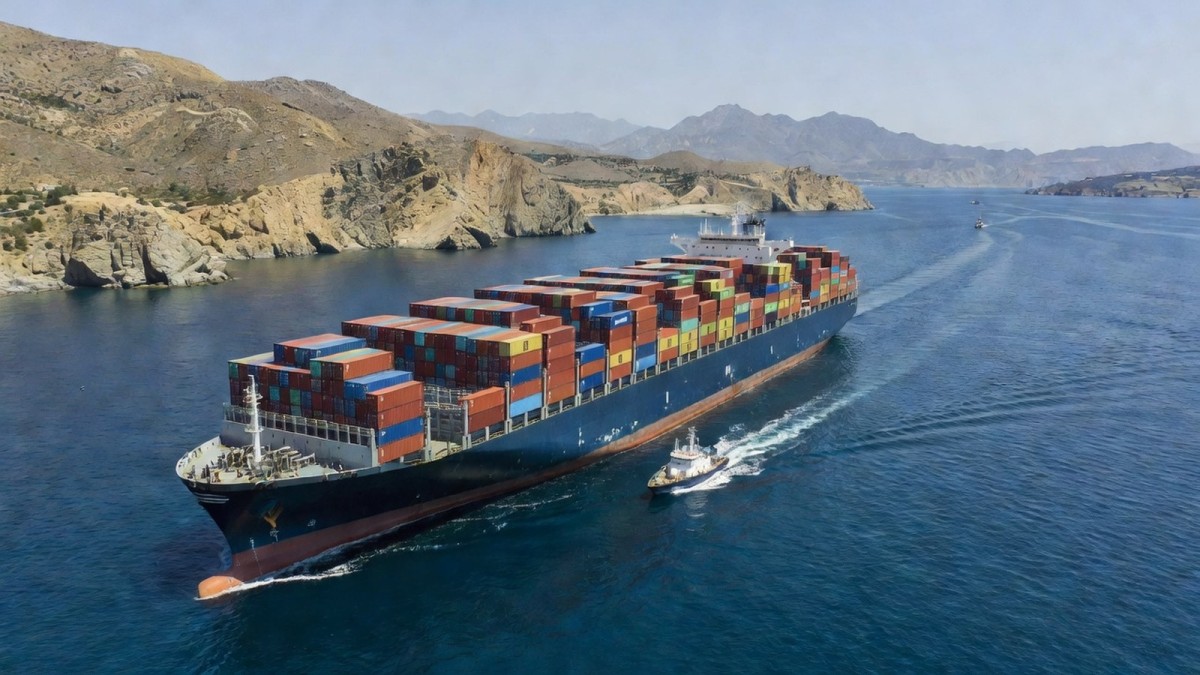
The exchange marks the collapse of a relative lull that had held since April 2022. The Houthis triggered the return to hostilities in July 2026 when they allowed an Iranian plane to land in defiance of Saudi control of Yemeni airspace. The internationally recognized Yemeni government retaliated by striking Sanaa airport, an attack the rebels blamed on Saudi Arabia. Yemeni government forces have since reported battlefield gains across four fronts, and Presidential Leadership Council chairman Rashad al-Alimi pledged to sustain operations until state authority is restored. The Houthis also declared a naval blockade of Saudi Arabia in the Red Sea in July 2026 and have targeted commercial shipping there.
Pakistan's Warning: The Makkah Pact Goes Live
Prime Minister Shehbaz Sharif condemned "in the strongest terms, the cowardly attack by Houthis targeting civilian and energy facilities in the Kingdom of Saudi Arabia," saying Pakistan stands in "unwavering" solidarity with the Saudi leadership and people. But the more consequential signal came from Defense Minister Khawaja Asif, who told Geo News that the Makkah Joint Defense Agreement would become operational in the event of aggression against the Kingdom.
"Unprovoked aggression or spillover of whatever is happening in Yemen into Saudi Arabia will definitely make this agreement operational," Asif said. He added: "No one should have any doubt in this. We are bound by the terms and conditions of this pact. God willing, we will honor them in case there is a need." He also warned the Houthis not to exploit the wider U.S.-Iran confrontation to draw Saudi Arabia into the conflict, saying they would be doing so "at its own peril."
The Makkah Joint Defense Agreement was signed on August 7, 2026 by Saudi Arabia, Pakistan and Turkiye. An armed attack on one member is treated as an attack on all. The three agreed to a secretariat in Saudi Arabia, initially headed by a Pakistani secretary-general for three years. It envisages political and military coordination plus cooperation on joint exercises, air defense, unmanned systems and electronic warfare. Ankara said it is "not aimed at any particular country" and not in contradiction with its NATO commitments. Saudi Deputy Minister for Public Diplomacy Rayed Krimly said the agreement is not linked to "any nuclear ambitions or arms race."
The Makkah pact builds on an earlier framework: the September 17, 2025 Saudi-Pakistan Strategic Mutual Defense Agreement signed by Crown Prince Mohammed bin Salman and Shehbaz Sharif, which contains a collective security clause and which analysts read as putting Islamabad's nuclear deterrent behind the Kingdom. Read together, the two documents give Riyadh something it has sought for years — a layered, explicitly Sunni security guarantee that does not depend solely on the United States.
What Islamabad Actually Brings to the Table
Pakistan's value to Riyadh is not massed ground troops. It is intelligence, air-defense expertise, maritime surveillance and the credibility of a nuclear-armed state whose officer corps has deep historical ties to the Gulf. Pakistani military analyst Ayesha Siddiqa, a senior fellow at King's College London, has argued that Pakistan's preference would be defensive engagement — intelligence sharing, air-defense cooperation, maritime surveillance and protection of critical Saudi infrastructure — because expanding operations in the Red Sea is too risky.
That distinction matters. A defensive Pakistani role along Saudi Arabia's southern and western approaches is politically sustainable in Islamabad. A Pakistani expeditionary role against the Houthis in Yemen would not be. Pakistan's army is already stretched along its western border and its economy remains fragile; a foreign deployment would invite domestic backlash and, more dangerously, retaliation from Iran-backed networks inside Pakistan.
Analyst Michael Kugelman has noted that limited military support for Saudi Arabia would not necessarily rupture Pakistan's ties with Iran, but that arms support to Riyadh could deepen Tehran's suspicions and undermine Islamabad's role as a mediator. That is the central tension in Pakistan's position: it wants to be Riyadh's guarantor and Tehran's interlocutor at the same time.
The Iranian Dimension and the Mediation Trap
Reuters reported on September 9, 2026 that Pakistan delivered a Saudi warning to Iran to rein in the Houthis. Iran said it does not control the Houthis, while Iranian sources said Tehran had urged the Houthis to escalate attacks on Saudi Arabia. That contradiction is the heart of the crisis. If Tehran cannot restrain the Houthis, Saudi deterrence has no address. If Tehran can restrain them and chooses not to, then the Houthi campaign is a deliberate Iranian pressure tactic against Riyadh.
Pakistan's mediation credentials are real but fraying. Islamabad helped broker a roadmap toward a formal U.S.-Iran deal signed in June 2026, which later unraveled as Washington and Tehran resumed attacks on each other in the Gulf. Carrying a Saudi warning to Tehran while simultaneously promising to defend Saudi Arabia under the Makkah pact places Islamabad in an awkward dual role. The more credible its defense commitment becomes, the less neutral it looks in Iranian eyes.
This is where the Sunni-Shia competition that has shaped the region for two decades reasserts itself. Saudi Arabia frames the Houthis as an Iranian proxy; the Houthis frame themselves as defenders of Yemen against foreign aggression. Both narratives are instruments of mobilization, and both make de-escalation harder.
Yemen's War Enters Its Twelfth Year
Yemen has suffered nearly 12 years of war since the Houthis seized Sanaa in 2014. Saudi Arabia is the principal external backer of Yemen's internationally recognized government, and the collapse of the 2022 lull has returned the country to full-scale multi-front conflict. The Houthis' naval blockade declaration in July 2026 and their targeting of commercial shipping in the Red Sea have widened the war from a land battlefield into a maritime and economic one.
The Houthis' strategic logic is straightforward. By striking Saudi energy infrastructure and Red Sea shipping, they impose costs that ripple through global markets rather than only through Yemeni battlefields. Missiles at Abha and drones at Jazan are, in effect, messages to Riyadh, Washington and the oil market simultaneously. The prison strike toll reported by Al-Masirah TV — 32 dead and 7 injured — serves the same purpose on the information front.
For the internationally recognized government, the calculation is different. Rashad al-Alimi's pledge to sustain operations until state authority is restored reflects a belief in Sanaa and Riyadh that the Houthis are overextended. Government forces reporting gains across four fronts suggest a push is underway, but battlefield claims in Yemen have historically been unreliable and difficult to verify independently.
The Maritime Coalition and the Cost-Imposition Strategy
The Multinational Maritime Defense Alliance was announced by the Saudi Ministry of Defense on July 30, 2026, with nearly 50 countries meeting in Riyadh. At its third meeting in Jeddah on August 13, 2026, Saudi Arabia said 15 countries had signed the joint statement and 13 had completed national procedures and joined the coalition charter. Signatories include Bahrain, Bangladesh, the Comoros, Djibouti, Egypt, Jordan, Kuwait, Pakistan, Qatar, Saudi Arabia, Somalia, Sudan, Turkiye and Yemen. Rear Admiral Abdullah bin Salem Al-Shehri was appointed coalition commander.
Member states will exchange intelligence, develop operational planning, conduct joint naval exercises and build capabilities. Jeddah-based analysts describe it as a defensive alliance designed to raise the cost of Houthi attacks. That framing is deliberate: Riyadh wants deterrence without being drawn into a wider war with Iran while the U.S.-Iran confrontation continues.
The coalition's weakness is that deterrence by cost imposition works slowly. Houthi attacks are cheap; missile defense interceptors and naval patrols are expensive. Unless the alliance can degrade Houthi launch capacity or cut its supply lines, it risks a war of attrition in which the cheaper side sets the tempo.
Energy Markets and the Strait of Hormuz Overhang
Oil markets have already been rattled by the wider war. Brent crude settled above $100 a barrel on September 9, closing up 3.4% at $101.21 after touching $101.58, with the dated Brent benchmark used to price roughly two-thirds of global supply above $100 since September 3. The Strait of Hormuz standoff and Red Sea disruption are compounding an already tight market. The September 8 strikes on Saudi energy infrastructure and oil installations, with temporary shutdowns at oil sites, add a direct supply risk to a market already pricing geopolitical premium.
The second-order effects extend beyond price. Gulf states pursuing economic diversification need stable shipping lanes and predictable insurance costs. A sustained Houthi campaign in the Red Sea raises war-risk premiums, reroutes tanker traffic and undermines the investment climate that Saudi Vision 2030 and its neighbors depend on. This is why the maritime coalition matters more than its modest operational footprint suggests: it is as much an insurance mechanism for investor confidence as a naval mission.
For Pakistan, the energy dimension cuts both ways. Islamabad depends on Gulf oil and on remittances from Gulf-based workers. A wider war that disrupts Gulf economies would hurt Pakistan economically even as its military commitments deepen. That asymmetry explains why Pakistani officials speak of defensive solidarity rather than offensive operations.
Turkiye's Quiet Stake in the Makkah Pact
Turkiye's inclusion in the Makkah Joint Defense Agreement is the most underappreciated element of the new architecture. Ankara said the pact is "not aimed at any particular country" and not in contradiction with its NATO commitments. That language is designed to reassure both Washington and Tehran while preserving Turkish freedom of maneuver.
For Riyadh, Turkish participation brings defense-industrial capacity, drone expertise and a bridge to Sunni political networks that Pakistan alone cannot provide. For Ankara, it offers Gulf investment and a role in Red Sea security without a formal rupture with Iran. The three-way structure — Saudi money, Pakistani manpower and nuclear cover, Turkish technology — is a genuinely new configuration in Middle East security politics.
Whether it functions under fire is another matter. The pact's secretariat, initially headed by a Pakistani secretary-general for three years, is still being stood up. Joint exercises, air-defense integration and unmanned systems cooperation are aspirational until implemented. The September escalation is the first real stress test, and the gap between signed documents and operational capability is where crises are won or lost.
Regional Implications
The Houthi strikes on September 8 and 9 have done something that years of diplomacy could not: they have forced the Makkah Joint Defense Agreement from a signing ceremony into a live policy question. Pakistan's defense minister has now publicly committed Islamabad to activating the pact in the event of aggression against Saudi Arabia. If implemented, that commitment transforms Pakistan from a Gulf security contractor into a treaty-bound guarantor — a status with real deterrence value and real escalation risk.
Three scenarios follow. In the first, deterrence holds: the Makkah pact's credibility, combined with the Multinational Maritime Defense Alliance and continued Saudi airstrikes, persuades the Houthis to limit their campaign to Yemeni battlefields. In the second, attrition continues: Houthi attacks persist at a level high enough to disrupt energy infrastructure and shipping but low enough to avoid triggering full Pakistani or Turkish involvement. In the third, escalation spirals: a mass-casualty strike on Saudi soil pulls Pakistan and Turkiye into the conflict, Iran is drawn in through its Houthi clients, and the Red Sea becomes a second front alongside the Strait of Hormuz.
The second scenario is the most likely and the most dangerous, because it is sustainable for the Houthis and exhausting for everyone else. Riyadh's challenge is to convert its new alliances into deterrence before the cost of the war erodes the very economic transformation it is trying to protect. Islamabad's challenge is to honor its commitments without becoming a target. And Tehran's challenge is to keep using the Houthis as leverage without triggering the Sunni coalition it has spent two decades trying to prevent.
By Malik Hassan, Staff Writer
This article was produced with AI-assisted research and editorial support. Reporting is based on sources cited in the article.
What's Your Reaction?
 Like
0
Like
0
 Dislike
0
Dislike
0
 Love
0
Love
0
 Funny
0
Funny
0
 Wow
0
Wow
0
 Sad
0
Sad
0
 Angry
0
Angry
0

Middle East Correspondent at Global1.News. Based in Beirut, covering politics, conflict, energy, and society across the Middle East. Brings context and depth to a region often reduced to headlines.














Comments (0)