
Manila Garbage Fee Surge Squeezes Small Businesses Under Ordinance 9151
Manila's Ordinance 9151 raised garbage fees up to 12 times, hitting small businesses hard. Owners cut staff, took loans, or faced closure. City hall calls the rates lawful; a Supreme Court petition was dismissed.
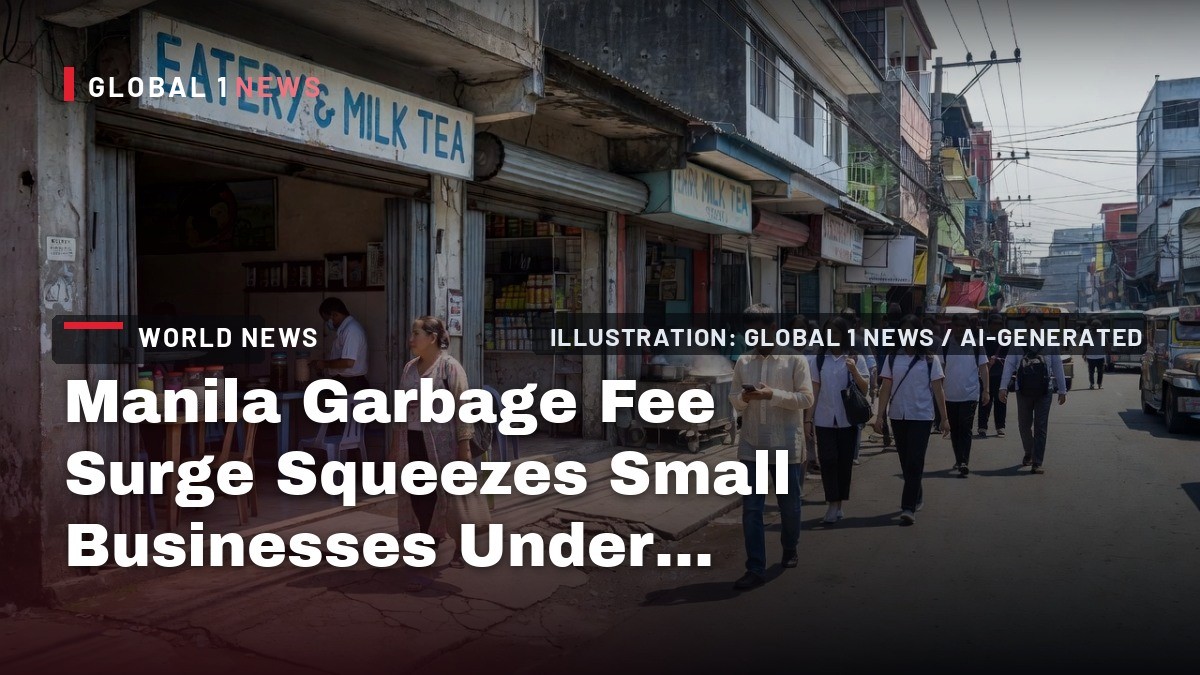
Small business owners across Manila are counting the cost of a sharp increase in garbage collection fees that came with this year's business permit renewal, with some cutting staff, taking out loans, or staring at closure as the city's revised rates bite into already thin margins.
For Vince Canlas, owner of El Latte Cafe on Taft Avenue, the new fees have turned daily operations into an uphill battle. The 100-square-meter cafe, which began as a milk tea shop in Olongapo before relocating to Manila to serve the large student market near major universities, employs just five people. When he renewed his permit, he was shocked at the assessment.
"Nagulat kami sa garbage fee. Na sobrang laki. Nakakagulat lang talaga. Hindi namin in-expect na mangyayari pala sa amin," Canlas told Philstar.com.
(We were taken aback by how high the garbage fee was. It was really surprising. We never expected this would happen to us.)
Canlas said the cafe incurred nearly P107,000 in fees for its business permit renewal, with around P60,000 going to garbage collection, including interest due to late payment. He questioned the amount given how little waste the cafe produces.
"Sabi ko manager ko, 'Sir, gaano ba karami ang tinatapon natin daily?' Sabi niya, 'Boss, ano lang 'to, nasa one to two bags lang.' Sobrang baba so hindi talaga makatarungan ang P60,000," Canlas said.
(I asked my manager how much garbage we generate daily, and he said it was only around one or two bags. Given how little waste we produce, a P60,000 garbage fee is simply unreasonable.)
Closure, Loans, and the Fight to Stay Open
The pressure escalated on September 1, when the Manila local government ordered the closure of El Latte Cafe after Canlas struggled to settle the fees. To save the business, he took out a new loan and paid the nearly P107,000 assessment the same day. Even after settling the amount, he said the city still required another P6,200 in penalties before the cafe was allowed to reopen.
"Baka tapusin na lang itong year na 'to. Isara na lang namin ang cafe; wala na talaga eh, negative na dahil sa mga bills," Canlas said.
(We might just finish out this year and shut down the cafe. We really have no choice left. We're already operating at a loss because of all these bills.)
"Grabe, nakaka-iyak sa Manila. Parang tingin nila pinupulot namin ang pera," he added.
(It's terrible, it makes you want to cry in Manila. It's like they think we just pick money off the ground.)
To survive, Canlas reduced his employees' working days, resulting in lower take-home pay.
"Wala kaming choice kasi wala naman kaming ibang pwedeng i-cut na ano eh. Para lang mabawasan 'yung alam mo 'yun, 'yung gastusin eh," he said.
(We had no choice because there really wasn't anything else we could cut. We just needed to bring down our expenses.)
Nine Workers Let Go as Fees Balloon
For Kriska Castillejos, owner of a food stall near Manila's Fusion Alley in Sampaloc, the financial pressure meant letting go of nine of her 15 employees. For the previous year, she paid about P14,000 in renewal fees. In 2026, the amount ballooned to P64,000.
"Malaki 'yung ano niya, 'yung impact niya talaga. Lalo na kami maliliit, nagpapasahod kami ng tao," Castillejos said in a Philstar.com interview.
(It really has a huge impact, especially on small business owners like us who have employees to pay.)
Castillejos urged city hall to focus on strict waste segregation, penalties for littering, and investments in recycling rather than imposing increasingly heavy fees on already struggling businesses.
"Kasi talagang may basura naman tayo eh. Kailangan nating magbayad para sa ika-uunlad din natin. Ang ano ko lang is dapat hindi sobrang taas," she said.
(We recognize that we generate waste and need to pay our share. My only point is that the fee should not be this high.)
What Ordinance 9151 Changed
In January 2026, the Manila local government began implementing revised garbage collection fees under Ordinance 9151, with some commercial rates rising to 12 times their previous levels. Before the revised schedule, Manila followed the garbage collection rates under its 2013 Omnibus Revenue Code.
For instance, the quarterly garbage fee for the main office of a commercial bank was previously P1,250, while each branch was charged P225. Under the revised schedule, both a commercial bank's main office and each branch are charged P15,000 per quarter.
Public eating places with an aggregate area of 100 to less than 200 square meters are now charged P16,800 per quarter, or P67,200 annually. Philstar.com reported that the amount is notably higher than waste collection fees described by other local governments in their responses to the outlet. Philstar.com has reached out to the Manila Public Information Office for comment but has yet to receive a response as of press time.
City Hall Defends the Rates
In a January statement, the Manila local government defended Ordinance No. 9151 as "lawful and constitutionally sound." City officials said an earlier Supreme Court ruling involving Quezon City's garbage fees did not apply to Manila's ordinance because the city's revised charges were imposed on businesses as regulatory fees rather than as taxes.
"Manila's revised garbage collection fees apply exclusively to business establishments and are imposed as regulatory fees, not taxes, consistent with jurisprudence recognizing the validity of cost-based garbage charges," the Manila LGU's January statement read.
City Legal Officer Luch Gempis Jr. said the rates had not been updated since 2013 despite increases in commercial waste volumes and garbage hauling costs, particularly after Manila was advised to redirect its waste to the New San Mateo Sanitary Landfill in Rizal.
City Treasurer Paul Vega similarly said the revised rates were intended to narrow the gap between the cost of garbage collection and the revenue generated from the fees. Bureau of Permits Director Levi Facundo, meanwhile, said fee assessments are automatically generated based on the schedules under the ordinance and advised business owners with billing concerns to coordinate with the appropriate city departments.
Supreme Court Petition Dismissed
The implementation of the garbage fee ordinance was challenged before the Supreme Court on February 5, 2026. The petition was filed by Las Piñas-based senior high school teacher John Barry Tayam, who invoked the "doctrine of transcendental importance" and sought a temporary restraining order against the implementation of the ordinance.
In a February 25 resolution, however, the Supreme Court dismissed the petition, ruling that Tayam lacked legal standing for not being a Manila resident. It also ruled that the petitioner violated the doctrine of hierarchy of courts by filing the case directly with the high tribunal.
An Appeal for Balance
Business owners urged Manila Mayor Isko Moreno Domagoso to reconsider the steep increases. Canlas said he does not hold any personal animosity toward the local government but believes its current policies are putting more pressure on small enterprises.
"Sana ma-hear kami na magiging balance lang sa lahat. May proyekto para sa mahirap, may proyekto para sa mga small business owners," Canlas said.
(I hope we are heard and that there will be balance for everyone, with projects for the poor as well as projects for small business owners.)
"Hindi naman namin hinihiling na malaki ang bumalik sa amin. Ang gusto lang talaga namin makapag-operate nang wala kaming iniisip na, hala, may bayarin malaking ganito. Mabubuhay, makakapag-operate pa ba tayo para sa mga employees natin?" he added.
(We aren't asking for huge returns. All we really want is to operate without constantly worrying about massive bills and wondering whether we can survive and continue operating for our employees.)
For the staff behind the counter at El Latte Cafe, the squeeze lands as fewer paid days each week. Canlas said the cafe's employees now take home less after he trimmed their working days, the only expense he felt he could cut. Castillejos's former staff faced a harder outcome: nine of them lost their jobs outright.
As Manila's small entrepreneurs wait for word from city hall, the question Canlas posed still hangs over the city's student strips and neighborhood eateries: can enterprises like his keep operating for the people who depend on them?
This article was produced with AI-assisted research and editorial support. Sources: Philstar.com.
By Bella Reyes, Staff Writer
What's Your Reaction?
 Like
0
Like
0
 Dislike
0
Dislike
0
 Love
0
Love
0
 Funny
0
Funny
0
 Wow
0
Wow
0
 Sad
0
Sad
0
 Angry
0
Angry
0

Philippines/Southeast Asia Correspondent at Global1.News. Manila-based journalist covering Philippine politics, environment, maritime security, and social issues. Passionate about marine conservation and the communities protecting the Philippines' natural heritage.















Comments (0)