
Telangana's 5-Day Precursor Crackdown: 83 Units Checked
Telangana's EAGLE Force and TG-SAFE completed a five-day, eight-district operation inspecting 83 URN-linked chemical units for diversion of precursors such as ephedrine and acetic anhydride under the NDPS Act.
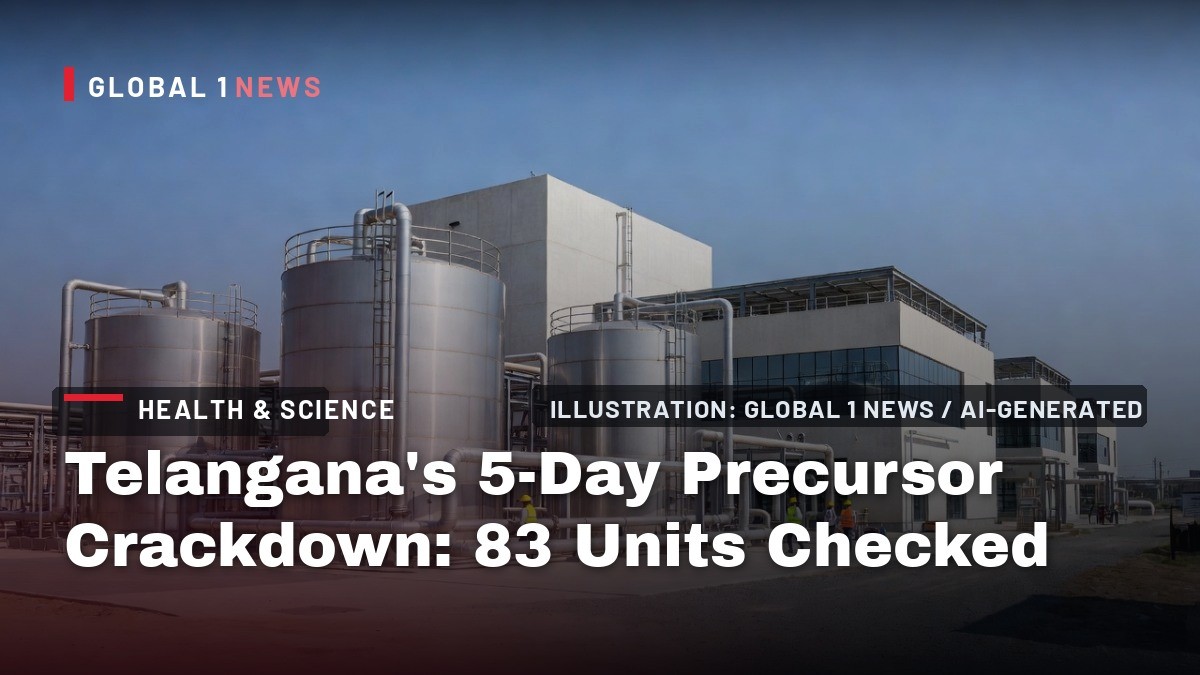
Telangana's elite drug-enforcement unit has concluded a five-day, eight-district sweep of the industrial chemical supply chain, inspecting 83 registered factories and establishments in a bid to choke off the raw materials that feed synthetic-drug manufacturing. The joint operation, launched on September 3, 2026, marks one of the state's most aggressive attempts yet to police the "source side" of the narcotics trade rather than merely intercepting finished product on the streets.
Telangana's 5-Day Precursor Crackdown: 83 Units Checked
Hyderabad, Telangana – September 9, 2026 — The operation, led by the EAGLE Force (Elite Action Group for Drug Law Enforcement) alongside the Telangana Standards Authority for Food and Essential Drugs (TG-SAFE), targeted the potential diversion and misuse of precursor chemicals and controlled substances regulated under the Narcotic Drugs and Psychotropic Substances (NDPS) Act, 1985. Ten multi-departmental teams were deployed for field operations, according to R. Giridhar, Superintendent of Police (East), EAGLE Force.
A Statewide Net: Eight Districts, Ten Teams, One Objective
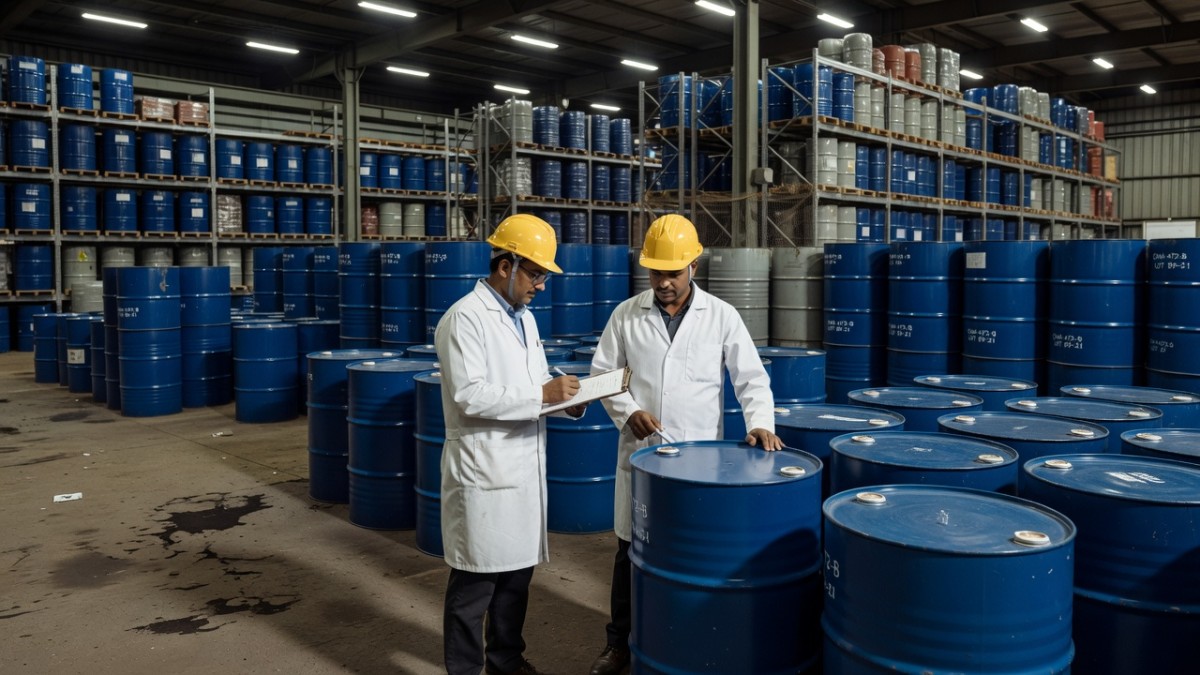
The scale of the operation was considerable. Over the five-day period, joint teams comprising Deputy Superintendents of Police, Drug Inspectors, Prohibition and Excise officers, and personnel from Central Intelligence and the Narcotics Control Bureau (NCB) fanned out across Medchal-Malkajgiri, Yadadri Bhongir, Sangareddy, Ranga Reddy, Hyderabad, Kamareddy, Medak and Nalgonda districts. Their target: 83 URN-linked factories and industrial establishments involved in the procurement, possession, purchase, sale, consumption and storage of controlled and precursor chemicals, as corroborated by NewsMeter's reporting.
Inspectors scrutinised storage practices, procurement records and transaction details related to a specific list of sensitive industrial chemicals: Acetic Anhydride, Ephedrine, Pseudoephedrine and Anthranilic Acid. Giridhar said the focus was on identifying unusual purchases, improper storage practices and any possible diversion of controlled chemicals. Companies were urged to report suspicious orders or activities to authorities and to maintain proper records and comply with regulations governing sensitive chemicals.
The Chemistry of Diversion: Why These Four Chemicals Matter
The choice of chemicals under scrutiny is not arbitrary; it reflects a sophisticated understanding of illicit drug manufacturing. Ephedrine and pseudoephedrine, while common decongestants in cold medicines, are also key precursors in the illicit manufacture of methamphetamine-type drugs. Acetic anhydride, a widely used industrial chemical, is a precursor in heroin processing and is a regulated or list-controlled chemical in many countries. Anthranilic acid, used in dyes and pharmaceuticals, can be diverted for illicit drug manufacture.
Officials said preventing the diversion of these raw materials is crucial to tackling the production of synthetic drugs. Instead of waiting for drugs to reach the market, authorities are trying to stop their production by monitoring the supply of raw materials. This "precursor strategy" — cutting supply at the chemical stage rather than the street stage — is used by enforcement agencies worldwide because synthetic drug labs depend on industrial inputs. The logic is simple: without the chemical building blocks, the labs cannot operate, regardless of demand.
A Pharma State's Dual-Use Dilemma
Telangana's position as a pharmaceutical powerhouse makes this enforcement challenge uniquely complex. According to the Telangana Drugs Control Administration's (DCA) 2025 annual report, the state produces about 35 percent of India's pharmaceuticals. This industrial concentration means that vast quantities of legitimate precursor chemicals flow through the state's factories and warehouses daily, creating inherent vulnerabilities in the supply chain.
The dual-use nature of these chemicals — essential for legitimate medicine manufacturing but equally vital for illicit drug production — places a heavy compliance burden on industry. The URN-linked registration regime, under which legitimate chemical and pharmaceutical firms handling such substances must be registered, is designed to create a traceable chain of custody. However, the sheer volume of chemical movement through a state producing a third of the nation's drugs means that oversight requires constant vigilance and, as this operation demonstrates, periodic intensive sweeps.
The Record Behind the Raids: A Year of Escalating Enforcement
This week's operation did not occur in a vacuum. The DCA's 2025 annual report paints a picture of an agency that has significantly intensified its enforcement posture. In 2025, the DCA seized 244 drug consignments, uncovered 84 substandard drugs, and took 5,278 enforcement actions after more than 28,800 inspections statewide. The value of confiscated drugs reached Rs 1.39 crore.
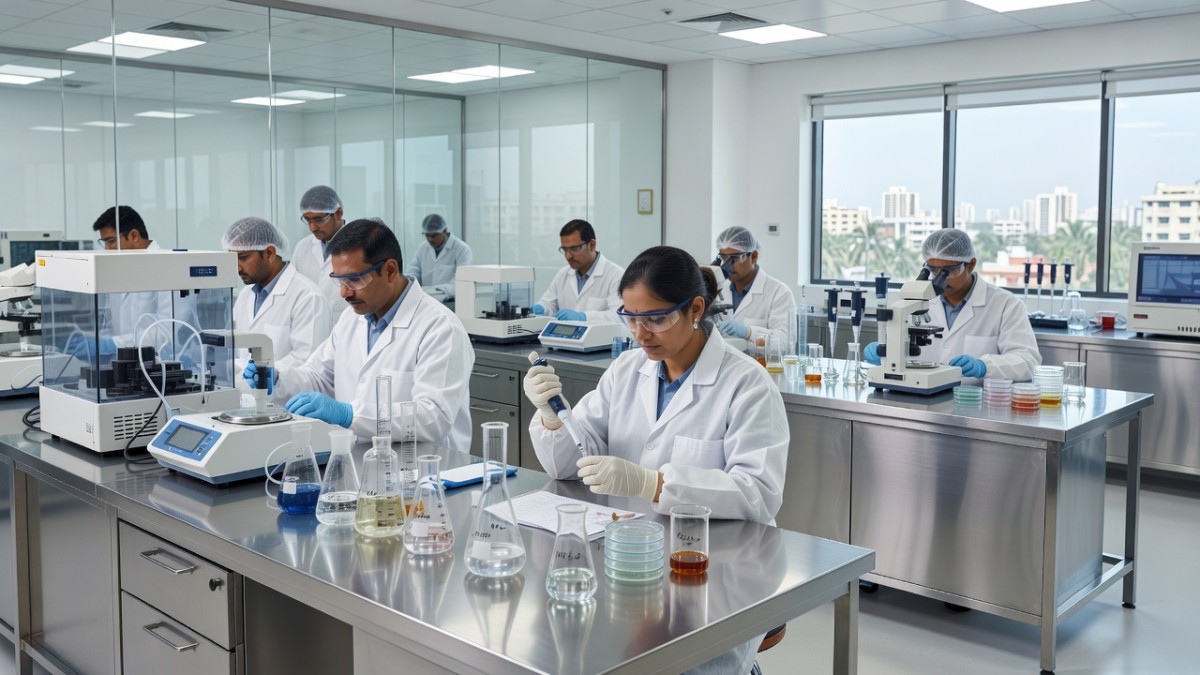
Perhaps more significantly, the DCA made arrests in fake-drug cases for the first time, and the year's enforcement produced 217 convictions. The agency also analysed 4,801 drug samples and declared 84 as Not of Standard Quality. But the most alarming finding came from joint inspections that detected a Telangana-based unit manufacturing and exporting New Psychoactive Substances (NPS), or designer drugs, to Europe. The substances — MDPHP, Ethylpentedrone, 2-MMC and 2-MEC — have no real medical use, and the DCA formally proposed including these four substances under the NDPS Act to curb domestic diversion.
The Demand Side: Testing, Treatment and Rehabilitation
While the EAGLE Force operation targets supply, Hyderabad police have been simultaneously addressing the demand side of the equation. In an interview with Deccan Chronicle, senior Hyderabad police officials outlined a tripartite action plan that moves beyond merely registering cases. The strategy involves strengthening ground-level surveillance, dismantling supply networks, and rehabilitating consumers to protect young people.
The scale of the demand-side problem is quantifiable. Of 1,550 individuals given on-field drug tests so far, 421 tested positive. Police said consumers are being referred to Gandhi Hospital and prominent private rehabilitation centres for medical treatment and specialised counselling to reintegrate into society. This dual approach — aggressive supply-side interdiction coupled with public-health-oriented demand reduction — reflects a more mature understanding of the drug problem as both a law-enforcement and a public-health challenge.
What This Means for India: Policy Implications and Industry Compliance
The Telangana operation carries significance well beyond the state's borders. India's principal law on narcotic drugs and psychotropic substances, the NDPS Act of 1985, provides the legal framework for such actions, but the country's obligations under UN drug-control conventions and the coordinating role of the Narcotics Control Bureau mean that state-level initiatives like this one feed into a national enforcement architecture.
For the pharmaceutical industry, the message is clear: compliance with controlled-substance regulations is no longer a paperwork exercise. The scrutiny of procurement records and transaction details signals that enforcement agencies are now examining the integrity of supply chains, not just their existence. Companies handling sensitive chemicals must ensure robust internal controls, accurate record-keeping and prompt reporting of suspicious orders.
The detection of a Telangana-based unit exporting designer drugs to Europe underscores the international dimension of this issue. India's pharmaceutical manufacturing capacity, while a source of national pride and economic strength, also presents a potential vulnerability if a small fraction of its industrial base is diverted to illicit purposes. The DCA's proposal to add MDPHP, Ethylpentedrone, 2-MMC and 2-MEC to the NDPS Act's schedules is a necessary step to close regulatory gaps that allow such substances to be manufactured and exported with impunity.
The Bottom Line
The five-day operation represents a strategic shift in how Indian enforcement agencies approach the drug problem. By targeting the chemical precursors rather than the finished product, authorities are attempting to disrupt the economics of synthetic-drug manufacturing at its most vulnerable point. The inspection of 83 units across eight districts in a coordinated, multi-agency operation demonstrates a level of inter-departmental cooperation that has historically been challenging to achieve.
Yet the operation also raises questions about sustainability. A five-day sweep, however thorough, cannot substitute for continuous vigilance. The more than 28,800 inspections the DCA conducted in 2025 suggest that routine oversight is already substantial. But the emergence of designer drugs with no medical use, manufactured for export to Europe, indicates that enforcement must evolve as quickly as the chemistry of illicit drug production.
For Indian taxpayers and patients, the stakes are considerable. A pharmaceutical industry that produces 35 percent of the nation's medicines is a strategic asset; protecting its integrity from diversion and abuse is a matter of both public health and national economic security. The Telangana model — combining EAGLE Force's police powers with TG-SAFE's regulatory authority and the DCA's analytical capabilities — may well serve as a template for other states grappling with the synthetic-drug challenge.
— By Dr. Raj Patel, Staff Writer
This article was produced with AI-assisted research and editorial support. Sources: NDTV (September 9, 2026); Telangana EAGLE Force statements; NewsMeter; Telangana Drugs Control Administration 2025 annual report; Deccan Chronicle.
What's Your Reaction?
 Like
0
Like
0
 Dislike
0
Dislike
0
 Love
0
Love
0
 Funny
0
Funny
0
 Wow
0
Wow
0
 Sad
0
Sad
0
 Angry
0
Angry
0

India/South Asia Correspondent at Global1.News. Analytical voice with a background in science and health journalism. Based in New Delhi, covering Indian politics, education, healthcare, technology, and policy. Breaks down complex data into clear, actionable reporting.















Comments (0)