
Trinidad and Tobago to Negotiate Fiscal Terms for Venezuelan Gas Fields
The Government has admitted that existing agreements with Venezuela over cross-border natural gas developments contain no framework for how this country gets paid, as it announced plans to negotiate the fiscal terms of these arrangements.
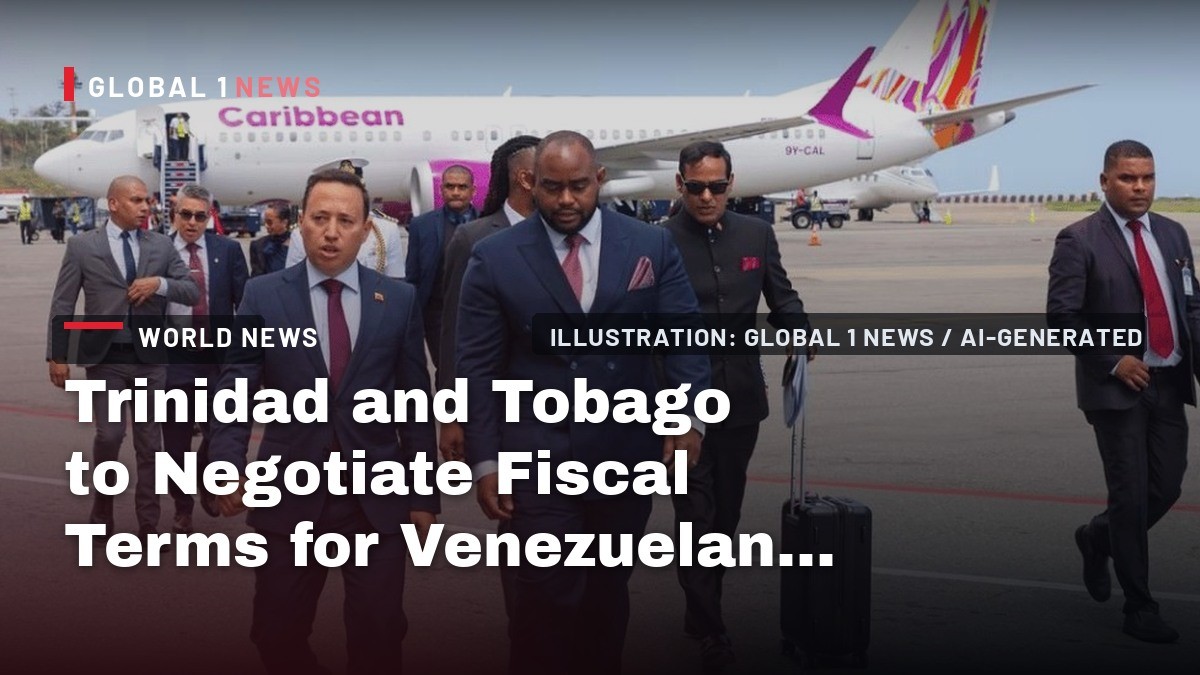
The Government has admitted that existing agreements with Venezuela over cross-border natural gas developments contain no framework for how this country gets paid, as it announced plans to negotiate the fiscal terms of these arrangements. Finance Minister Davendranath Tancoo told Parliament on 3 September that the Government intends to open talks with Caracas covering fields including Dragon and Manakin-Cocuina, warning that current government-to-government agreements left a "serious gap" in the revenue structure.
Speaking during a sitting of the House of Representatives, Minister Tancoo said that while the country had arrangements, discussions and expectations with its neighbour, the system for generating revenue from hydrocarbons entering Trinidad and Tobago remained unfinished. His admission signals a significant shift in how the Government views the commercial potential of resources that have been the subject of diplomatic overtures for years, and comes as the country seeks to shore up its energy sector amid declining domestic production.
A Serious Gap in the Revenue Framework
Minister Tancoo was direct in his assessment of the current state of play, telling legislators that the absence of a fiscal structure undermines the national benefit from these projects. "That is a serious gap. It means that while the country had arrangements, discussions and expectations, the revenue system and structure was still unfinished," he said, according to the official record of the proceedings.
The Minister outlined possible mechanisms that could be employed, including fixed import fees, commodity charges based on volume, unit transit fees based on distance, and reserved-volume or consumed-volume fees. However, he stressed that these are examples of possible arrangements under consideration, not confirmed policy. The Government, he said, is seeking to balance investor interest with national interest, declaring: "We are not seeking to suffocate investment. We are seeking to ensure that investment does not take place at the expense of the people of Trinidad and Tobago."
Multinational Negotiations and Opposition Queries
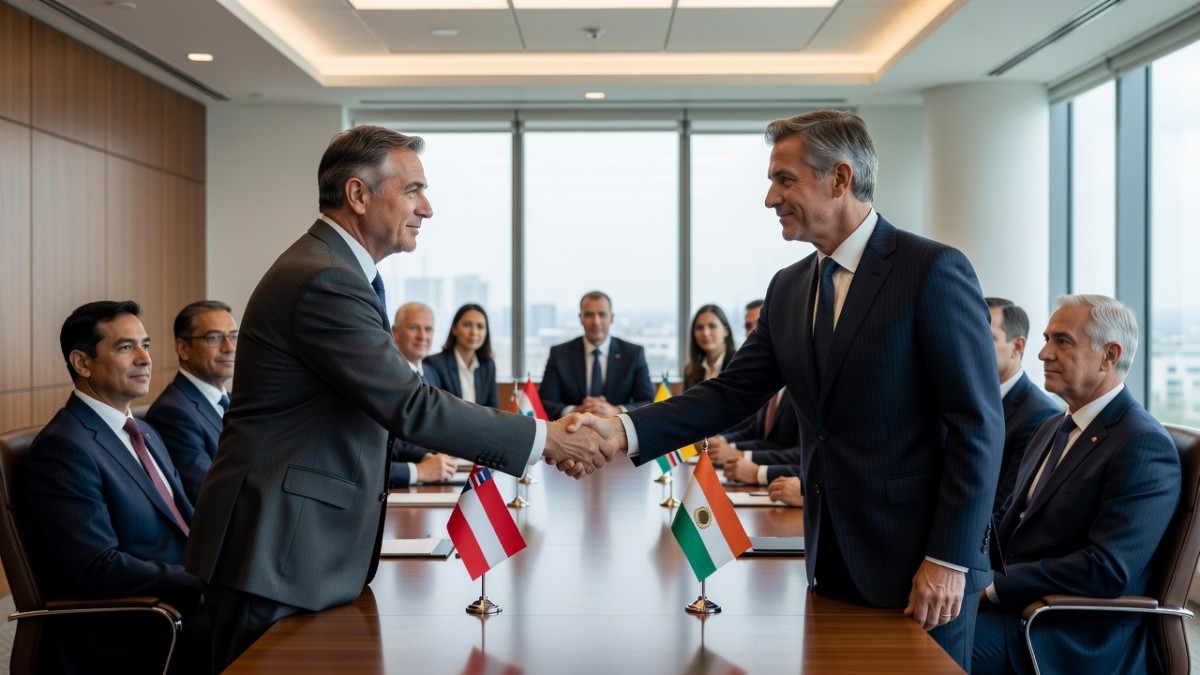
The admission came in response to questions from Opposition MP Stuart Young, the representative for Port-of-Spain North/St Ann's West, who pressed the Government on whether major energy players had been consulted on the proposed fiscal terms. Mr Young asked specifically whether BP and Shell, which are in separate talks with Caracas over the Dragon and Manakin-Cocuina fields, had been party to discussions on how Trinidad and Tobago would be compensated for hosting and processing the gas.
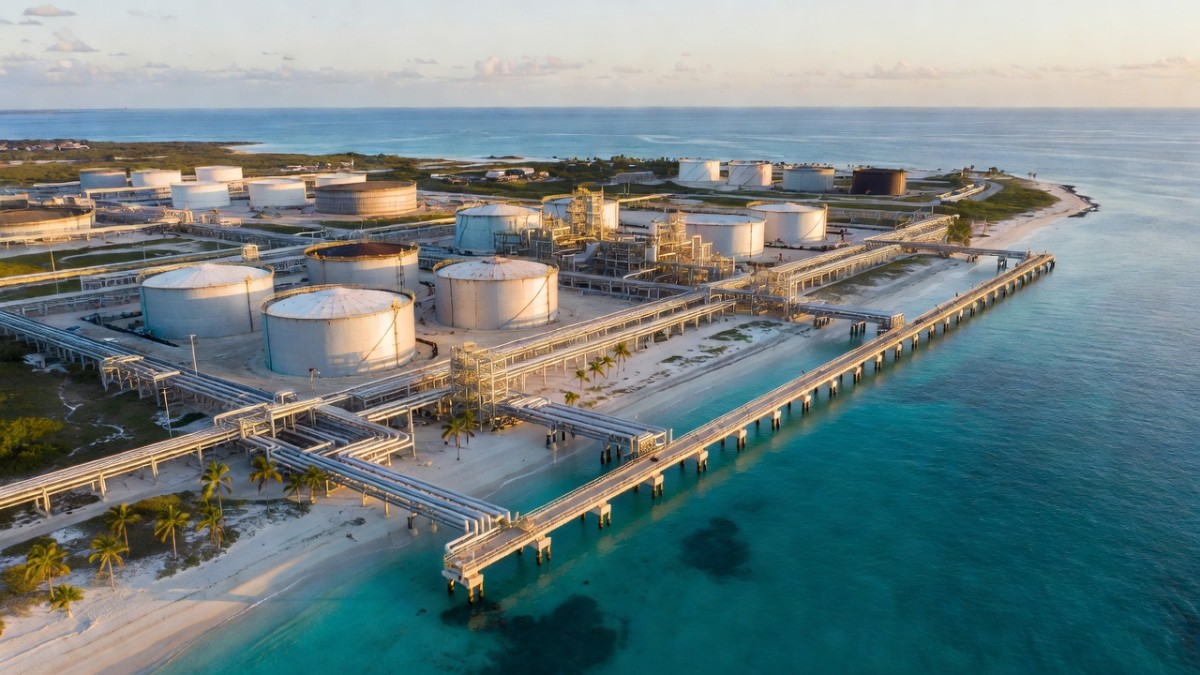
Energy Minister Dr Roodal Moonilal responded that the Government's policy on allocating natural gas from cross-border projects will adhere to commercially negotiated arrangements agreed beforehand. The exchange highlights the complex web of interests at play, with multinational corporations holding significant stakes in the fields and in Trinidad and Tobago's existing energy infrastructure, including Atlantic LNG, where Shell holds roughly 45 per cent of the project.
Diplomatic Thaw and the Caracas Visit
The fiscal discussions come against a backdrop of renewed diplomatic engagement between Port of Spain and Caracas. On the same day Minister Tancoo addressed Parliament, Minister of Foreign and Caricom Affairs Sean Sobers led a delegation to the Venezuelan capital, meeting with Foreign Minister Félix Plasencia at the Casa Amarilla. The delegation also delivered approximately three tonnes of medical supplies for victims of recent earthquakes in Venezuela.
The two governments issued a joint statement characterising the visit as the start of a "new chapter" in bilateral relations, agreeing on a work agenda spanning energy, trade, agriculture, security, environment and culture. This agenda is to be led at the highest levels by Prime Minister Kamla Persad-Bissessar and acting Venezuelan President Delcy Rodríguez. The visit signals a warming of ties that had cooled considerably in recent years, and observers note it comes at a time of shifting geopolitical dynamics in the region.
Commercial Moves and Air Travel Resumption
Beyond the diplomatic sphere, commercial activity is also advancing. BP has agreed to sell a 20 per cent stake in the Trinidad-side portion of the Manakin-Cocuina gas field to the National Gas Company (NGC), a move that could give the state-owned entity a firmer foothold in the development. Meanwhile, Caribbean Airlines is in the final stages of planning to resume commercial flights to Simón Bolívar International Airport in Caracas, exactly one year after suspending the weekly service on 4 September 2025.
The resumption of air links is widely seen as a barometer of normalised bilateral access, and its timing alongside the high-level diplomatic visit is unlikely to be coincidental. For the diaspora and business community, direct flights between Port of Spain and Caracas restore a practical connection that has been missing for a year, easing travel for trade, family visits and official business.
The Promise and Peril of the Dragon Field
At the heart of the matter lies the Dragon gas field, located in Venezuelan waters and holding roughly 4.2 trillion cubic feet of gas. The field sits only about 11 kilometres from Trinidad at its closest point, making it a natural candidate for processing at Trinidad's existing industrial facilities. It is part of the larger Mariscal Sucre project off Venezuela's eastern coast, alongside fields such as Rio Caribe, Patao and Mejillones.
The separate Loran field, on the Venezuelan side of the cross-border Loran-Manatee reservoir, holds an estimated 7.3 trillion cubic feet of gas, with Shell already developing Manatee on the Trinidad side. Former energy minister Kevin Ramnarine has offered a cautiously optimistic outlook, suggesting that if Dragon, Cocuina-Manakin and Loran-Manatee all progress, the country's gas production could climb back above 3 billion cubic feet per day around 2028. Such a recovery, he said, would give the sector "another 20 to 30 years of life," though he cautioned that first gas would still require years of engineering and commercial work.
Analysts Warn of Missed Opportunities
Yet the analytical community is urging caution. The Lloyd Best Institute of the Caribbean has warned that if NGC holds no direct entitlement to the gas or LNG value from Dragon, Trinidad and Tobago could find itself hosting the processing while cargo revenues flow entirely to the companies that own and market the product. Such an outcome, the Institute argues, would reduce the country to a tolling agent for multinational interests, capturing only narrow processing and transit fees while the real value of the resource accrues elsewhere.
The T&T Chamber of Industry and Commerce echoes this concern, calling for the focus to move from diplomacy to implementation. The Chamber notes that Dragon, Loran-Manatee and Manakin-Cocuina are at different stages of readiness, and none is yet bankable. Without a clear fiscal framework, the Chamber argues, the projects cannot achieve the financial closure necessary to proceed, leaving the country's energy future in a state of suspended animation.
Geopolitical Shifts and Multi-Tracking Venezuela
The context for these negotiations has been complicated by an August 2026 US-Venezuela oil agreement that has shifted Caracas's near-term energy priorities toward crude production. Analysts say this could push cross-border gas timelines further out and intensify competition for Venezuelan feedstock between Trinidad's Pointe-a-Pierre refinery and US facilities. Security consultant Dr Garvin Heerah, writing in the Business Guardian, offered a stark characterisation of Venezuela's approach: "Venezuela is not incoherent; it is multi-tracking: Shell gets Loran, Guyana gets defiance, T&T gets an oil spill allegation."
Opposition MPs were dismissive of the Caracas visit, with Mr Young calling it "all spin and paid social media coverage with no substance." He noted that the visit took 16 months to materialise and that acting President Rodríguez did not attend the meetings. Another opposition figure pointed out that Venezuela had just hosted Barbados Prime Minister Mia Mottley on a state visit, suggesting that Trinidad and Tobago was not receiving priority treatment. Venezuela's proven oil reserves are estimated at roughly one-fifth of the world's total, giving it considerable leverage in regional energy politics.
The Road Ahead: Watch Items and Unfinished Business
The absence of a fiscal framework means Trinidad and Tobago has been hosting cross-border energy conversations without locking in how the country gets paid. Closing that gap before Dragon or Manakin-Cocuina reach first gas will decide whether this nation earns genuine upstream-equivalent revenue or is left with narrower processing and transit fees while the multinationals capture the LNG upside. The stakes could not be higher for a country whose economy remains heavily dependent on energy revenues.
Key items to watch in the coming months include whether defined fiscal terms are agreed before any final investment decision by Shell or BP, and whether NGC's commercial role, whether equity, offtake, tolling or none, is clearly disclosed. The OFAC licence framework underpinning the talks will also be critical, as US sanctions on Venezuela continue to shape what is possible. And the return of Caribbean Airlines to Caracas will serve as a visible sign of whether the "new chapter" in bilateral relations translates into practical reality.
For the people of Trinidad and Tobago, watching from Port of Spain, San Fernando and the diaspora abroad, the promise of these cross-border fields has always been about more than geology. It is about jobs, revenue, and the long-term viability of an energy sector that has underpinned the nation's prosperity for decades. The Government's admission that the revenue framework is unfinished is a necessary first step, but the hard work of negotiation lies ahead. Whether this country secures its fair share of the value or watches it slip away to multinational balance sheets will depend on the firmness of the Government's resolve in the talks to come.
This article was produced with AI-assisted research and editorial support. Sources: Caribbean360; Trinidad Guardian; Trinidad Express; Trinidad and Tobago Newsday.
By Sharon Sahatoo, Staff Writer
What's Your Reaction?
 Like
1
Like
1
 Dislike
0
Dislike
0
 Love
0
Love
0
 Funny
0
Funny
0
 Wow
0
Wow
0
 Sad
0
Sad
0
 Angry
0
Angry
0

Caribbean Correspondent at Global1.News. Based in Port of Spain, Trinidad, covering Caribbean politics, economy, energy, climate, and culture. Amplifying the voices and stories of the Caribbean region.














Comments (0)