
Zanzibar's Freddie Mercury Museum Showcases Life of Legendary Queen Frontman
There is a particular magic in standing on the soil that first held a legend, and this week, the world’s eyes have turned to a modest house on Shangani Street in Stone Town, Zanzibar. As fans across the globe mark what would have been Freddie Mercury’s 80th birthday on 5 September 2026, the Freddie Mercury Museum at Mercury House is drawing renewed attention, inviting us to ponder the wonder of an African island birthplace shaping a global icon.
There is a particular magic in standing on the soil that first held a legend, and this week, the world’s eyes have turned to a modest house on Shangani Street in Stone Town, Zanzibar. As fans across the globe mark what would have been Freddie Mercury’s 80th birthday on 5 September 2026, the Freddie Mercury Museum at Mercury House is drawing renewed attention, inviting us to ponder the wonder of an African island birthplace shaping a global icon. It is a story that begins not in London’s arenas, but in the salt-scented air of the Indian Ocean, where a boy named Farrokh once played.
Zanzibar's Freddie Mercury Museum Brings a Rock Legend's Roots to Life at 80
Zanzibar, Tanzania — The museum at Mercury House, where Farrokh Bulsara spent his first years, tells the story from the very beginning, offering pilgrims a chance to walk the floors of his childhood. It is a powerful reminder that before the sequins and the soaring vocals, there was a Zanzibari boy whose multicultural world would shape the most fearless voice in rock history. For Africans, this is not just a story about a British rock star; it is a story about one of our own, a son of the continent whose journey continues to inspire.
A Stone Town Childhood Behind the Legend
Farrokh Bulsara was born on 5 September 1946 in the British protectorate of Zanzibar, a name that would later echo through stadiums as Freddie Mercury. His parents, Bomi and Jer Bulsara, were Parsis of the Zoroastrian faith, who had originally come from India to serve in the colonial administration. They were part of a thriving Parsi merchant community that had found a home on this spice island, known for its business acumen and cultural adaptability.
To understand Freddie Mercury, one must first understand Zanzibar as a crossroads of African, Arab, Indian and European cultures, a melting pot shaped by centuries of Indian Ocean trade. This was not a quiet backwater; it was a vibrant, cosmopolitan hub where dhows carried ivory, cloves, and ideas across the sea. Young Farrokh would have heard a symphony of languages in the streets—Swahili, Gujarati, Arabic, and English—a daily immersion in diversity that would later inform his artistic openness.
He spent his first eight years in the house on Shangani Street, a period that, while brief, laid the foundation for his extraordinary life. The sounds of the call to prayer mingling with the rhythms of the island, the colours of the bustling bazaars, and the rich tapestry of his Zoroastrian heritage all seeped into his consciousness. This upbringing fed his remarkable openness, his vocal dexterity, and his fearless ability to move across genres, from opera to rock to disco, without a second thought.
The Bulsara family were respected members of the community, and young Farrokh was known as a bright, somewhat reserved child with a keen interest in music and art. He attended a local school where he excelled, but it was the piano that truly captured his imagination, a passion his parents nurtured. The seeds of his future theatricality were planted here, in the rich, sensory world of Stone Town, a place where storytelling and performance were woven into the fabric of daily life.
It is a poignant thought that the man who would later command the world’s largest stages first learned to observe the world from the verandas of this Indian Ocean island. The cultural fluidity of Zanzibar, where nothing was purely one thing, became his artistic blueprint. He would later fuse rock with opera, pop with vaudeville, creating a sound that defied categorisation, much like the island of his birth itself.
From Zanzibar to the World's Greatest Arenas
The family’s life changed dramatically in 1964 when, amid the Zanzibar Revolution, they left the island and settled in Feltham, near London’s Heathrow Airport. It was a sudden and permanent rupture from the world they had known, but for the 17-year-old Farrokh, it was the beginning of a new chapter. In London, he enrolled at Ealing Art College, where he studied graphic art and design, a skill that would later inform Queen’s distinctive visual identity.
It was in London’s vibrant music scene that Farrokh Bulsara began to transform. He met Brian May and Roger Taylor, and in 1970, they co-founded Queen, a band that would redefine the possibilities of rock music. With the addition of John Deacon on bass, the lineup was complete, and their self-titled debut album was released in 1973, a promising start that hinted at the grandeur to come.
The name "Mercury" was not a random choice; it was inspired by the lyric "Mother Mercury, look what they've done to me" from his song "My Fairy King". It was a perfect moniker for a man of quicksilver talent and restless energy. The release of "Bohemian Rhapsody" in 1975 changed everything—a six-minute operatic rock masterpiece that defied radio conventions and became one of the best-selling singles of all time, cementing Queen’s place in music history.
By July 1985, Freddie Mercury was a global superstar, and his performance at Live Aid at Wembley Stadium is widely regarded as the greatest live performance in rock history. With a global television audience watching, he commanded the crowd of 72,000 with an effortless charisma, turning the entire stadium into his personal choir. It was a moment of pure, unadulterated magic, a testament to his unique ability to connect with people on a massive scale.
Tragically, the world lost this brilliant star on 24 November 1991, when he died at his home in Kensington, London, aged just 45, one day after publicly announcing his HIV diagnosis. His death sent shockwaves around the world, but his music ensured his immortality. Queen remain among the world’s best-selling artists, with most of their sales coming after Mercury’s death, a testament to the enduring power of his artistry and the deep connection he forged with millions of fans.
Inside the Museum at Mercury House
For those who wish to understand the man behind the myth, the Freddie Mercury Museum at Mercury House on Shangani Street is an essential pilgrimage. Officially inaugurated in November 2019 on the 28th anniversary of his death, the museum is a labour of love, transforming his childhood home into a vibrant celebration of his life and legacy. It is a place where the past and the present converge, offering a deeply personal glimpse into his origins.
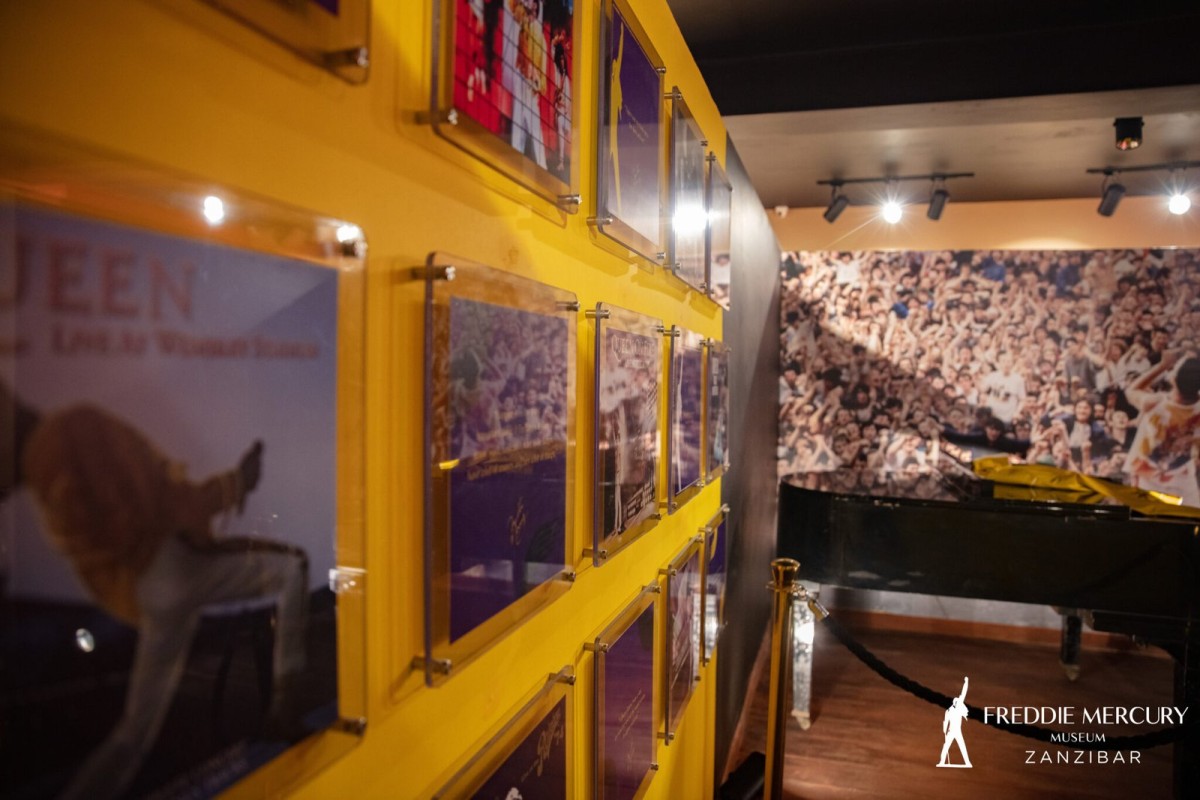
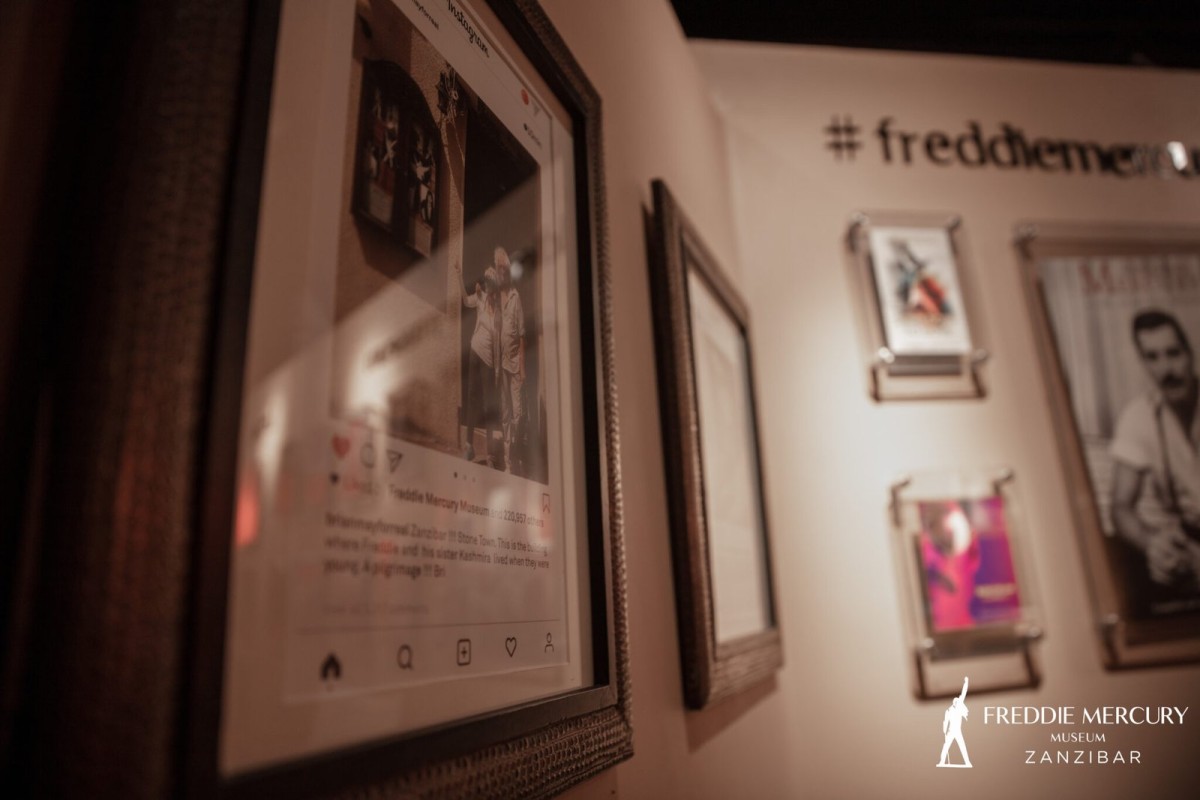
Inside, visitors are treated to a remarkable collection of exhibits, including flamboyant stage outfits that shimmer with the memory of his performances, his first piano, handwritten lyrics that reveal his creative process, and early family photographs that show a young boy on the cusp of greatness. The curators have also created period recreations that evoke a 1940s and 1950s Zanzibari household, allowing visitors to step back in time and imagine the Bulsara family’s daily life.
The museum tells his story from his Zanzibar roots and Zoroastrian heritage, through his boarding school years in Panchgani, India, and on to the world stage. Some of the images on display have been loaned by Queen Productions Ltd, adding an official stamp of authenticity to the collection. It is a comprehensive narrative that connects the dots between the island boy and the global icon, showing how each phase of his life informed the next.
Mar Perez Pena, a visitor from Spain, shared her emotional connection to the site. She had come to Stone Town 23 years earlier, before the museum existed, and was thrilled to finally have a place to honour him. She described the house as an excellent opportunity to understand his childhood and how "he was a real artist from the beginning", a sentiment that echoes the feelings of many who make the journey.
The museum is open daily from 9 a.m. to 8 p.m., welcoming a steady stream of fans, music lovers, and curious travellers from around the world. For many, it is the highlight of their visit to Zanzibar, a chance to connect with a piece of music history that is often overlooked. Standing in the rooms where Freddie Mercury took his first steps, one cannot help but feel a profound sense of connection to a man who gave so much to the world.
A Museum at the Heart of Zanzibar's Cultural Tourism
Mercury House is situated in the heart of Stone Town, a UNESCO World Heritage site whose blend of African, Arab, Indian and European architecture reflects centuries of migration and trade. The museum is not just a standalone attraction; it anchors a cultural-tourism identity for the island, drawing visitors who might otherwise come only for the beaches. It adds a rich layer of musical history to the island’s already fascinating narrative.
For African heritage, the museum is a powerful symbol. It represents an internationally recognised figure whose story begins on the continent, a reminder that greatness can emerge from any corner of the world. Preserving the boyhood home of Farrokh Bulsara gives Zanzibar a permanent place in global music history, transforming a personal story into a shared cultural treasure.
The museum also offers a broader lesson for African cultural institutions about turning heritage into sustainable tourism. By investing in the preservation and promotion of its cultural assets, Zanzibar is creating a model for other African nations to follow. It demonstrates that heritage is not just about the past; it is a vital economic and cultural resource for the future, capable of creating jobs and fostering a sense of pride.
Across the continent, African musicians and fans grew up with Queen’s records, and many claim Freddie as one of their own. His music transcended borders and languages, speaking to a universal desire for freedom and self-expression. The museum in Zanzibar is a testament to that connection, a place where the continent can honour one of its most famous sons and celebrate the diverse roots of his genius.
As Zanzibar continues to develop its tourism sector, the Freddie Mercury Museum stands as a beacon of what is possible. It is a reminder that our stories, our histories, and our people are our greatest assets. By telling the story of one of its own, Zanzibar is not only preserving a legacy but also building a bridge between its past and its future, inviting the world to share in its rich cultural heritage.
The World Celebrates Freddie at 80
While Zanzibar holds the key to his origins, the world has been celebrating Freddie Mercury’s 80th birthday in spectacular fashion. Over the weekend of 5 September 2026, fans gathered at the Freddie Mercury statue in Montreux, Switzerland, a bronze figure in a triumphant pose erected in 1996 overlooking Lake Geneva. The statue was decked with balloons, flowers, and tributes, a colourful shrine to a beloved icon.
The atmosphere was one of joy and reverence, as fans travelled from as far afield as Australia to Japan to pay their respects. Sonia, who made the journey from Canberra, was among those moved to tears by the outpouring of love. It is a testament to Mercury’s enduring appeal that people from such diverse corners of the globe would make such a pilgrimage to honour his memory.
The occasion was marked by the Freddie Days event, which has run in Montreux since 2003. This free five-day celebration is a labour of love for its organisers, with Lucien Muller expecting between 14,000 and 16,000 people to attend. Muller, who has been involved for years, affectionately calls the crowd a family, a community united by their shared love for Queen and their frontman.
Montreux holds a special place in Queen’s history, as the band owned Mountain Studios there and recorded six albums in the town. The studio is now a Queen exhibition space where visitors can even try their hand at the mixing desk. It was in Montreux that Mercury wrote "A Winter's Tale", the last song he ever wrote, an ode to the town’s serene beauty. James Perkin of the tribute band Don't Stop Queen Now described it as a beautiful, life-affirming song, a fitting final statement from an artist who embraced life so fully.
The Oscar-winning 2018 biopic "Bohemian Rhapsody" has brought Mercury to a new generation, ensuring that his legacy will continue to inspire for years to come. At the statue in Montreux, a 13-year-old girl was seen sketching his portrait, a poignant symbol of how his music and story continue to resonate with the young. His influence is timeless, and his music remains a soundtrack for dreamers everywhere.
What to Watch For
As the Freddie Mercury Museum continues to grow, it is becoming an increasingly important pilgrimage site for Queen fans visiting East Africa. The museum’s success is a clear signal that there is a strong demand for cultural tourism tied to global figures, and Zanzibar is well-positioned to capitalise on this trend. We can expect to see further investment in the site and its surrounding area in the coming years.
Across the continent, African governments and cultural bodies are increasingly recognising the value of heritage tourism. The story of Freddie Mercury is a powerful example of how a single figure can put a place on the map, attracting visitors and generating economic activity. This model is being studied and replicated in other African nations, from music museums in Mali to heritage trails in South Africa.
The enduring influence of Queen and Mercury on African artists is undeniable, from rock and Afro-rock to fusion sounds across the continent. His fearless experimentation and theatrical flair have inspired generations of musicians, from the stadium-filling sounds of Nigerian Afrobeat to the indie rock scenes of Nairobi and Lagos. His music is a bridge between cultures, and his story is a source of pride for Africans everywhere.
We invite our readers to visit Stone Town and walk the streets where Farrokh Bulsara played as a boy. Stand in the rooms of Mercury House, feel the history in the walls, and listen for the echoes of a voice that would one day shake the world. It is an experience that will deepen your appreciation for the man and his music, and remind you of the extraordinary journey that began on this very soil.
Freddie Mercury’s journey from a Zanzibari childhood to the world’s arenas is one of Africa’s great cultural exports. It is a story of talent, ambition, and the power of embracing one’s roots. As we mark his 80th birthday, we celebrate not just a rock legend, but a son of Africa whose light continues to shine brightly across the globe.
This article was produced with AI-assisted research and editorial support. Sources: Africanews, AFP, Freddie Mercury Museum Zanzibar, Africa Scorecard.
By Amara Diop, Staff Writer
What's Your Reaction?
 Like
0
Like
0
 Dislike
0
Dislike
0
 Love
0
Love
0
 Funny
0
Funny
0
 Wow
0
Wow
0
 Sad
0
Sad
0
 Angry
0
Angry
0

West Africa/Sahel Correspondent at Global1.News. Dakar-based journalist covering politics, security, climate, and development across Francophone and Anglophone West Africa. Tells the stories of a region undergoing profound transformation.











Comments (0)