
Elbit Loses $7B US Army Howitzer Tender to Hanwha's K9
The US Army has selected South Korea's Hanwha Defense to supply its next-generation mobile cannon, passing over Israel's Elbit Systems and the SIGMA howitzer based on the IDF's Roem gun. The initial contract is worth $100.3 million, with the full Mobile Tactical Cannon program expected to reach $7 billion.
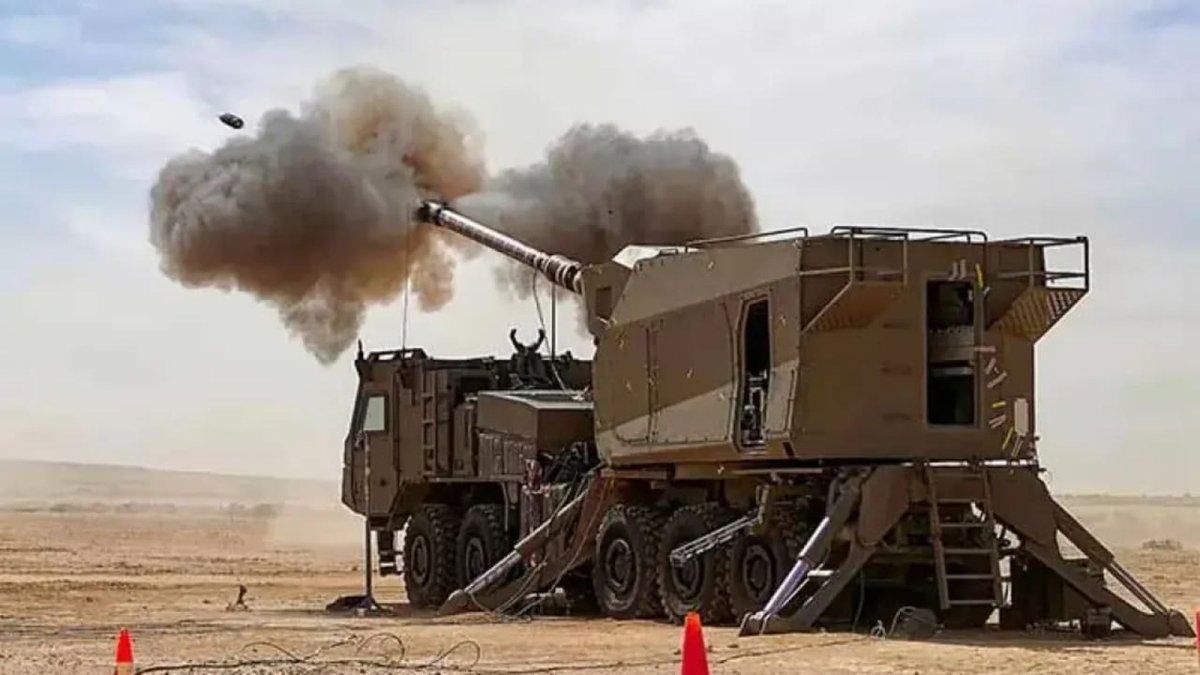
The US Army has passed over Israel's Elbit Systems in one of the most closely watched artillery competitions in decades, selecting South Korea's Hanwha Defense to supply its next-generation mobile cannon. The decision, announced this week, marks a significant setback for Elbit's SIGMA system—the automated, truck-mounted howitzer derived from the Roem gun currently in service with the IDF—and reshapes the competitive landscape for Western artillery procurement.
Elbit Loses $7B US Army Howitzer Tender to Hanwha's K9
Tel Aviv, Israel — The US Army's Mobile Tactical Cannon (MTC) program awarded Hanwha Defense USA an initial contract valued at $100.3 million to rapidly deliver six prototype K9 Mobile Howitzers (K9MH), with an option for 12 additional systems. The total cumulative value of the agreement stands at $262.9 million, with the full program expected to reach approximately $7 billion as the Army moves to replace its aging fleet of towed M777 howitzers.
A Landmark Win for South Korea
The selection is historic for reasons that extend well beyond the artillery itself. This marks the first time the US Department of Defense has purchased a complete weapons system from a South Korean defense company, breaking a long-standing barrier in the trans-Pacific defense trade relationship. While Israel has long been one of the few foreign nations permitted to sell arms to the Pentagon, Seoul now joins that exclusive club with a full platform rather than components or subsystems. The K9MH is an 8x8 wheeled self-propelled howitzer that combines a Tatra chassis with a K9A2-derived automated turret, featuring a 40-round magazine and a 52-caliber CN98 cannon. The system can fire nine rounds in 59 seconds, with a standard firing range of 40 kilometers that extends beyond 60 kilometers when using rocket-assisted or extended-range ammunition. This represents a dramatic leap over the current US towed artillery, which tops out at roughly 32 kilometers. Hanwha Defense USA COO and President of Land Systems Mike Smith framed the win as a validation of the company's approach. "We're honored that the U.S. Army has selected Hanwha's K9 Mobile Howitzer to fulfill its Mobile Tactical Cannon requirement," Smith said in a statement. "The K9MH is the total artillery solution and will be the centerpiece of Army Fires' transformation into a more modern, more lethal force."What the MTC Program Seeks to Achieve
The MTC program emerged from more than three decades of failed attempts to modernize US artillery. The journey began with the XM2001 Crusader, launched in 1994 and cancelled in 2002, followed by the XM1203 Non-Line-of-Sight Cannon under the Future Combat Systems program, which was scrapped in 2009. The current effort aims to replace roughly 498 to 500 M777 155mm towed howitzers in selected formations with a more lethal, mobile, automated, and survivable system suited to the modern battlefield. Initial fielding is planned for Stryker brigade combat teams, followed by mobile and infantry brigade combat teams. Following delivery of the prototypes, soldiers will conduct operational experiments to assess performance, reliability, and supportability, with the evaluation expected to take about four years. This month's award settles only the prototype downselect; 2030 is currently the planned First Unit Equipped date rather than the final selection date. Competitive evaluation runs through the current fiscal year, with soldier experimentation and integration testing throughout fiscal year 2027.Elbit's Ambitious Bid and the Charleston Gamble
For Elbit, the loss caps a thorough, resource-intensive campaign. According to the Jerusalem Post, Elbit did not include the US tender in its future sales forecasts, acknowledging the uncertain odds from the outset — yet it invested heavily to demonstrate commitment to American production. Elbit established a production facility for the Roem in Charleston, South Carolina, a strategic move designed to signal onshore manufacturing capability and local job creation. The company also formed a consortium for the tender that included truck manufacturer Oshkosh and the defense-tech company Anduril—both American firms with deep Pentagon relationships. The SIGMA system offered by Elbit is a 155mm/52-caliber gun with a fully automated 40-round magazine mounted on an Oshkosh-derived 10x10 wheeled chassis. It requires a crew of just three soldiers—compared to eight for traditional towed artillery—fires more than eight rounds per minute, provides 360-degree traverse, and can enter action within 45 seconds of arriving at a position. The system is compatible with US and NATO ammunition, including XM1113 rocket-assisted rounds. The Roem has been in operational service with the IDF for about a year and has already been purchased by additional foreign clients, giving Elbit a battle-tested platform to offer. The company's statement following the decision struck a measured tone: "Elbit Systems respects the US Army's decision and will review the feedback once received. Elbit remains focused on executing and delivering its existing programs, chief among them the Roem program, which is currently in serial production for its clients. Elbit is proud of its operationally proven technology, its employees, and its partners following a long and challenging competitive process, and will continue working to strengthen its customers with some of the best technological solutions in the world."A Crowded Field of Losers
Elbit was far from alone in falling short. The competition drew some of the world's most formidable defense manufacturers, each offering distinct approaches to the mobile artillery requirement. Germany's Rheinmetall, through its US subsidiary, offered its wheeled howitzer. Leonardo DRS of America partnered with France's KNDS to offer a CAESAR howitzer variant. Britain's BAE Systems, which produces the Army's M109A7 Paladin, also reportedly participated in the competition. The K9 family has enjoyed remarkable international success, with acquisitions by Poland, Australia, Finland, Estonia, India, and Egypt — a track record that, combined with aggressive pricing and a willingness to localize production, has made it a formidable competitor in markets once dominated by American and European manufacturers.What the Loss Means for Elbit and Israel's Defense Industry
For Israel's defense establishment, the decision carries both symbolic and practical weight. Israel has long been one of the few foreign nations permitted to sell arms to the Pentagon, reflecting decades of defense-industrial cooperation. Losing a major US Army program to a new entrant from South Korea raises questions about how durable that privileged position is. In Tel Aviv, the loss is being read in context. Elbit's SIGMA and the Roem program remain commercially viable, with existing clients and ongoing serial production. The company's decision not to include the US tender in its sales forecasts suggests management had already priced in the possibility of defeat. The Charleston facility, built partly for the US bid, can serve other purposes, including future contracts or partnerships. The broader Israeli defense industry continues to enjoy robust demand, with systems ranging from Iron Dome and David's Sling to advanced drones and cyber capabilities finding buyers worldwide. The US-Israel defense relationship remains anchored in strategic cooperation that extends far beyond any single procurement decision.Hanwha's American Manufacturing Push
Hanwha has signaled it will localize K9MH production in the United States, including an integration and test facility in Opelika, Alabama — a commitment to onshore manufacturing that was likely decisive given pressures to create American jobs and secure supply chains. Smith emphasized the point: "The US Army's selection is a testament to our track record of delivering devastating capability at speed, at scale, on cost and onshore. As the wheeled variant of the K9, the K9MH provides an expansion path towards a tracked capability with designed-in margin for the future fight." The Alabama facility will serve as the hub for US production, with the potential to expand into tracked variants of the K9 family should the Army pursue additional artillery modernization in the coming years.What Comes Next
The immediate path forward involves delivery of the six prototypes, followed by an intensive period of soldier experimentation. The Army will assess performance, reliability, and supportability over roughly four years before any final production decision. For Elbit, the company will review the Army's feedback and determine whether adjustments to the SIGMA platform could position it for future opportunities. The MTC program, while significant, is not the only artillery modernization effort underway globally, and the Roem's operational pedigree with the IDF remains a powerful selling point in other markets. The broader lesson from this competition may be that the global artillery market has become more crowded and more competitive than ever. South Korea's emergence as a major defense exporter, combined with the willingness of traditional powers to consider non-traditional suppliers, signals a new era in defense procurement. For Israel, maintaining its edge will require continued innovation, aggressive marketing, and cultivating relationships beyond Washington's familiar corridors. The Charleston facility and the Oshkosh-Anduril consortium may still prove valuable in other contexts, and the Roem's combat-proven performance in Israeli service — a crew of three instead of eight, firing shortly after arriving at a position — remains a compelling story for buyers worldwide. For now, the US Army has made its choice. The K9MH will undergo its evaluation, Hanwha will build its Alabama facility, and the global artillery landscape will watch closely to see whether this Korean-American partnership delivers on its promise. For Israel, the focus shifts to the next competition — and the next chance to prove its defense industry remains among the world's best. This article was produced with AI-assisted research and editorial support. Sources: Jerusalem Post, The Defense Post, Army Recognition. By Hannah Berg, Staff WriterWhat's Your Reaction?
 Like
0
Like
0
 Dislike
0
Dislike
0
 Love
0
Love
0
 Funny
0
Funny
0
 Wow
0
Wow
0
 Sad
0
Sad
0
 Angry
0
Angry
0

Hannah Berg
Israel Correspondent at Global1.News. Based in Tel Aviv, covering Israeli politics, security, technology, and society. Provides balanced, deeply-sourced reporting on one of the most closely-watched regions in the world.














Comments (0)