
Adidas Boycott Storm Reaches Bafana Bafana's Doorstep
Adidas is in the crosshairs of a global boycott movement, and the three stripes now sit on the shoulders of Bafana Bafana and Banyana Banyana. The sportswear giant is under fire over a campaign featuring a former Israeli soldier, and the fallout has landed squarely on South African football's doorstep. Adidas boycott storm lands on Bafana Bafana's doorstep as three stripes face global backlash Johannesburg, South Africa - September 2026 - The kit deal that was supposed to feel like a...
Adidas is in the crosshairs of a global boycott movement, and the three stripes now sit on the shoulders of Bafana Bafana and Banyana Banyana. The sportswear giant is under fire over a campaign featuring a former Israeli soldier, and the fallout has landed squarely on South African football's doorstep.
Adidas boycott storm lands on Bafana Bafana's doorstep as three stripes face global backlash
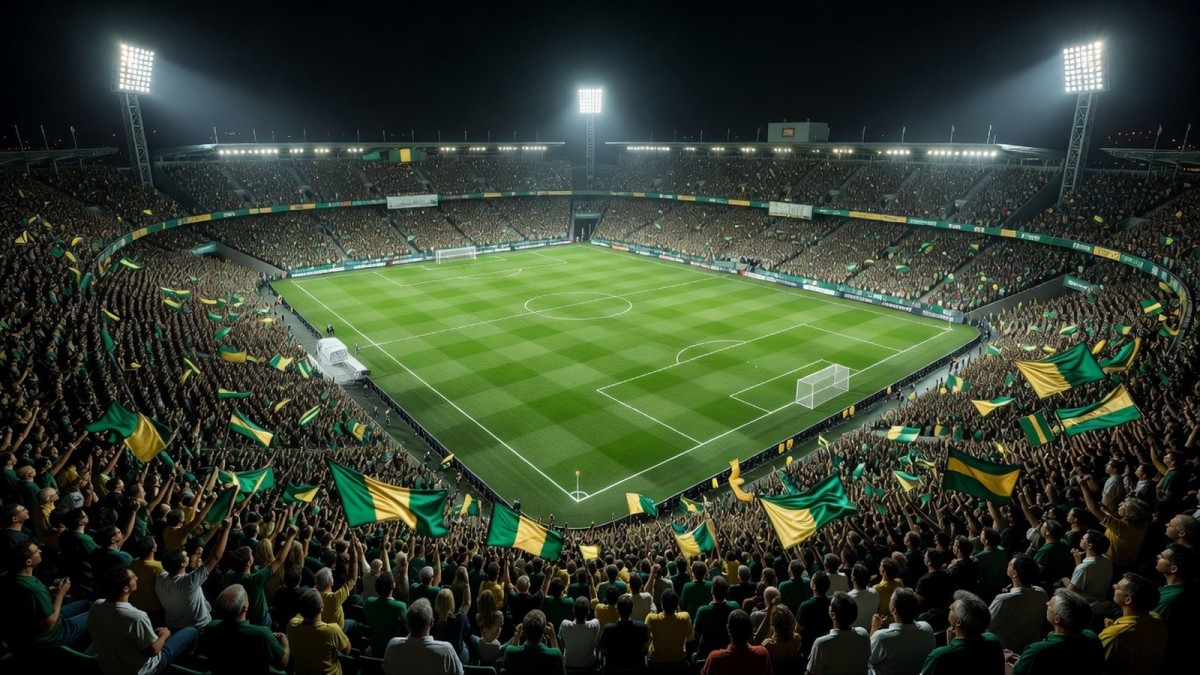
Johannesburg, South Africa - September 2026 - The kit deal that was supposed to feel like a homecoming has turned into a headache. Adidas, back as SAFA's technical sponsor since March this year, is now the target of a global boycott campaign over an advertisement featuring a former Israeli soldier - and South African football fans are being asked to pick a side.
The campaign that lit the fuse
The advertisement at the centre of the storm promotes Adidas's "Single Shoe Service", a genuinely useful initiative that lets people who need only one shoe - including amputees and people with limb differences - buy a single shoe at roughly half the price of a standard pair. It launched in Europe in January 2026 and is expanding across Europe, Asia and the Middle East, including the UAE, Palestine, Lebanon, Saudi Arabia, Kuwait, Qatar and Egypt.
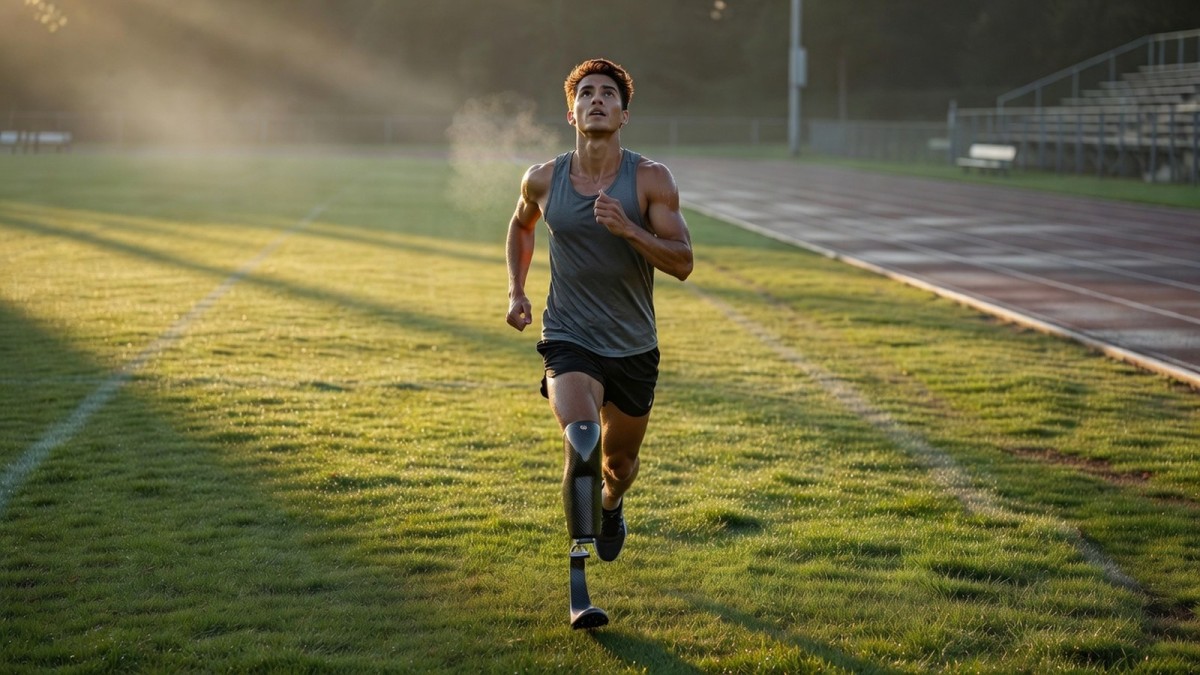
The problem is who fronts the local Israeli version of it. The ad shows Shalev Biton, a former Israeli soldier, trying on a shoe at a store in Israel and then wearing it while running outdoors. Biton lost his left leg after being wounded by an anti-tank missile while serving in the Israeli military near Gaza during the 2021 Israel-Gaza conflict, the 11-day assault that left scars across the region.
Adidas says Biton was reportedly one of 11 athletes with disabilities featured in what it describes as a local campaign, developed by its team in Israel and not part of its global advertising strategy. That distinction has done little to calm the reaction.
The Palestinian Campaign for the Academic and Cultural Boycott of Israel (PACBI), a founding member of the BDS movement, came out swinging. PACBI sports boycott campaigns coordinator Stephanie Westbrook told Al Jazeera: "This isn't Adidas being tone-deaf or insensitive; it is an absolute affront to the Palestinians who have lost their loved ones, killed by Israel, and who have lost their limbs." She added that such campaigns "normalise Israel's crimes against Palestinians".
Adidas apologises - and why BDS calls it empty talk
Adidas moved quickly, issuing an apology on Monday 7 September 2026 through the Adidas Arabia Instagram account. "We recognise that an image used in a recent local activation has raised concerns and strong reactions. It was never our intent to offend, and we apologise for anyone affected. We acknowledge the concerns that have been raised and are taking the feedback seriously," the statement read.
The company said inclusion remains one of its core values and repeated its commitment to expanding access to sport. It pointed to the Single Shoe service's expansion across Europe, Asia and the Middle East and cited a long-standing commitment to communities in the Middle East, working with athletes, teams and sporting communities and through product donations.
Critics were quick to note that the apology was posted on a regional account, not on Adidas's main Instagram account, which carries nearly 30 million followers. For many, that felt like damage control rather than accountability.
BDS co-founder Omar Barghouti dismissed the apology outright as "empty talk". He said: "The fact that Palestine is home to the highest number of child amputees in the world makes this marketing choice even more obscene; it celebrates the very instrument of that suffering." Barghouti demanded that Adidas "immediately remove the Israeli soldier from all Adidas promotional material and channels" and adopt a company-wide ethical policy governing partnerships, spokespersons, ambassadors and testimonials.
The numbers behind that anger are staggering. The World Health Organization estimates that between 5,000 and 6,000 people in Gaza have undergone amputations as of early October 2025, when Israel and Hamas signed a "ceasefire" agreement. They are among 42,000 Palestinians in Gaza who sustained life-changing injuries in the two-year conflict. In a May 2026 report, the WHO said fewer than 25 per cent of 2,300 people with amputated limbs who were evaluated between September 2024 and May 2026 had been fitted with prostheses.
The International Rescue Committee reports that children account for a quarter of all amputations in Gaza over the past two years, making it the place with the highest number of child amputees per capita in the world. UNICEF puts the figure at 42,000 Palestinians who have suffered life-altering injuries since October 2023, of which 11,000 are children. Al Jazeera reports more than 1,000 Palestinian athletes have been killed during the war on Gaza, with hundreds of aspiring footballers losing limbs and forming amputee football teams, finding respite in the game they love.
Westbrook said Israel has "decimated the health sector" and that its blockade prevents prosthetics from entering Gaza, creating a "man-made shortage".
The celebrity pressure is mounting too. Spanish actor Javier Bardem called for a boycott and shared images and videos backing the campaign. US-Palestinian author Susan Abulhawa, Pakistani author Fatima Bhutto and many Palestinians on social media also called for a boycott. Social media users are urging K-pop star Jennie and new France manager Zinedine Zidane to end their Adidas contracts.
Why this cuts deeper in South Africa
For South African fans, this is not a distant controversy. It lands in a country that knows exactly what sporting isolation feels like - and what it can achieve.
South Africa was cut off from international sport during apartheid, a boycott that helped force political change. That history is not abstract here. It is lived memory. And it is precisely why the Palestinian call for solidarity resonates so strongly in the townships, the stands and the sports bars from Soweto to Mitchells Plain.
South Africa has been one of the most prominent state supporters of Palestinian rights, and its government filed a genocide case against Israel at the International Court of Justice. The South African BDS Coalition, a network of Palestine solidarity organisations and the South African affiliate of the Palestinian BDS National Committee, runs consumer boycott campaigns and publishes a list of targeted corporations. Adidas now sits uncomfortably close to that list.
SAFA CEO Lydia Monyepao, speaking when the Adidas deal was announced, said the partnership honours the past generation of the 1960s to the 1980s who could not represent South Africa. That sentiment - football as a vehicle for dignity and recognition - is exactly what makes this controversy so awkward for the association.
The three stripes on Bafana and Banyana
Adidas returned as the official technical sponsor of the South African Football Association from 24 March 2026, on a three-year deal, taking over from Le Coq Sportif. The deal covers Bafana Bafana, Banyana Banyana and SAFA youth teams, with match wear, training and travel ranges, pre-match apparel and a fan collection.
It was a homecoming of sorts. Adidas was previously South Africa's kit supplier from 1999 until 2011 - a period fondly remembered by SA fans, the era of the 2002 World Cup kit and the 2010 World Cup on home soil.
The timing could hardly be more loaded. Bafana Bafana qualified for the 2026 FIFA World Cup, staged in the United States, Canada and Mexico in June and July. Banyana Banyana wore the new Adidas kit at the 2026 Women's Africa Cup of Nations in Morocco, staged from 26 July to 16 August 2026.
Tom Brown, Senior Brand Director for adidas South Africa, said the 2026/27 away jersey reflects a timeless elegance and highlighted that 2026 is the first year adidas introduced the trefoil logo to global away federation jerseys at the World Cup. The green and gold 2026/27 away kit was designed with equal representation of Bafana Bafana and Banyana Banyana - a detail that mattered to fans who have long complained about the women's team being an afterthought.
The money at stake in the Gulf and beyond
Adidas is not a company in crisis. It recorded 14 per cent currency-neutral growth in global net sales in the first half of 2026, one of its strongest periods ever. But the geography of its business is where the vulnerability lies.
An Anadolu Agency analysis found that of Adidas's roughly 3,378 official store locations worldwide, about 90.8 per cent are in countries that voted for the UN General Assembly resolution of 12 December 2025 supporting the International Court of Justice's advisory opinion on Israel's obligations in the occupied Palestinian territory. That resolution passed with 139 votes in favour, 12 against and 19 abstentions. The 12 countries that voted against hold a combined 287 Adidas locations, most in the US (179), Israel (62) and Argentina (41).
The Gulf is a particular pressure point. Saudi Arabia has 101 official Adidas sales locations and Adidas holds an estimated 18-20 per cent share of its sportswear market. In Nigeria, Adidas has an estimated 14-16 per cent market share. Consumer sensitivities across the Gulf are seen as a major factor behind the swift regional apology.
For South Africa, the calculation is different but no less real. The SAFA deal is a three-year commitment covering the country's most visible national teams. Any sustained boycott campaign targeting Adidas in South Africa would put fans, retailers and the association in an uncomfortable triangle.
What it means for fans on the terraces
Here is the uncomfortable truth for South African football supporters: the jersey you buy is not just fabric. It is a statement. And right now, that statement is being contested.
Bafana Bafana fans who waited years for the team to return to the World Cup now face a kit manufactured by a company under global boycott pressure. Banyana Banyana supporters, who have fought their own battles for recognition and equal treatment, are watching their team's brand partner make headlines for all the wrong reasons.
The irony is sharp. The Single Shoe Service is, in isolation, a genuinely progressive initiative for amputees and people with limb differences - the kind of accessibility programme that disability sports advocates in South Africa have been calling for. But context is everything. A campaign that celebrates a former soldier who lost a limb in military service near Gaza, in a territory where thousands of civilians - including thousands of children - have lost limbs, has turned a good idea into a global flashpoint.
For grassroots football in South Africa, the stakes are more practical. SAFA youth teams are covered by the same deal. Kit supply, training gear, travel apparel - all of it runs through the three stripes. A boycott that gains traction among South African consumers could squeeze the very programmes that develop the next generation of Bafana and Banyana stars.
What to watch for
Three things matter from here.
First, whether Adidas moves beyond a regional apology. Barghouti's demand - remove the Israeli soldier from all promotional material and adopt a company-wide ethical policy - is the benchmark BDS is setting. A statement on the main Adidas account, with nearly 30 million followers, would carry far more weight than a post on a regional handle.
Second, whether the South African BDS Coalition formally targets Adidas. The coalition publishes a list of targeted corporations and runs consumer boycott campaigns. If Adidas lands on that list, the pressure on SAFA and on South African retailers intensifies immediately.
Third, whether the players speak. Bafana Bafana and Banyana Banyana are the ones who wear the badge. In a country where sport and politics have never been separable - where the sports boycott helped end apartheid - the silence or the voices of the players themselves could shape how this story lands on the terraces.
Adidas says inclusion remains one of its core values. South African fans, who know a thing or two about what inclusion costs and what exclusion achieves, will be the judge of that.
By Dante Williams, Staff Writer
This article was produced with AI-assisted research and editorial support. Sources: Al Jazeera English, Al Jazeera, Anadolu Agency, World Health Organization, UNICEF, International Rescue Committee, SAFA, adidas South Africa, BBC Sport.
What's Your Reaction?
 Like
0
Like
0
 Dislike
0
Dislike
0
 Love
0
Love
0
 Funny
0
Funny
0
 Wow
0
Wow
0
 Sad
0
Sad
0
 Angry
0
Angry
0

Breaking News and Investigations Correspondent at Global1.News. Based in London, covering global breaking news, security, and investigative stories. Known for digging deeper and connecting the dots across continents.









Comments (0)