
Bullock Cart Delivery: Rural India's Ambulance Gap
In a stark reminder of how last-mile connectivity failures can undermine India's most ambitious healthcare guarantees, a pregnant woman in Telangana's Komaram Bheem Asifabad district was forced onto a bullock cart on September 5 to reach a stranded 108 ambulance that could not navigate the muddy, da
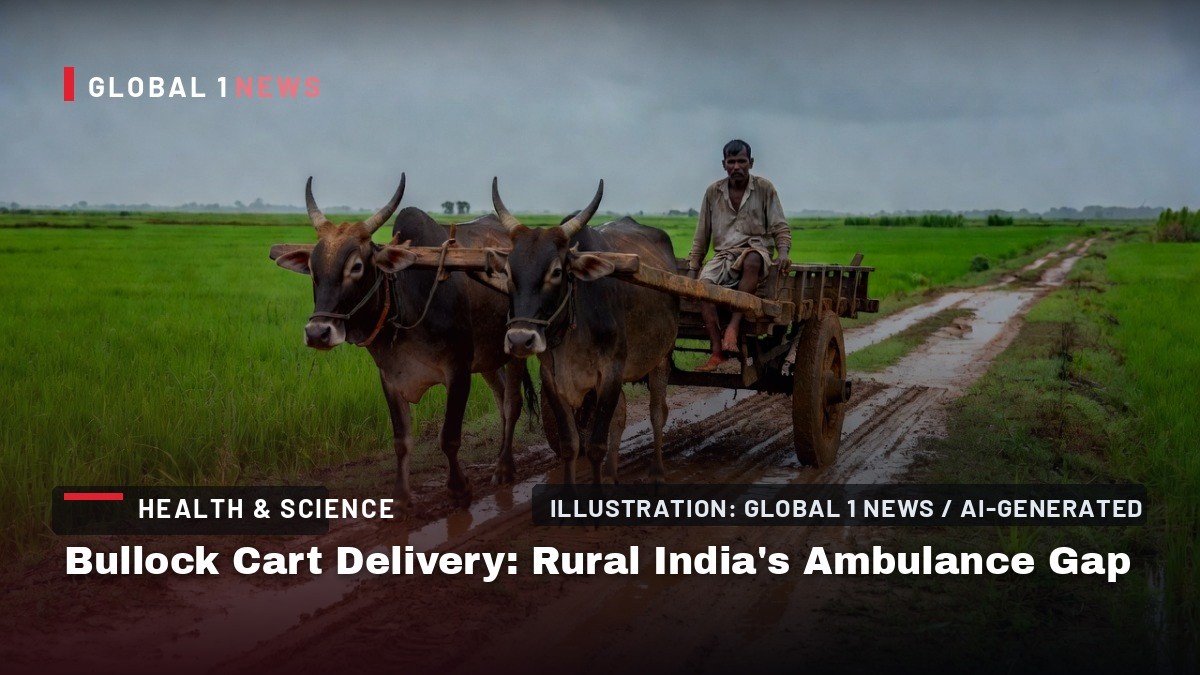
In a stark reminder of how last-mile connectivity failures can undermine India's most ambitious healthcare guarantees, a pregnant woman in Telangana's Komaram Bheem Asifabad district was forced onto a bullock cart on September 5 to reach a stranded 108 ambulance that could not navigate the muddy, damaged roads to her village. The incident, which ended safely with the delivery of a baby girl at the Wankidi Government Hospital, has reignited questions about the gap between policy intent and rural ground reality.
Bullock Cart Delivery: Rural India's Ambulance Gap
Komaram Bheem Asifabad, Telangana - September 7, 2026 - Karishma, a resident of Sarkepalli village in Wankidi mandal, went into labour on September 5, prompting her family to immediately alert the 108 emergency ambulance service. The vehicle responded but became stranded near Marepalli, unable to proceed further as the road turned muddy and impassable, forcing family members and local residents to arrange a bullock cart to bridge the final, critical stretch to emergency care.
The Anatomy of a Preventable Crisis
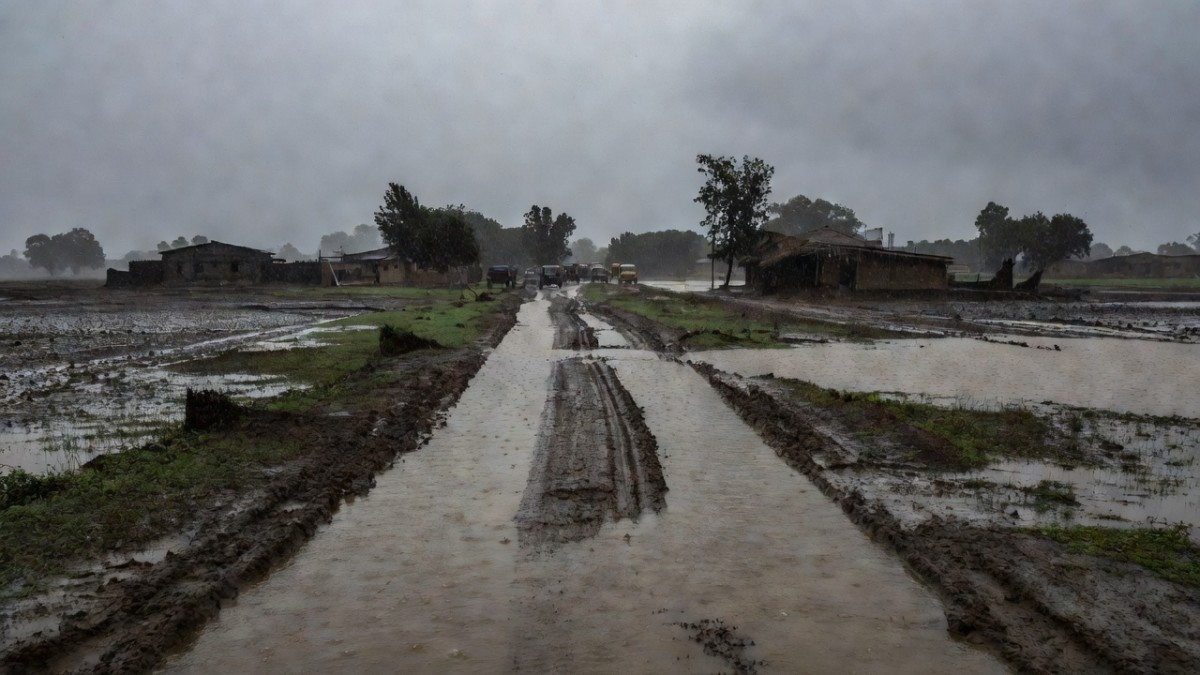
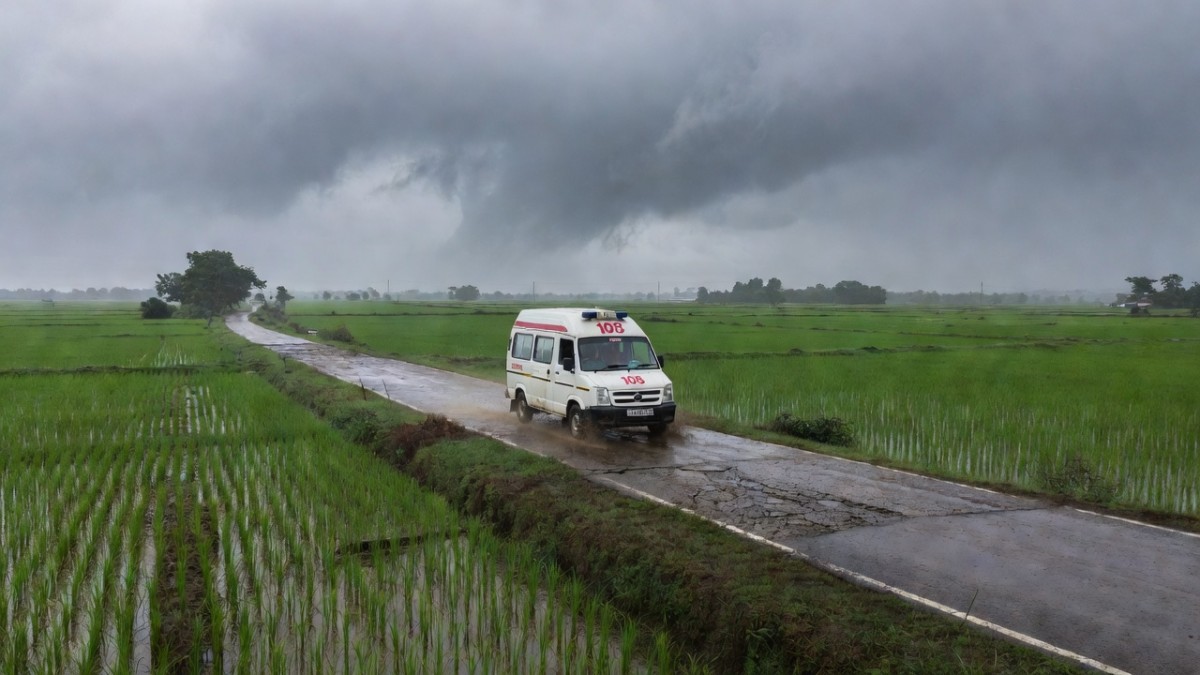
The sequence of events in Sarkepalli follows a distressingly familiar pattern for Komaram Bheem Asifabad, a tribal-majority district carved out of Adilabad in 2016. The 108 ambulance, which operates under the National Health Mission as the backbone of emergency obstetric transport in Telangana, started its journey towards the village but was reportedly unable to proceed beyond Marepalli after the road turned muddy and difficult. This is not a failure of the ambulance network itself, but rather a failure of the infrastructure that the network depends upon.
Karishma was transported by bullock cart through the difficult road stretch before being transferred to the waiting ambulance, which then took her to the Wankidi Government Hospital where she delivered a baby girl. While the outcome was positive, the incident exposes a systemic vulnerability: for pregnant women in remote habitations, the distance to a functional road can be the difference between a safe institutional delivery and a high-risk home birth or transit emergency.
Not an Isolated Incident: A Recurring Pattern
This is not the first time such a scene has unfolded in this district. In August 2024, a pregnant woman in Komaram Bheem Asifabad was forced to travel approximately 2.5 kilometres by bullock cart after a 108 ambulance could not reach her village because of muddy and damaged roads. The recurrence of this specific scenario within a two-year period suggests that the underlying infrastructure deficit remains unaddressed despite repeated public appeals.
Residents of Sarkepalli have stated that pregnant women, elderly people, children and seriously ill patients are particularly vulnerable when emergency vehicles cannot reach the village. They have urged authorities to take immediate measures to improve road connectivity and ensure that ambulance services can access Sarkepalli without obstruction. The demand is straightforward, yet the administrative machinery required to deliver it spans multiple departments and funding streams.
The Policy Promise vs. The Ground Reality
India's policy framework explicitly guarantees that no pregnant woman should face such ordeals. The Janani Shishu Suraksha Karyakram (JSSK), a flagship scheme, entitles every pregnant woman to free transport, free delivery, and free treatment at government health institutions. The 108 ambulance service is meant to operationalise this entitlement by providing free emergency response and transport. When an ambulance cannot physically reach a patient, the JSSK guarantee of free transport becomes a hollow promise.
The Pradhan Mantri Gram Sadak Yojana (PMGSY), launched in 2000, was designed to provide all-weather road connectivity to unconnected rural habitations. Yet, more than two decades later, habitations like Sarkepalli remain dependent on seasonal, weather-dependent tracks that become impassable during rains. The disconnect between the scheme's objectives and the on-ground reality in Komaram Bheem Asifabad highlights the challenges of implementing infrastructure programmes in forested, undulating terrain with scattered hamlets.
District Profile: Why Terrain Compounds the Problem
Komaram Bheem Asifabad's geography is central to understanding why this problem persists. The district, which borders Maharashtra and Chhattisgarh, is characterised by forested terrain, scattered tribal hamlets, and a sparse road network relative to its area. Many habitations sit off the all-weather road network, making them accessible only by kutcha roads that deteriorate rapidly during the monsoon season. The September 5 incident occurred during the tail end of the monsoon, when the region's black cotton soil becomes particularly treacherous for vehicles.
The district's tribal-majority demographics add another layer of complexity. Tribal populations in this region have historically faced higher barriers to healthcare access due to geographic isolation, linguistic differences, and lower literacy rates. When emergency transport fails, these communities bear the disproportionate burden of poor infrastructure, often resorting to traditional modes of transport that are ill-suited for medical emergencies.
Maternal Health: The Stakes of Delayed Access
India's maternal mortality ratio has declined steadily in recent Sample Registration System reports, a testament to the expansion of institutional delivery and emergency obstetric care. National Family Health Survey data show that the majority of births in Telangana now occur in institutions, a significant achievement for public health policy. However, these aggregate improvements mask persistent rural-urban and inter-district gaps that continue to put women in remote areas at risk.
Delayed access to a facility is a recognised risk factor in maternal and neonatal outcomes. For every minute that a woman in obstructed labour or experiencing postpartum haemorrhage waits for transport, the risk of complications rises. The bullock cart journey in Sarkepalli, while ultimately successful, represents a dangerous gamble with maternal and neonatal health that no woman should have to take in 2026.
What This Means for Citizens and Taxpayers
For the residents of Sarkepalli and similar villages across Komaram Bheem Asifabad, the implications are immediate and personal. Pregnant women face the anxiety of not knowing whether help will arrive in time. Elderly individuals with chronic conditions and children with acute illnesses face similar uncertainties. The psychological toll of living in a place where emergency services cannot reliably reach you is immeasurable, and it shapes decisions about when to seek care, often leading to dangerous delays.
For taxpayers, the incident raises questions about the efficiency of public spending. The 108 ambulance network represents a significant investment in emergency healthcare infrastructure, with vehicles, trained personnel, and operational costs funded through public money. When these vehicles are rendered ineffective by poor roads, that investment is partially wasted. Similarly, the JSSK programme's free transport guarantee loses its value when the transport cannot reach the beneficiary. The funds allocated under PMGSY for rural road connectivity are meant to address precisely this gap, yet the persistence of such incidents suggests either inadequate coverage, poor maintenance, or both.
Administrative Solutions Within Reach
District administrations in Telangana have experimented with measures to address the challenge of remote habitations. Birth waiting rooms near hospitals, where high-risk tribal and remote pregnant women can stay in the weeks before their due date, have been used in difficult-to-reach areas. Such facilities allow women to be close to emergency obstetric care when their villages are inaccessible during the monsoon. Scaling up these waiting rooms in Komaram Bheem Asifabad, particularly for women from habitations like Sarkepalli, could provide a practical interim solution while road infrastructure is upgraded.
However, waiting rooms are a stopgap measure, not a substitute for connectivity. The district administration must prioritise the upgrade of roads connecting Sarkepalli and similar villages to the all-weather network, with particular attention to stretches like the one between Marepalli and Sarkepalli that have proven impassable for ambulances. This requires coordinated action between the rural development department, which implements PMGSY, and the health department, which operates the ambulance network.
The Broader Policy Trend: Infrastructure as Health Policy
The Sarkepalli incident underscores a broader truth that health policymakers have long recognised: healthcare outcomes are determined as much by roads, electricity, and water as by hospitals, doctors, and medicines. In rural India, infrastructure is health policy. The success of India's maternal health programmes, which have brought institutional delivery rates to record highs, is now constrained by the limits of physical connectivity. Every bullock cart journey to an ambulance represents a failure of the integrated approach that public health requires.
As India moves towards universal health coverage and aspires to eliminate preventable maternal deaths, incidents like this serve as a critical reminder that the last mile is often the hardest to cover. The 108 ambulance that could not reach Sarkepalli was not broken; the road that stopped it was. Fixing that road, and thousands like it across the country's tribal and rural belts, is not merely an infrastructure project. It is a maternal health intervention, a child survival strategy, and a promise of dignity to every citizen who deserves emergency care without having to ride a bullock cart to reach it.
The Bottom Line
Karishma and her baby girl are safe, but their story is a statistical near-miss in a district where the August 2024 incident proved this was not a one-off failure. With the 108 network, JSSK entitlements, and PMGSY roads all designed to prevent exactly this scenario, the gap between policy and practice in Komaram Bheem Asifabad demands urgent administrative attention. Until the muddy stretch between Marepalli and Sarkepalli is made all-weather, every pregnant woman in that village remains one rainstorm away from a bullock cart delivery.
This article was produced with AI-assisted research and editorial support. Sources: NDTV, Global 1 News reporting.
- By Dr. Raj Patel, Staff Writer
What's Your Reaction?
 Like
0
Like
0
 Dislike
0
Dislike
0
 Love
0
Love
0
 Funny
0
Funny
0
 Wow
0
Wow
0
 Sad
0
Sad
0
 Angry
0
Angry
0

India/South Asia Correspondent at Global1.News. Analytical voice with a background in science and health journalism. Based in New Delhi, covering Indian politics, education, healthcare, technology, and policy. Breaks down complex data into clear, actionable reporting.














Comments (0)