
Netanyahu Denies UAE Warning Report as Haaretz Faces Libel Suit
Prime Minister Benjamin Netanyahu is facing fresh and politically explosive questions about what he knew in the days before the October 7, 2023 Hamas attack, after a new Haaretz report alleged that the president of the United Arab Emirates personally warned him that Hamas leader Yahya Sinwar was planning a major operation.
Prime Minister Benjamin Netanyahu is facing fresh and politically explosive questions about what he knew in the days before the October 7, 2023 Hamas attack, after a new Haaretz report alleged that the president of the United Arab Emirates personally warned him that Hamas leader Yahya Sinwar was planning a major operation. The i24NEWS English report "What did Netanyahu know about Oct 7 and who leaked the story?" frames the two questions now dominating Israeli political debate: whether the warning was delivered and ignored, and who inside Israel's leadership circles allowed the account to surface just weeks before the October 27 Knesset election.
Netanyahu Denies UAE Warning Claim as Haaretz Report Ignites Election Storm
Jerusalem, Israel - The report, published Tuesday by Haaretz and drawn from the new book "Hostages: 843 Days of Abandonment," says UAE President Mohamed bin Zayed Al Nahyan called Netanyahu roughly ten days before the October 7, 2023 attack. According to Haaretz, the 45-minute call was made from the presidential palace in Abu Dhabi, and bin Zayed warned that Sinwar was planning a major operation against Israel that would lead to bloodshed, unsettle the region, and potentially damage the Abraham Accords.
Haaretz reported that Netanyahu reacted "with relative calm" and was largely dismissive, telling bin Zayed that Jerusalem was on top of things in Gaza, that any Hamas action was more likely to come from the occupied West Bank, and that Israel was prepared for any scenario. According to the report, the warning was not passed on to Israeli defense or intelligence officials. The book, written by Haaretz reporters including Shlomi Eldar and Ruth Yuval, is based on dozens of sources in Israel and worldwide, including very senior officials.
The Prime Minister's Office: 'The Press Reports Are False'
The Prime Minister's Office rejected the account outright on Tuesday, saying: "The press reports are false. No warning was given to the Prime Minister from the United Arab Emirates before October 7th. If there was any relevant information, it was passed through intelligence channels between the two countries."
On Wednesday, Netanyahu escalated his response, posting on X under the title "Lies Made in 'Haaretz'" and calling the report "a sinister libel with clear political timing, as part of the left's election campaign, and there will be more such false libels." He said there was no call between him and bin Zayed at any point between early September 2023 and October 7, 2023, and that the Prime Minister's Office, the National Security Council and the Military Secretariat reviewed his call records for that period and found "no trace of it whatsoever."
Netanyahu also disputed the mechanics of the alleged call. He said conversations between the Israeli premier and the Emirati president are conducted through the Prime Minister's Office, with an Emirati representative arriving with a special encrypted device. Haaretz, for its part, reported that bin Zayed communicated frequently with senior Israeli leaders including Netanyahu and President Isaac Herzog, with a UAE diplomat delivering a secure phone to the prime minister for the calls. The newspaper's response to the denial was brief: "Haaretz stands by its reporting."
Netanyahu Orders Libel Suit and Demands Criminal Probe
Netanyahu has ordered his lawyers to file a libel suit against Haaretz, reporter Shlomi Eldar, and unnamed "other parties," and has demanded a criminal probe. He again claimed that had Israel's security chiefs alerted him in the hours before the attack, "the terrible massacre could have been prevented."
The legal threat drew a sharp response from the International Federation of Journalists, which urged Netanyahu to drop the action. The IFJ said lawsuits used to intimidate journalists and obstruct reporting are an attack on press freedom and the public's right to know. The confrontation places Israel's press-freedom record squarely inside an election campaign in which Netanyahu has cast himself as the target of a coordinated media and political campaign.
Emirati Source and Bennett Back the Account
The report has not been left standing alone. An Emirati source familiar with the conversation confirmed the Haaretz account to The Times of Israel. Former prime minister Naftali Bennett said after publication that the report was "true," and Channel 13 reported that Bennett had told people in private conversations that bin Zayed had informed him of the call.
Kan news reported that bin Zayed raised the warning in a conversation with several US and Israeli officials months after the war began, including then-CIA director Bill Burns. Sources quoted by Kan said it was a general warning and did not refer to specific Hamas plans. The UAE Foreign Ministry would not comment on "speculation regarding conversations between government leaders," saying only that the two countries have maintained "open and direct lines of communication" and that "when necessary, all relevant intelligence has been and continues to be communicated."
Likud Counters: 'Foreign Interference' and a Dahlan Plot
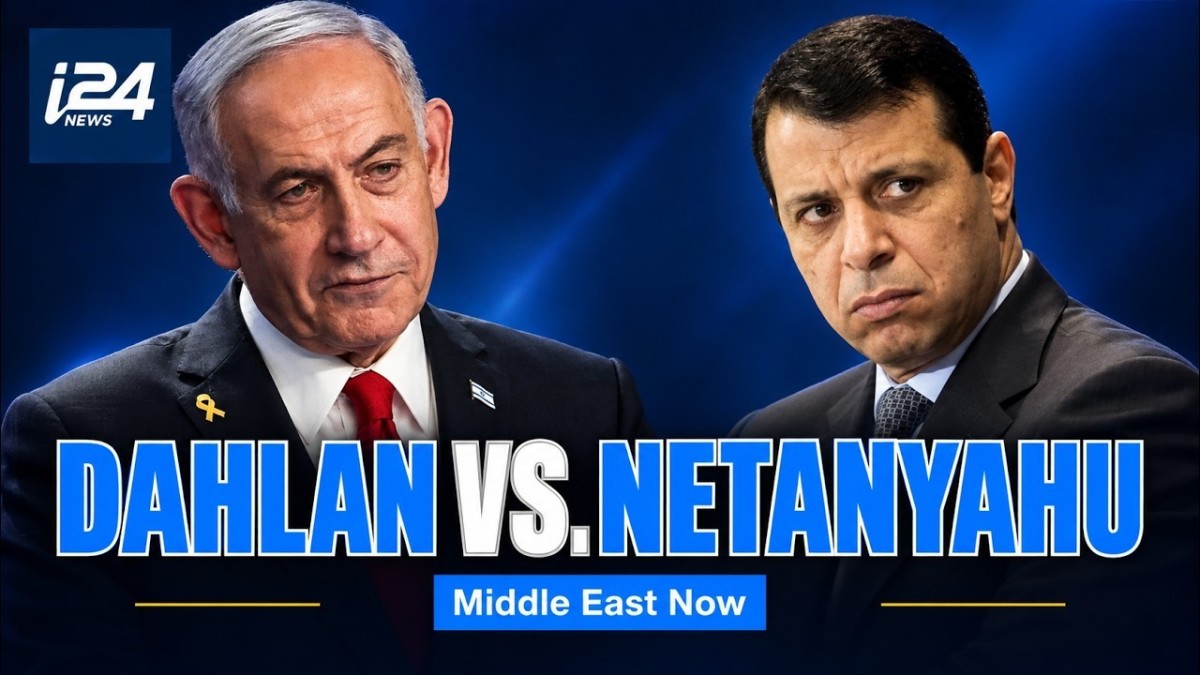
Netanyahu shared a Likud party statement accusing Haaretz and Democrats party leader Yair Golan of "blatant foreign interference in Israel's elections." Likud claimed the story was planted by Muhammad Dahlan, an exiled senior Palestinian official based in the UAE, who "dreams of taking control of the Gaza Strip" and needs "a weak left-wing government" to get it. Likud offered no evidence for the claim.
The party demanded a criminal investigation into Eldar, Yuval, Haaretz, Golan and the Democrats party "due to suspicion of attempting to disrupt the elections with foreign entities." Likud also raised, again without evidence, a possible connection to a recent reported visit to the UAE by Golan and former Shin Bet chief Ronen Bar. The counterattack signals that Likud intends to fight the election on the terrain of loyalty and external interference rather than on the substance of the warnings themselves.
The Egyptian Warning and the Blinken Denial
Separately, Army Radio reported Wednesday that the Shin Bet presented Netanyahu with warnings received from Egyptian counterparts about Hamas's intentions to "make the ground in Gaza tremble." The Egyptians gave only that general warning, with no precise details. Then-Shin Bet chief Ronen Bar assessed the warning meant, at least in part, that Hamas wanted to include the case of then-kidnapped Israeli researcher Elizabeth Tsurkov in hostage talks. Tsurkov was released in September 2025.
In the days after October 7, 2023, an Egyptian intelligence official said Jerusalem had ignored repeated warnings that Hamas was planning "something big," including an apparent direct notice from Cairo's intelligence minister to the prime minister. The new Egyptian details complicate Netanyahu's blanket denial, because they describe warnings that moved through the Shin Bet and reached his desk through established security channels rather than through a foreign leader's phone call.
The report also triggered a diplomatic side-quarrel. Secretary of State Antony Blinken, who held the post at the time of the attack, flatly denied part of the Haaretz report claiming he told Qatar's prime minister to wait on an offer to release hostages on October 7. Blinken posted on X: "For the record, this is false. Complete fiction."
Two Hours in Caesarea: The Morning of October 7
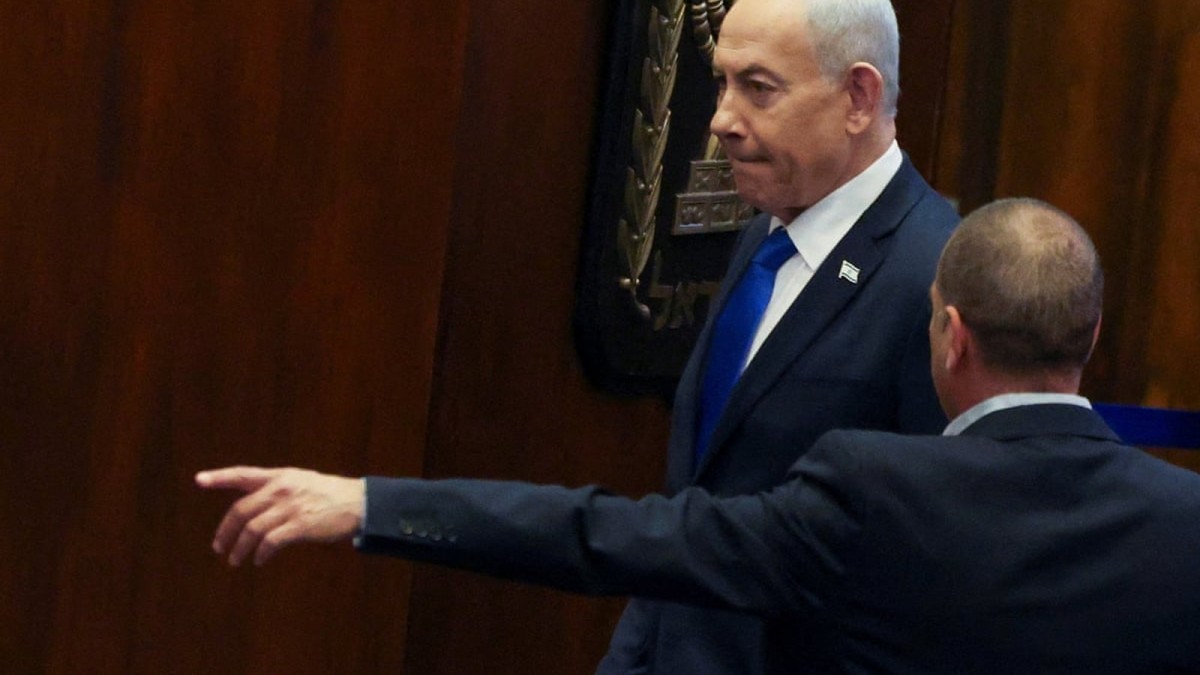
The warnings controversy is colliding with new reporting on Netanyahu's own movements that morning. Channel 12 reported Friday that Netanyahu took at least two hours to leave his home in Caesarea and travel to the IDF's Kirya military headquarters in Tel Aviv after being told at 6:29 a.m. that Hamas-led terrorists were attacking Israel. He did not contact the heads of the IDF and Shin Bet at that time or en route, though he was in contact with his military secretary. According to his own published schedule, the prime minister only ordered the Gaza border closed and a full IDF mobilization at 9:55 a.m.
For Israeli readers, the Caesarea timeline is the most concrete element of the entire affair. It does not depend on the memory of a foreign leader or the sourcing of a book. It is a sequence of movements and phone calls that can be reconstructed from the prime minister's own schedule and the records of the security establishment, and it speaks directly to the question of whether the country's decision-making apparatus functioned in the first hours of the worst attack in its history.
Opposition: 'You Knew, You Ignored, You Failed'
The political reaction was immediate and personal. Gadi Eisenkot, a former IDF chief of staff and Netanyahu's main rival in the October elections, said: "Netanyahu received dozens of warnings for 7 October and ignored them all. He is unfit." Bennett said Netanyahu "bears personal and direct responsibility" for the deaths, and "cannot continue to serve in his position for even one more minute."
Yair Golan, leader of the centre-left Democrats, said: "The stories about 'no one woke me up' are over. You knew, you ignored, you failed, you are to blame." Several opposition party leaders issued a joint statement demanding to know what Netanyahu knew and when, and why he did not inform the security establishment or act to protect Israeli citizens.
Many Israelis have demanded an independent state commission of inquiry into the security failures. Opposition parties say establishing such a commission, whose members would be appointed by the Supreme Court, would be their first priority if elected. Netanyahu's government has rejected the proposal, and that refusal is now itself a campaign issue.
Why This Matters Before October 27
The timing is inseparable from the politics. With the Knesset election set for October 27, the Haaretz report lands in the middle of a campaign in which the October 7 failures, the hostages and the conduct of the war remain the defining issues for a large bloc of voters. Netanyahu's response - a libel suit, a criminal complaint, and a Likud statement about foreign interference - is designed to convert the story from a question about warnings into a question about who is colluding with outsiders against him.
The risk for the prime minister is that the volume of corroboration keeps growing. An Emirati source confirmed the call to The Times of Israel. Bennett said it was true. Kan reported that bin Zayed raised the warning with US and Israeli officials including Bill Burns. Army Radio added the Egyptian channel through the Shin Bet. Each new thread makes it harder to dismiss the affair as a single newspaper's invention, even as the precise content and specificity of the warnings remain disputed.
The deeper issue is institutional. The report alleges that a warning from a regional leader never reached the IDF, the Shin Bet or the National Security Council - the very bodies whose job is to translate such information into operational readiness. Whether or not the call took place as described, the debate now turns on a question Israeli voters will carry into the polling booth: in the weeks before October 7, 2023, was the country's early-warning system working, and if it was, who chose not to listen? The answer will shape not only the election result but the public's faith in the institutions that failed on that morning in Caesarea and Gaza.
By Hannah Berg, Staff Writer
This article was produced with AI-assisted research and editorial support. Reporting is based on sources cited in the article.
What's Your Reaction?
 Like
0
Like
0
 Dislike
0
Dislike
0
 Love
0
Love
0
 Funny
0
Funny
0
 Wow
0
Wow
0
 Sad
0
Sad
0
 Angry
0
Angry
0

Israel Correspondent at Global1.News. Based in Tel Aviv, covering Israeli politics, security, technology, and society. Provides balanced, deeply-sourced reporting on one of the most closely-watched regions in the world.















Comments (0)