
Xi Skips UNGA for White House Summit With Trump, Signaling a Bilateral-First Strategy
Xi Jinping will skip the UN General Assembly and meet Donald Trump at the White House on September 24, his first US visit in 11 years, signaling a bilateral-first strategy amid the AI race and a looming trade deadline.
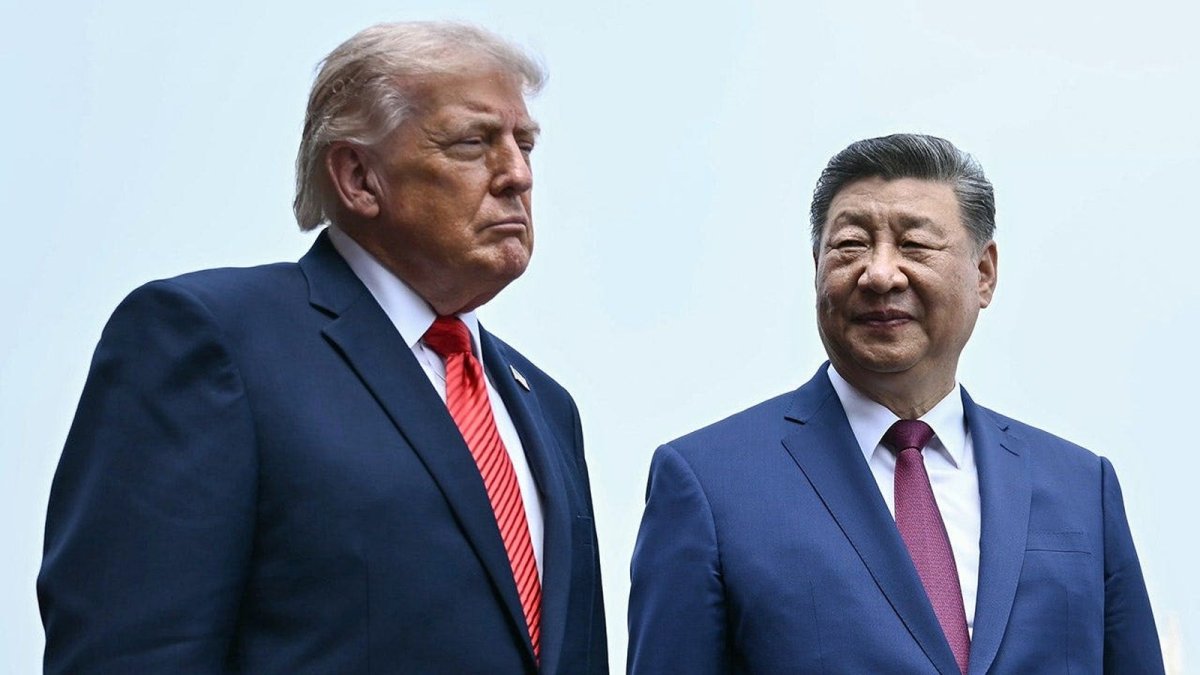
In a decision that reorders the diplomatic calendar for the autumn, Chinese President Xi Jinping will skip the United Nations General Assembly (UNGA) in New York and instead travel to Washington for a bilateral summit with President Donald Trump on September 24, 2026. Confirmed by four people familiar with Xi's itinerary and acknowledged by the White House on August 17, the visit marks Xi's first trip to the United States in 11 years and his second in-person meeting with Trump in 2026.
The move is a striking departure from Beijing's traditional posture of using the UNGA podium to project leadership of the Global South. By prioritizing a narrow, transactional meeting in Washington over the world's premier multilateral forum, Xi is signaling that the management of the US-China relationship—specifically the accelerating artificial intelligence race and a looming trade deadline—now trumps the symbolic theater of the United Nations.
A Historic Itinerary: From Beijing to Washington
According to the confirmed itinerary, Xi is expected to arrive in the US late on September 23 and depart on September 25, a tightly compressed 48-hour window that leaves no room for sideline meetings or regional detours. The UNGA's high-level General Debate begins September 22 in New York, a session Xi will bypass entirely. This will be his first in-person attendance at the UNGA since 2015, when he traveled to New York for the 70th-anniversary events. In 2021, he addressed the assembly virtually during the COVID-19 pandemic, and in 2025, he sent Premier Li Qiang in his place.
The September 24 date was first floated publicly by Trump around July 6, and confirmed by the president himself on July 23 at an Environmental Protection Agency event. "President Xi is coming over on Sept. 24. We talked about it when I was over in Beijing, and we'll be talking about it again," Trump said. The meeting follows Trump's state visit to Beijing on May 14, 2026, which Xi called "historic and landmark" and Trump described as "very successful."
The AI Race Takes Center Stage
The summit's primary agenda item is expected to be artificial intelligence, a domain Trump has described as "probably the biggest thing anybody's ever seen," adding, "Whoever wins that race is probably going to win, period." Reuters first reported on July 21 that the planned dialogue would be the first official US-China AI dialogue under the Trump administration, led on the American side by Treasury Secretary Scott Bessent. Both nations are expected to discuss how to regulate powerful AI models that could reshape military power, enable cyberattacks on critical infrastructure, and upend labor markets.
Chinese state media and commentators have framed the summit as a concession, arguing that the Trump administration called for the meeting because it fears Beijing is gaining the upper hand in the global AI race. This narrative gained traction after China forged AI partnerships with 28 nations, mainly from the Global South, at the 2026 World Artificial Intelligence Conference (WAIC) in Shanghai on July 17. For Beijing, the Washington summit is an opportunity to formalize a governance framework on its own terms, potentially countering US efforts to build a separate, exclusionary tech bloc.
The November Deadline: Trade Truce on the Brink
Beyond AI, Xi will be seeking concrete concessions on trade. The US and China reached a one-year trade truce in October-November 2025 at a summit in South Korea, which cut US tariffs on Chinese goods to 47% from 57%, resumed US soybean purchases, and paused China's rare earth export curbs for a year. That deal is set to expire in November 2026 unless extended. Xi's visit, coming just six weeks before that deadline, is widely viewed as a last-ditch effort to secure tariff relief and negotiate the future of rare earth export controls—a critical lever in the tech war.
The timing is not coincidental. A late-July trip to Washington by China's Vice-Foreign Minister Ma Zhaoxu produced only a brief improvement in the atmosphere, with the official Chinese read-out noting only "in-depth exchanges" with senior US officials. The lack of substantive progress on that track likely pushed both sides to elevate the dialogue to the presidential level, where personal rapport and direct deal-making have historically yielded more tangible results.
Preparations in Disarray: A Bureaucratic Vacuum
Despite the high stakes, preparations for the visit appear unusually fragmented. According to a mid-August report from the South China Morning Post, no US official or agency has clearly assumed responsibility for organizing the visit. The State Department has remained largely uninvolved, with the Treasury Department and the US Trade Representative expected to play central roles. This bureaucratic vacuum reflects the Trump administration's preference for economic and trade officials over traditional diplomatic channels, but it also raises questions about the summit's operational readiness.
For Beijing, this disarray is a double-edged sword. On one hand, it suggests that the US is treating the meeting as a transactional economic negotiation rather than a broader strategic dialogue. On the other, it means that Xi will be negotiating with a fragmented US apparatus, where the Treasury's priorities on tariffs and financial stability may not align with the Pentagon's concerns over AI and military applications.
Multilateralism on the Back Burner
Xi's decision to skip the UNGA is a significant geopolitical signal. A European Union diplomat in Washington noted that China had not sent an advance team to New York, suggesting Xi was not planning to attend the UN gathering. Analysts have pointed out that his absence reduces the possibility of a direct comparison between China's approach to international institutions and the Trump administration's openly hostile posture toward the UN.
This is a calculated trade-off. Beijing has traditionally used the UNGA to showcase its Global South leadership, championing causes like development aid, climate finance, and the "AI for All" narrative. By skipping the forum, Xi is implicitly acknowledging that the bilateral relationship with Washington is now the primary driver of China's foreign policy—a shift that may disappoint allies in the Global South who look to Beijing as a counterweight to US hegemony.
However, the move also carries strategic logic. With Trump having repeatedly attacked UN institutions and withdrawn from multilateral frameworks, Beijing may calculate that there is little to gain from appearing at a forum the US president disdains. Instead, Xi can claim that China is engaging directly with the US on the issues that matter most—AI governance, trade, and regional stability—while preserving its multilateral credentials for other venues like the BRICS summit or the Shanghai Cooperation Organization.
Regional and Global Second-Order Effects
The summit's outcomes will reverberate well beyond Washington. ASEAN member states, which have carefully balanced their economic ties with China against security alliances with the US, are watching to see whether the meeting yields tariff relief or a broader AI governance framework. A breakthrough could ease pressure on regional supply chains, while a failure could accelerate the fragmentation of global tech standards.
Taiwan is another key observer. The agenda is expected to cover the Taiwan issue, and any shift in US signaling—whether a reaffirmation of the status quo or a new commitment—will be scrutinized in Taipei and Beijing alike. The ongoing Iran conflict and the Strait of Hormuz crisis are also expected to feature in the talks, given their implications for global energy prices and maritime security.
For the Global South, the summit raises uncomfortable questions. China's "AI for All" initiative, showcased at WAIC in July, promised to democratize access to artificial intelligence technologies. But a bilateral-first posture in Washington may suggest that Beijing is willing to prioritize its own tech interests over the coalition-building that has defined its recent outreach to developing nations. The 28-nation partnership forged in Shanghai could prove hollow if China's AI governance framework is negotiated primarily with the US.
Historical Context: A Pattern of Minimal UN Engagement
Xi's 2015 UNGA appearance was a high-water mark for Chinese multilateralism, coinciding with the adoption of the Paris climate agreement and the Sustainable Development Goals. Since then, his engagement with the UN has been minimal: a virtual address in 2021 and a delegation led by Premier Li Qiang in 2025. The September 24 summit continues this trend, suggesting that Beijing views the UN as a venue of diminishing returns compared to direct bilateral engagement with Washington.
This is not necessarily a retreat from globalism. China remains deeply involved in multilateral institutions like the Asian Infrastructure Investment Bank and the Belt and Road Initiative. But the Xi-Trump summit signals a pragmatic recalibration: when the world's two largest economies are locked in a tech and trade war, the most consequential negotiations happen in the Oval Office, not in the General Assembly hall.
What to Watch on September 24
As the summit approaches, several key questions remain unanswered. Will the two leaders announce a framework for AI regulation, or will they settle for a vague commitment to continue dialogue? Will Xi secure a commitment to extend the trade truce, or will the November deadline loom unresolved? And will the meeting produce any movement on Taiwan or the Iran crisis?
The absence of a clearly designated US organizing agency suggests that the summit's logistics may be chaotic, but the stakes are too high for either side to allow the meeting to fail. For Xi, the visit is an opportunity to reset a relationship that has been defined by tariffs, tech controls, and mutual suspicion. For Trump, it is a chance to claim a historic win in the AI race and on trade. The world will be watching to see which narrative prevails.
By Prof. Marcus Chen, Staff Writer
This article was produced with AI-assisted research and editorial support. Sources: POLITICO, Reuters, Fox News, Asia Times, Samaa TV, PrimeXBT, Bloomingbit, Taipei Times, China Daily, Xinhua.
What's Your Reaction?
 Like
0
Like
0
 Dislike
0
Dislike
0
 Love
0
Love
0
 Funny
0
Funny
0
 Wow
0
Wow
0
 Sad
0
Sad
0
 Angry
0
Angry
0
World Politics Analyst at Global1.News. Based in Beijing, covering US-China relations, global trade, and geopolitical strategy. Brings deep analytical perspective to the power dynamics shaping international affairs.












Comments (0)