
Why Is China Less Active in the 2026 Ebola Epidemic?
In September 2026 the Democratic Republic of the Congo (DRC) faces an Ebola outbreak that, if unchecked, could become the largest on record. Historical Context: China’s 2014‑2016 Ebola Intervention During the 2014‑2016 West African Ebola epidemic, China emerged as a conspicuous donor.
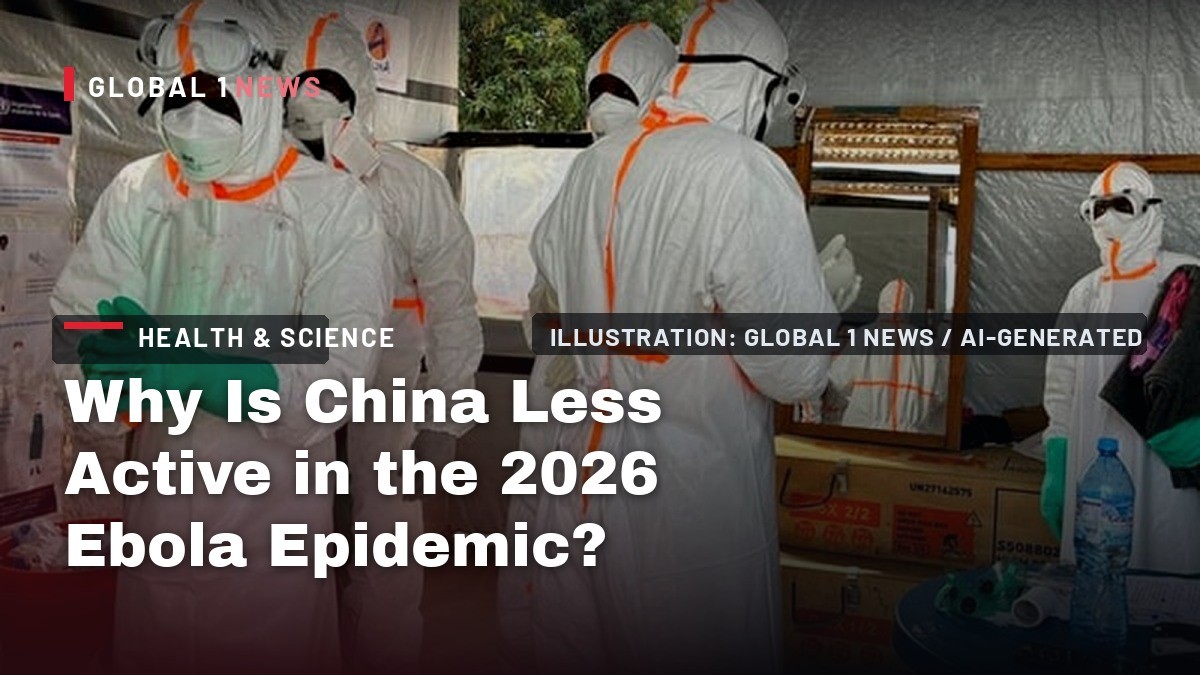
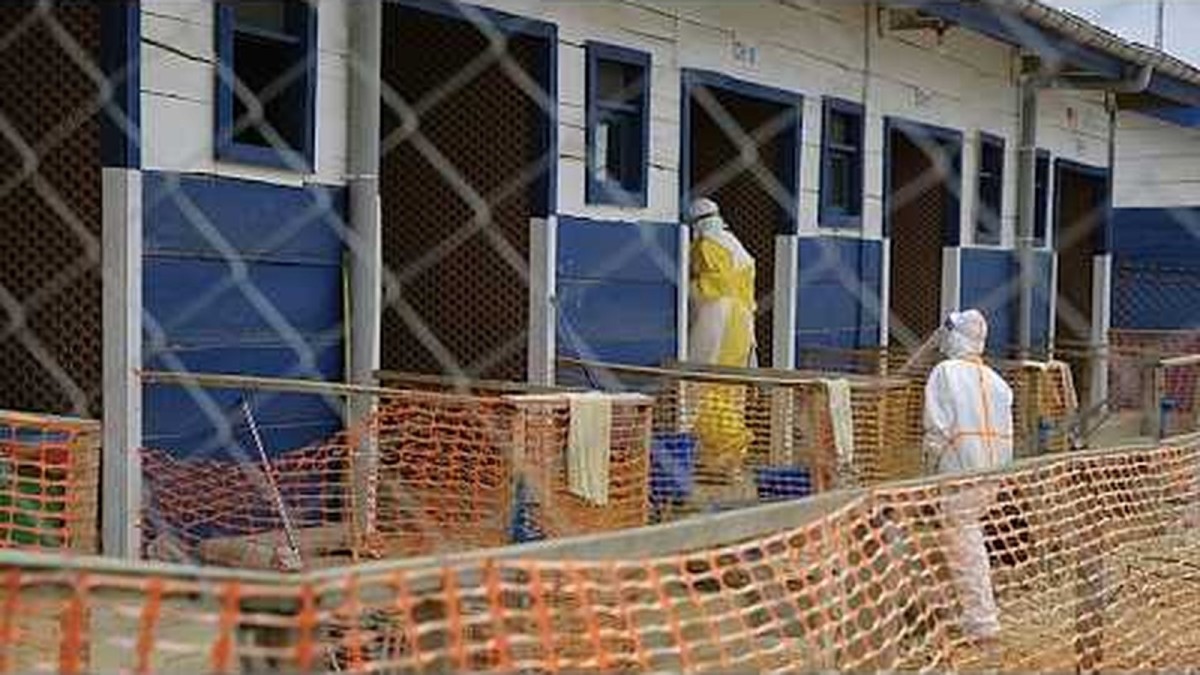
In September 2026 the Democratic Republic of the Congo (DRC) faces an Ebola outbreak that, if unchecked, could become the largest on record. By early September more than 6,700 infections and over 3,200 deaths had been recorded, driven by the Bundibugyo strain—a form of Ebola for which no licensed vaccine or approved therapeutic exists. The crisis arrives at a pivotal moment for global health governance: the United States, long the architect of the international health architecture, is retreating, while China, now the world’s second‑largest economy and a major investor in the DRC’s copper and cobalt sectors, confronts expectations that it will fill the vacuum. This article assesses China’s response, situating it within the broader trajectory of Beijing’s health diplomacy, its strategic calculations, and the implications for Northeast Asian and African geopolitics.
Historical Context: China’s 2014‑2016 Ebola Intervention
During the 2014‑2016 West African Ebola epidemic, China emerged as a conspicuous donor. By late 2014 Beijing had mobilised assistance valued at 750 million yuan, encompassing laboratory equipment, food aid and health personnel. Notably, the response was swift: after the virus was first identified in Guinea in March 2014, China dispatched 4 million yuan of aid by April, followed by chartered flights and the deployment of its inaugural overseas infectious‑disease field hospital. This speed contrasted with the delayed large‑scale actions of the United States, Britain and other Western donors, which only escalated after the summer surge of cases.
The early Chinese effort carried symbolic weight beyond the monetary amount. Official statements framed the assistance as “South‑South cooperation” and multilateralism, while Western analysts interpreted it as a strategic move to reduce the risk of Ebola reaching Chinese territory and to test Beijing’s capacity for overseas power projection. The episode also offered Chinese scientists unprecedented access to outbreak data and field specimens, fostering experience in mobile biosafety laboratories—a capability that would later underpin China’s expanding role in infectious‑disease preparedness.
Current Scale of Chinese Assistance in 2026
As of late August 2026, China’s direct contribution to the DRC outbreak amounts to $4.5 million—approximately 30.2 million yuan—channeled to the Africa Centres for Disease Control and Prevention, alongside the deployment of a limited number of medical expert teams. While every contribution is valuable, the magnitude is markedly smaller than the expectations generated by China’s 2014 performance and its present economic stature. In contrast, the United States, despite a “America First” posture, has pledged more than $512 million directly to the Ebola response and has sought an additional $1.4 billion from Congress.
This disparity signals that the transfer of global‑health leadership from Washington to Beijing is not a simple substitution. The United States continues to dominate financing, while China’s assistance, though proportionally modest, remains strategically significant given its logistical capacities and diplomatic reach across Africa.
Why China’s Response Is More Limited
Three interrelated explanations emerge from the source material. First, China now enjoys a secure global status and faces less external pressure to demonstrate its benevolence. In 2014, the outbreak offered a rare, highly visible platform for a rising power to prove its willingness to act when Western governments appeared hesitant. Today, Beijing already finances extensive infrastructure projects, dominates global manufacturing, and maintains deep diplomatic ties throughout Africa, reducing the imperative for a headline‑grabbing health intervention.
Second, the scientific incentives have shifted. During the West African crisis, China could couple humanitarian aid with a research agenda, notably the development of a vaccine against the Zaire Ebola virus. In the current DRC outbreak, most vaccine and therapeutic candidates are being pursued by institutions outside China, diminishing the opportunity for Beijing to link aid with a high‑profile scientific breakthrough.
Third, the geopolitical environment has become more constrained. China’s economic growth has slowed, and domestic public opinion increasingly favours allocating resources to domestic priorities. Moreover, an expansive operation in eastern DRC would entail heightened security risks. The Ebola crisis now competes with a suite of other international emergencies—conflicts, economic instability and climate‑related shocks—that collectively define the strategic landscape of 2026.
Policy Signals from Beijing’s White Paper
In June 2026 China released a white paper on global governance that articulated a principle that major powers should assume greater responsibility and that international cooperation must yield concrete outcomes. The Ebola outbreak presents a concrete test of this rhetoric. While the white paper underscores a normative commitment to global stewardship, the modest scale of the current assistance suggests a gap between aspirational language and operational delivery.
Nevertheless, the document also hints at avenues where China could leverage its comparative advantages. The paper highlights the importance of “surge capacity” in medical supplies, a domain where Chinese manufacturing excels. Aligning policy pronouncements with tangible contributions—such as large‑scale production of diagnostics, personal protective equipment and other essential medical goods—could bridge the rhetoric‑reality divide.
Strategic Opportunities for Expanded Chinese Involvement
China’s logistical and manufacturing strengths position it to become a major surge supplier of diagnostics, protective equipment and other medical commodities. By scaling up production and channeling these goods through established supply chains, Beijing could amplify its impact without the political costs of large‑scale field deployments. Additionally, China’s extensive diplomatic network across African states offers a platform to act as a multiplier of African and World Health Organization (WHO) capacities, coordinating regional responses and facilitating resource sharing.
Greater transparency would enhance the credibility of Chinese aid. Detailed public reporting on the scale, timing and purpose of assistance would enable both domestic and international audiences to assess Beijing’s contribution more accurately. Such openness would also mitigate the tendency in Western policy circles to view Chinese participation reflexively as a geopolitical threat, opening space for constructive cooperation.
Implications for Northeast Asian Geopolitics and Future Health Diplomacy
The Ebola episode illustrates a broader shift in how Northeast Asian powers engage with global health emergencies. South Korea, for instance, has long integrated health assistance into its foreign‑policy toolkit, leveraging ministries such as the Ministry of Foreign Affairs (MOFA) and the Ministry of Education (MOE) to support capacity‑building in Africa. The Korean International Cooperation Agency (KOICA) and think tanks like the Asan Institute for Policy Studies have advocated for a “health‑first” approach to diplomatic outreach, emphasizing scientific collaboration and transparent reporting.
As China recalibrates its health‑aid posture, Korean policymakers may find opportunities to fill gaps, particularly in vaccine research and training of health workers—areas where Korean institutions, including the Korea Development Institute (KDI) and the Korea Institute for International Economic Policy (KIEP), have demonstrated expertise. Collaborative mechanisms, such as joint Korean‑Chinese field laboratories or coordinated procurement of medical supplies, could enhance regional stability while reinforcing the principle of multilateralism espoused in China’s 2026 white paper.
Forward‑Looking Assessment: Toward a More Balanced Global Health Architecture
The 2026 DRC Ebola outbreak underscores the continuing need for a diversified, cooperative global health system. While the United States remains the dominant financier, China’s modest yet strategically significant contributions reflect a nuanced recalibration of its international role. For the broader Northeast Asian region, the episode offers a lesson in leveraging comparative strengths—manufacturing, diplomatic networks and scientific capacity—to complement, rather than compete with, other major donors.
In the coming months, the trajectory of China’s involvement will likely hinge on domestic political calculations, the evolution of the scientific pipeline for Bundibugyo‑targeted therapeutics, and the ability of multilateral institutions to coordinate a coherent response. If Beijing aligns its white‑paper rhetoric with transparent, sizable aid—particularly in the provision of diagnostics and protective equipment—it can reinforce its claim to responsible global stewardship while contributing to a more resilient health architecture that benefits the DRC, the African continent and the international community at large.
This article was produced with AI-assisted research and editorial support. Reporting is based on the source material cited below. Sources: The Diplomat; thediplomat.com; Global1.News (11 September 2026).
By Prof. David Park, Staff Writer
What's Your Reaction?
 Like
0
Like
0
 Dislike
0
Dislike
0
 Love
0
Love
0
 Funny
0
Funny
0
 Wow
0
Wow
0
 Sad
0
Sad
0
 Angry
0
Angry
0

East Asia/Technology Correspondent at Global1.News. Seoul-based voice covering Korean politics, technology, business, and culture. Analyzes how technology and geopolitics intersect across East Asia.











Comments (0)