
WMO Warns 'Supersized' El Nino Could Persist Through February 2027 as India's Monsoon Deficit Deepens
The world's climate agencies have issued their most unambiguous warning yet: the El Nino now firmly established across the Pacific is set to intensify into a very strong event, with near-100% likelihood of persistence through February 2027. For the first time in the history of the World Meteorological Organization's El Nino/La Nina Updates, the language is unequivocal, and the implications for India's monsoon, food security, and public health are profound.
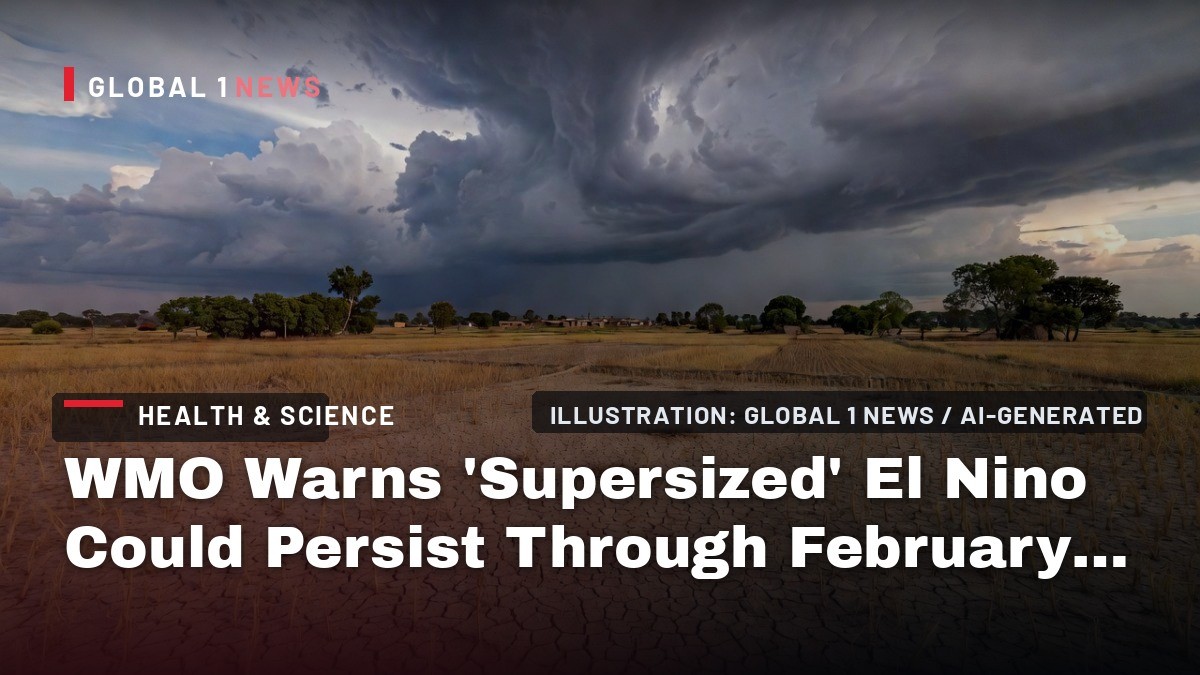
The world's climate agencies have issued their most unambiguous warning yet: the El Nino now firmly established across the Pacific is set to intensify into a very strong event, with near-100% likelihood of persistence through February 2027. For the first time in the history of the World Meteorological Organization's El Nino/La Nina Updates, the language is unequivocal, and the implications for India's monsoon, food security, and public health are profound. As the 2026 southwest monsoon enters its closing weeks with rainfall running about 13% below normal, and roughly 40% of the country having received at least 20% less rainfall than average, the intersection of a natural climate phenomenon and human-caused warming is creating conditions that scientists describe as unprecedented.
El Nino 'Supersized Before Our Eyes': Near-100% Persistence Through Feb 2027 Marks First-Ever Unequivocal WMO Warning, India Monsoon 13% Below Normal
New Delhi, September 5 - The World Meteorological Organization's September 3 update, produced with input from national agencies including the India Meteorological Department and the Indian Institute of Tropical Meteorology, removes any remaining ambiguity about the coming months.
The Science: An Unprecedented Signal
The data from the World Meteorological Organization (WMO), released from Geneva on September 3, 2026, paints a stark picture. The Nino 3.4 index-the primary metric for tracking El Nino strength in the central Pacific-stood at +1.5°C above the normal average for the May-July 2026 period, climbing to +2.0°C in July. Weekly readings from late July through mid-August reached between +2.2°C and +2.6°C above average, while subsurface ocean temperatures in some areas exceeded 8°C above normal during July and early August.
These are not incremental anomalies. They represent a heat reservoir beneath the Pacific that is already feeding energy into the atmosphere, with the event expected to peak toward the end of 2026 and impacts continuing well into 2027. The WMO has stated that above-normal temperatures are expected across almost all land areas for the September-November 2026 period.
Global Leaders: 'Uncharted Waters'
United Nations Secretary-General Antonio Guterres delivered a characteristically blunt assessment. "El Nino is being supersized before our eyes," he said, adding that "the science leaves no room for doubt: the planet is in uncharted waters, and those waters are heating up." In the full statement issued from Geneva, Guterres elaborated: "Sea surface temperatures are rising, temperatures keep climbing, and the world is in the danger zone of extreme weather. The race now is between rising risks and our commitment to take climate action and protect people. We must win that race."
WMO Secretary-General Celeste Saulo underscored the dual nature of the phenomenon. "El Nino in Spanish means boy child-but it has the potential to deliver a massive blow to communities and economies across the world," she warned. "We are already seeing the disruption and devastation caused by droughts and floods, and we expect these impacts to worsen as El Nino intensifies."
Exceptional Event, Exceptional Response
What distinguishes this event from its predecessors is not merely its intensity but the institutional response it has triggered. For the first time, the United Nations has launched a mobilisation of this scale with national weather agencies, strengthening forecasts and early-warning systems with a focus on vulnerable sectors: agriculture, public health, energy, and water supplies.
"This exceptional El Nino demands exceptional preparedness and response," Saulo stated, framing the WMO's global network-which includes the India Meteorological Department (IMD) and the Indian Institute of Tropical Meteorology (IITM)-as the frontline defence against what is still an unfolding crisis. The event has yet to peak, and the window for preventive action is narrowing.
India's Monsoon: A Season in Progress
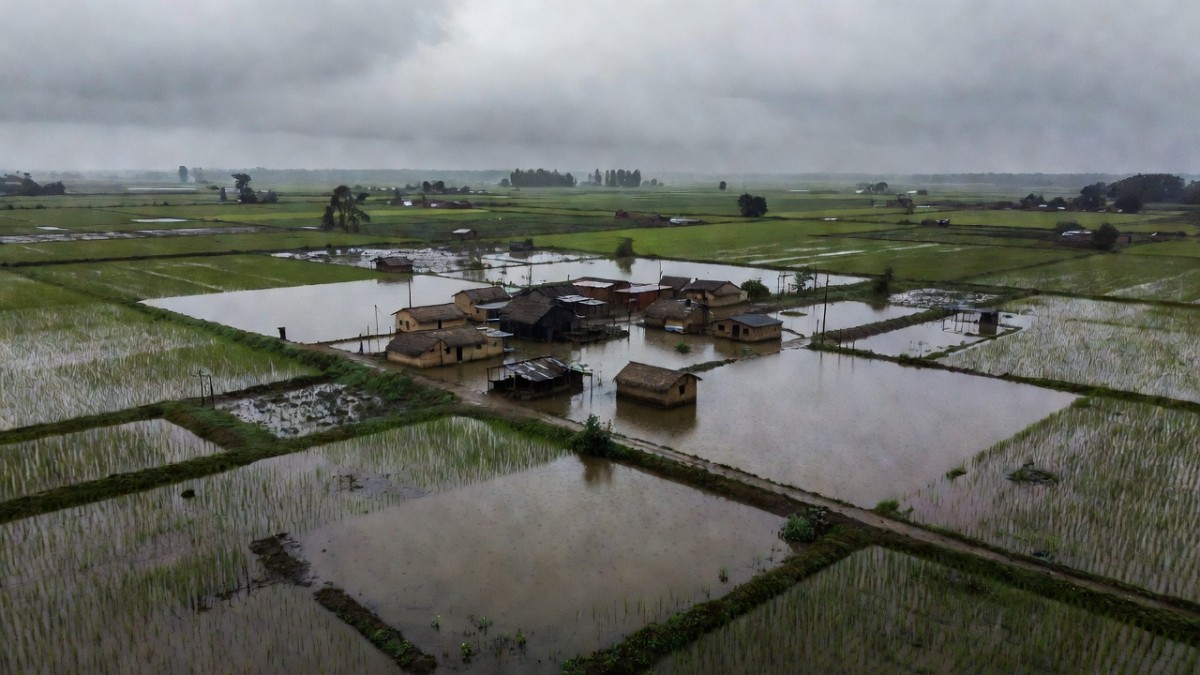
For India, the immediate concern is the 2026 southwest monsoon, which is currently running about 13% below normal through its closing weeks. Approximately 40% of the country has received at least 20% less rainfall than the long-period average, raising concerns over crop production and the broader economy as kharif crops approach maturity.
The timing is particularly delicate. With the monsoon season not yet concluded, farmers and policymakers are watching the final weeks of rainfall with apprehension. A deficient monsoon in a year of record global heat creates a compound stress: reduced soil moisture, higher evaporation rates, and increased irrigation demand all converge on the agricultural sector simultaneously.
Forecasters: 'Never Seen a Signal This Intense'
The forecasting community is struggling to find historical analogues for what they are observing. Adam Scaife, head of long-range forecasting at the UK Met Office, offered a rare admission of scientific astonishment: "I have never seen an El Nino signal this intense in our forecasts." The UK Met Office has indicated that the currently developing El Nino could be the strongest recorded since the 19th century, with some forecasts suggesting Pacific sea surface temperatures could climb to more than 3°C above normal by late 2026 or early 2027.
Reuters reporting from September 3, 2026, confirms that the event is set to intensify further into 2027 and could be the strongest ever recorded. The distinction between "strongest since the 19th century" and "strongest ever recorded" reflects the improving quality of observational data, but both framings point to the same conclusion: this is a historically significant climate event.
The Pendulum Will Swing-But the Heat Will Linger
Madhavan Rajeevan, an atmospheric physicist and monsoon expert who formerly served as secretary of India's earth sciences ministry, offers a perspective grounded in the physics of the climate system. "The one thing we know with absolute certainty is that the El Nino will reverse... like a pendulum, it will swing back," he said. This is the natural lifecycle of the phenomenon, which occurs every 2-7 years and typically lasts 9-12 months, developing between March and June and reaching peak intensity between November and February.
However, Roxy Mathew Koll, a climate scientist at the Indian Institute of Tropical Meteorology, cautions that the return to neutral conditions will not bring immediate relief. Temperatures could remain unusually high for several months even after El Nino begins to shift, and this lingering warmth could contribute to 2027 becoming one of the hottest years ever recorded globally. Koll adds an important caveat: not every part of India will see record temperatures in April or May, as the distribution depends on regional atmospheric circulation and Indian Ocean conditions.
Food Security: 50 Million More at Risk
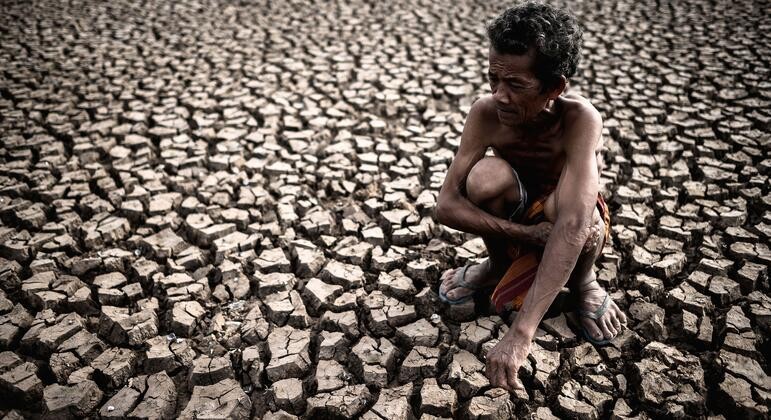
The human cost of this event extends far beyond temperature records. The World Food Programme (WFP), in an assessment dated August 5, 2026, projects that the strengthening El Nino will push nearly 50 million more people into acute hunger globally, with highly vulnerable communities bearing the brunt of the impact.
For India, the monsoon deficit raises immediate concerns about food inflation and crop production. The kharif season-which includes rice, pulses, oilseeds, and cotton-depends critically on the June-September rainfall. A 13% deficit at the national level, with significantly larger shortfalls in roughly 40% of the country, translates into stress on agricultural livelihoods and food prices that could persist well beyond the current season.
Public Health: Children Bearing the Burden
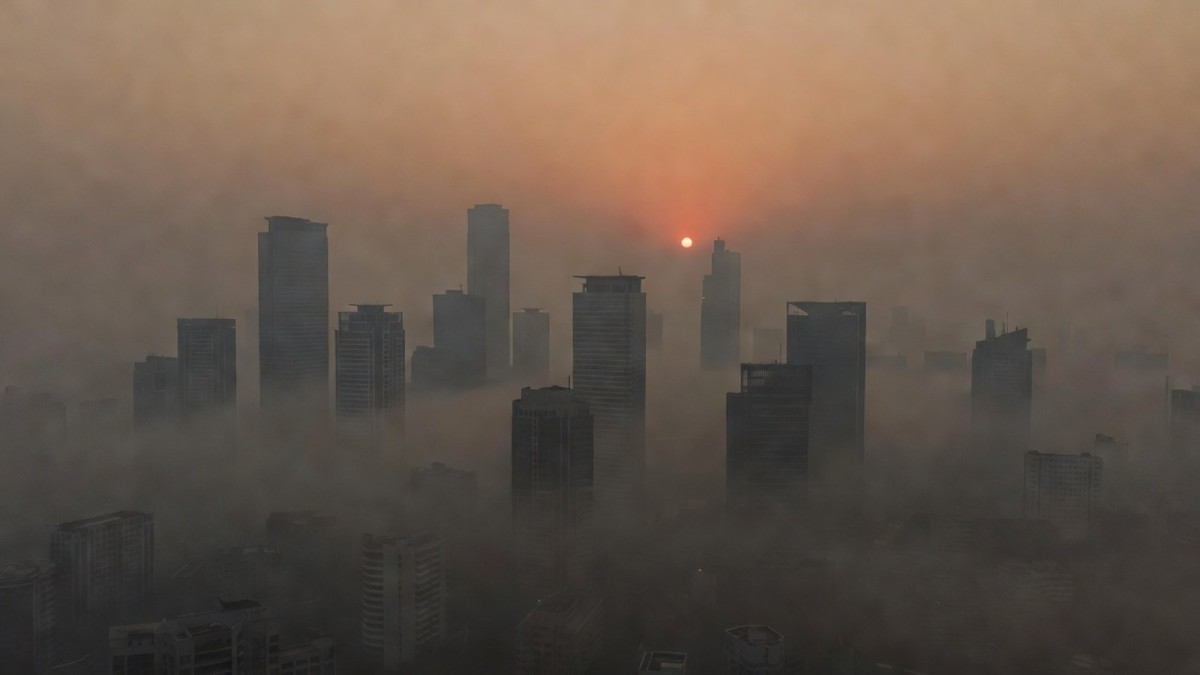
The health impacts of a warming climate are increasingly well-documented, and India's youngest citizens are disproportionately exposed. A recent study has found that 61% of children in India are exposed to one or more additional months of heat stress due to climate change-a finding that takes on added urgency as El Nino amplifies global temperatures.
Heat stress in children is not merely a matter of discomfort; it affects cognitive development, nutritional absorption, and susceptibility to infectious diseases. As the WMO and UN mobilise early-warning systems focused on public health, the protection of vulnerable populations-particularly children, the elderly, and outdoor workers-becomes a central policy priority.
The Indian Ocean Dipole: A Potential Offset
One factor that could partially mitigate the impact on India's monsoon is the Indian Ocean Dipole (IOD), a climate phenomenon in the Indian Ocean that often counteracts El Nino's drying influence over the subcontinent. The WMO expects a positive IOD to develop, with an index of approximately 0.9°C projected for September-November 2026.
A positive IOD typically brings enhanced rainfall to parts of India, particularly the central and western regions. However, the interaction between El Nino and the IOD is complex, and the offset is unlikely to be complete. The monsoon deficit already recorded suggests that any IOD-driven enhancement in the season's final weeks will be insufficient to fully compensate for the rainfall shortfall.
Preparedness: Early Warnings as the First Line of Defence
The unprecedented UN mobilisation, conducted in coordination with national weather agencies including the India Meteorological Department, represents a recognition that early warning systems are the most cost-effective climate adaptation tool available. The focus on agriculture, public health, energy, and water supplies reflects the sectors where El Nino impacts are most acutely felt.
For India, this means strengthening the IMD's capacity to provide district-level forecasts, enhancing the National Disaster Management Authority's (NDMA) response protocols, and ensuring that farmers receive timely information about rainfall expectations and crop management strategies. The science is clear that El Nino is a natural phenomenon, but human-caused climate change makes its impacts worse-and preparedness is the only variable that remains within human control.
Bottom Line
The 2026 El Nino represents a convergence of natural climate variability and anthropogenic warming that has no precedent in the observational record. With near-100% persistence through February 2027, a monsoon season running 13% below normal in India, and nearly 50 million additional people projected to face acute hunger globally, the stakes could not be higher.
The scientific consensus is unambiguous: this event has not yet peaked, its impacts will extend into 2027, and the warming that follows its decline could make 2027 one of the hottest years ever recorded. As Guterres framed it, the race is between rising risks and our commitment to climate action and protect people. The outcome of that race will be determined in the coming months.
- By Dr. Raj Patel, Staff Writer
This article was produced with AI-assisted research and editorial support. Sources: NDTV, World Meteorological Organization, UN News, Reuters, The Telegraph via Mint.
What's Your Reaction?
 Like
0
Like
0
 Dislike
0
Dislike
0
 Love
0
Love
0
 Funny
0
Funny
0
 Wow
0
Wow
0
 Sad
0
Sad
0
 Angry
0
Angry
0

India/South Asia Correspondent at Global1.News. Analytical voice with a background in science and health journalism. Based in New Delhi, covering Indian politics, education, healthcare, technology, and policy. Breaks down complex data into clear, actionable reporting.













Comments (0)