
Colombia's new president loosens gun control rules
President Abelardo de la Espriella signed a decree on 9 September 2026 that lifts a decade‑long suspension on the public carriage of legal firearms. It was framed as a short‑term response to the heightened risk during the Christmas and New Year festivities.
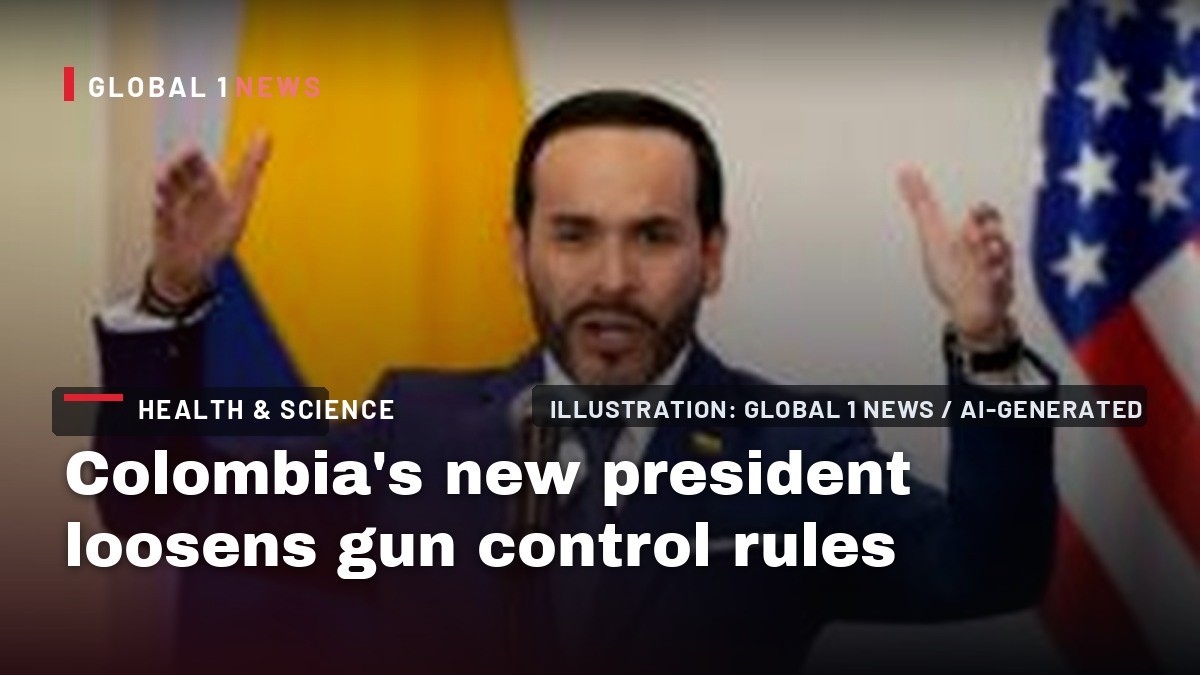
President Abelardo de la Espriella signed a decree on 9 September 2026 that lifts a decade‑long suspension on the public carriage of legal firearms. The move fulfills a campaign promise to let “decent people” defend themselves, but it also reopens a contentious debate about gun control, security and the balance of power between civilians and the state in a country still haunted by decades of armed conflict.
From a temporary holiday measure to a permanent restriction
The original restriction on carrying legal guns in public was introduced by President Juan Manuel Santos in December 2015. It was framed as a short‑term response to the heightened risk during the Christmas and New Year festivities. Yet, as the BBC notes, the suspension was extended year after year—first by Santos, then by conservative Iván Duque and later by left‑wing Gustavo Petro. Each administration treated the measure as a permanent fixture, despite its provisional origins.
By the time de la Espriella took office, the rule had become a symbol of Colombia’s broader struggle to reconcile a culture of armed self‑defence with the state’s monopoly on force. The decree, therefore, is not merely a bureaucratic adjustment; it is a political statement that the temporary emergency powers of the past should finally give way to the original intent of the law.
The decree’s immediate impact
According to Spanish newspaper El País, the decree will affect almost 700,000 Colombians who already hold a legal permit to carry a firearm. Those individuals will now be able to take their registered gun out of their homes, provided their permits remain up to date. The change removes the requirement for an additional authorisation that had effectively rendered the permits meaningless for public carriage.
President de la Espriella framed the adjustment as a correction of a “restriction which had never been meant to be permanent.” He stressed that the move would not create a “free‑for‑all” because “tight controls over who can own a gun would remain in place.” The president’s language—linking personal honour to the fulfilment of a promise—underscores the political capital he hopes to gain from law‑abiding citizens who feel vulnerable to criminal violence.
Security arguments from the president’s office
De la Espriella argued that the decree would not undermine security. He pointed to ongoing operations targeting illegal firearms, noting that security forces had seized more than 15,000 weapons so far in 2026. He identified the bulk of those arms as belonging to breakaway factions of the FARC rebel group and the Gulf Clan criminal gang, both of which continue to challenge state authority in rural and urban hotspots.
The president’s narrative suggests a two‑pronged approach: empower law‑abiding citizens while simultaneously cracking down on illicit arms. By emphasizing the number of illegal weapons already confiscated, de la Espriella seeks to reassure a public that the state remains in control of the overall flow of firearms.
Opposition and ethical concerns
Green Alliance Party Senator Ariel Ávila condemned the decree as a “grave error.” She warned that legally held guns could end up in the hands of criminals, arguing that only state forces should carry weapons and act as guarantors of security. Ávila’s criticism reflects a broader ethical dilemma: whether a citizenry armed for self‑defence can coexist with a professional police force tasked with monopoly over violence.
The senator’s stance also taps into a historical suspicion of civilian armament in Latin America, where private militias have sometimes been co‑opted by drug cartels or paramilitary groups. Her call for the state to remain the sole bearer of arms resonates with those who fear that expanding civilian gun rights could erode the fragile rule of law.
Political context and foreign interest
De la Espriella’s first day in office also saw the approval of extradition requests for rebel leaders to the United States and a reported US offer of $1 billion to Colombia. While the BBC article does not detail the terms of that offer, the timing suggests a strategic alignment with Washington on security matters. The president’s hard‑line stance on crime, combined with the gun decree, appears designed to cement a right‑wing, security‑focused agenda that dovetails with US interests in curbing illicit arms and narcotics flows.
Yet, the history of foreign intervention in Colombia—most notably the decades‑long US‑backed fight against the FARC—has left many citizens wary of external influence. De la Espriella’s rhetoric, emphasizing personal honour and national sovereignty, attempts to frame the policy as a domestic solution rather than a concession to foreign pressure.
Potential consequences for rural and urban communities
In rural areas where former FARC factions still wield influence, the ability to carry a legal firearm could alter the balance of power between civilians and illegal armed groups. For some, the decree may be seen as a protective measure against extortion and intimidation. For others, it could provoke an arms race, as criminal groups respond by increasing their own firepower to maintain dominance.
Urban centres, already grappling with the Gulf Clan’s criminal enterprises, may experience a shift in street‑level dynamics. The decree could embolden community members to confront gang activity, but it also raises the risk of accidental or intentional misuse of legally owned weapons, potentially escalating violence in densely populated neighborhoods.
Looking ahead: monitoring the decree’s impact
The true test of de la Espriella’s policy will be in the months and years to come. Monitoring will need to focus on whether the increase in legally carried firearms correlates with a measurable decline in crime, or whether it simply adds another variable to Colombia’s complex security landscape. Independent data collection, transparent reporting of firearm‑related incidents, and robust oversight of permit renewals will be essential to assess the decree’s effectiveness.
For now, the decree stands as a bold political move that reflects the president’s commitment to his campaign promise and his vision of a Colombia where “decent people” can protect themselves without waiting for the state to intervene. Whether that vision translates into safer streets or deeper divisions over the role of guns in society remains an open question—one that will shape the nation’s security narrative for the rest of this decade.
This article was produced with AI-assisted research and editorial support. Reporting is based on the source material cited below. Sources: BBC News Latin America; bbc.co.uk; Global1.News (10 September 2026).
By Elena Vasquez, Staff Writer
What's Your Reaction?
 Like
0
Like
0
 Dislike
0
Dislike
0
 Love
0
Love
0
 Funny
0
Funny
0
 Wow
0
Wow
0
 Sad
0
Sad
0
 Angry
0
Angry
0

Latin America Correspondent at Global1.News. Based in Mexico City, covering politics, economics, energy, and culture across the region. Brings an on-the-ground perspective to stories spanning from the Rio Grande to Patagonia.













Comments (0)