
Whose Game Is It? Football Fandom Debate Hits Home for PSL Fans
Who really owns football - the fans or the money? A Doha Debates town hall in Toronto, aired by Al Jazeera English, debates whether clubs are community or commodity. For South African fans, from PSL terraces to township diski fields, the answer cuts to the heart of the game.
The debate over who truly owns football has never felt more distant from the dusty diski fields of Soweto, yet it has never been more relevant to the future of the game in Mzansi. As global superclubs fight over broadcast billions and sovereign wealth funds, a town hall in Toronto this week asked the question that should be echoing through every PSL boardroom and every Kaizer Chiefs supporters' branch: is this still the people's game?
Whose Game Is It? Football Fandom Debate Hits Home for PSL Fans
JOHANNESBURG — The 2026 FIFA World Cup ended barely a month ago with Spain lifting the trophy in a blaze of corporate sponsorship and geopolitical posturing, but the hangover is just beginning. This week, Al Jazeera English and Doha Debates brought their global town hall series to Toronto's Terminal Theatre, and the question they posed cuts straight to the bone of South African football: in an era of state-backed superclubs and billionaire playthings, who actually owns your loyalty?
The Toronto Town Hall: A Majlis for the Modern Game
Moderated by journalist Imran Garda, the debate assembled a heavyweight panel: football historian and sociologist David Goldblatt, author of the seminal "The Ball is Round"; Kely Nascimento, president of the Nascimento Foundation and daughter of the immortal Pelé; and Shireen Ahmed, senior contributor at CBC Sports. Around them sat roughly 20 students from Qatar, Canada, Mexico and beyond, gathered in the Majlis tradition — a space where hierarchy dissolves and honest conversation takes the floor.
The timing is no accident. The World Cup that concluded last month across North America was the most commercially saturated tournament in history, a three-nation spectacle where the line between sport, statecraft and sponsorship vanished entirely. And the club game? It remains dominated by the Gulf sovereign wealth of Manchester City and Paris Saint-Germain, the Saudi Pro League's relentless spending spree, and the European Super League saga that has dragged through courts since 2023. For South African fans who wake up at odd hours to watch these leagues on SuperSport, the debate is not academic — it is the very texture of their football consumption.
Goldblatt's Radical Vision: No Owners, Only Communities
David Goldblatt did not come to Toronto to tinker around the edges. His position was uncompromising, almost revolutionary in its clarity. "Football clubs should not be privately owned by anyone," he declared. "They shouldn't be owned by states, or by rich men or rich women. They are collective forms of cultural capital."
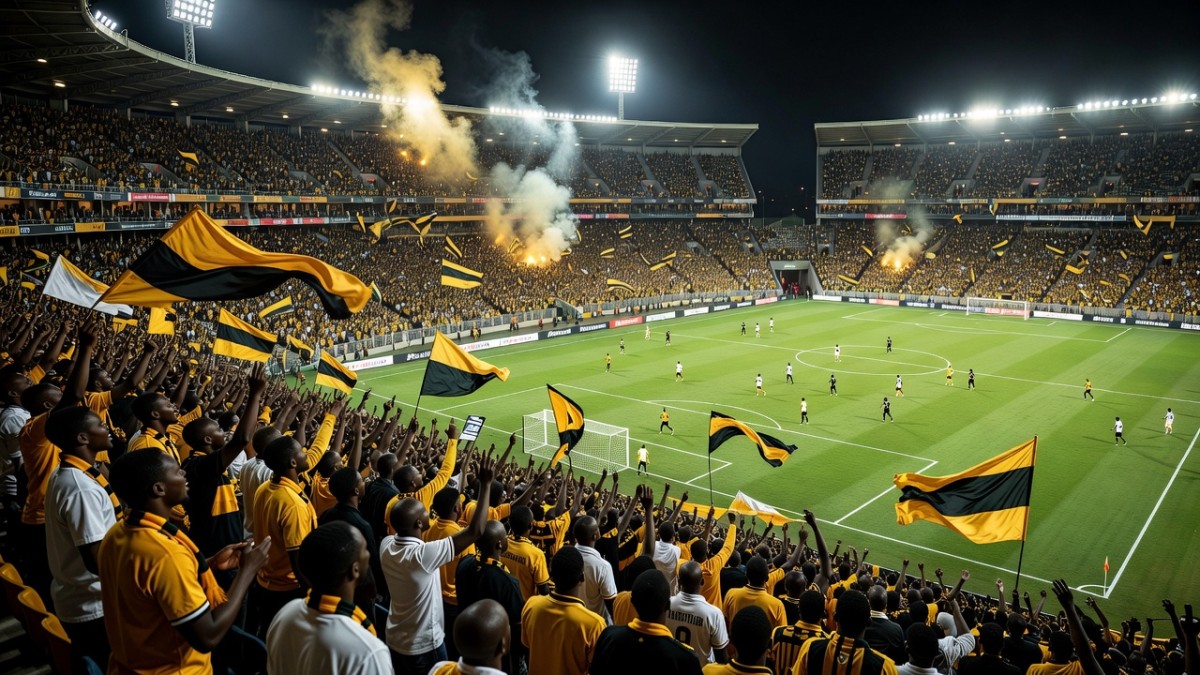
It is a vision that would resonate powerfully in South Africa, where the biggest clubs are not corporate entities but community institutions. Kaizer Chiefs and Orlando Pirates are not merely football teams; they are tribal affiliations passed down through generations, their supporter bases numbering in the millions across the continent. The Soweto derby remains one of world football's great occasions precisely because it transcends the 90 minutes on the pitch — it is identity, history and belonging rolled into one thunderous afternoon.
Yet Goldblatt's idealism collided head-on with the messy reality of how football actually operates. His prescription — that no one should own a club, that they should be collective cultural assets — sounds beautiful in a Toronto theatre. But in Mzansi, where Mamelodi Sundowns have built their domestic dominance on the back of massive private investment from the Motsepe family, the question becomes uncomfortable: would Sundowns be the powerhouse they are today without that capital injection? Would they have won six consecutive league titles on the strength of membership fees alone?
Nascimento's Reality Check: Was It Ever Really Better?
Kely Nascimento, carrying the weight of her father's legacy, offered a necessary corrective to Goldblatt's nostalgia. "I did some research into what it was like before the money," she said. "It didn't seem like it was that great."
Her point is devastating in its simplicity. The romanticised past of football — before television deals, before shirt sponsors, before sovereign wealth — was also a time of crumbling stadiums, poor working conditions for players, and rampant exploitation. Pelé himself played in an era when the sport's global governing bodies treated players as commodities with minimal rights. The money did not create football's problems; it simply made them more visible and more complex.
For South African football, this cuts deep. The Betway Premiership, the PSL's top flight, carries the name of a betting company as its title sponsor — a reality that makes many fans uncomfortable but which funds the league's operations. The women's game, meanwhile, is booming precisely because investment has arrived: Cameroon's Lionesses broke their curse to win a first-ever WAFCON title this year, while Banyana Banyana's 2022 continental triumph under the guidance of Desiree Ellis showed what happens when resources finally match talent. The money is not inherently evil; it is a tool. The question is who wields it and for whose benefit.
Ahmed's Nuance: Accountability Over Purity
Shireen Ahmed brought the debate back to practical ground. "This discussion that money is bad in all cases — it's nuanced, and it's complicated," she argued. "So, I would rather have accountability for that money and transparency."
This is the position that should animate South African football governance. We do not need to pretend that money is dirty or that commercialisation is inherently corrupting. What we need is the same thing every Sundowns fan, every Chiefs supporter, every Pirates faithful deserves: to know where the money comes from, where it goes, and who is accountable when things go wrong.
In the PSL, that transparency is often sorely lacking. The league's relationship with betting companies — not just Betway's title sponsorship but the proliferation of gambling advertising across match broadcasts and social media — raises questions that administrators would rather avoid. Who protects the vulnerable fans, the young boys and girls who see betting as a natural part of the match-day experience? What happens when a club's financial backers decide to pull out, as we have seen with several PSL clubs in recent seasons facing administration or collapse?
Germany's Bundesliga offers a model worth studying. The 50+1 rule ensures that clubs remain majority-owned by their members and fans, a structural safeguard against the whims of wealthy individuals. English fans, meanwhile, have protested ticket-price rises in recent seasons, pushing back against the creeping commercialisation of the match-day experience. These are not abstract European debates — they are blueprints for what South African football could demand of its own administrators.
What Toronto Means for Mzansi: The PSL's Ownership Question
Let us be honest about the South African landscape. Mamelodi Sundowns, under the ownership of the Motsepe family — with Patrice Motsepe now serving as CAF president — have become the continent's benchmark for professional excellence. Their investment in facilities, player recruitment and coaching has raised the bar for everyone. But it has also created an imbalance: Sundowns' financial muscle makes the league less competitive, and their dominance has at times felt like a foregone conclusion.
Kaizer Chiefs and Orlando Pirates, the country's two biggest brands, operate on different models. They are not owned by a single billionaire family but by corporate structures and founding families, yet their supporter bases dwarf everyone else. The irony is stark: the clubs with the most passionate, most numerous, most loyal fans are not necessarily the ones with the deepest pockets. The people who fill FNB Stadium for the Soweto derby, who travel across the continent to support Bafana Bafana, who paint their faces and sing until their voices give out — they are the true owners of the game's cultural capital, even if they hold no shares.
Goldblatt's argument, translated into the South African context, is that this should be formalised. That Chiefs and Pirates should belong to their supporters in a structural sense, not just an emotional one. That the PSL should have mechanisms for fan representation, for financial transparency, for accountability to the communities that sustain the game. It sounds radical, but it is merely common sense dressed in the language of democracy.
The Women's Game and the Township Heartbeat
The debate in Toronto also illuminated a truth that South African football has been slow to embrace: the future of the game is not just in the men's professional leagues. Banyana Banyana's WAFCON triumph in 2022 was a watershed moment, and Cameroon's Lionesses finally breaking through this year proves that the women's game across Africa is no longer a side-show. It is a movement.
Yet the commercial structures that support women's football remain fragile. Sponsorship is inconsistent, broadcast deals are minimal, and the players — many of whom balance football with full-time jobs — do not receive the same protections or rewards as their male counterparts. The accountability and transparency that Shireen Ahmed demands must extend to the women's game, where the gap between rhetoric and reality is widest.
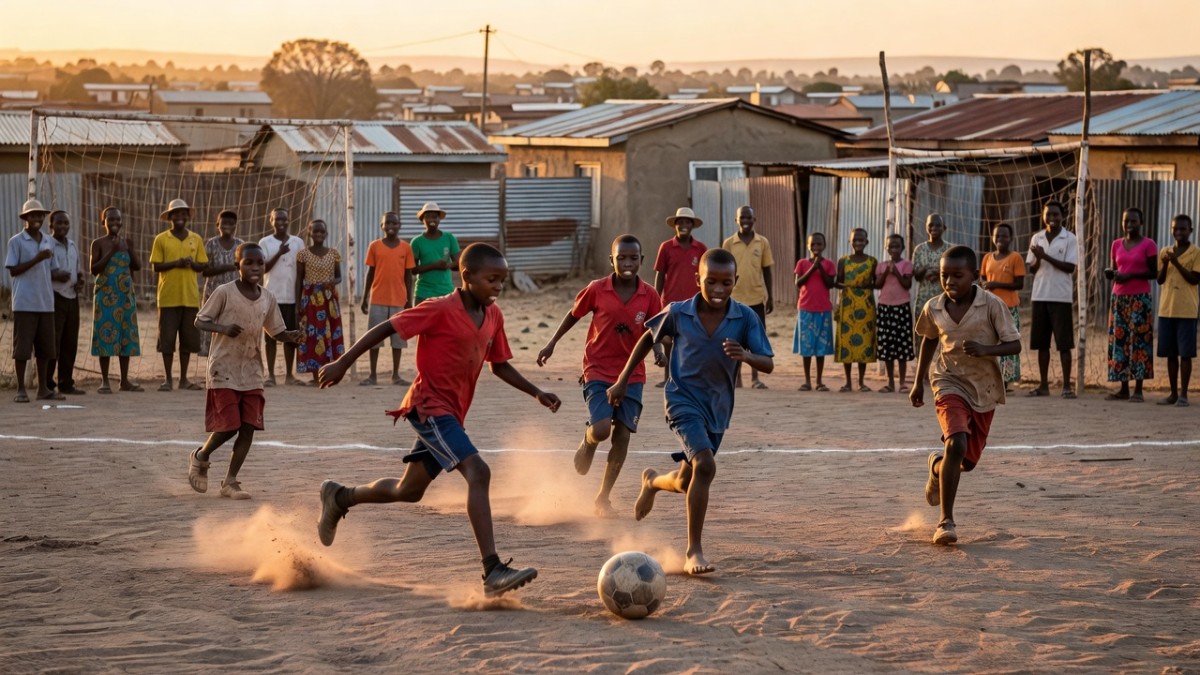
And beneath it all lies the township heartbeat: the diski culture, the street football, the makeshift pitches where the next generation of South African talent is forged. These spaces are not commercialised. They are pure. They are the reason South Africa produces players with the technical flair and improvisational genius that the world admires. The challenge for administrators is to nurture these grassroots spaces without suffocating them, to bring resources without bringing exploitation.
What to Watch For: The Road to 2030 and Beyond
As Bafana Bafana build toward the 2030 World Cup qualifying campaign, the questions raised in Toronto will only grow more urgent. South Africa's national team has struggled to recapture the glory of 1996, when we lifted the Africa Cup of Nations on home soil. The infrastructure is there — world-class stadiums left over from 2010 — but the football ecosystem that feeds the national team is under strain.
The PSL remains one of Africa's strongest leagues, but its commercial model is heavily dependent on betting sponsorship and broadcast revenue from SuperSport. The global trend toward streaming platforms and direct-to-consumer models could disrupt that revenue stream in ways that administrators have not fully anticipated. If the European Super League eventually becomes a reality, the financial gap between African and European football will widen further, making it harder for PSL clubs to retain their best players.
Doha Debates president Amjad Atallah captured the spirit of the Toronto gathering when he said: "In Toronto, our expert guests and students refused the easy answer, and that is what truth-seeking looks like." South African football needs that same refusal. We cannot pretend that money is the enemy, because money has built our stadiums, funded our development programmes and put our players on the world stage. But we also cannot pretend that the current model serves everyone equally, because it does not.
The answer lies somewhere between Goldblatt's radical collectivism and Nascimento's pragmatic realism, guided by Ahmed's insistence on accountability. It lies in a PSL where fans have a genuine voice, where clubs are transparent about their finances, where the women's game receives equal investment, and where the township remains the soul of the sport. It lies in a South African football that remembers who it serves: not the sponsors, not the broadcasters, not the global conglomerates, but the people who pack the stands and paint their faces and sing until their voices give out.
That is who owns your loyalty, Mzansi. The question is whether the game's custodians will ever be brave enough to acknowledge it.
By Dante Williams, Staff Writer
This article was produced with AI-assisted research and editorial support. Reporting is based on sources cited in the article.
What's Your Reaction?
 Like
0
Like
0
 Dislike
0
Dislike
0
 Love
0
Love
0
 Funny
0
Funny
0
 Wow
0
Wow
0
 Sad
0
Sad
0
 Angry
0
Angry
0

Breaking News and Investigations Correspondent at Global1.News. Based in London, covering global breaking news, security, and investigative stories. Known for digging deeper and connecting the dots across continents.











Comments (0)